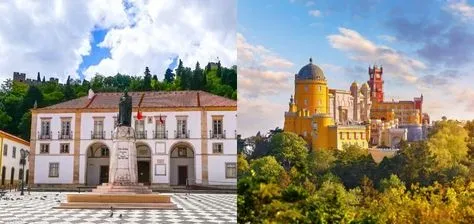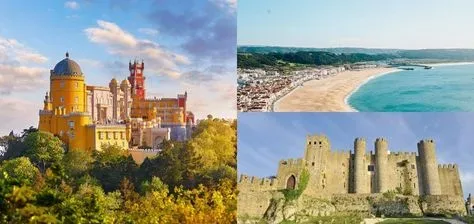
pena palace sintra

Pena Palace Sintra: History, Architecture and Visitor Guide

Fábio Mendes - Founder and CEO at Yellow Cab TT Tours - author
Author: Fábio Mendes · Founder & Director, Yellow Cab TT Tours
8 June 2026 · 25 min read

In 1503, King Manuel I of Portugal commissioned a small chapel on a remote hilltop in the Serra de Sintra, 500 metres above the Atlantic coast. Hieronymite monks built a monastery around it. The 1755 Lisbon earthquake left the monastery in ruins. And in 1838, King Ferdinand II bought the ruins and hired a German engineer to build what he imagined. 

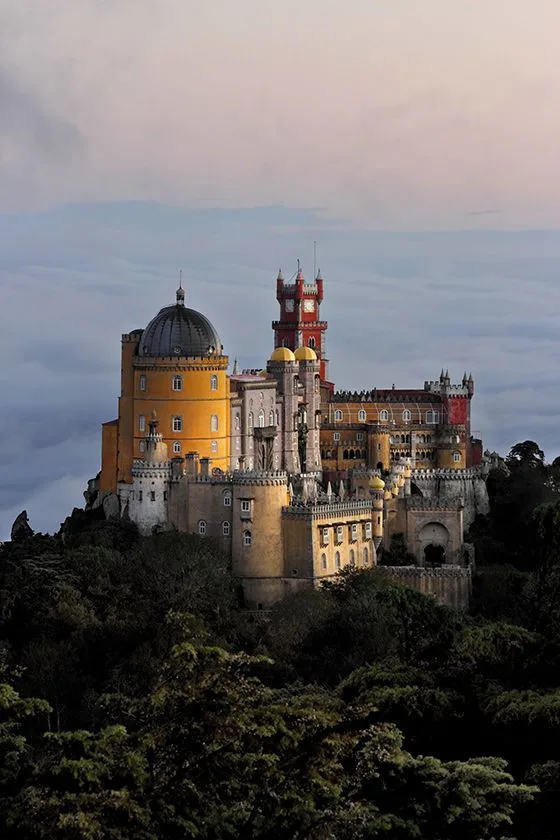
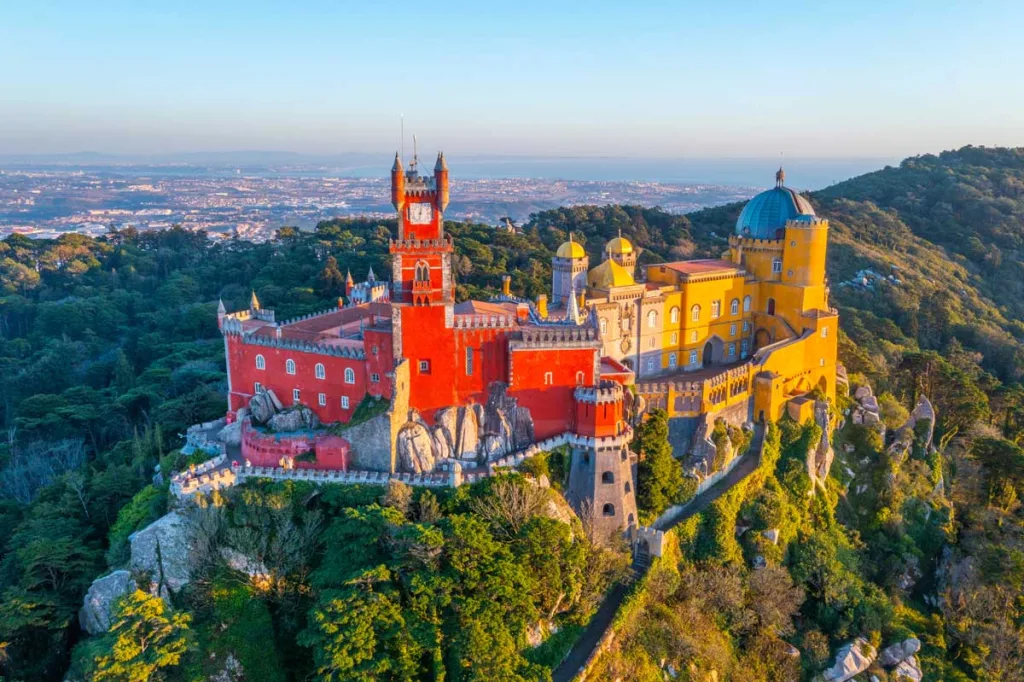
The result is Pena Palace — a deliberate architectural collage of Gothic battlements, Manueline rope carvings, Moorish arched windows, Renaissance towers, and Neo-Romanesque domes, painted in yellow and red, set on a hilltop in one of the cloudiest places in western Portugal. 

Pena Palace attracts approximately 1.5 million visitors per year, making it Portugal’s most visited monument. It was voted one of the Seven Wonders of Portugal in a 2007 public referendum. The UNESCO World Heritage inscription came in 1995, as part of the Cultural Landscape of Sintra. 

This guide covers the history, the interior rooms, and the practical information for a visit in 2026 — including the current ticket price of €20 per adult, arrival timing that actually works, and what to prioritise if you have three hours.

Table of Contents

The Monastery That Came Before the Palace: 1503–1755

King Manuel I and the Hieronymite Monastery

The history of Pena Palace begins not with Ferdinand II but with the Portuguese Age of Discovery, which was at its peak when this hilltop was first developed.


King Manuel I (r. 1495–1521) commissioned the construction of a small chapel dedicated to Nossa Senhora da Pena in approximately 1503. The site had existing significance — there are accounts of a hermit’s chapel on the hilltop from at least the 15th century. Manuel I expanded this into a formal monastery and handed it to the Hieronymite Order, the same order he commissioned for the Jeronimos Monastery in Lisbon (begun 1501) and the Monastery of the Batalha.


The Hieronymite monks occupied the Pena monastery for over two centuries. The complex included a church, cloister, and living quarters adapted to the steep hillside. Accounts from travellers in the 16th and 17th centuries describe a functioning religious community at the summit, with views extending to the Atlantic on clear days and the site wrapped in mist on the majority of winter mornings.

The 1755 Earthquake and What Remained

On November 1, 1755, the Lisbon earthquake — one of the most powerful in European recorded history, with an estimated magnitude of 8.5–9.0 — struck during the morning of All Saints’ Day. The monastery at Pena, on its exposed hilltop 500 metres above sea level, was severely damaged. The main church collapsed. The living quarters were rendered uninhabitable.

What survived was the chapel itself — the original nucleus that Manuel I had commissioned in 1503. The cloister also retained its basic structure. The order did not rebuild, and the monastery was abandoned.

The ruins remained untouched for over eighty years, slowly being consumed by the vegetation that the Serra de Sintra’s damp Atlantic microclimate grows with unusual efficiency.
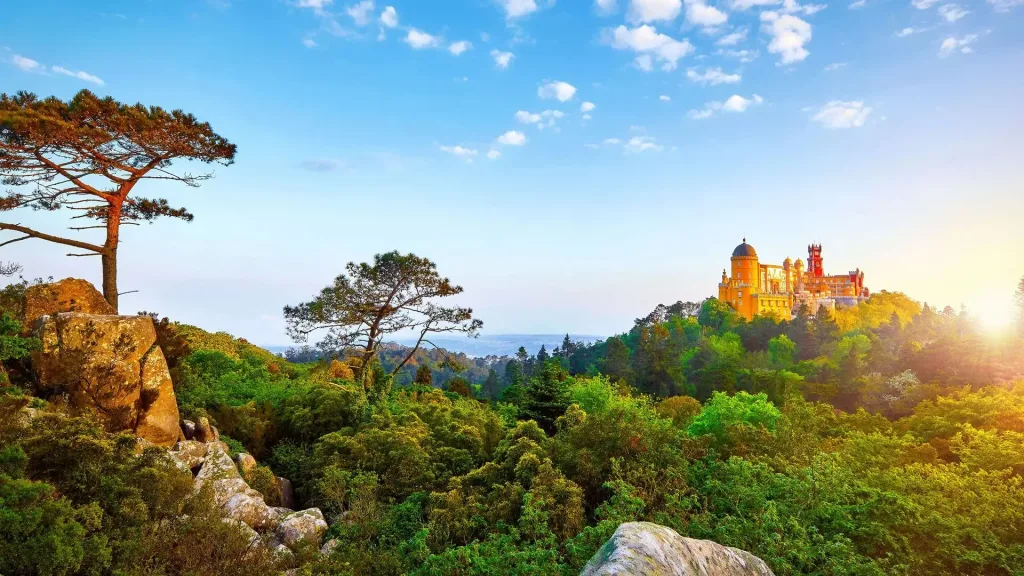
sintra pena palace

Ferdinand II Builds a Palace: 1838–1854

The King Who Designed His Own Mountain

Ferdinand of Saxe-Coburg and Gotha — known in Portugal as Ferdinand II — was the husband of Queen Maria II and, effectively, the consort king of Portugal from 1836. He was German by origin, trained in the arts, and had grown up during the Romantic movement’s most productive decades in central Europe.
In 1838, Ferdinand purchased the ruined monastery and the hilltop land surrounding it. His stated intention was to build a summer residence for the royal family. His actual ambition, evident in the result, was considerably larger.
Ferdinand did not commission a straightforward restoration. He retained the surviving chapel and cloister of the 1503 monastery and built an entirely new palace around and above them. The palace is not a converted monastery — it is a new construction that incorporates the monastery’s surviving elements as deliberate historical references.

Wilhelm von Eschwege and the Architectural Mix

The architect Ferdinand chose was Wilhelm Ludwig von Eschwege (1777–1855), a German military engineer and mining specialist who had lived and worked in Portugal since 1808. Eschwege was not a trained architect in the academic sense — he was an engineer with strong Romantic aesthetic convictions and a taste for medieval revival forms.
Ferdinand and Eschwege worked together on the design from 1838. Construction began in 1842 and was largely complete by 1854, though the interior fittings and decoration continued into the 1860s under Ferdinand’s direction.
The architectural vocabulary is deliberately eclectic: Neo-Gothic pointed arches and battlements recall northern European medieval fortresses; Neo-Manueline twisted-rope mouldings and armillary spheres reference Portugal’s 16th-century maritime empire; horseshoe arches and tile-clad domes invoke Moorish Iberia; and the overall massing draws on Romantic-era castle architecture that was flourishing in Germany at the same time.
Pena Palace predates Neuschwanstein — the Bavarian castle that inspired it — by roughly three decades. The influence ran the other way.
The Romantic movement in architecture — variously called Historicism, Revivalism, or Gothic Revival depending on the regional variant — was at its most productive between approximately 1820 and 1900. Its premise was that historical forms could be assembled into new buildings carrying emotional weight through association. Windsor Castle’s current Gothic towers date to the same decade as Pena. Hohenschwangau in Bavaria, which Neuschwanstein was later built to improve upon, was completed in 1837 — one year before Ferdinand purchased Pena’s ruins. Ferdinand was participating in a Europe-wide architectural movement, not pursuing an idiosyncratic personal vision. Eschwege gave him the engineering; Ferdinand gave him the aesthetic brief.

Why the Palace Is Painted Yellow and Red
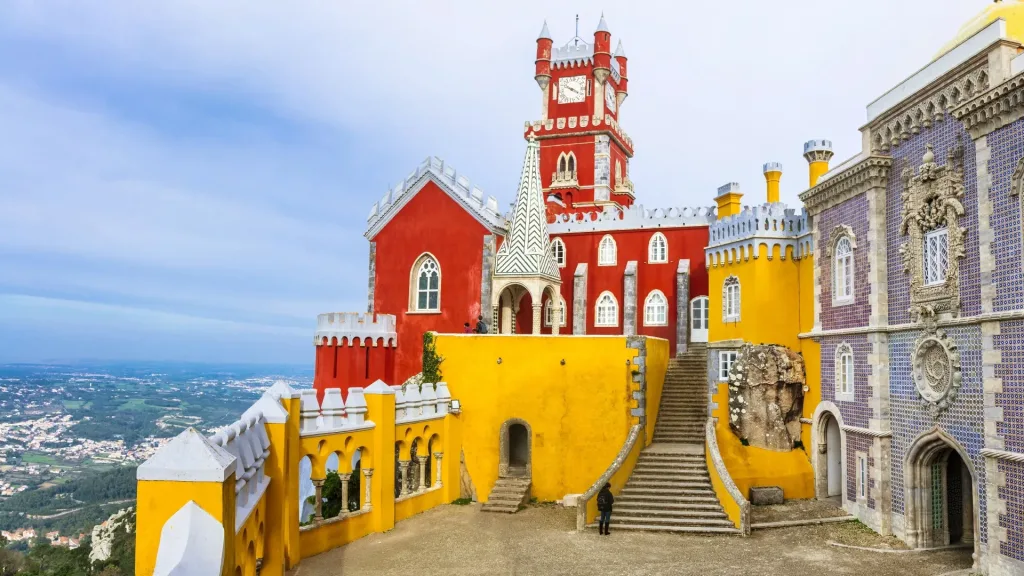
The yellow wing houses the royal apartments — the new construction Ferdinand built for the family’s residence. The red wing wraps the surviving cloister of the 1503 Hieronymite monastery. Ferdinand II painted them different colours so visitors would know which part was older. Whether this worked is a matter of debate.
The yellow was repainted more recently: a 1996 restoration project returned the palace exterior to what archival photographs suggested was its original coloration, after decades in which the paint had been allowed to fade significantly.
The red and yellow combination is now the most reproduced image in Portuguese tourism.
Pena Palace, Sintra — built 1842–1854 at 529 m elevation, UNESCO World Heritage Site

The Royal Family at Pena Palace: 1854–1910

Ferdinand II used the palace as the royal family’s primary summer residence from the 1850s. He died at Pena on December 15, 1885, having spent the final decades of his life there. Over 56 years of royal occupation — from completion in 1854 to the revolution of 1910 — five monarchs used the palace, each leaving traces in the rooms.

Ferdinand II and His Second Wife

After Queen Maria II died in childbirth in 1853, Ferdinand II remained at Pena and eventually married a second time. His second wife was Elise Hensler, an American opera singer from Boston who had performed across Europe. Ferdinand married her morganatically in 1869 — below his station, which prevented her from inheriting any royal title. He built the Chalet of the Countess of Edla within the park that same year as her private residence.

Ferdinand died in 1885. The state purchased both the palace and the chalet from Elise Hensler in 1889 for 900 contos de réis. She returned to the United States.

King Carlos I, Royal Painter

King Carlos I (r. 1889–1908), Ferdinand II’s grandson, was an accomplished marine painter who exhibited work in Lisbon and Paris. He maintained a working studio on the upper floor of the palace — easel, canvases, and painting materials still in place. The studio is one of the more unexpected rooms in the building: a reigning king’s working art space inside a royal palace, preserved as it was used rather than as a display.

Queen Amélia, his wife, used the private sitting room adjacent to the royal apartments. Her tea service remains arranged on a table there.

Carlos I was assassinated on February 1, 1908, in the Praça do Comércio in Lisbon during a royal procession. His son Manuel II, aged 18, succeeded him as the last king of Portugal. He used Pena as a royal residence for two years.

October 5, 1910

On the morning of October 5, 1910, a republican revolution broke out in Lisbon. Manuel II and the royal family left Pena Palace the same day.

A set of coffee cups was left on a table in the state rooms exactly as it stood that morning. The palace passed to state ownership with its full contents intact: furniture, personal effects, crockery, artworks, Queen Amélia’s tea service, the painting equipment in Carlos I’s studio. Nothing was cleared. Portugal’s parks authority has maintained the interior in this condition since 1910.

The result is a palace frozen at a specific moment — October 5, 1910, approximately 08:00 — rather than restored to a generalised period impression. That specificity is what distinguishes Pena from most comparable royal residences in Europe, where interiors were rearranged, sold off, or reconstituted as period reconstructions. Here, historians know exactly which king left which object in which room, and when.
Pena Palace

What to See Inside Pena Palace

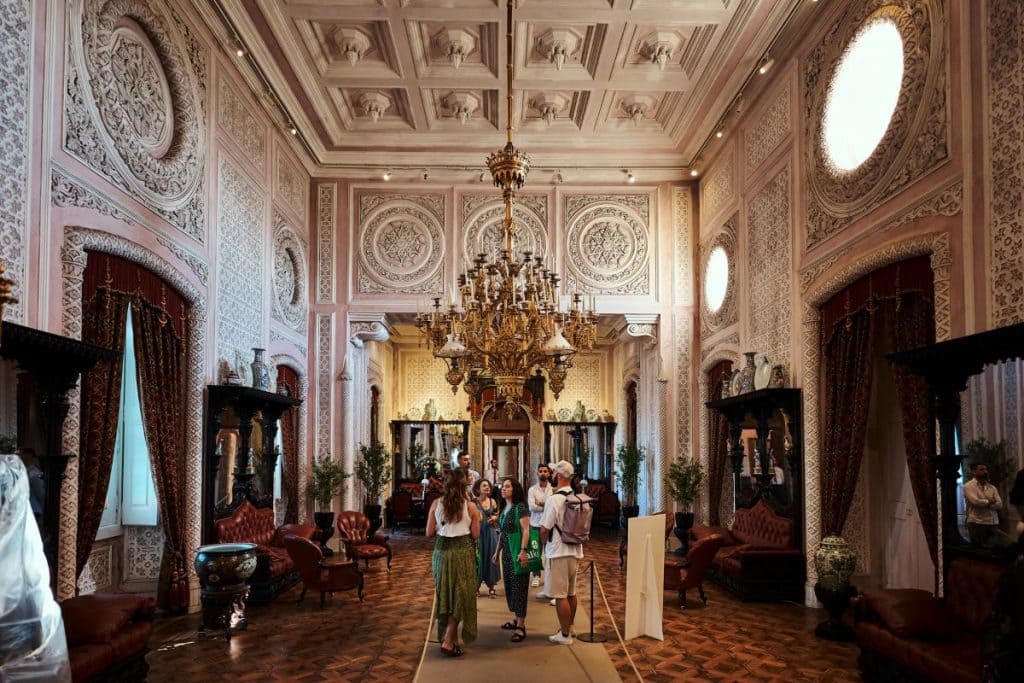
The palace interior was left as the royal family had it on October 5, 1910 — the day the Portuguese revolution ended the monarchy and the family left for exile. They left behind furniture, personal effects, textiles, and the full contents of the royal rooms. The state has maintained the interior in this condition, making Pena Palace one of the more completely furnished royal palaces in Europe.

Interior entry is timed: tickets for the state rooms are sold in 30-minute entry slots. Book via parquesdesintra.pt. The 09:30 slot is the one to book — not because the light is better, but because the crowds have not yet arrived from Lisbon by train. The main visitor wave reaches Pena Palace between 10:30 and 14:00; if you enter the interior before 10:30, you walk through rooms. After 11:00, you queue through them.

The Triton Arch and the Portal

The main entrance to the palace interior is through the Triton Arch — a gateway carved in limestone, depicting a sea god (Triton) emerging from the stone, covered in scales, coral, and marine life. It was carved between 1840 and 1860. The detail is dense enough that first-time visitors consistently stop here for longer than they planned.

The archway connects the outer courtyard to the palace’s formal entrance. The carving is Manueline in style — referencing the decorative vocabulary of 16th-century Portuguese maritime architecture — but executed in the 19th century as deliberate historical pastiche.

The Cloisters: The Surviving Monastery

Beyond the Triton Arch, the cloister of the original Hieronymite monastery is the oldest surviving element on the site. It dates to the early 16th century, though it was significantly modified during the palace construction.

The chapel — Manuel I’s original commission from 1503 — is accessible through the cloister. It contains an alabaster altarpiece created in Bruges around 1520 and brought to Portugal during the Age of Discovery period. The altarpiece survived both the 1755 earthquake and the monastery’s abandonment.

The State Rooms: King’s Bedroom, Arab Room, Kitchen

The royal apartments occupy the yellow wing. The most-visited rooms:

King’s Bedroom: furnished as it was left in 1910, with original royal furniture, textiles, and personal effects. The bed, desk, and wardrobes are from the 19th century. The room is smaller than visitors typically expect.

The Arab Room: one of the most photographed interiors, with walls and ceiling entirely covered in azulejo tiles in geometric Moorish patterns. Designed in the 1850s, it reflects Ferdinand II’s interest in Moorish architectural forms.

The Kitchen: the only room in the palace that was designed for practical use rather than display. The kitchen equipment is largely intact, including the original wood-burning range and copper cookware.

The Sala dos Veados (Stag Room): the main formal reception room, named for the stag antlers mounted along its upper walls. Contains a circular banquet table in the configuration used for royal dinners and state occasions at the palace.

King Carlos I’s Painting Studio: on the upper floor, maintained with the easel, canvases, and painting materials Carlos I (r. 1889–1908) used during his reign. Carlos exhibited marine paintings in Paris during the 1890s. The studio is preserved as a working space, not a display room — a distinction visitors notice.

Queen Amélia’s Sitting Room: the private drawing room of Queen Amélia, wife of Carlos I, with the original tea service still arranged on the table. The porcelain cups and teapot were left here on October 5, 1910.

The Dining Room and Remaining State Rooms: a sequence of furnished rooms tracing three successive reigns — Ferdinand II’s Romantic eclecticism, Luís I’s more restrained Victorian sensibility, and Carlos I’s Edwardian period. Painted ceilings, formal portraiture, and heavily upholstered furniture throughout. Less immediately striking than the Arab Room, but the most complete documentary record of how the Portuguese royal family organised their private life across six decades.

The Terraces and Views

The palace terraces extend from the yellow and red wings at approximately 480 metres elevation. On a clear day, the view extends southwest to Cabo da Roca (the westernmost point of mainland Europe, 14 km from Sintra) and south across Cascais Bay toward the Arrábida peninsula.

I have watched groups arrive at 10:45 and spend their first 40 minutes waiting in a ticket queue for a timed entry slot that no longer exists. The terrace, which does not require a timed ticket, is accessible from the upper courtyard at any time during park opening hours. If the interior slots are sold out, the terrace view is a genuine alternative.
Pena Palace Interiors

Pena Park: 200 Hectares Above Sintra

The Pena Park surrounding the palace was planted under Ferdinand II’s direction beginning in the 1840s. It covers 200 hectares of the Serra de Sintra hilltop. Ferdinand was a serious botanical collector — a preoccupation common among 19th-century European royalty with access to plants arriving on ships from the Portuguese colonial network. The park contains cedars of Lebanon, giant sequoias from California, tree ferns (Dicksonia antarctica) from Australia and New Zealand, cork oaks, camellias, and rhododendrons from across Asia. The Atlantic microclimate of the Serra — cool, moist, and frequently overcast — supports this diversity; the same specimens would not survive at Lisbon’s lower elevation 28 kilometres east.

The park contains walking trails ranging from 30 minutes to 2 hours. In late March and April, the rhododendrons planted in the 19th century produce a dense canopy of colour visible from Sintra town below. The giant sequoias and cedars are most prominent along the upper trail toward Cruz Alta.

The Chalet of the Countess of Edla

Within the park, approximately 500 metres from the palace on the western side, stands the Chalet of the Countess of Edla. Ferdinand II built it in 1869 for his second wife, Elise Hensler, an American opera singer whom he married morganatically after Queen Maria II’s death.

The chalet is smaller and more intimate than the palace — a single-storey building with cork-lined interiors and painted tile exteriors. Ferdinand died in 1885; the Portuguese state purchased the palace and chalet from Elise Hensler in 1889.

The chalet is included in the Palace + Park ticket. It receives far fewer visitors than the palace itself, which means it is typically accessible without waiting.

Cruz Alta at 529 Metres

Cruz Alta — the High Cross — is the highest point on the Serra de Sintra at 529 metres, approximately 20 minutes’ walk from the palace through the upper park. A stone cross has stood here since at least the 16th century; the current cross is 19th century.

The view from Cruz Alta extends further than from the palace terraces — on a clear day, the coast from Setúbal in the south to Peniche in the north is visible. Most visitors get as far as the palace terrace, take the standard photograph, and consider the job done. This is not a criticism — the terrace view is genuinely good. Cruz Alta requires walking uphill through forested paths for an additional 20 minutes, which eliminates the majority of palace visitors.

Cruz Alta was recorded in 16th-century accounts as a pilgrimage point visited by the Hieronymite monks from the monastery below. Ferdinand II restored the cross in the 1840s and incorporated it as the deliberate terminus of the upper walking route. The path from the palace to Cruz Alta passes through the densest section of the 19th-century botanical plantings — the giant sequoias and cedars are most visible here.
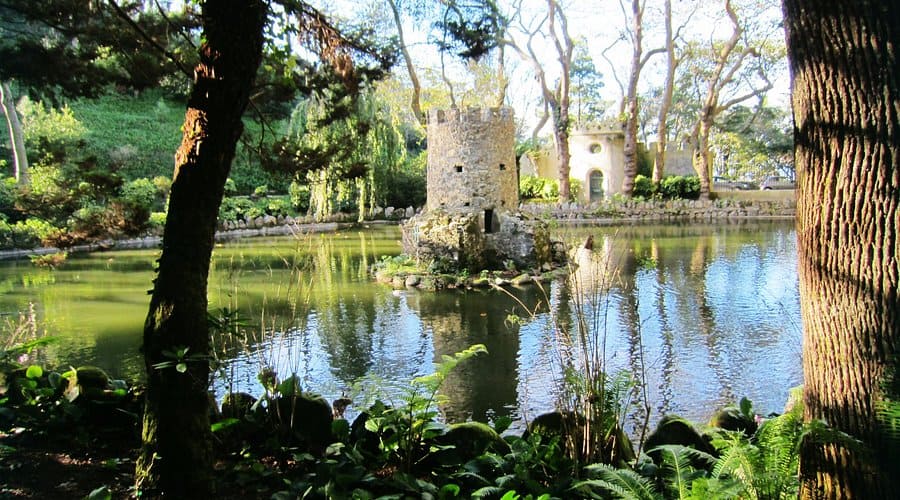
pena palace park

Practical Information: Tickets, Hours, Getting There

Tickets and Prices

All Pena Palace tickets must be purchased in advance at parquesdesintra.pt. Walk-up tickets at the gate are not guaranteed, and timed-entry tickets for the palace interior are not available on-site.

Ticket prices for 2026 are:

  • Palace + Park — Adult (18–64): €20
  • Palace + Park — Youth (6–17): €18
  • Palace + Park — Senior (65+): €18
  • Palace + Park — Family (2 adults + 2 youth): €65
  • Park Only — Adult: €12
  • Park Only — Youth / Senior: €10

The Palace + Park ticket includes access to both the palace and its surrounding park. To visit the palace interior (the state rooms), you must select a specific timed-entry slot when booking online. Entry times are available in 30-minute intervals.

Prices verified in June 2026 via the official Pena Palace ticketing website.

Opening Hours

Pena Palace visiting hours are as follows:

  • Pena Park is open daily from 09:00 to 18:00, with last entry at 17:30.
  • Gardens from 09:00 to 18:30,.

These hours may vary depending on season or operational changes.

Getting from Sintra Station to Pena Palace

From Sintra train station (28 km from Lisbon Rossio Station, 40-minute direct train), the options:
Bus 434 (Carris Metropolitana): Runs from Sintra station to Historic Centre → Moorish Castle → Pena Palace in a circular route. Journey from station to Pena Palace: approximately 15–20 minutes. Ticket: approximately €3 single (verify at carrismetropolitana.pt).  In July and August, queues for Bus 434 at Sintra station begin before 10:00. Bus frequency increases in peak season but capacity is limited.
Shuttle bus from Sintra ticket office: A shuttle runs from the Parques de Sintra ticket office at the palace park entrance to the palace itself (the walk between them is steep). Price: €4.50. This is separate from Bus 434.
On foot from Sintra town: Approximately 3.5 km uphill walk (45–60 minutes). Possible and pleasant in mild weather; not recommended in July/August heat.
Private tour: Departure from Lisbon hotel at 08:30-09:00 places you at Pena Palace by 09:30–10:00 — before the main visitor wave. This is the main operational advantage of a private tour for Sintra. We have been running this timing for 13+ years, and it is the single most consistent piece of advice I give to clients.

Best Time to Arrive

The most common question I get at Pena Palace is whether the interior is worth the extra cost compared to the park-only ticket. The answer is yes, but only if you can enter before 10:30. After that, the indoor experience is significantly affected by crowd density in the corridor-like rooms.

From 09:30 to 10:00, the palace interior is accessible with low crowds, and you can move through the rooms at a comfortable pace. From 10:30 to 12:00, the main visitor wave arrives; queues for entry into rooms begin to form, and the terrace becomes crowded. Between 12:00 and 14:00, this is peak congestion, with 30–45 minute waits for timed-entry slots being common. From 15:00 to 17:00, crowds start to ease, the park becomes pleasant again, and the interior is manageable. From 17:00 to 18:00, this is the last entry window, with softer light that is particularly good for exterior photography.

April to June and September to October offer the best balance of weather, crowd levels, and ticket availability. July and August are the busiest months; if visiting then, arriving by 09:30 is strongly recommended, otherwise you should expect peak conditions.

The Serra de Sintra microclimate is also important. The hilltop is typically 5–8°C cooler than Lisbon and significantly more humid. In winter and spring, the summit is often in cloud, creating a more atmospheric, sometimes misty experience. This does not necessarily improve or ruin the visit—it depends on whether you prefer a dramatic, gothic aesthetic. In summer, the cooler temperatures are a genuine advantage compared to central Lisbon. From November through February, the palace is at its least crowded, and on weekdays interior slots are often available without advance booking.

Discover our comprehensive guide to Sintra.

Photography Tips
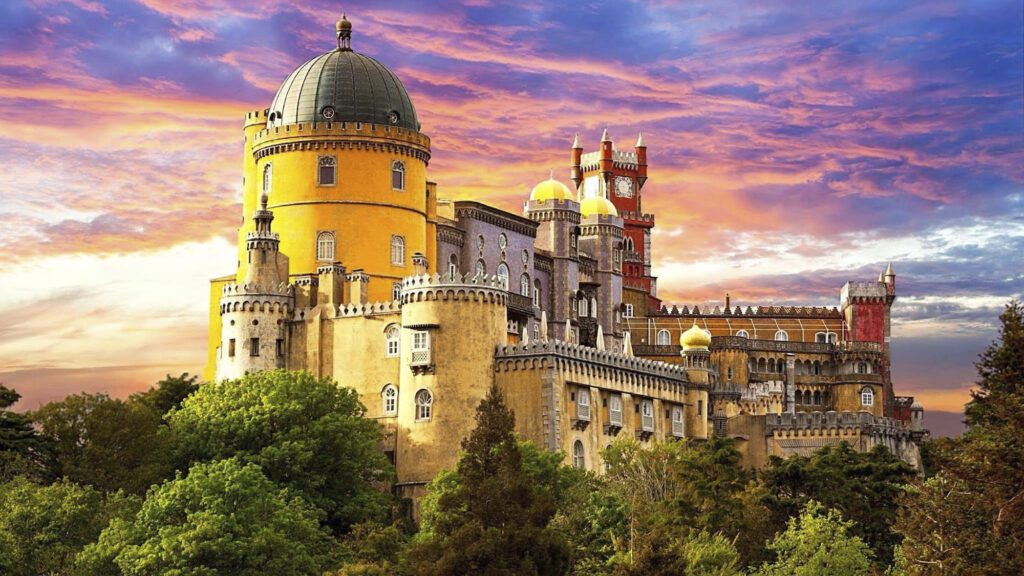
The exterior is most photographed from two positions: the lower courtyard (facing up toward the yellow and red façade) and the main terrace (looking toward the Moorish Castle and the Serra). Morning light reaches the yellow wing first; the red wing faces roughly south and is better from midday onward.
The Triton Arch is difficult to photograph well — the courtyard is narrow and frequently crowded. The first 30 minutes after opening give the clearest shot. For the interiors, photography is permitted but the rooms are small and the lighting is low; a wide-angle lens on a phone or mirrorless camera works better than a telephoto.
Drone photography in the Sintra-Cascais Natural Park requires prior authorisation from ICNF (Instituto da Conservação da Natureza e das Florestas) and is prohibited over protected areas without a permit. The park and palace fall within this boundary.
pena-palace-sintra-exterior-yellow-red.webp | Pena Palace Sintra exterior, yellow and red wings built 1842-1854 by King Ferdinand II at 500m elevation, Serra de Sintra

Private Tours to Pena Palace from Lisbon

Yellow Cab TT Tours has operated Sintra tours from Lisbon since 2013. Our departure time of 08:30 places your group at Pena Palace before the first bus tours arrive from Lisbon. The guide stays with you for the full day — not just for transfers.


We run private and small-group tours from Lisbon.

FAQ

Pena Palace is Portugal’s most visited monument, attracting approximately 1.5 million visitors per year. It is known for its eclectic Romantic-era architecture — combining Gothic, Manueline, Moorish, and Renaissance styles — and its vivid yellow and red exterior, set at approximately 500 metres elevation on the Serra de Sintra. It was voted one of the Seven Wonders of Portugal in 2007 and is part of the UNESCO Cultural Landscape of Sintra, inscribed in 1995.
Pena Palace was built between 1842 and 1854 by King Ferdinand II (Ferdinand of Saxe-Coburg and Gotha), the German-born consort of Queen Maria II of Portugal. The architect was Wilhelm Ludwig von Eschwege (1777–1855), a German engineer. The palace was built on the ruins of a Hieronymite monastery originally commissioned by King Manuel I in 1503 and largely destroyed by the 1755 Lisbon earthquake.
The Palace + Park ticket costs €20 for adults aged 18–64. Youth (6–17) and seniors (65+) pay €18. A family ticket (2 adults + 2 youth) costs €65. A Park Only ticket (access to grounds and terraces but not the interior state rooms) costs €12 for adults, €10 for youth/seniors. All tickets must be purchased in advance at parquesdesintra.pt. Verify current prices before visiting.
Allow 2–3 hours for the palace and immediate terraces. Allow 3–4 hours if you plan to walk through Pena Park to the Chalet of the Countess of Edla and Cruz Alta (the highest point at 529 metres). The interior state rooms take approximately 45–60 minutes if you enter at 09:30 with low crowds; longer if you arrive after 11:00 when rooms are congested.
Bus 434 (Carris Metropolitana) runs from Sintra station through the historic centre to Pena Palace. Single ticket approximately €3 (verify at carrismetropolitana.pt). Journey time: 15–20 minutes. In July–August, queues for this bus build before 10:00. An additional shuttle runs from the park entrance to the palace itself (steep uphill path): €4.50. On foot from Sintra town to the palace is approximately 3.5 km uphill (45–60 minutes).
Arrive at 09:30 for opening. The interior timed-entry slots at 09:30 and 10:00 are significantly less crowded than later slots. The main visitor wave reaches the palace between 10:30 and 14:00. April to June and September to October offer the best combination of weather and crowd levels. July–August is peak season: heat (temperatures occasionally reach 30°C in Sintra, though the Serra microclimate is 5–8°C cooler than Lisbon), full booking of interior slots, and maximum crowds.
es. The interior state rooms — including the King’s Bedroom, Arab Room, Kitchen, and the surviving 16th-century chapel and cloister — are open to visitors with a Palace + Park ticket. Interior entry is timed in 30-minute slots; book your specific slot when purchasing online. The Park Only ticket gives access to the grounds and terraces but not the state rooms.
The interior was preserved exactly as the royal family left it on October 5, 1910. Key rooms: the Triton Arch (intricately carved limestone gateway); the 16th-century cloister and chapel of the original Hieronymite monastery; the King’s Bedroom (original royal furniture and personal effects); the Arab Room (walls and ceiling covered in geometric Moorish azulejo tiles); the Kitchen (original 19th-century cooking equipment); and formal dining and state rooms with painted ceilings. The interior reflects 19th-century royal taste and is one of the most completely furnished royal palaces in Europe.
Yes, for most visitors to Sintra. The combination of its history (500+ years from monastery to palace), distinctive exterior, and intact 19th-century interior justifies the €20 ticket. The main variable is timing: a visit at 09:30 with low crowds is a qualitatively different experience from a visit at 12:00 at peak. If you cannot arrive before 10:30, the Park Only ticket (€12) and the exterior terraces are a reasonable alternative for visitors primarily interested in the views.
Pena Palace (built 1842–1854) is a royal palace with preserved state rooms and formal royal history. Entry is €20; the interior requires timed booking. Quinta da Regaleira (built 1904–1910) is a private palace with gardens, tunnels, and the famous Initiation Well — a 27-metre underground tower with a spiral staircase. Entry is €20 adult (valid from January 2026). Quinta is in the Sintra town centre (walking distance from the train station); Pena requires a bus or car. Both are worth visiting; most visitors with a full day do both. Our Quinta da Regaleira guide covers the differences in detail.
Yes. Sintra is 28 km northwest of Lisbon — approximately 40 minutes by direct train from Rossio Station. From Sintra station, Bus 434 reaches Pena Palace in 15–20 minutes. Allow 6–8 hours for a full Sintra day including Pena Palace and one other monument. Yellow Cab TT Tours offers private day tours from Lisbon with hotel pickup, departing at 08:30 to reach Pena Palace before the main visitor wave.
The Sala dos Veados (Stag Room) is the main formal reception room in the yellow wing, named for the stag antlers mounted along its upper walls. It contains a circular banquet table used for royal dinners and state occasions at the palace. The room is part of the standard interior route included with the Palace + Park ticket (€20 adult).
Yes. Carlos I (r. 1889–1908), Ferdinand II’s grandson, was a trained marine painter who exhibited work in Lisbon and Paris. He maintained a working studio on the upper floor of the palace, preserved with his easel, canvases, and painting materials. The studio is one of the few rooms in the palace that reflects a personal pursuit rather than royal protocol. Carlos I was assassinated in Lisbon on February 1, 1908, during a royal procession.
Fábio Mendes - Founder and CEO at Yellow Cab TT Tours - author
Written by Fábio Mendes
Founder & Director of Yellow Cab TT Tours. Guiding in Portugal for 20+ years.
Founded Yellow Cab TT Tours in 2013. 3,372 five-star reviews on Tripadvisor.
Facebook
X
LinkedIn
Facebook
X
LinkedIn