


Portugal has 31 wine DOC regions and produces approximately 590 million litres per year. Almost none of it is made within the city of Lisbon.This matters for a practical reason: when you search for “wine tasting in Lisbon,” you get two different products that get conflated constantly.
One is a seated tasting in a bar or tasting room — wine brought to the city from vineyards elsewhere, poured by a sommelier or self-served via a card system.
The other is a half-day or full-day drive to the actual production regions — Colares DOC 30 km west, the Setúbal Peninsula 40 km south, Alentejo 130 km east — where you visit a winery, walk a cellar, and taste at the source.
Both are legitimate. They serve different traveller profiles and different amounts of time.
The problem is that most articles about “wine tasting in Lisbon” describe only one of them, which leaves visitors either paying €89 per person for a bar experience when they could have driven to a vineyard, or expecting a countryside winery visit and arriving at a tasting room three floors below a restaurant.
Wine is something clients ask about more than almost any other topic — not because they are wine professionals, but because Portugal’s DOC system is genuinely confusing at first, and the gap between what you can taste in the city and what you can taste at a winery 40 minutes away is larger than most people expect.
I have been guiding wine-focused trips out of Lisbon since 2013. What follows is the honest comparison.
The In-City Option: What Lisbon Has
Wines of Portugal Tasting Room — Praça do Comércio
Run by ViniPortugal, the national wine promotion body, this is the only place in Lisbon where you can taste wines from all 31 DOC regions in one space. The entry system is simple: pay €2 for an Enocard, which gives access to 2–4 pours from a rotating selection of 12 wines. Recharge the card for more. The room holds over 1,000 reference bottles and a small library.
It is the most educational option in the city and also the cheapest. The format is self-guided, which means no sommelier and no narration — you are essentially tasting against a catalogue.
It is the most educational option in the city and also the cheapest. The format is self-guided, which means no sommelier and no narration — you are essentially tasting against a catalogue. Best suited to visitors who already know what they are looking for. Less suited to visitors who arrive hoping the wine will explain itself.
Location: Praça do Comércio (west arcade). Hours: Tuesday–Saturday, 11:00–19:00. Closed Sunday and Monday. Cost: Enocard €2 (2–4 wines). Entry free.
Lisbon Winery — Bairro Alto
Lisbon Winery sits at Rua Rodrigues Sampaio 18A, near Avenida da Liberdade. The tasting format is guided: a sommelier leads a flight of five wines over approximately 90 minutes, with premium cheese and charcuterie pairings included. The list skews towards boutique producers with small runs (typically under 6,000 bottles). Three tiers available:
- Portuguese Wine Tasting: €89/person (5 wines + food pairing)
- Port Wine Tasting: €89/person (Port-focused flight)
- Deluxe Tasting: €250/person (private room, premium selection)
Over 2,000 five-star reviews on Google, TripAdvisor, and Viator. Recommended by Rick Steves. Groups up to 12; advance booking recommended.
For visitors who want a guided, educational experience within the city without committing to a full day, this is the category winner. For a couple or small group, €89 each is not a casual spend — it is worth comparing with what the same budget buys at a vineyard 40 km south.
Taylor’s Port — Alfama
Taylor’s opened a Lisbon tasting room in Alfama, next to Chafariz del Rei, as a city outpost of the Porto-based house founded in 1692. The format is lighter than Lisbon Winery: by-the-glass Port from €6, or a guided “Introduction to Taylor’s” tasting of four wines (Chip Dry, LBV, 20-Year Tawny, Quinta de Vargellas Vintage) for €40.
This is the right option for visitors specifically interested in Port and fortified wines who want a structured introduction without the full-day commitment. The Alfama location also integrates naturally into a morning walk through the neighbourhood.
Porta da Vila: The Entrance Nobody Looks at Properly
Almost everyone enters Óbidos through the Porta da Vila — the main arched gate at the south end of the walled town. Almost everyone looks forward through the arch and starts walking up Rua Direita. The correct move is to stop inside the arch and look at the walls.
The interior of the Porta da Vila is entirely covered in 18th-century azulejo tiles — blue and white, depicting scenes from the Passion of Christ. The tiles were added after the 1755 earthquake, not as earthquake repair but as a separate act of religious patronage. The gate itself survived the earthquake. The tilework was a deliberate artistic commission, completed in the decades following 1755.
The quality of the azulejos inside the Porta da Vila is comparable to what you would pay to see in Lisbon’s churches and museums. Here it is on a public gate, no ticket required, and the majority of visitors walk straight through it in thirty seconds. I have lost count of how many times I have watched a group stop, take a photo of the arch from outside, then walk through without looking up.

Port Wine vs Still Wine: The Practical Difference
The distinction matters for making a decision about where to go.
Port wine is a fortified wine produced exclusively in the Douro Valley, approximately 300 km north of Lisbon. Fermentation is stopped midway by adding aguardente (grape spirit), which preserves residual sugar and raises alcohol to 19–22% ABV. The result is sweet, structured, and aged — White Port, Ruby, LBV, Tawny, and Vintage are the main categories.
Port is not made near Lisbon. When you taste it in a Lisbon bar, you are drinking a product shipped from the Douro. That is fine — you are tasting the wine, not the landscape. The limitation is that no Lisbon tasting room can offer you the context of the Douro terraces, the schist soils, or the way the temperature swings affect flavour.
Still wines from the regions near Lisbon — Colares DOC (30 km west), Setúbal Peninsula (40 km south), Palmela (50 km south) — are different products made in landscapes you can reach in under an hour. Colares Ramisco red is almost extinct as a variety; Moscatel de Setúbal is one of the few fortified wines aged 20+ years in barrels outside the Douro.
If Port wine is the reason you want a tasting, Lisbon’s bars are fully adequate. If you are interested in what grows nearest to Lisbon — which is genuinely unusual wine country — a day trip makes the stronger case.

A Short Lesson in Portuguese Wine Geography
Portugal has 31 DOC wine regions, which is a large number for a country 218 km wide at its broadest point. France manages 300 km across Burgundy alone and has fewer. Portugal counts differently. From a Lisbon-based traveller’s perspective, the regions divide into three groups by travel time:
Under 1.5 hours from Lisbon:
- Colares DOC (30 km west, Sintra coast): Ramisco grape, ungrafted vines in Atlantic sand dunes — the only pre-phylloxera variety still producing commercially in Portugal. Westernmost DOC in continental Europe.
- Setúbal Peninsula (40–50 km south): Moscatel de Setúbal (fortified, Muscat of Alexandria, minimum 6 months barrel-aged, some aged 20+ years); Castelão (Periquita) red.
- Palmela DOC (50 km south): Castelão-based reds, part of the Setúbal Peninsula system.
1.5–2 hours from Lisbon:
- Alentejo (130 km east): Produces approximately 45% of Portugal’s domestic wine market by volume. Main varieties: Aragonês (Tempranillo), Alicante Bouschet, Antão Vaz. Home to Vinho de Talha — wine fermented in clay amphorae using a Roman technique still practised in a handful of Alentejo villages.
3+ hours (day trip not practical as sole destination):
- Douro Valley (Port), Dão, Vinho Verde (Minho), Bairrada — all excellent wine regions, none accessible from Lisbon in a single day trip with meaningful time on site.

Wine Calendar: Best Months by Region
Timing affects what you experience significantly — not just the weather, but whether you see the vineyard in harvest, in dormancy, or in spring growth. The three regions near Lisbon have different harvest windows.
| Month | Alentejo (130 km east) | Setúbal Peninsula (40 km south) | Colares / Sintra (30 km west) |
|---|---|---|---|
| Jan–Mar | Pruning; cellars active; wines resting in barrel | Pruning; Moscatel ageing | Dormant vines; fewest visitors |
| Apr–May | Vines budding; landscape green; temperatures 18–22°C | Green vineyards; pleasant temperatures | Best months for Colares visit: Atlantic cool, low crowds |
| Jun | Pre-harvest; Alentejo heats rapidly (30°C+) | Warm (24–26°C); good visiting conditions | Comfortable; vineyards full |
| Jul–Aug | Harvest begins late August; 35–38°C in Évora — visit early morning | Harvest approaching; 26–28°C; Arrábida coast accessible | Warm but Atlantic-moderated; 22–25°C |
| Sep | Peak harvest: late Aug–mid Sep. Reguengos Harvest Festival (grape stomping, local music) | Festa das Vindimas, Palmela: annual harvest festival, first week of September (62nd edition in 2025) | Colares harvest begins — Ramisco ripens late due to Atlantic fog |
| Oct | ÉvoraWine festival (40+ producers, 200+ wines, Évora main square) | Post-harvest; wines fermenting; cellars accessible | Peak Colares harvest: Ramisco late-ripening, Oct is the critical month |
| Nov | Festa da Vinha e do Vinho, Borba (wine parade, traditional celebration) | Moscatel tasting season; new vintage settling | Post-harvest; quiet, cool |
| Dec–Feb | Cellars quiet; tastings available year-round at producers | Winter hours; fewer visitors | Off-season; some producers by appointment only |
The harvest window in practice: Alentejo runs earliest (late August to mid-September), driven by the continental heat. Setúbal Peninsula follows in September, with Palmela’s Festa das Vindimas marking the region’s harvest celebration during the first week of the month. Colares runs latest of the three — Ramisco grapes, grown in Atlantic-cooled sand dunes 30 km from Lisbon, ripen slowly and are typically picked in October.
If your trip falls in September and you want harvest atmosphere, Setúbal or Alentejo are the natural choice. Colares in October gives you the added rarity of watching one of Europe’s last pre-phylloxera ungrafted vineyards being harvested — a thing that does not happen in many places, and is worth planning around if the timing works.
Spring (April–May) is the alternative: vineyards green, temperatures reasonable, no harvest crowds, and a Colares or Setúbal visit that fits a Lisbon city break without committing to full summer heat.

When a Vineyard Day Trip Makes More Sense
The calculation shifts depending on what you want from the experience.
In-city tasting is the right call when:
- You have an evening free, not a full day
- You want Port wine specifically
- You have 2 people and a €89/person budget works as an evening activity
- You want a sommelier-narrated experience in a comfortable, central setting
A day trip makes more sense when:
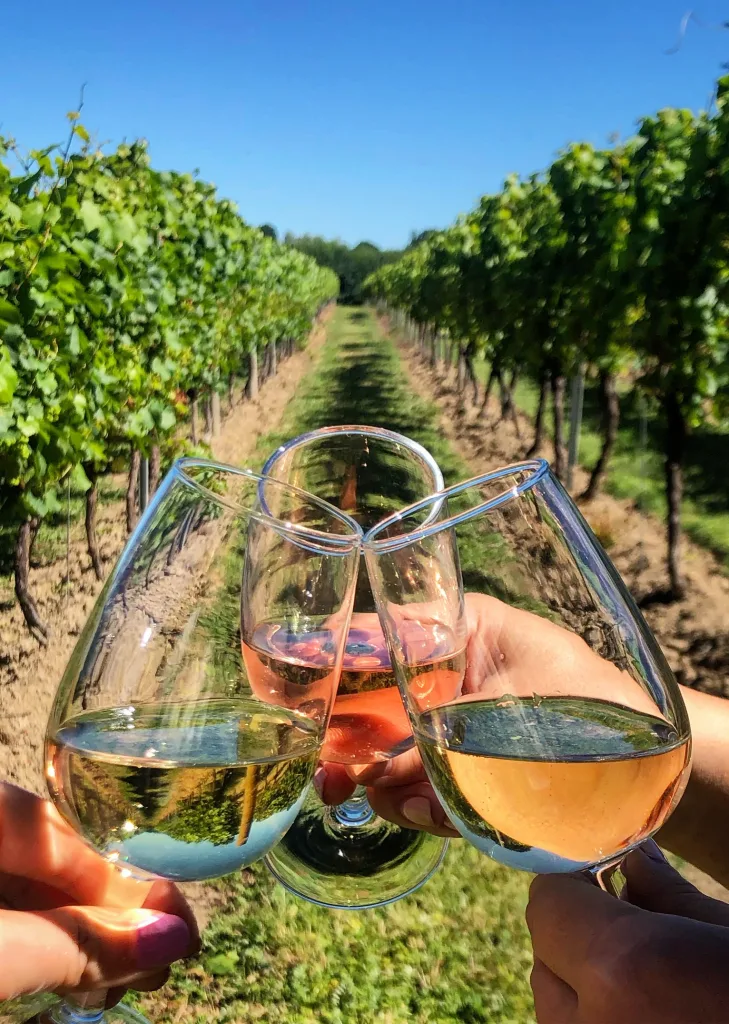
- You want to see where the wine is made — cellars, barrels, vineyards, the physical context.
- You are a group of 3 or more (per-vehicle pricing spreads the base cost; the wine add-on is per person, so total cost stays comparable to city options while the product is 8 hours vs 90 minutes).
- You are interested in Colares, Moscatel de Setúbal, or Alentejo — varieties you cannot taste anywhere in the city at this level.
- You want to combine wine with landscape: Arrábida cliffs, Sintra hills, or Alentejo cork forests.
For a couple, the economics are roughly comparable: two tickets to Lisbon Winery (€178) vs a base vehicle to Setúbal Peninsula wine experience (from €310, split two ways = €155 each, plus the wine add-on). The day trip takes 8 hours instead of 90 minutes. Whether that is worth it depends entirely on what the trip is for.
How to Choose
One question resolves most of the decision: do you have a full day, or a few hours?
If you have 2–3 hours: Wines of Portugal tasting room (cheapest, most educational, self-paced) or Taylor’s Port (guided Port focus, Alfama location works in the morning).
If you have 3–4 hours and a guided experience budget: Lisbon Winery (€89/person, structured, central, excellent quality).
If you are interested in Port specifically and have a full day: the right answer is Porto and the Douro, not a Lisbon bar — but that is a different trip.

Wine Day Trips from Lisbon
The three vineyard regions near Lisbon cover very different wine styles — Colares’s coastal Ramisco, Setúbal’s fortified Moscatel, Alentejo’s clay-pot Vinho de Talha and powerful structured reds. All three are private, all-day tours on a per-vehicle price, which makes them significantly cheaper than in-city tasting rooms for groups of three or more.
- Sintra Wine Tasting Tour — Colares DOC, Ramisco and Malvasia de Colares, Atlantic coast. Can combine with Sintra palaces and Cabo da Roca in the same day.
- Setúbal Wine Experience — Moscatel de Setúbal, Castelão reds, optional azulejo tile factory visit. Route through Arrábida Natural Park.
- Alentejo Wine Tour — ~45% of Portugal’s domestic wine market. Cork factory, olive oil tasting. UNESCO Évora on the same day if time allows.
- Full wine tour overview — prices, regions, options compared.
FAQ
What is the cheapest wine tasting in Lisbon?
How much does wine tasting cost in Lisbon?
Can you do a Port wine tasting in Lisbon?
What wine regions are near Lisbon?
Is it worth going to a vineyard from Lisbon for wine tasting?
What is Moscatel de Setúbal?
What is the difference between Vinho Verde and Port?
When is the best time to visit Portuguese wine regions near Lisbon?
What grape varieties are unique to Portugal?
Can wine tours from Lisbon include sightseeing?

Founder & Director of Yellow Cab TT Tours. Guiding in Portugal for 20+ years.
Founded Yellow Cab TT Tours in 2013. 3,372 five-star reviews on Tripadvisor.