
Cascais, Portugal: What to See, How to Get There & Day Tours from Lisbon
Cascais is a coastal municipality located 30 km west of Lisbon, on the northern bank of the Atlantic coast at the mouth of the Tagus estuary. The direct train from Cais do Sodré Station (Lisbon) reaches Cascais in approximately 40 minutes on the Linha de Cascais suburban line.
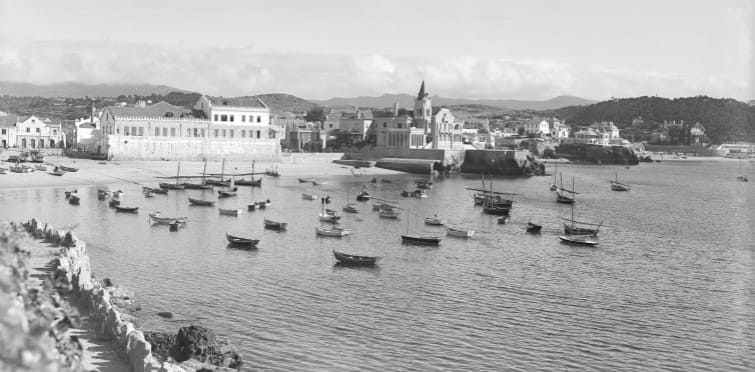
The municipality of Cascais has a population of approximately 214,000 (2021 census). The town of Cascais itself — the historic seafront area — developed as a fishing village before becoming the preferred summer residence of the Portuguese royal family following King Luís I’s first stay at the Cidadela palace in 1870. This royal association shaped the town’s architecture, cultural institutions, and the casino at Estoril over the following decades.
Cascais is 25 km south of Sintra by road and 14 km east of Cabo da Roca (the westernmost point of mainland Europe). Yellow Cab TT Tours includes Cascais in 5 private and group tours departing daily from Lisbon.

Main Attractions in Cascais
Cidadela de Cascais
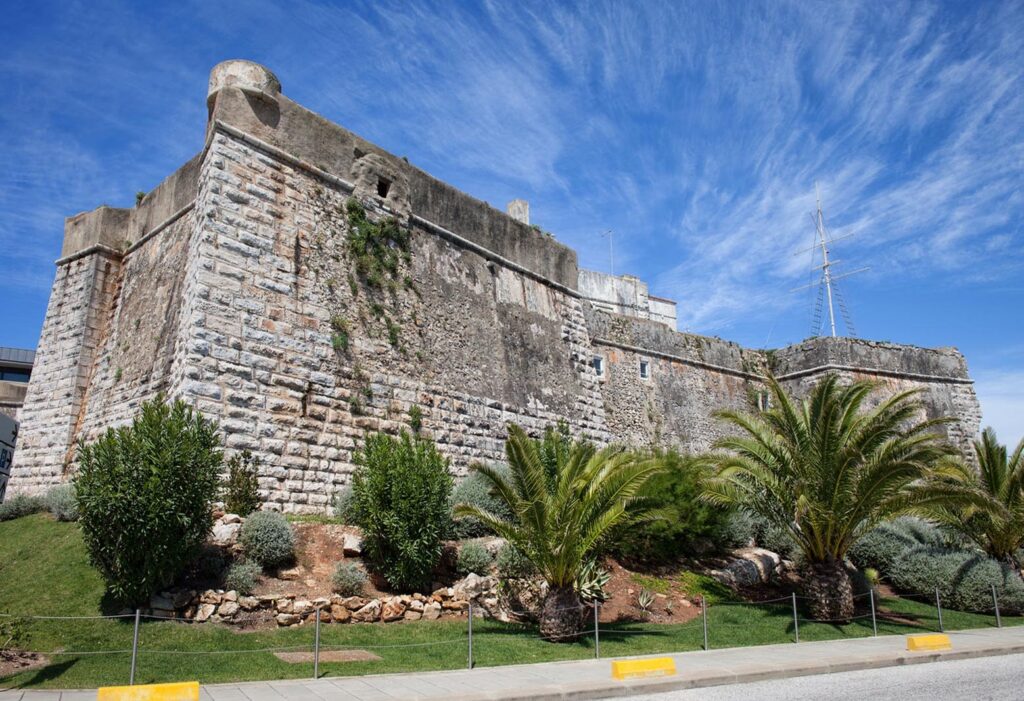
The Cidadela de Cascais (Cascais Citadel) is a star-shaped fortress on the seafront of the town centre. Its history as a fortification begins in 1490, when King João II ordered the construction of a defensive structure on this site to protect the Atlantic coast south of Lisbon. By 1640, the complex had been expanded into its current star-shaped defensive form, with bastions designed to resist artillery.
In 1870, King Luís I designated the Cidadela as the official royal summer residence. The Portuguese royal family used the complex every summer until the abolition of the monarchy on 5 October 1910. King Carlos I (1863–1908) conducted his Atlantic oceanographic research from Cascais between 1896 and 1907 — 12 expeditions in total, the findings of which are documented in the nearby Museu do Mar Rei Dom Carlos I.
Today the Cidadela complex houses a boutique hotel (Pousada Cascais), a contemporary art museum (Museu Citadela), restaurants, and gallery spaces. The outer walls and bastions are accessible for walking and photography.
Museu Condes de Castro Guimarães
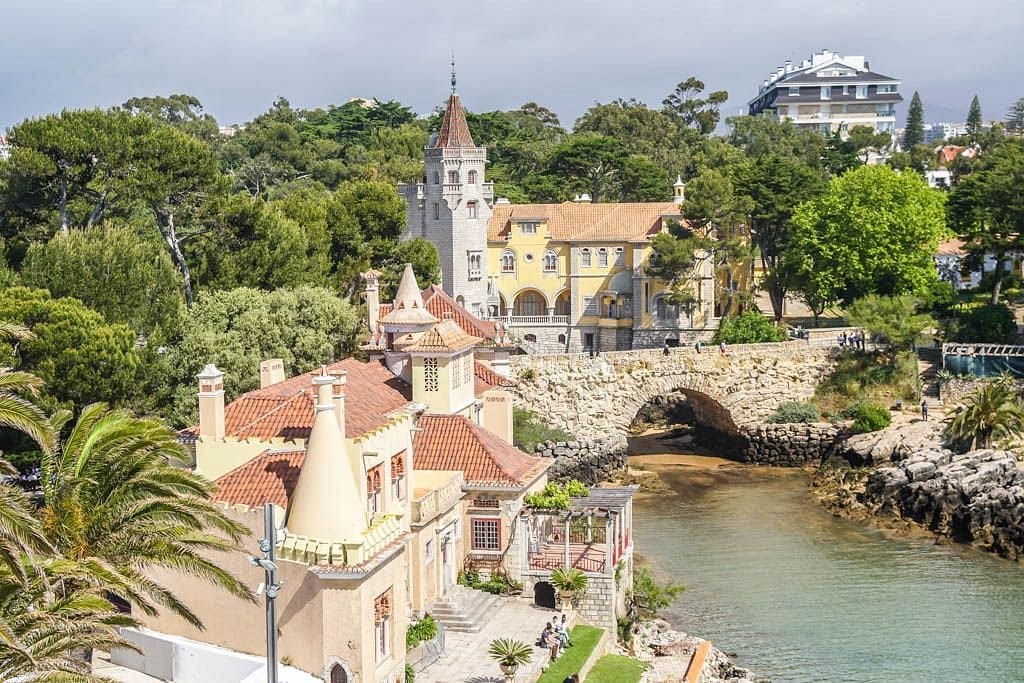
The Museu Condes de Castro Guimarães is a neo-gothic villa set in the Parque Marechal Carmona, approximately 700 m east of the Cidadela. It was built in 1902 by architect Luigi Manini — the same Italian architect responsible for Quinta da Regaleira in Sintra, built in the same period (1904–1910). The original owner was Jorge O’Neil, a wealthy merchant.
The building was purchased by the municipality of Cascais in 1910 and opened as a museum. Its library holds approximately 25,000 volumes. The most significant item in the collection is an illuminated manuscript of the Crónica de Dom Afonso Henriques, dated to 1505, depicting the life of Portugal’s first king.
The museum also contains 17th-century Indo-Portuguese furniture, azulejo panels, and paintings from the Portuguese royal period.
Current opening hours and admission price at bairrodosmuseus.cascais.pt.
Boca do Inferno
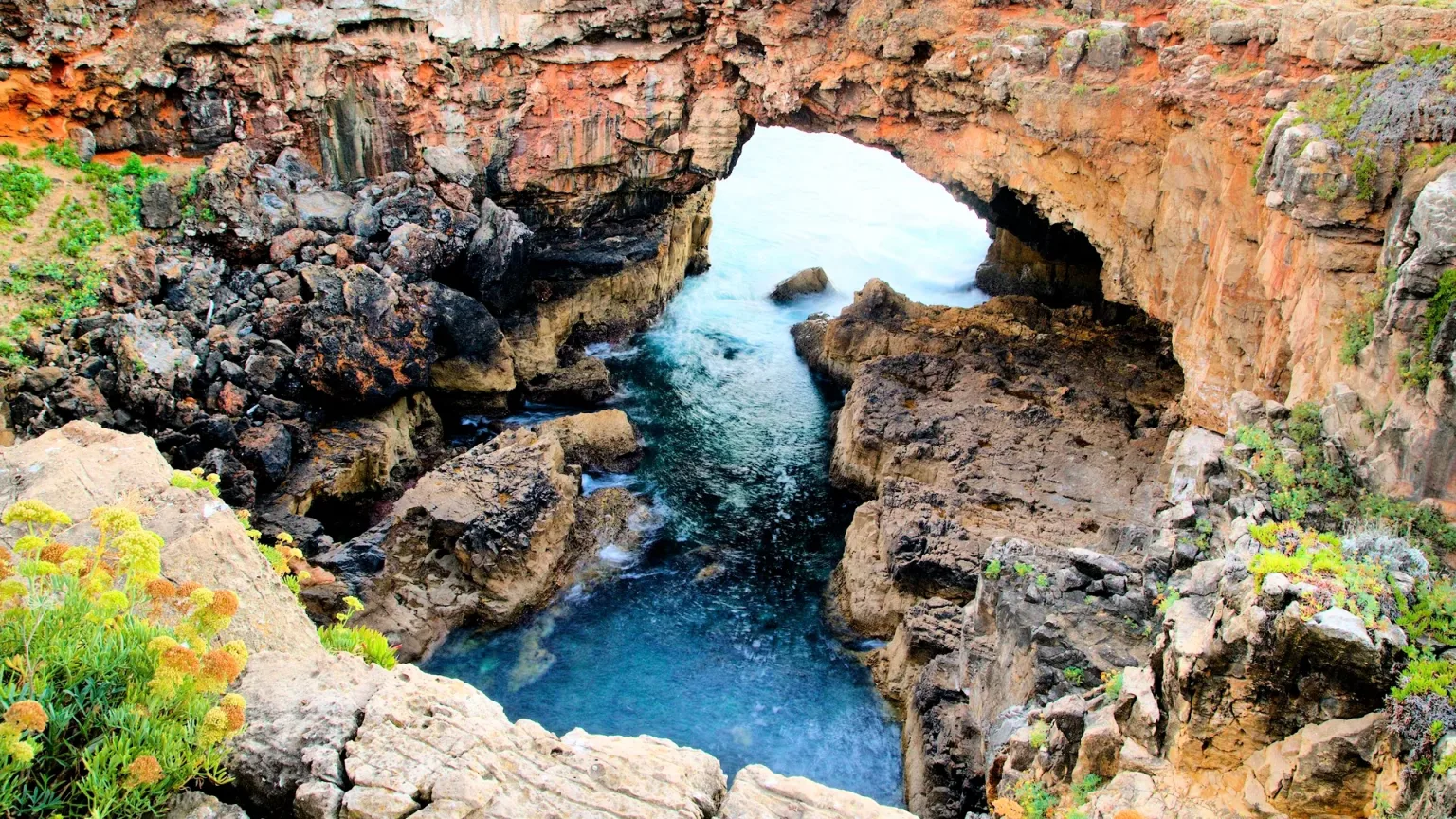
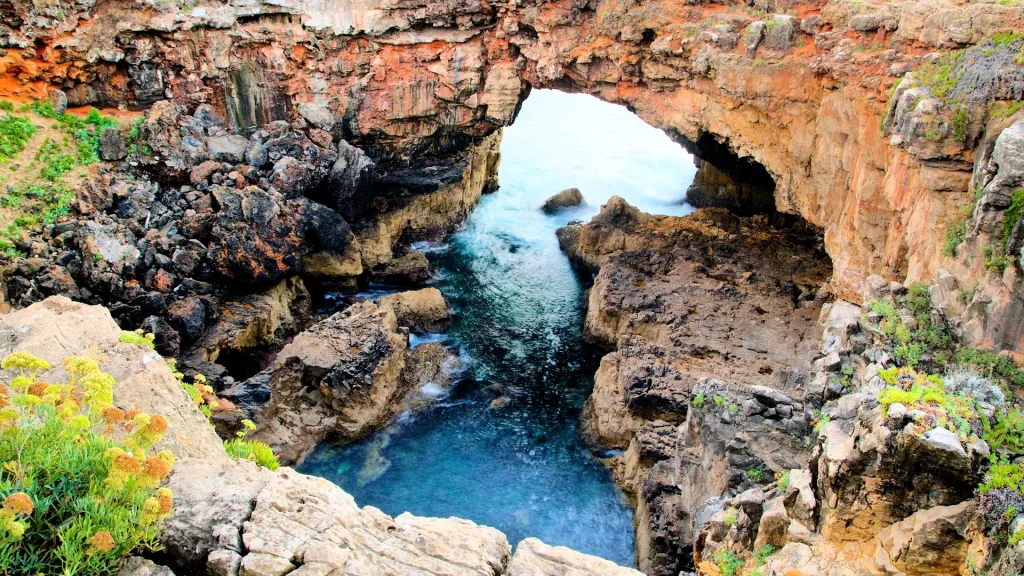
Boca do Inferno (literally “Hell’s Mouth”) is a collapsed sea cave approximately 1 km west of Cascais town centre, accessible by a 10–15 minute walk along the coastal path. The original cave was formed by the Atlantic Ocean eroding the limestone coastal cliffs; its roof eventually collapsed, creating the current arch formation through which waves enter at high tide.
The site is most dramatic in autumn and winter, when Atlantic storms send waves 15–20 m into the air through the arch. In calm summer conditions, the formation is visible but the wave action is subdued.
Entry is free. A small kiosk and viewpoint platform above the arch are open year-round. The walking path from the Cidadela to Boca do Inferno continues further west to Praia do Guincho (9 km total from town centre — by foot, bicycle, or car).
Farol da Guia and Costa da Guia Climbing Area
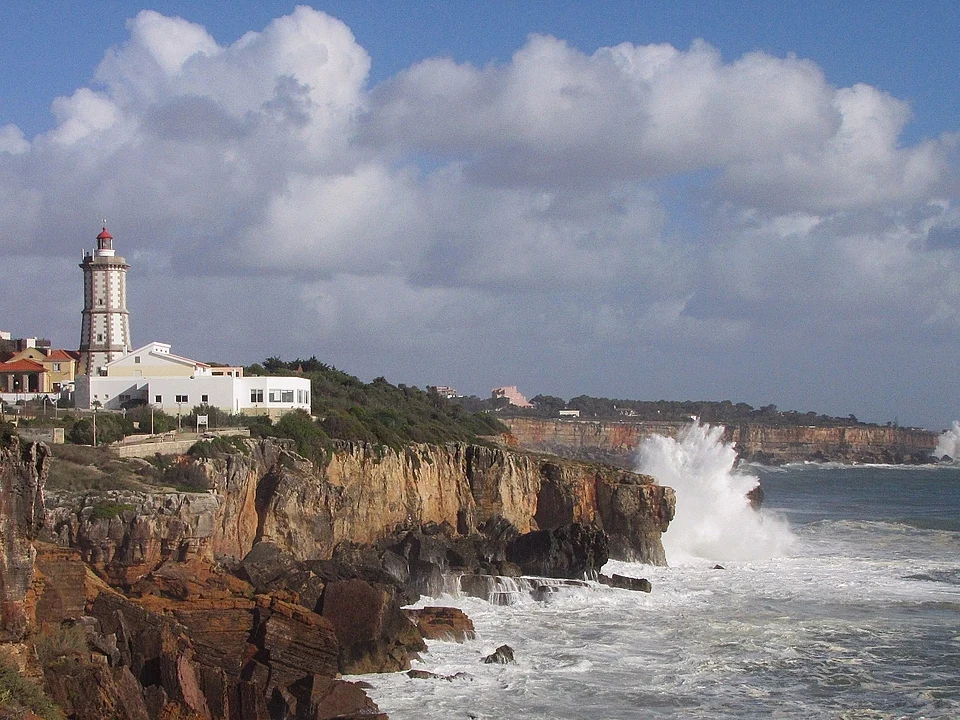
The Guia Lighthouse (Farol da Guia) is an active lighthouse on the Cabo da Guia headland, 2 km west of Cascais town centre along the coastal road to Guincho. The site has served as a navigational marker since 1523, when the Brotherhood of Our Lady of Guia first lit oil lamps in the chapel of the hermitage here. A tower was built in 1537; it was destroyed in the 1755 Lisbon earthquake and rebuilt in 1761 on the orders of the Marquis of Pombal. The current octagonal tower is 23 m tall, clad in white masonry with a red lantern, and has a range of 19 nautical miles. It was electrified in 1957 and automated in 1982.
The limestone cliffs immediately below the lighthouse — the Costa da Guia — form one of the most significant sport climbing venues in Portugal. The Escola de Escalada da Guia (Guia Climbing School), managed by the Câmara Municipal de Cascais, offers 61 sport climbing routes on south-facing limestone cliffs, grades 4c to 8a+, with routes approximately 20 m tall. Access is via a staircase west of the lighthouse. Route grades are marked at the base of each climb.
Santa Marta Lighthouse
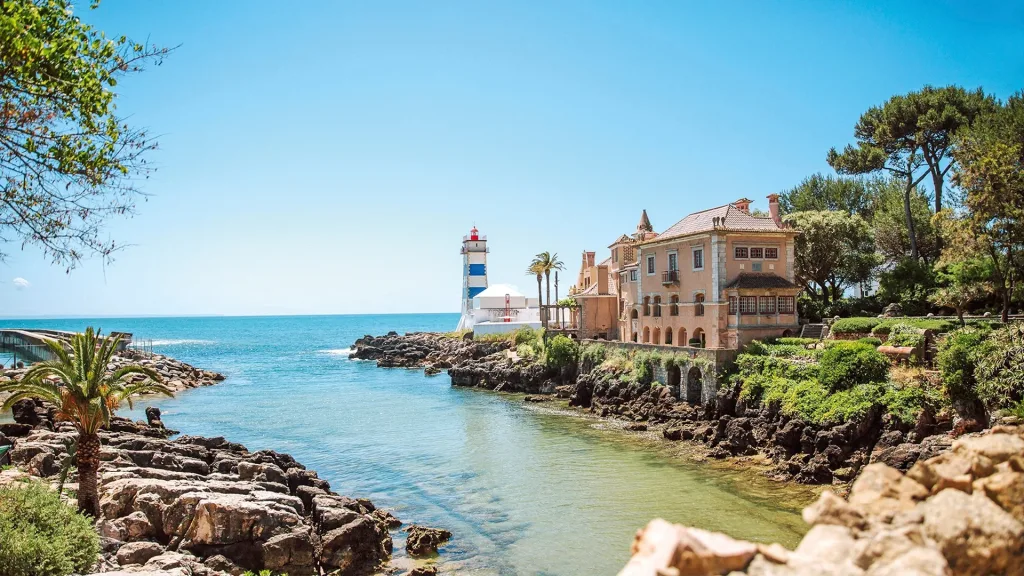
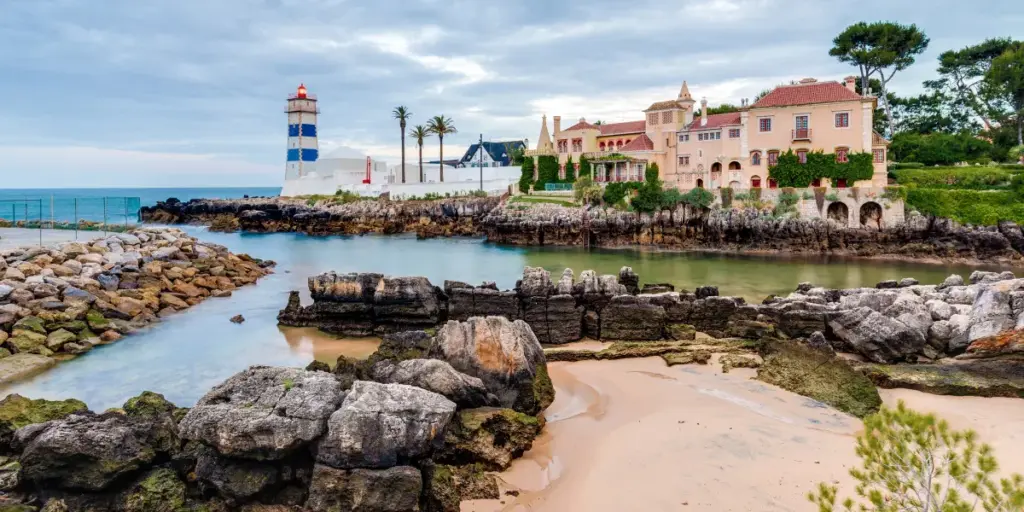
The Santa Marta Lighthouse (Farol de Santa Marta) is a working lighthouse and museum located in the town centre, adjacent to the Cidadela.
The lighthouse tower was built in 1868 on the ruins of a 17th-century fort. It is one of the most visually distinctive lighthouses in Portugal: the square tower is clad entirely in blue-and-white azulejo tiles with geometric patterns, making it immediately recognizable. The lighthouse complex includes the Casa de Santa Maria (1902), a Mediterranean-style villa designed by architect Raul Lino, known for promoting Portuguese vernacular architecture. It was originally a wedding gift from merchant Jorge O’Neil to his daughter.
The lighthouse museum documents the history of Portuguese maritime navigation.
Casa das Histórias Paula Rego
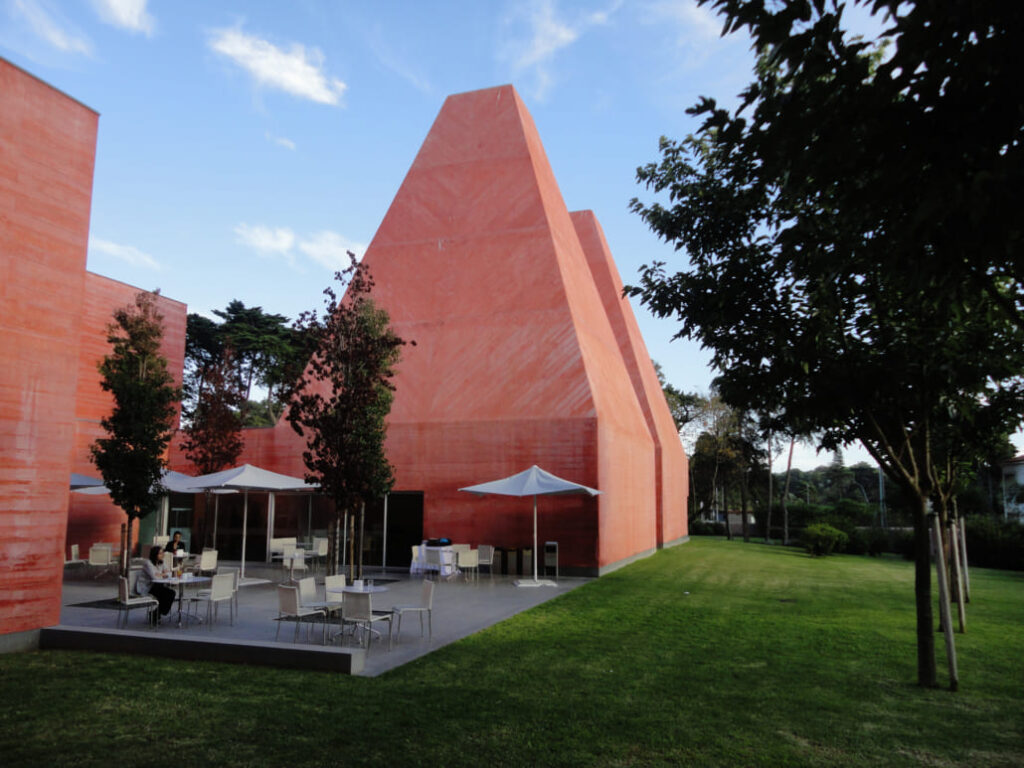
Casa das Histórias Paula Rego is a contemporary art museum dedicated to the work of Paula Rego (1935–2022), one of the most internationally recognized Portuguese visual artists of the 20th century. The building was designed by architect Eduardo Souto de Moura, winner of the Pritzker Architecture Prize in 2011. The two rust-red conical towers of the museum are a prominent landmark on the Cascais seafront.
The museum opened in 2009 and holds approximately 80 works from across Paula Rego’s career — spanning 50 years of figurative paintings, prints, and pastels. Rego spent much of her adult life in the UK but returned frequently to Portugal; Cascais was her family’s coastal base.
Brief History of Cascais
The name “Cascais” has two competing origin theories. The traditional derivation traces it to cascal — a Portuguese word for a place associated with shells — reflecting the town’s centuries-long history as a fishing settlement and linking it to coastal communities formed during the Christian Reconquista.
A more recent alternative proposes an Arabic origin. Historian A. H. de Oliveira Marques was the first to suggest a connection to Khashkhash, a family name recorded in Muslim sources from the 9th century. Muslim chronicles mention at least two members of this family active on the Iberian Atlantic coast: one reportedly died in combat against Viking incursions around 858–862 CE; another remained active later in the century. It is plausible that one of them maintained a presence near what is now Cascais as part of the coastal defence network of al-Ândalus, leaving his name associated with the area’s harbour. The primary argument is phonetic: Khashkhash (also written Kaxkax) → Cascais. Most researchers acknowledge that documentary support is limited. A secondary linguistic chain has also been proposed: cascal → Catalan cascall (meaning “opium poppy”) → Arabic khashkhash — pointing to cultural exchange between the Iberian Peninsula and Catalonia.
The Muslim presence in the wider Cascais region is independently documented through place names: Abuxarda, Alcabideche, and Alcoitão are all of Arabic origin. Alcabideche derives from the Arabization of a Latin term related to water sources.
Cascais appears in Portuguese royal records from the 13th century as a fishing village under the jurisdiction of the Order of Christ. King João II (1455–1495) ordered the construction of the first fortification on the Cidadela site in 1490. In 1488, Bartolomeu Dias returned to Cascais after becoming the first European navigator to round the Cape of Good Hope.
The town’s modern identity as a resort destination was established in 1870, when King Luís I chose the Cidadela as his summer palace. European royalty and the Portuguese nobility followed. The railway connection to Lisbon (Linha de Cascais, inaugurated 1889) made the town accessible to a wider population.
Estoril: 3 km East of Cascais
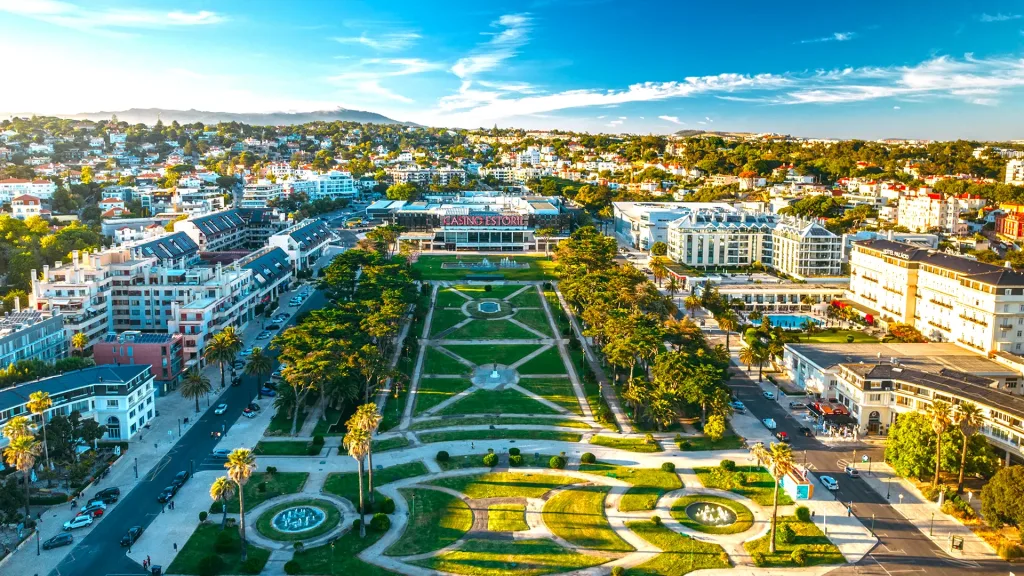
The town of Estoril sits 3 km east of Cascais along the same coastal train line. Its Casino Estoril was inaugurated in 1931 — the foundation stone was laid on 16 January 1916 by President Bernardino Machado — and was at the time of its opening the largest casino in Europe. During World War II (1939–1945), Estoril was a neutral meeting point for intelligence operatives from Allied and Axis nations, taking advantage of Portugal’s official neutrality under Prime Minister Salazar.
The British novelist and naval intelligence officer Ian Fleming visited Estoril in 1941 and used the casino and its atmosphere as a direct inspiration for Casino Royale, the first James Bond novel, published in 1953. Fleming reportedly played baccarat at the casino’s tables.
The Cascais–Estoril seafront promenade (Paredão) connects both towns: 2.3 km of coastal walkway with views of the Tagus estuary and the Atlantic. The walk takes approximately 25–30 minutes.
Beaches in Cascais
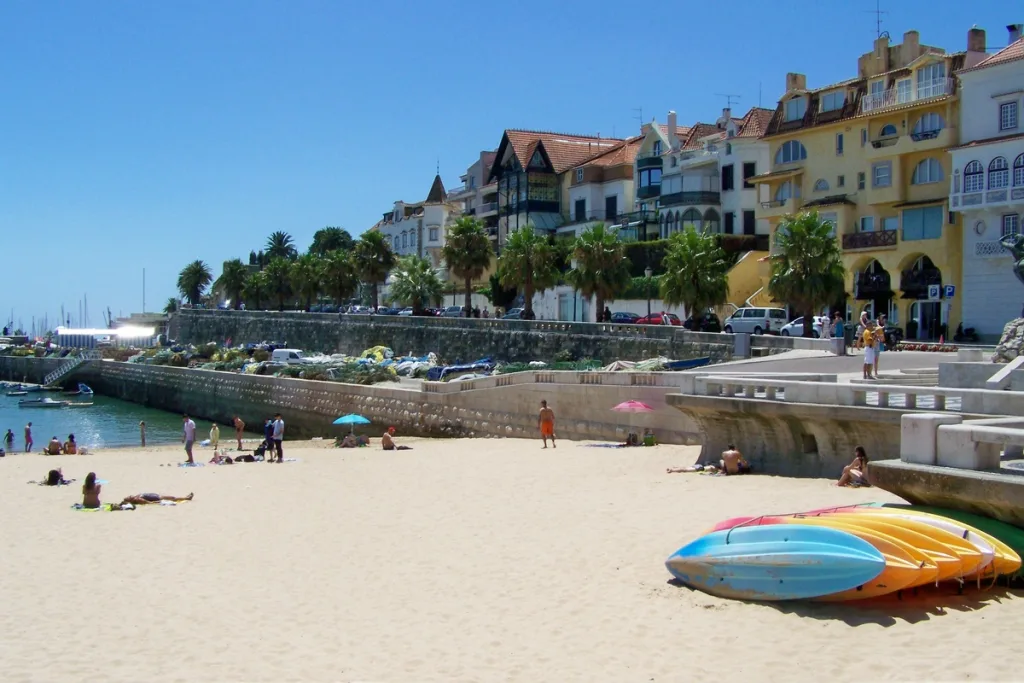
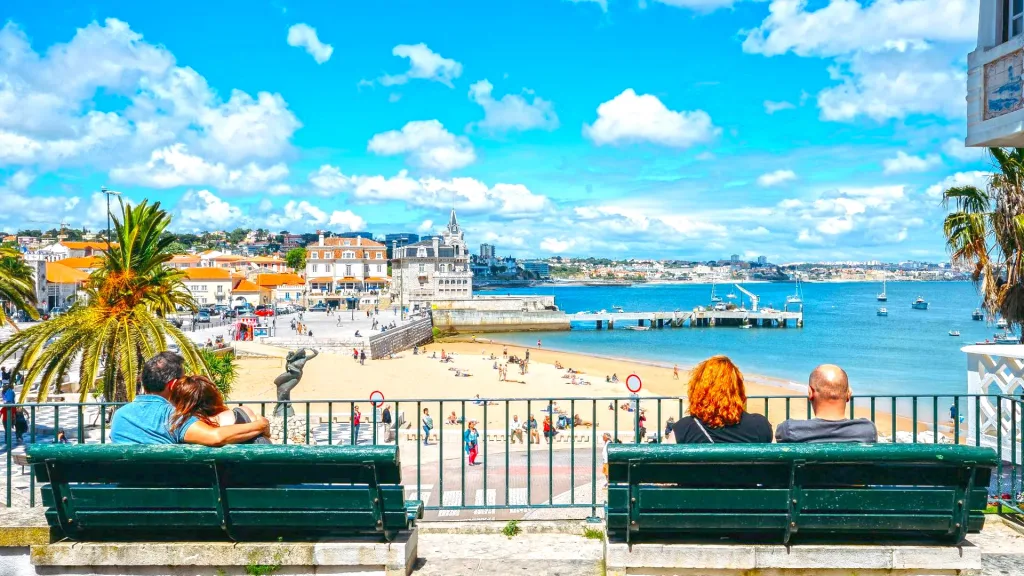
Cascais has five beaches within or immediately adjacent to the town centre. Praia da Ribeira (also called Praia dos Pescadores) is the principal town beach, located directly below the Cidadela, facing east into the bay. Praia da Rainha is a small sheltered cove 300 m east of the Cidadela — it was the private beach of Queen Amélia, wife of King Carlos I, from 1889.
For ocean swimming and water sports, Praia do Guincho is 9 km west of the town centre, situated within the Sintra-Cascais Natural Park. Guincho faces the open Atlantic and receives consistent northwest winds, making it a primary venue for windsurfing and kitesurfing in the region. Swimming at Guincho can be strong-current — suitable for experienced swimmers only.
Cascais town beaches are calm and suitable for family swimming from June to September. Water temperatures in peak summer reach approximately 20–22°C.
Check out our Lisbon Beaches Guide for more details.
How to Get to Cascais from Lisbon
By train (recommended): Linha de Cascais (CP suburban line) runs direct trains from Cais do Sodré Station (Lisbon) to Cascais Station every 20 minutes throughout the day. Journey time: approximately 38–40 minutes. The line runs along the coast via Belém, Oeiras, and Estoril — the coastal stretch from Oeiras to Cascais offers Atlantic views.
Ticket price: €2.55 one-way on a Navegante card (integrated Lisbon public transport pass).
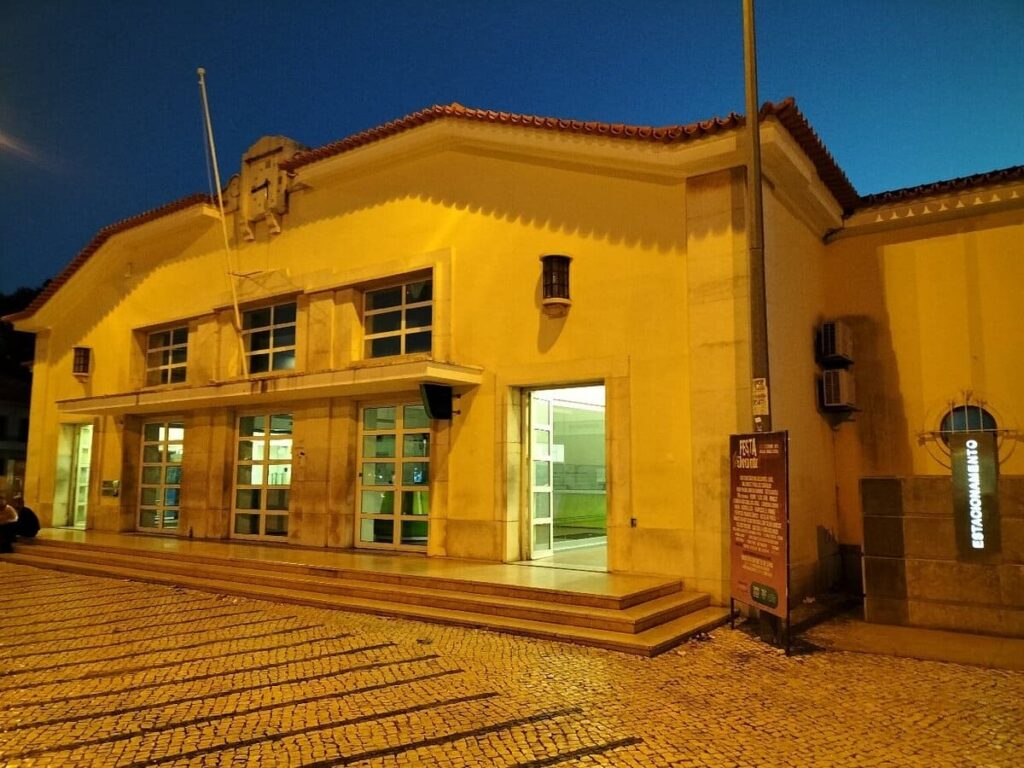
Cascais Station is 400 m from the town centre and Praia da Ribeira.
By private tour or vehicle: 30–45 minutes from central Lisbon depending on traffic. Private transport allows direct access to Cascais seafront and continuation to Cabo da Roca or Sintra without timetable constraints. From Sintra to Cascais: Carris Metropolitana Bus 1620, 1621, or 1623 (Cascais → Sintra, no Cabo da Roca stop): approximately 45 minutes. Bus 1624 (Cascais → Cabo da Roca → Sintra): approximately 74 minutes.
How Much Does a Cascais Day Trip Cost?
A self-guided day trip to Cascais costs approximately €15–30 per person including transport and one museum entry.
- Train Lisbon → Cascais return | €5.10.
- Museu Condes de Castro Guimarães | €5.00.
- Casa das Histórias Paula Rego | €5.00.
- Boca do Inferno | Free | No admission.
- Cidadela exterior | Free | Interior museum + galery €10.00
A guided private day tour from Lisbon to Sintra, Cabo da Roca and Cascais starts from €59/person and includes vehicle, guide, and hotel pickup. Museum entries are separate.
Check out our guide to explore more things to do in Cascais.

Best Time to Visit Cascais
Cascais is a permanent residential town (population ~214,000) and is open year-round. The “dead in winter” claim found on several travel sites is inaccurate — all major museums, restaurants, and attractions operate throughout the year.
June–September: peak beach season. Town centre is crowded on weekends from mid-July to late August. Water temperatures 20–22°C. Atlantic breezes keep temperatures 2–3°C cooler than Lisbon in summer.
October–May: quieter. Fewer tourists, no queues at museums.
November–February sees the most dramatic conditions at Boca do Inferno — Atlantic storms produce the largest wave action. Temperatures rarely fall below 10°C in Cascais in winter. September–October: recommended. Warm sea (still 20°C+), crowds significantly reduced vs July–August.
Day Trips from Cascais
Cascais is an excellent base for exploring the surrounding region, with several popular destinations easily accessible by public transport or car:
- Sintra (25 km) – Reachable by buses 1620, 1621, or 1623 in approximately 45 minutes, or by car.
- Cabo da Roca (14 km) – Accessible via bus 1624 (requires 15-20 walk from the near bus station) or by car.
- Estoril (3 km) – Just a 5-minute journey on the Cascais Line train, or a pleasant 2.3 km walk along the coastline.
- Lisbon (30 km) – Connected by the Cascais Line train, with a journey time of around 40 minutes.
- Setúbal & Arrábida Natural Park (85 km) – Best reached by car.
For longer day trips to destinations such as Fátima (110 km), Évora (155 km), and Nazaré (95 km), please refer to our complete day trip guide.
Guided Tours from Lisbon to Cascais
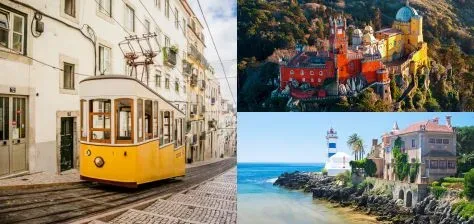
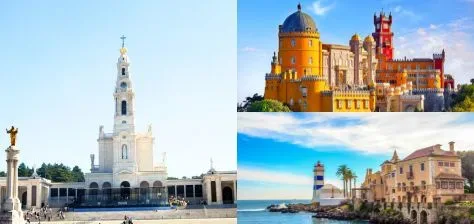
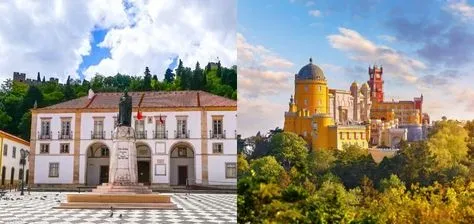
Yellow Cab TT Tours includes Cascais in 5 guided tours from Lisbon. Every tour includes a licensed driver-guide, private vehicle, and hotel pickup.

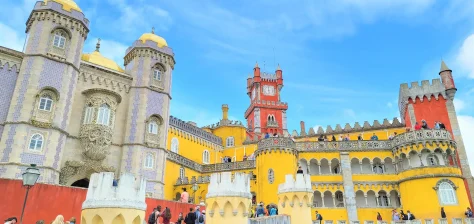
Private Sintra/Cascais 4x4 Tour

FAQ
How far is Cascais from Lisbon?
Cascais is 30 km west of Lisbon by road. By direct train on the Linha de Cascais from Cais do Sodré Station, the journey takes approximately 40 minutes, with trains running every 20 minutes throughout the day.
How do I get from Lisbon to Cascais by train?
Take the Linha de Cascais suburban train from Cais do Sodré Station in Lisbon. Trains run every 20 minutes and the journey takes approximately 40–45 minutes. The one-way fare is €2.55 on a Navegante card. Cascais Station is 400 m from the town centre.
How long should I spend in Cascais?
A half day (4–5 hours) is enough to visit the Cidadela, Boca do Inferno, and the seafront. A full day allows time for one museum, the coastal walk to Boca do Inferno, lunch, and Guincho Beach (9 km west). Most visitors combine Cascais with Sintra and Cabo da Roca in a single day trip.
Can I visit Cascais and Sintra in the same day?
Yes. Sintra and Cascais are 25 km apart by road, and this is the most common day trip format from Lisbon — combining Sintra palaces in the morning with Cabo da Roca and Cascais in the afternoon. Yellow Cab TT Tours has completed 761 tours of this specific itinerary, rated 5.0 on Tripadvisor.
What is Boca do Inferno?
Boca do Inferno (Hell’s Mouth) is a collapsed sea cave 1 km west of Cascais town centre, forming a natural arch through which Atlantic waves crash at high tide. Entry is free. The 10–15 minute coastal walk from the Cidadela is well signposted. In autumn and winter, Atlantic storms send waves 15–20 m through the arch.
Why is Casino Estoril famous?
Casino Estoril, 3 km east of Cascais, was inaugurated in 1931 (foundation stone: 16 January 1916) and was the largest casino in Europe at the time of its opening. During World War II, Estoril served as a meeting point for intelligence operatives from Allied and Axis nations operating in neutral Portugal. British author Ian Fleming visited in 1941 and used the casino as the direct inspiration for Casino Royale (1953), the first James Bond novel.
Is Cascais good for swimming?
Cascais has five beaches within the town, all sheltered from the Atlantic swell — suitable for family swimming from June to September. Water temperatures reach 20–22°C in peak summer. For wind sports, Praia do Guincho (9 km west) receives consistent northwest Atlantic winds and is a major windsurfing venue; currents there are strong and it is not recommended for casual swimming.
How do I get from Cascais to Sintra by public transport?
Carris Metropolitana buses 1620, 1621, and 1623 run from Cascais to Sintra in approximately 45 minutes (no Cabo da Roca stop). Bus 1624 takes the longer coastal route via Cabo da Roca and reaches Sintra in approximately 74 minutes.
What is the Museu Condes de Castro Guimarães?
It is a neo-gothic villa built in 1902 by architect Luigi Manini — the same architect who designed Quinta da Regaleira in Sintra. The museum holds 25,000 library volumes and a 1505 illuminated manuscript of the Crónica de Dom Afonso Henriques, one of the oldest surviving accounts of Portugal’s first king. It is located in Parque Marechal Carmona, 700 m from the Cidadela.
Is Cascais open in winter?
Yes. Cascais is a permanent residential municipality with approximately 214,000 residents and is not a seasonal destination. Main attractions, museums, and restaurants operate year-round. Winter (November–February) is quieter and offers the most dramatic conditions at Boca do Inferno during Atlantic storms.