
Private Arrábida Natural Park & Lisbon City Tour (Full Day)
- Private vehicle and local driver-guide exclusively for your group (up to 8 people).


8 Hours
Private
Max. 8px/Van
Hotel or apartment pickup in Lisbon, Sintra, Cascais, Estoril, or anywhere along the coast
Arrábida, Palmela, Azeitão, Lisbon, Downtown
From €330 per private vehicle (see pricing below)

Tour at a Glance
- Duration: 8 hours.
- Departure: Suggested 08:30–09:00 – hotel or apartment pickup in Lisbon, Sintra, Cascais, Estoril, or anywhere along the coast.
- Return: ~17:00–17:30 to your pickup location.
- Tour Type: 100% private — your group only.
- Group Size: Up to 8 passengers.
- Vehicle: Air-conditioned private van.
- Guide: Licensed driver-guide available in English, Spanish, French, and Portuguese.
- Destinations: Arrábida Natural Park and Lisbon city highlights.
- Total Driving Distance: Approximately 120 km round trip.
- Price: From €330 per vehicle (see pricing details below).
- Cancellation Policy: Free cancellation up to 24 hours before departure; non-refundable within 24 hours.
- Tripadvisor Rating: 5.0/5 based on 3,387 reviews.
- License: RNAAT 119/2013.
Tour Overview
This private full-day tour covers two destinations in sequence. The morning is spent 40–45 km south of Lisbon at Arrábida Natural Park: viewpoints along Serra da Arrábida (501 m), the sheltered limestone coves of Portinho da Arrábida and Galapinhos, and the Convento da Arrábida (founded 1542, Discalced Franciscan Order). The afternoon returns to Lisbon for Alfama quarter (developed during the Moorish period, 711–1147 AD), Baixa, and Belém – Jerónimos Monastery (commissioned 1502, UNESCO World Heritage 1983) and Belém Tower (built 1514–1519, UNESCO World Heritage 1983).
Arrábida Natural Park was designated a UNESCO Biosphere Reserve in September 2025 at the World Congress of Biosphere Reserves in Hangzhou, China, joining 785 of the world’s most significant territories for biodiversity. The park’s total area is 176.41 km², of which 53.11 km² is a marine reserve.
The tour is 100% private: your group, your vehicle, your licensed driver-guide. Maximum 8 passengers. From €330 per vehicle.
Why travellers choose this tour
- 3,387 verified reviews · 5.0 Tripadvisor – the only licensed private tour combining Arrábida Natural Park beaches with Lisbon city highlights (Alfama, Belém) in a single 8-hour day.
- Two destinations in one day: Mediterranean-type turquoise cove in the morning, UNESCO monuments in the afternoonю
- Fresh UNESCO status: Arrábida was designated a Biosphere Reserve in September 2025 – most guides and competitors don’t yet reflect thisю
- Flexible schedule: adjustable order and timing based on group priorities, confirmed at booking.
Tips for This Tour
- Alfama is steep. The Alfama quarter involves 15–20 minutes of uphill walking on cobblestone streets with gradients of 8–12%. The Graça viewpoint sits at approximately 100 m altitude. If mobility is a concern, the guide can access the miradouro by vehicle – confirm at booking.
- Best light for Belém is afternoon. Jerónimos Monastery and Belém Tower face south-west. From 14:00 onward the light is optimal for photography. We schedule Belém last in the day for this reason.
Sample Itinerary (Flexible)
This is a suggested plan. Exact timing depends on traffic and how long you want to stay at each stop.
• 09:00 – Pickup in Lisbon (city centre).
• Arrábida Natural Park scenic stops (viewpoints + coast; optional Azeitão/Palmela wine area stop).
• Lunch break (not included; recommendations provided).
• Lisbon historic areas & viewpoints (Alfama / Graça / Senhora do Monte area).
• Downtown Lisbon (Baixa, Praça do Comércio, Chiado).
• Belém (Jerónimos area + Belém Tower surroundings + Monument to the Discoveries; Pastéis stop optional).
• 17:00 – Drop-off in Lisbon.
Optional (time permitting): quick stop at Cristo Rei viewpoint across the 25 de Abril Bridge.
What You Can See
Arrábida Natural Park
In September 2025, UNESCO designated Arrábida Natural Park a Biosphere Reserve at the World Congress in Hangzhou, China – placing it among 785 globally recognised territories for biodiversity conservation. Most visitor guides and competitor pages were written before this happened.
Arrábida Natural Park covers 176.41 km² along the southern edge of the Setúbal Peninsula, approximately 40 km south of Lisbon. Established July 28, 1976. In September 2025, UNESCO designated it a Biosphere Reserve at the World Congress of Biosphere Reserves in Hangzhou, China – placing it among 785 globally designated territories for biodiversity conservation.
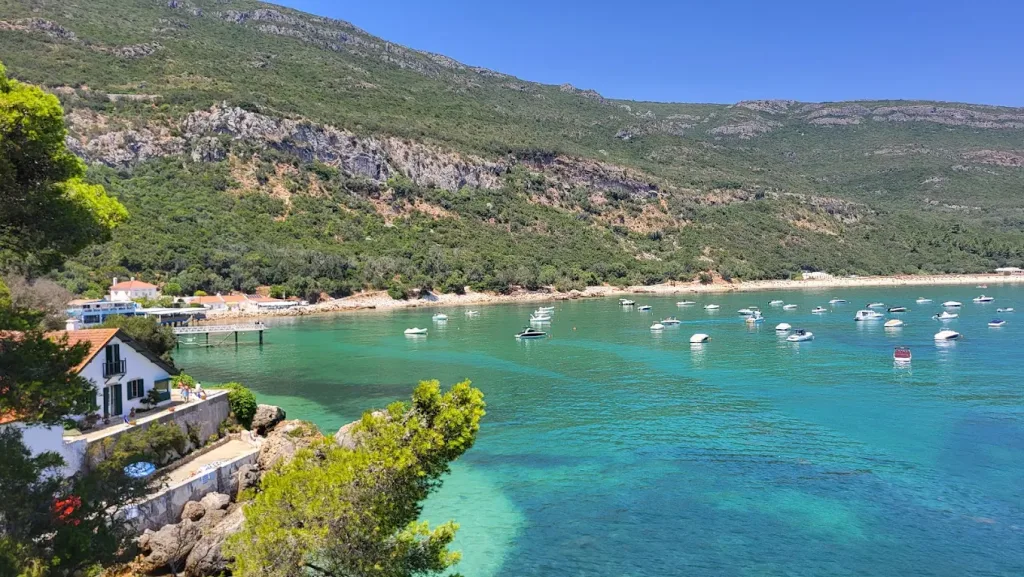
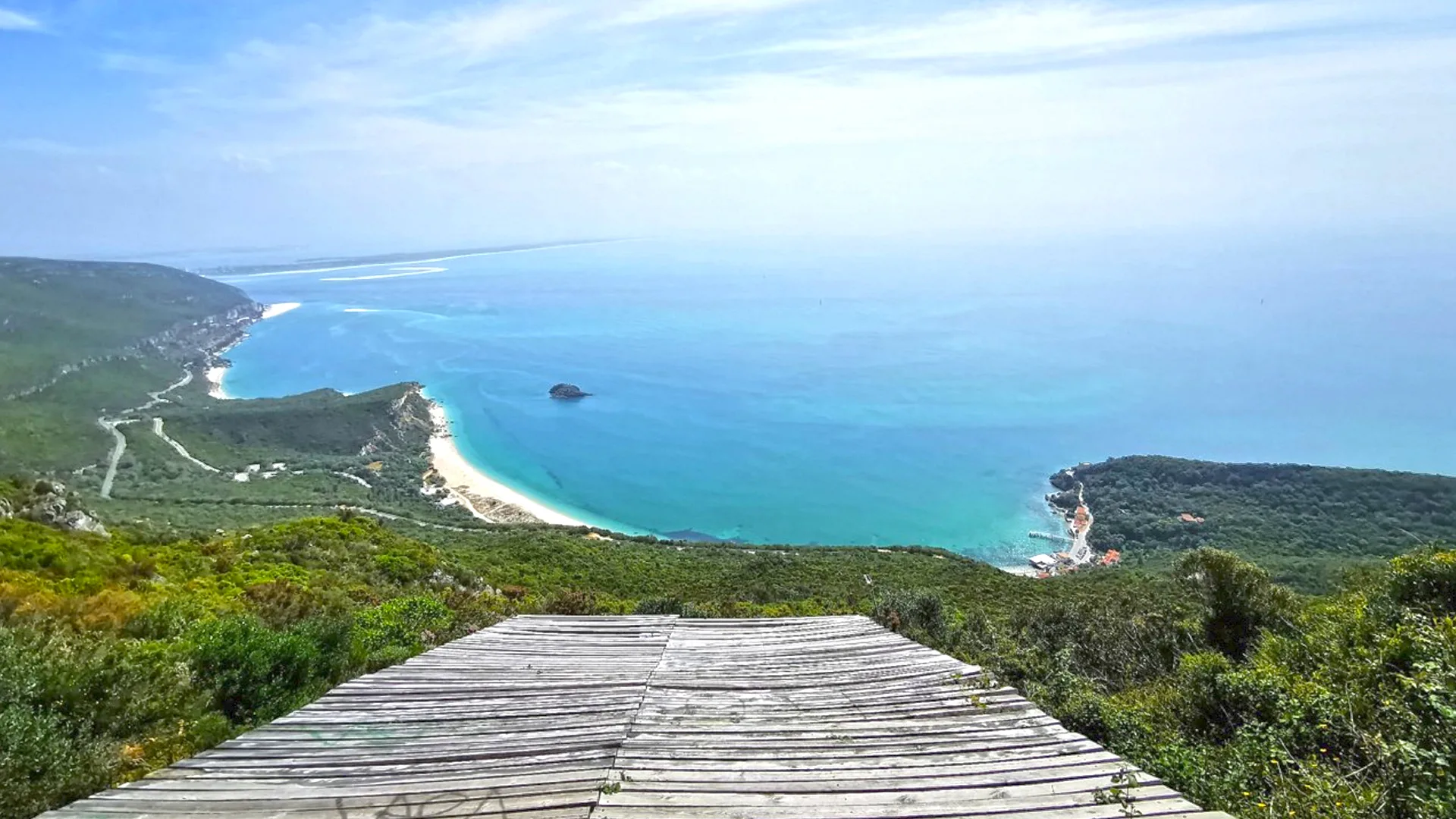
The defining geological feature is Serra da Arrábida: a limestone ridge (501 m maximum elevation) running parallel to the coast and creating sheltered south-facing coves. The limestone geology filters the water, producing turquoise clarity more typical of the Mediterranean than the Atlantic. The park contains 1,400+ plant species (approximately 40% of Portugal’s total flora), 213 vertebrate species (154 birds, 35 mammals, 16 reptiles, 8 amphibians), and 42 classified habitat types – 10 of which are designated European conservation priorities. The marine reserve (53.11 km²) holds 1,400+ marine species.
Portinho da Arrábida & Galapinhos Beach
Convento da Arrábida


Alfama & Graça, Lisbon
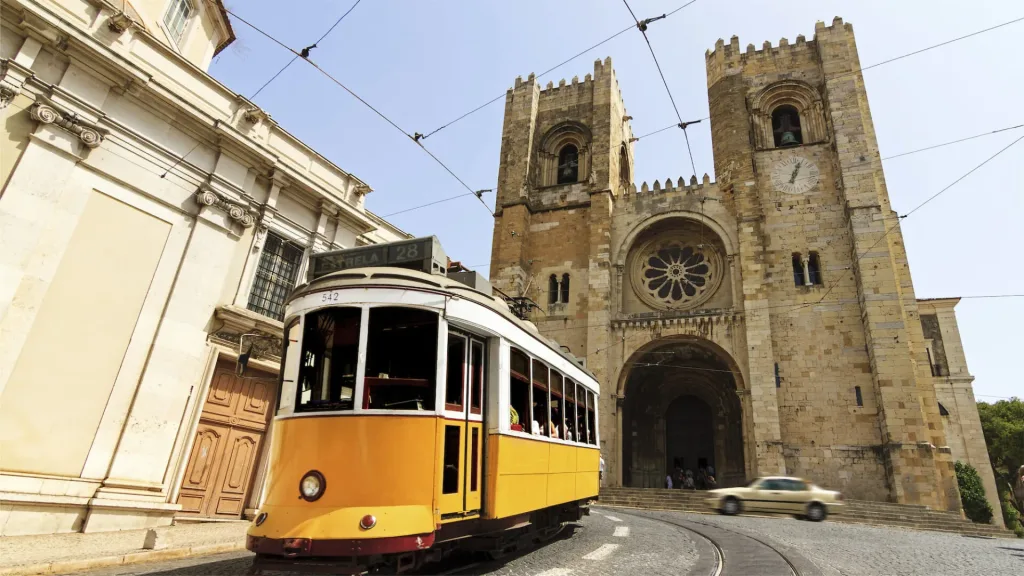
The 1755 Lisbon earthquake – estimated 8.5–9.0 magnitude, followed by a tsunami and fire – destroyed approximately 85% of the city. Alfama survived. Built on solid bedrock during Moorish rule (711–1147 AD), while the lower city sat on alluvial sediment that amplified the shock, it is the only pre-earthquake neighbourhood still standing in its original form. The name derives from the Arabic al-hamma (“fountains” or “baths”).
The neighbourhood retains its Moorish-origin street plan: narrow alleys (vielas), whitewashed walls with azulejo tile facades, and iron-railing balconies. Fado – Portugal’s national music genre, inscribed by UNESCO as Intangible Cultural Heritage in 2011 – originated in Alfama in the early 19th century and is still performed in the neighbourhood’s casas de fado.
The Graça district, immediately above Alfama, is one of Lisbon’s oldest parishes (documented 1271). The Miradouro da Graça and the Miradouro da Senhora do Monte offer the broadest panoramic views of the city, the Tagus estuary, and the Cristo Rei statue on the south bank.
Baixa & Praça do Comércio
The 1755 earthquake destroyed the Baixa entirely. The man tasked with rebuilding it – the Marquis of Pombal – chose a rational grid plan and timber-frame cage construction: one of the earliest deliberate applications of earthquake-resistant engineering in urban history. The plan was executed by engineer Manuel da Maia and architect Eugénio dos Santos.
118 years later, the Arco da Rua Augusta – inaugurated 1873 – finally completed the original design for the square. Praça do Comércio faces the Tagus, covers 31,250 m², and served as the landing point for river arrivals until the 20th century. The equestrian statue of King José I (sculptor Machado de Castro, cast 1775) stands at the centre.
Belém
On 8 July 1497, Vasco da Gama left from this exact stretch of riverbank on the first direct sea route from Europe to India. The voyage took 10 months and 28 days and established Portugal as the dominant maritime power in the Indian Ocean. The monuments at Belém – 6 km west of Baixa, where the Tagus widens toward the Atlantic – were built to mark that departure. This afternoon’s tour ends here because the south-west-facing monuments are at their best from 14:00.
Jerónimos Monastery was commissioned by King Manuel I in 1502 and largely completed by 1572. It is the principal surviving example of Portuguese Manueline architecture – Gothic structure combined with nautical motifs: rope, coral, armillary spheres, and exotic references from the Indian Ocean trade. Designated UNESCO World Heritage in 1983. Length: approximately 300 m. The church interior (Igreja de Santa Maria de Belém) is free to enter.
Belém Tower (Torre de Belém) was built between 1516 and 1521 as a ceremonial gateway to Lisbon from the Tagus. Attributed to Francisco de Arruda. Dimensions: approximately 30 m tall, constructed in Lioz limestone. UNESCO World Heritage 1983. Entry tickets are optional – the exterior and waterfront are accessible without a ticket.
Monument to the Discoveries (Padrão dos Descobrimentos) was built in 1960 to mark the 500th anniversary of the death of Henry the Navigator (died 1460), who organised Portugal’s early Atlantic exploration programme from Sagres. The monument is 56 m tall, shaped as a ship’s prow facing the Tagus. The marble compass rose on the plaza (25 m diameter) was gifted by South Africa in 1960.


End of the Tour & Return to Your Accommodation
At the end of the tour, we return to Lisbon and drop you off at your accommodation. The tour is planned to be well-balanced, but the pace and focus can be adapted to your priorities—your day, your choice.
Customise Your Day
Because this is a private tour, we can tailor the itinerary to your preferences:
- More nature & viewpoints: extra stops inside Arrábida Natural Park for panoramas and photos.
- More beaches: more time around the Portinho da Arrábida coastal area (weather permitting).
- More wine & local flavours: optional stop in the Azeitão/Palmela area (tastings not included).
- More Lisbon: extra time in Alfama/viewpoints or longer Belém heritage stop.
Tell us what matters most when booking, and we’ll recommend the best order and timing.
What’s Included
- 8-hour private guided tour in air-conditioned vehicle
- Hotel pickup and drop-off in Lisbon city centre
- Hotel/apartment pickup and drop-off in Lisbon, Sintra, Cascais, Estoril, or anywhere along the Estoril Coast
- Mandatory Insurances
- All vehicle expenses (fuel, tolls, parking)
Not included
- Meals and drinks
- Tickets to Monuments
- Tips (optional and appreciated)
Tour Prices
Prices are per vehicle, not per person.
-
Up to 2 Pax €330
-
3 to 4 Pax €420
-
5 to 8 Pax €540
Contact us and Book your Tour
Best Time of Year for This Tour
March–May (recommended): Temperatures 16–22°C. Serra da Arrábida vegetation is at its greenest after winter rains – strong contrast with white limestone and turquoise water. Portinho da Arrábida and Galapinhos are nearly empty on weekdays. No access restrictions. Spring wildflowers in the park peak in April.
June–September: Water temperature 22–24°C. Summer access restriction active (Jun 7–Sep 15). Belém and Alfama are at peak tourist density in the afternoon.
October–November: Water 18–20°C; still swimmable. Crowds drop sharply after mid-September. Clear blue Atlantic skies typical in October. No access restrictions. The serra changes colour slightly in late autumn.
December–February: Coolest months (10–17°C). Park virtually empty. Water too cold for most visitors (15–16°C). The Lisbon city component is the main draw: Alfama and Belém in winter light with negligible queues at Jerónimos.
FAQ
Can I swim at Arrábida Natural Park?
Can I visit Arrábida beach by rental car in summer?
How far is Arrábida Natural Park from Lisbon?
What is Arrábida Natural Park?
What is the Convento da Arrábida?
Are monument entrance tickets included?
What is included in the tour price?
How much does the Arrábida & Lisbon private tour cost?
What is the best time of year to visit Arrábida?
Is hotel pickup included?
What is the cancellation policy?
Is the tour suitable for children?
What your Guests Say
You may also be interested in
Private Arrábida Tour
This Arrábida full-day tour from Lisbon covers four stops on the Setúbal Peninsula: Palmela Castle, Azeitão, Arrábida Natural Park, and Setúbal waterfront.
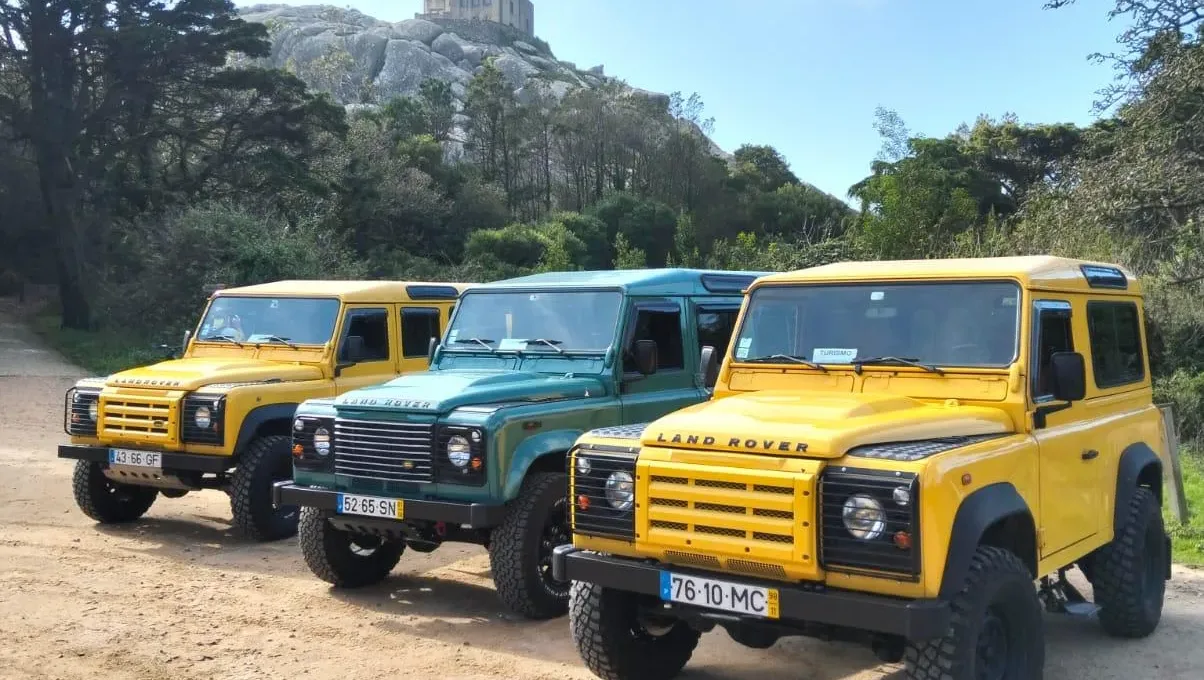
Sintra Land Rover 4x4 Tour
Off-road Sintra, Cabo da Roca and Cascais in a private Land Rover Defender.
Setúbal Wine Tasting Tour
Moscatel de Setúbal, azulejo factory, Arrábida Natural Park, 40 km south.
