
Tomar, Portugal: Historia de los Caballeros Templarios, Convento de Cristo y Excursiones de un día desde Lisboa
Tomar es una ciudad de 36.413 habitantes (censo de 2021) en el distrito de Santarém, Portugal, a 136 km al noreste de Lisboa por la autopista A1, a aproximadamente 1 hora y 30 minutos en coche. La ciudad se encuentra a orillas del río Nabão, afluente del Zêzere, en la fértil región del Ribatejo.
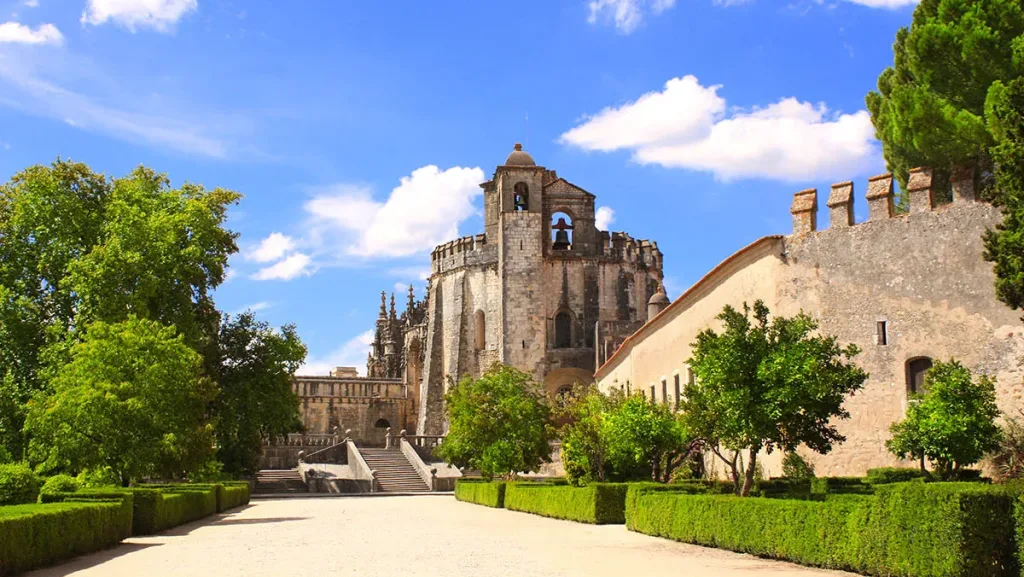
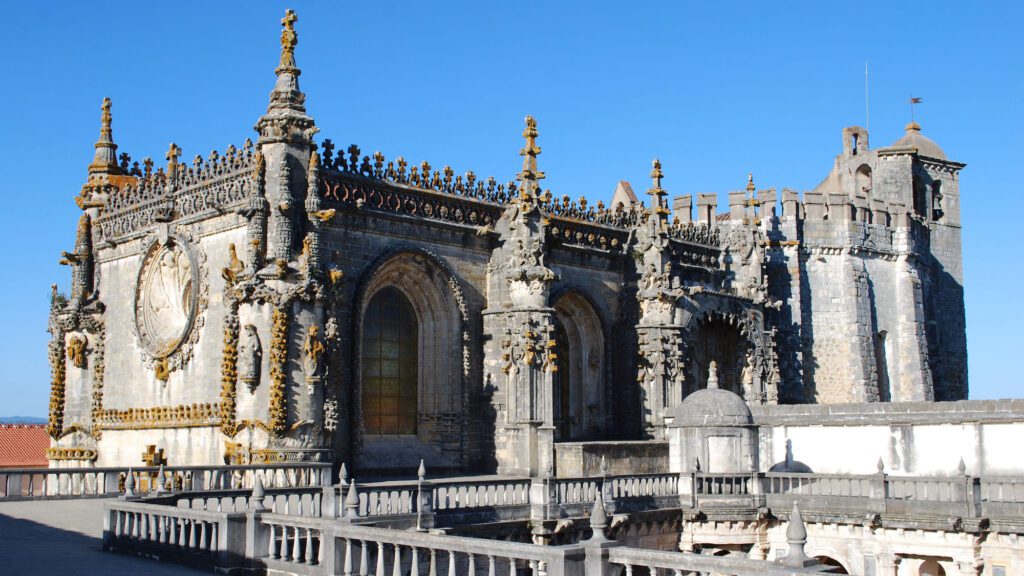
La importancia de Tomar en la historia de Portugal se concentra en un monumento: el Castillo y Convento de Cristo, Patrimonio de la Humanidad por la UNESCO desde 1983. El complejo fue fundado en 1160 por Gualdim Pais, el cuarto Gran Maestre de los Caballeros Templarios en Portugal, y ha estado ocupado de forma continua durante más de 860 años. Contiene ocho claustros que abarcan cinco siglos y uno de los mejores ejemplos de arquitectura manuelina en Portugal.
Una breve historia de Tomar
El asentamiento en el río Nabão era conocido en la época romana como Nabantia, una ciudad en el camino entre Olisipo (Lisboa) y Emerita Augusta (la actual Mérida, España). La temprana historia cristiana de la ciudad está anclada en la leyenda de Santa Iria – Irene de Tomar – una joven nacida en Nabancia alrededor del año 635 d.C. y martirizada el 20 de octubre de 653. Según la tradición, su cuerpo fue arrojado al río Nabão tras rechazar los avances de un monje local. La devoción hacia ella se extendió lo suficiente como para que la ciudad de Scalabis, aguas abajo, fuera rebautizada como Santarém – una contracción portuguesa de “Santa Irene” – en su honor.
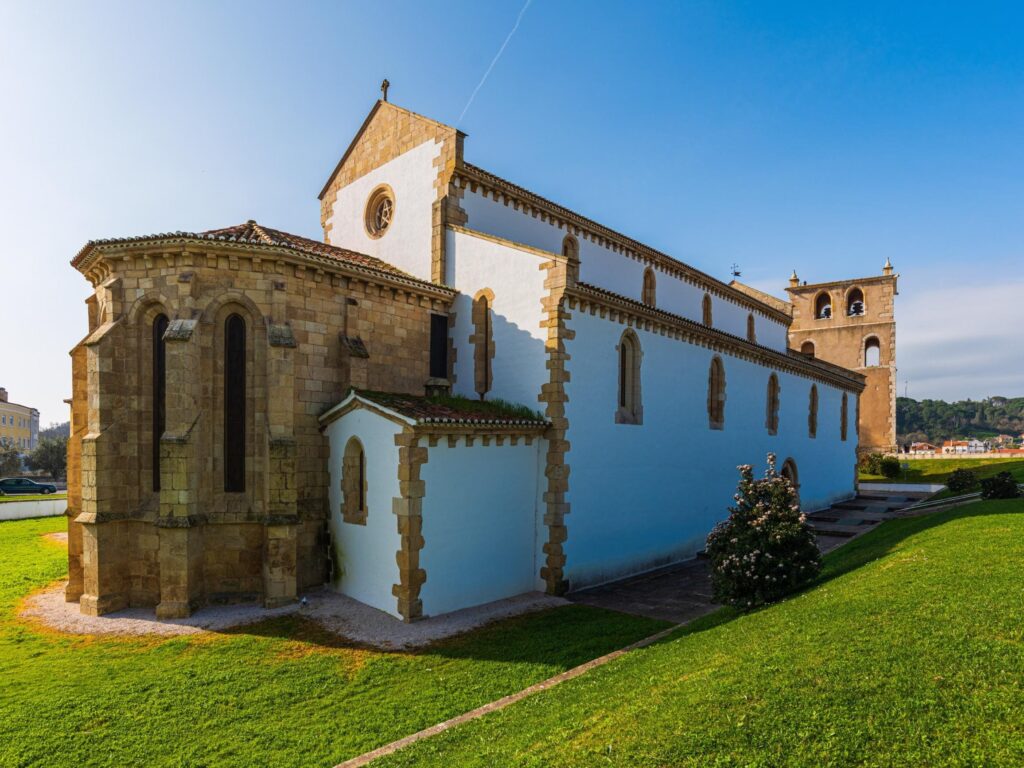
La fundación de la Tomar moderna se remonta a 1160, cuando Gualdim Pais, el cuarto Gran Maestre de los Caballeros Templarios en Portugal, construyó un castillo en la colina sobre el Nabão y trazó la ciudad abajo. Pais está enterrado en la Iglesia de Santa María del Olival; su losa sepulcral, fechada en 1195, permanece en su interior.
Los Caballeros Templarios fueron suprimidos por el Papa Clemente V en el Concilio de Vienne en 1312. El rey Dionís I de Portugal y el Papa Juan XXII respondieron en 1319 estableciendo la Orden de Cristo como la organización sucesora, absorbiendo las propiedades y el personal templario en Portugal. El Convento de Tomar se convirtió oficialmente en la sede de la Orden de Cristo en 1357.
El siglo XV trajo una transformación radical. Enrique el Navegante fue Gran Maestre de la Orden de Cristo de 1417 a 1450. Bajo su dirección, se iniciaron dos nuevos claustros, se comenzó la Capilla de São Jorge en 1426 y la Orden de Cristo financió las primeras expediciones marítimas de Portugal a lo largo de la costa de África Occidental. Cuando Vasco da Gama navegó a la India en 1497-.
Una comunidad judía existía en Tomar al menos desde 1315, fecha del primer registro conocido: la lápida del rabino José de Tomar. Entre 1430 y 1460, la comunidad construyó una sinagoga en la ciudad. El decreto del rey Manuel I de 1496, que ordenaba la expulsión o el bautismo forzoso de los judíos, puso fin a la presencia de la comunidad. La sinagoga fue abandonada y posteriormente reutilizada como almacén y cárcel antes de ser restaurada en el siglo XX.
El siglo XVI marcó el apogeo de la ambición arquitectónica en el Convento de Cristo: la nave manuelina y el célebre Janela do Capítulo se completaron entre 1510 y 1515. El Acueducto de los Pegões se construyó entre 1593 y 1614. Tras la decadencia de la Orden de Cristo y la contracción de los intereses coloniales de Portugal, Tomar se retiró del centro de la historia nacional, razón por la cual el tejido medieval de la ciudad ha sobrevivido prácticamente intacto.
Lee la historia completa de los Caballeros Templarios en Portugal.
Convento de Cristo - Patrimonio de la Humanidad de la UNESCO (1983)
El Convento de Cristo cubre una colina de aproximadamente 5 hectáreas sobre Tomar. La designación de la UNESCO, otorgada en 1983, cubre las murallas del castillo y todo el complejo del convento, reconociendo la excepcional concentración de estilos arquitectónicos que abarcan cinco siglos: elementos románicos, góticos, manuelinos, renacentistas, manieristas y barrocos están presentes en el mismo sitio. El complejo es administrado por la entidad estatal Museus e Monumentos de Portugal. Se deben verificar los horarios de apertura y los precios de las entradas en museosemonumentos.pt.

La Charola - Iglesia Redonda Templaria (Siglo XII)
La estructura más antigua del complejo es la Charola, el oratorio templario construido en la segunda mitad del siglo XII. Es uno de los pocos ejemplos que sobreviven de la arquitectura de rotonda templaria en Europa, una forma circular derivada de la Rotonda de la Iglesia
Charola sigue.

La Nave y el Capítulo manuelinos de la Ventana (1510-1515)
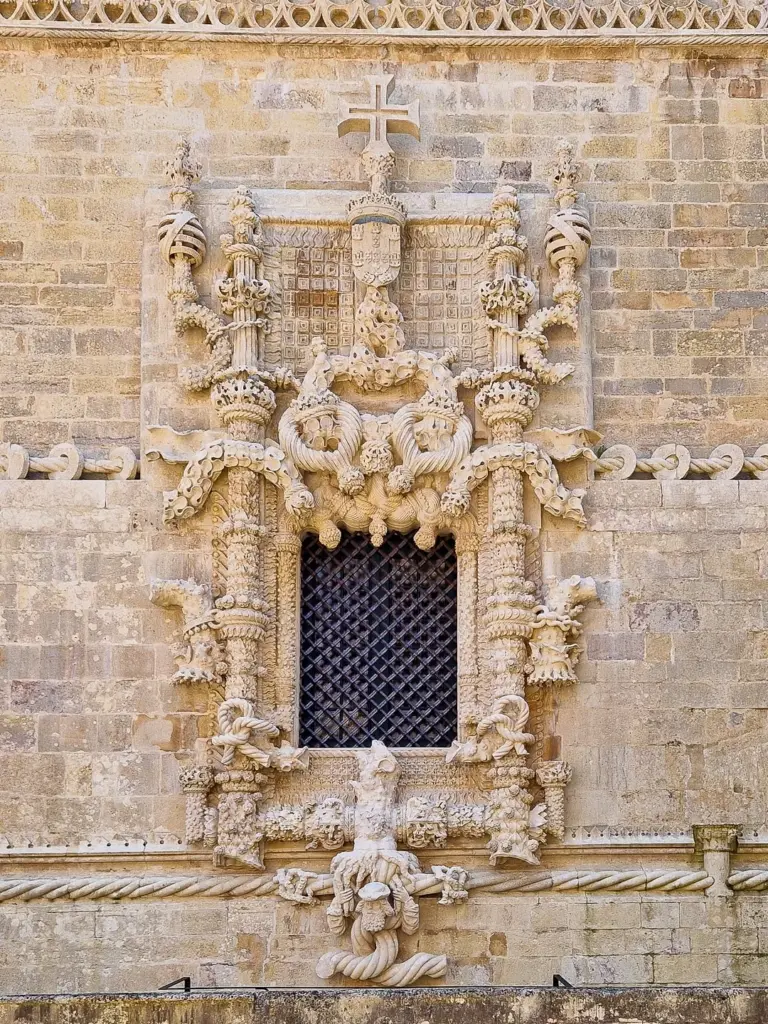
En 1510, el rey Manuel I ordenó la ampliación de la Charola con una nave manuelina completa. El arquitecto principal fue Diogo de Arruda, quien diseñó tanto la nave (1510-1513) como la Ventana del Capítulo (Janela do Capítulo). João de Castilho completó la nave en 1513-1515.
La Ventana del Capítulo se considera una de las obras maestras de la decoración manuelina en Portugal. Su mampostería, de aproximadamente 8 metros de altura, representa la iconografía de la Era de los Descubrimientos de Portugal: cadenas de anclas retorcidas, corteza de alcornoque, esferas armilares, ramas de coral, la Cruz de la Orden de Cristo y motivos de cuerda tallados en piedra caliza en una composición de denso detalle orgánico. El hermano de Diogo de Arruda, Francisco, también fue un destacado arquitecto manuelino activo en el mismo período; ambos son figuras centrales en el desarrollo de este estilo distintivamente portugués gótico-renacentista.
Ocho claustros que abarcan cinco siglos
El Monasterio se expandió a lo largo de los siglos XV y XVI hasta convertirse en un complejo de ocho claustros, cada uno construido en un estilo arquitectónico diferente. El más significativo es el Claustro Principal, diseñado por Diogo de Torralva a mediados del siglo XVI y completado por el arquitecto italiano Filippo Terzi. Es considerado uno de los mejores ejemplos de arquitectura renacentista portuguesa. El Claustro del Cementerio data del siglo XV e incluye un pozo y arcos góticos.
Otros monumentos en Tomar
Iglesia de Santa Maria do Olival (siglo XII)
La Iglesia de Santa Maria do Olival es la iglesia más antigua de Tomar, construida en la segunda mitad del siglo XII por Gualdim Pais. La.
La iglesia sirvió como lugar de enterramiento de los Grandes Maestros de los Caballeros Templarios en Portugal. Gualdim Pais está enterrado aquí; su lápida, fechada en 1195, es el monumento de piedra con inscripción más antiguo conocido en Tomar.
En 1455, el Papa Calixto III emitió una bula papal designando a Santa Maria do Olival como la Iglesia Madre de todas las parroquias establecidas por Portugal en Asia, África y América. Una modesta iglesia gótica en el centro de Portugal se convirtió, por decreto papal,.
Sinagoga de Tomar (1430-1460)
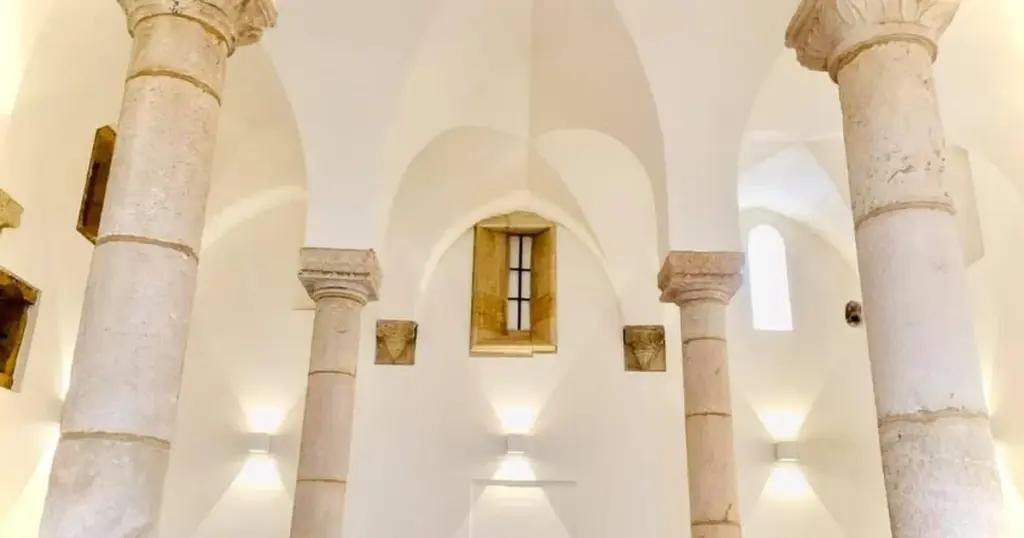
La Sinagoga de Tomar es la única sinagoga medieval de Portugal que ha sobrevivido sustancialmente intacta desde su construcción entre 1430 y 1460. La comunidad judía de Tomar estuvo documentada al menos desde 1315, fecha de una lápida de rabino encontrada en la ciudad.
El interior contiene cuatro columnas representando a las cuatro Matriarcas de Israel, conectadas por doce arcos que simbolizan las doce tribus. El edificio dejó de funcionar como sinagoga tras el decreto de expulsión real de 1496. Se utilizó posteriormente como prisión y almacén antes de ser comprado en 1923 por Samuel Schwarz, un ingeniero y erudito judío polaco, que financió su restauración. En 1939, se inauguró como el Museo Judío Portugués Abraham Zacuto (Museu Luso-Hebraico de Abraham Zacuto). El edificio es Monumento Nacional.
Acueducto de Pegões (1593-1614)
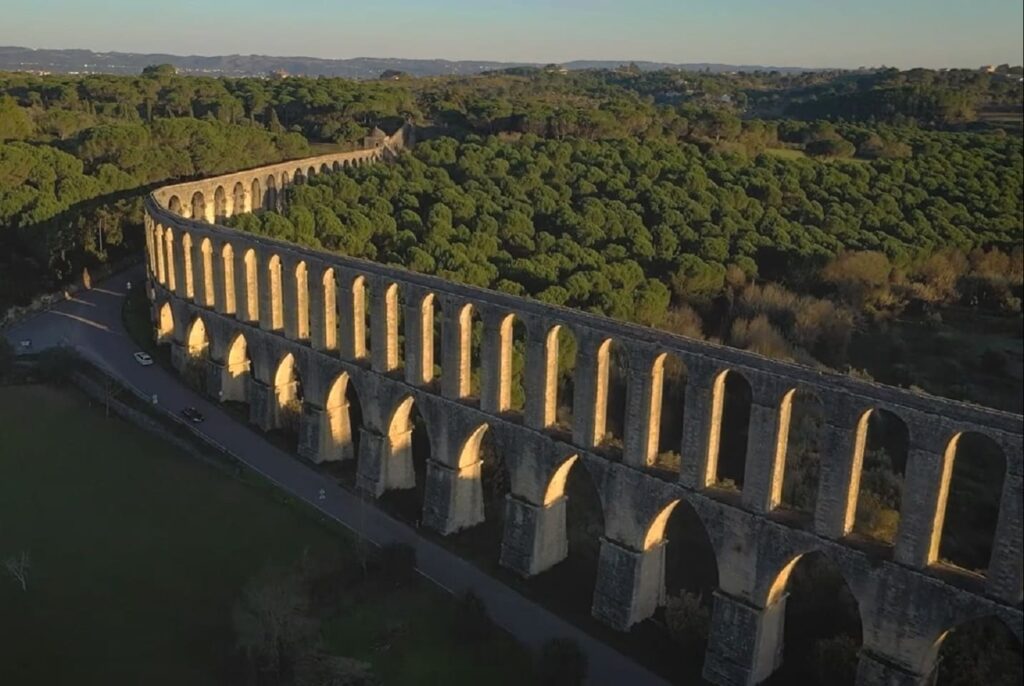
El Acueducto de Pegões es una estructura de 6,223 km que transportaba agua de cuatro manantiales naturales al oeste de Tomar hasta la fuente del claustro principal del Convento de Cristo. La construcción comenzó en 1593 bajo la dirección del ingeniero militar italiano Filippo Terzi (1520-1597), quien también completó el Claustro Principal del Convento, y fue terminada por Pedro Fernando de Torres en 1614.
La estructura contiene 180 arcos en total, alcanzando una altura máxima de aproximadamente 30 metros en el cruce del valle. El tramo del valle de Pegões consta de 58 arcos de medio punto que descansan sobre 16 arcos apuntados, una combinación de la forma estructural romana con soportes apuntados de influencia morisca. El acueducto fue declarado Monumento Nacional en 1920.
A Festa dos Tabuleiros
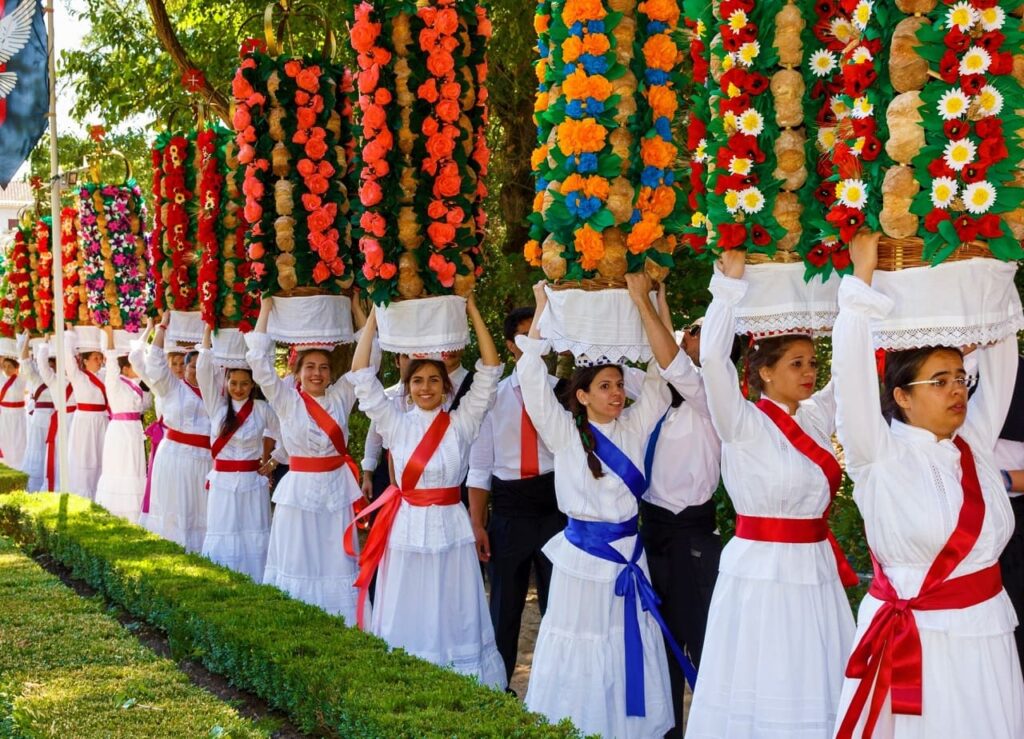
Cada cuatro años, Tomar acoge la Festa dos Tabuleiros (Festival de las Bandejas), una de las mayores fiestas populares de Portugal. Los orígenes del festival se remontan al siglo XIV y a la devoción al Espíritu Santo asociada a la reina Isabel de Portugal.
La pieza central es un desfile de varios cientos de mujeres, cada una llevando una tabuleiro en la cabeza: una estructura de 30 panes apilados sobre un armazón de mimbre, decorada con flores de papel y espigas de trigo y coronada con una corona de papel. La tabuleiro debe tener exactamente la altura de la mujer que la lleva, típicamente entre 1,4 y 1,6 metros. El desfile recorre aproximadamente 5 kilómetros por las calles históricas de Tomar y a lo largo del río Nabão.
La edición más reciente se celebró en junio-julio de 2023. La próxima Festa dos Tabuleiros está prevista para 2027. La fiesta es candidata a ser designada Patrimonio Cultural Inmaterial de la UNESCO.
Cuándo visitar Tomar
Marzo-mayo y septiembre-octubre son los meses óptimos para visitar. Las temperaturas oscilan entre los 14°C y los 24°C. El Convento de Cristo requiere caminar bastante por superficies de piedra y terreno irregular; las condiciones de primavera y otoño son adecuadas para todos los niveles de condición física.
Julio y agostoLas temperaturas en Tomar suelen alcanzar los 35 °C o más. El complejo del Convento, gran parte del cual está al aire libre o en zonas sin sombra, se vuelve incómodo con el calor de la tarde. Para las visitas de verano, salir de Lisboa antes de las 08:00 permite llegar al Convento antes del pico del mediodía. Si viaja en 2027, tenga en cuenta que la Festa dos Tabuleiros (julio) atrae a un número significativo de visitantes y el alojamiento debe reservarse con mucha antelación.
Diciembre–febreroLas temperaturas oscilan entre 8°C y 14°C. El Convento permanece abierto. El volumen de turistas es mínimo.
Leer más en nuestro Guía de cosas que hacer en Tomar.
Cómo llegar a Tomar desde Lisboa
En coche: 136 km al noreste de Lisboa por la autopista A1 (dirección Oporto), luego IC9 dirección Tomar. Tiempo de viaje aproximado 1 hora y 30 minutos sin tráfico significativo. Hay aparcamiento de pago en el centro del pueblo; aparcamiento gratuito en la base de la colina del Convento.
En tren: Desde Lisboa Oriente o Lisboa Santa Apolónia, los trenes requieren un cambio en Entroncamento. Tiempo total de viaje aproximado de 2 horas. La estación de tren de Tomar está a aproximadamente 1,5 km del Convento de Cristo.
Para un tour privado de un día, Tomar combina bien con Fátima (45 km al sur) y el Castillo de Almourol (30 km al sur a lo largo del río Tajo). Yellow Cab TT Tours incluye estas combinaciones en varios itinerarios.
Tours Privados de un Día a Tomar desde Lisboa
Hemos estado realizando tours privados a Tomar desde Lisboa, Sintra, Cascais, Estoril o cualquier lugar a lo largo de la costa desde 2013. El Convento de Cristo por sí solo requiere de 2 a 3 horas para cubrirlo a fondo; combinado con la Iglesia de Santa Maria do Olival, la Sinagoga y el Acueducto de Pegões, un día completo en Tomar es realista.


Lo que no puede perderse en Tomar
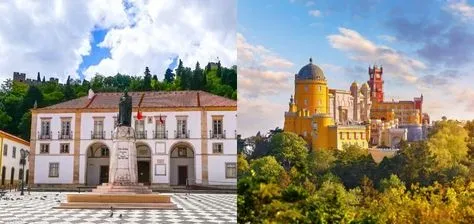
Convento de Cristo
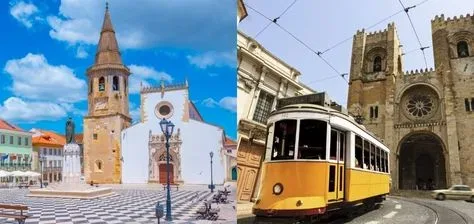
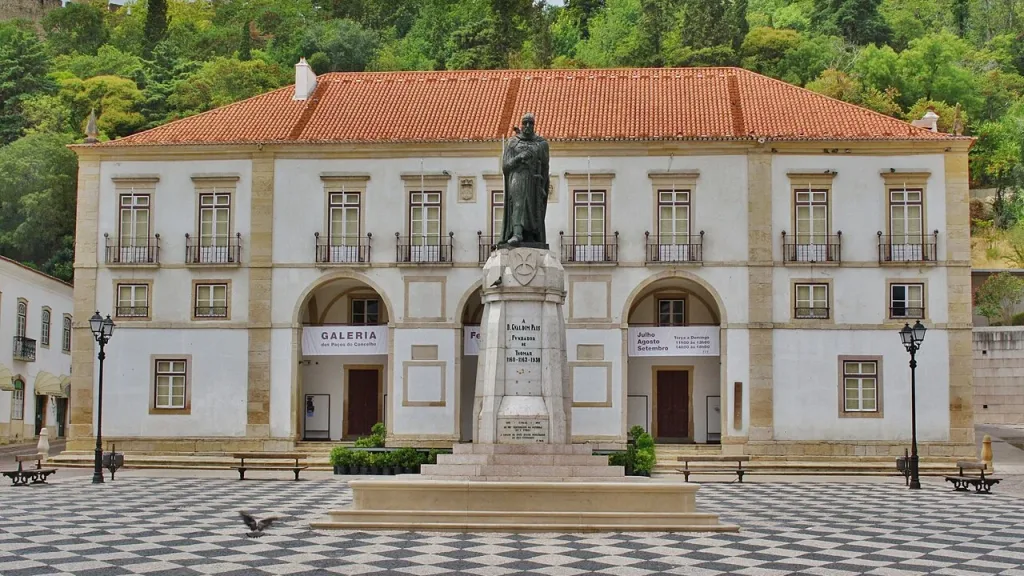
Plaza de la República
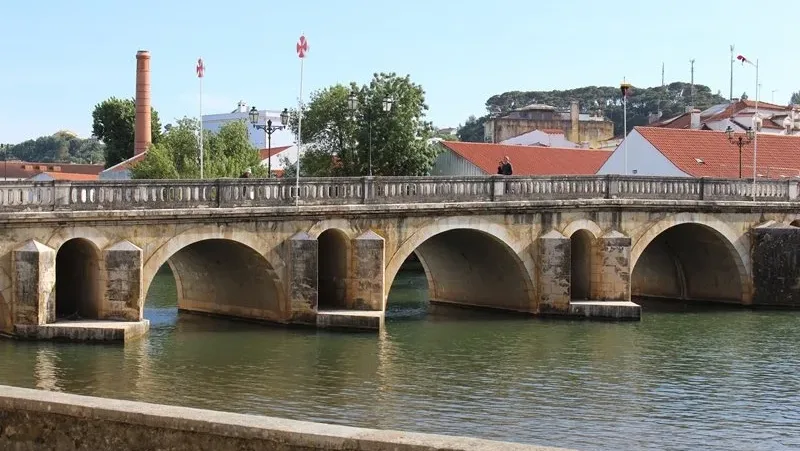
Puente Viejo
Rotonda
Preguntas frecuentes
¿A qué distancia está Tomar de Lisboa?
Tomar está a 136 km al noreste de Lisboa por la autopista A1 y la IC9. En vehículo privado, el viaje dura aproximadamente 1 hora y 30 minutos. En tren desde Lisboa Oriente, con transbordo en Entroncamento, el viaje dura aproximadamente 2 horas. Una excursión de un día desde Lisboa es fácilmente factible; la mayoría de los visitantes dedican entre 6 y 8 horas a la ciudad.
El Convento de Cristo en Tomar es un complejo monumento histórico y religioso ubicado en la ciudad de Tomar, Portugal.
El Convento de Cristo es un Patrimonio de la Humanidad por la UNESCO (1983) fundado en 1160 por Gualdim Pais, el cuarto Gran Maestre de los Caballeros Templarios en Portugal. Sirvió como cuartel general templario, luego como sede de la Orden de Cristo a partir de 1357. El complejo contiene ocho claustros, la rotonda templaria del siglo XII (Charola) y la célebre Ventana del Capítulo en estilo manuelino (1510-1513). Es uno de los sitios templarios mejor conservados de Europa.
¿Qué es la charola en tomar?
La Charola es el oratorio templario, una iglesia circular construida en la segunda mitad del siglo XII, inspirada en la Rotonda de la Iglesia del Santo Sepulcro en Jerusalén. Es una de las pocas rotondas templarias que sobreviven en Europa. La estructura tiene un plano poligonal de 16 tramos con un coro central octogonal. Los templarios tradicionalmente realizaban ritos religiosos a caballo dentro de su nave circular.
¿Qué es la Janela do Capítulo?
La Ventana del Capítulo es una gran ventana manuelina tallada en piedra caliza por el arquitecto Diogo de Arruda entre 1510 y 1513. Con aproximadamente 8 metros de altura, representa símbolos de la Era de los Descubrimientos de Portugal: cadenas de ancla, esferas armilares, coral, la Cruz de la Orden de Cristo, entretejidos en una elaborada composición de piedra. Se considera uno de los mejores ejemplos de decoración arquitectónica manuelina en Portugal.
La Orden de Cristo es una orden militar y religiosa portuguesa que se originó a partir de los Caballeros Templarios en el siglo XIV y se centró en la expansión portuguesa. Tomar fue su sede principal, donde se encuentra el Convento de Cristo, un extenso complejo monástico y fortaleza que sirvió como centro de operaciones y símbolo de su poder.
La Orden de Cristo fue establecida en Portugal en 1319 por el rey Dionís I y el papa Juan XXII como sucesora de los Caballeros Templarios, que habían sido disueltos en el Concilio de Vienne en 1312. El Convento de Tomar se convirtió en sede de la Orden en 1357. Enrique el Navegante sirvió como Gran Maestre de 1417 a 1450 y utilizó los recursos de la Orden para financiar las primeras expediciones marítimas de Portugal. Los barcos de Vasco da Gama llevaban la cruz de la Orden de Cristo en sus velas.
¿Hay una sinagoga en Tomar?
Sí. La Sinagoga de Tomar, construida entre 1430 y 1460, es la única sinagoga medieval intacta en Portugal. La comunidad judía existía en Tomar desde al menos 1315. Tras el decreto de expulsión del rey Manuel I en 1496, la sinagoga fue abandonada. Fue restaurada en 1923 e inaugurada como Museo Judío Portugués Abraham Zacuto en 1939. Es Monumento Nacional.
¿Qué es el Acueducto de Pegões?
El Acueducto de Pegões es una estructura de 6,223 km construida entre 1593 y 1614, diseñada para transportar agua desde manantiales al oeste de Tomar hasta el Convento de Cristo. El arquitecto principal fue el ingeniero militar italiano Filippo Terzi (1520–1597). La estructura incluye 180 arcos y alcanza aproximadamente 30 metros de altura. Fue declarado Monumento Nacional en 1920.
La Festa dos Tabuleiros es un festival tradicional que se celebra en Tomar, Portugal.
La Festa dos Tabuleiros es un festival que se celebra cada cuatro años en Tomar, con raíces en la devoción del siglo XIV al Espíritu Santo, asociada a la Reina Isabel de Portugal. El evento principal es un desfile de 5 km durante el cual cientos de mujeres portan “tabuleiros”: torres de 30 panes, decoradas con flores de papel y coronadas con una corona, de igual altura que la mujer que las lleva. La última edición fue en junio-julio de 2023; la próxima está programada para 2027.
¿Puedo combinar Tomar con Fátima en un día?
Sí. Fátima está a 45 km al sur de Tomar, aproximadamente 40 minutos en coche. Yellow Cab TT Tours opera un itinerario combinado de Tomar y Fátima que también incluye el Monasterio de Batalha. El tour combinado desde Lisboa cubre aproximadamente 300 km y requiere 10-11 horas. Este itinerario es uno de los tours de un día con mayor densidad histórica disponibles desde Lisboa.
¿Cuándo es la mejor época para visitar Tomar?
Marzo a mayo y septiembre a octubre. Las temperaturas de primavera (14–24 °C) y las condiciones de otoño son adecuadas para las caminatas necesarias por todo el complejo del Convento. Julio y agosto alcanzan regularmente los 35 °C, lo que hace que las visitas por la tarde sean físicamente exigentes. La Festa dos Tabuleiros (que se celebra cada cuatro años en julio, la próxima en 2027) atrae a grandes multitudes y requiere planificación previa si se visita durante ese período.