
Évora, Portugal: Historia, Monumentos y Tours Privados de un Día desde Lisboa
Évora es la capital de la región del Alentejo y sede del distrito de Évora, situada a 140 km al este de Lisboa. El municipio abarca 1.307 km² con una población de aproximadamente 53.591 habitantes (censo de 2021). El centro histórico de Évora fue declarado Patrimonio de la Humanidad por la UNESCO en 1986, reconocido por su excepcional concentración de monumentos que abarcan los períodos romano, morisco, gótico, manuelino y barroco dentro de una única ciudad amurallada.
La UNESCO describe Évora como una “ciudad museo”, un término que refleja la densidad de sus monumentos en relación con el tamaño de la ciudad. El centro histórico se ha mantenido en gran medida intacto desde el siglo XVI, cuando Évora era la segunda ciudad de Portugal y una residencia permanente de la corte real portuguesa.
Yellow Cab TT Tours opera tours privados de.
Consulta nuestra guía completa: Qué hacer en Évora.


Una breve historia de Évora
El sitio de Évora ha estado habitado continuamente desde tiempos prehistóricos. El Cromlech de los Almendros, un complejo megalítico de 95 menhires de granito situado a 16 km al oeste de la ciudad, fue construido en varias fases entre el 6000 y el 4000 a.C., lo que lo convierte en una de las estructuras más antiguas que se conservan en la Península Ibérica.
Los romanos establecieron un asentamiento permanente en este sitio, nombrándolo Liberalitas Iulia bajo Julio César. Entre el 80 y el 72 a.C., el general romano Quinto Sertorio utilizó Évora como su cuartel general durante su campaña contra Roma. Bajo el Imperio Romano, la ciudad se convirtió en la capital de la región y recibió su monumento más visible que sobrevive: el Templo Romano, construido en el siglo I d.C. en el foro público principal de la ciudad.
Aproximadamente en el año 712 d.C., fuerzas moriscas del norte de África capturaron Évora, rebautizándola como Jabura. El.
Évora alcanzó su máxima importancia política en el siglo XV, cuando se convirtió en residencia permanente de la corte real portuguesa bajo la Casa de Avis.
El terremoto de Lisboa de 1755 redirigió los esfuerzos de reconstrucción de Portugal hacia la capital. Évora, a 140 km al noreste y menos afectada, no fue reconstruida ni modernizada de la misma manera. Como resultado, su tejido urbano de los siglos XV y XVI —las murallas, el trazado de las calles y la arquitectura de su época dorada— sobrevivió en gran parte intacto hasta el siglo XX. Esta preservación fue la base principal para la designación de la UNESCO en 1986.
El Centro Histórico - Sitio del Patrimonio Mundial de la UNESCO de Évora
El centro histórico de Évora está delimitado por un circuito de murallas con orígenes en el período romano, posteriormente reforzado por construcciones moriscas y medievales portuguesas. Las murallas definen un área de aproximadamente 100 hectáreas que contiene los principales monumentos de la ciudad.
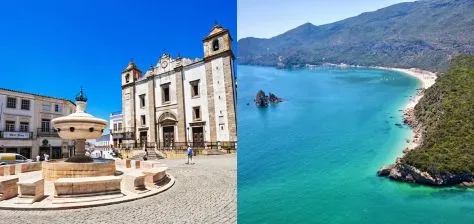
La plaza principal, Praça do Giraldo, lleva el nombre de Geraldo Sem Pavor, quien recapturó la ciudad en 1166. La plaza está flanqueada por edificios abovedados de los siglos XVI y XVII. En su extremo este se encuentra la Iglesia de Santo Antão, terminada en 1557. La fuente de mármol en el centro de la plaza fue instalada en 1570, diseñada por António Francisco Rosa, al final del Acueducto Água de Prata.
La identidad visual característica del centro histórico está definida por edificios encalados con paneles de azulejos y rejas de hierro forjado, un estilo desarrollado entre los siglos XVI y XVIII. Los criterios de inscripción de la UNESCO identifican específicamente la influencia de la arquitectura de Évora en la construcción portuguesa en Brasil, donde se adoptaron formas similares durante el período colonial.
Qué visitar en Évora
Templo Romano de Évora (Siglo I d.C.)
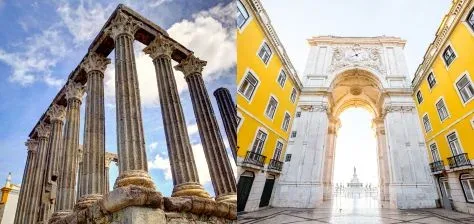
El Templo Romano de Évora se alza en el punto más alto del centro histórico, en el sitio del foro romano original. El templo fue construido en el siglo I d.C. y se cree que estuvo dedicado al emperador Augusto, quien fue venerado como una deidad durante y después de su gobierno. Comúnmente se le conoce como el “Templo de Diana”, pero esta atribución es incorrecta: un sacerdote portugués lo asoció erróneamente con Diana en el siglo XVII, y no hay evidencia histórica que respalde esta dedicación.
Catorce de las columnas corintias originales de granito aún se conservan. Cada columna está compuesta por varios tambores rematados con capiteles tallados decorados con hojas de acanto. El templo sobrevivió en parte porque fue convertido en una fortificación en el siglo XIV, con los espacios entre las columnas rellenados de piedra. Desde el siglo XIV hasta 1836, la estructura sirvió como carnicería, un uso que, paradójicamente, la protegió de la demolición. La restauración de su forma actual se completó en 1871.
El templo es un monumento nacional y forma parte de la designación de Patrimonio de la Humanidad de la UNESCO.

Catedral de Évora - Sé de Évora (1186-1746)
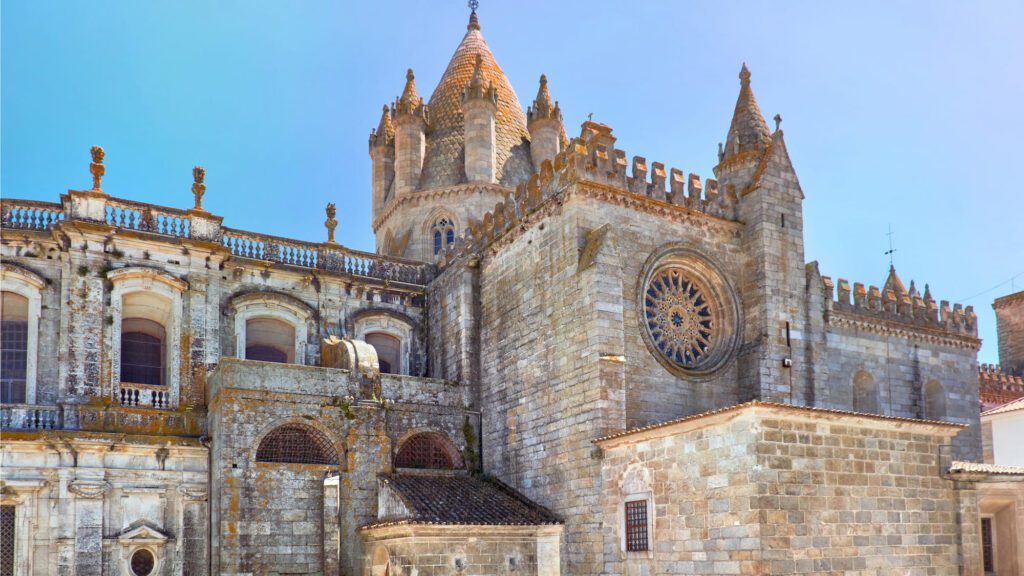
La construcción de la Catedral de Évora (Sé de Évora) comenzó en 1186 y se completó en 1204. Es una de las catedrales más antiguas de Portugal y está construida en el punto más alto de la ciudad, justo al lado del Templo Romano. La estructura original fue construida en estilo románico y ampliada entre 1280 y 1340 en estilo gótico temprano, lo que le da al edificio su característico aspecto de transición.
Las adiciones posteriores incluyen: los claustros góticos (siglo XIV), la capilla manuelina del Esporão (principios del siglo XVI) y la capilla mayor, que fue completamente reconstruida entre 1718 y 1746 bajo el patrocinio del rey Juan V, en estilo barroco romano con decoración de mármol polícromo.
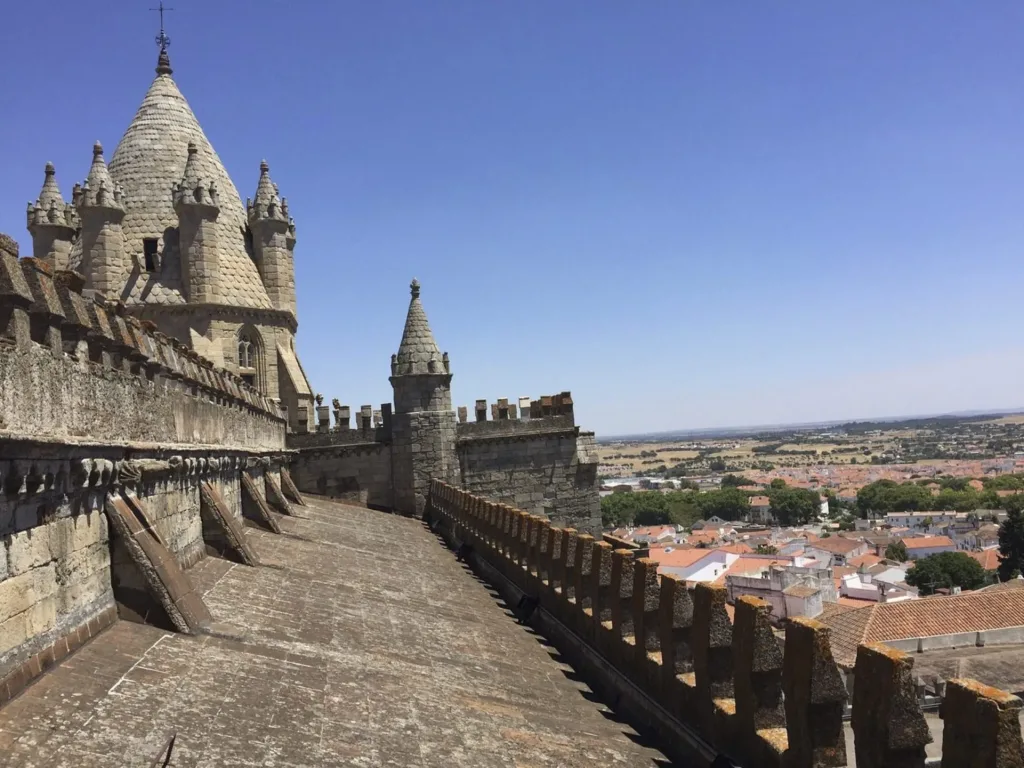
La terraza de la azotea de la catedral es accesible para los visitantes y ofrece vistas del centro histórico y de la llanura alentejana circundante. El museo de la catedral contiene una de las colecciones de arte eclesiástico más importantes de Portugal, incluyendo manuscritos iluminados medievales y estatuas de marfil del siglo XIII.
En los siglos XVI y XVII, la catedral fue el centro de la Escola de Évora (Escola de Évora) de polifonía, un movimiento significativo en la historia de la música portuguesa, que produjo compositores cuyas obras se interpretaron en toda Europa y en los territorios coloniales portugueses.
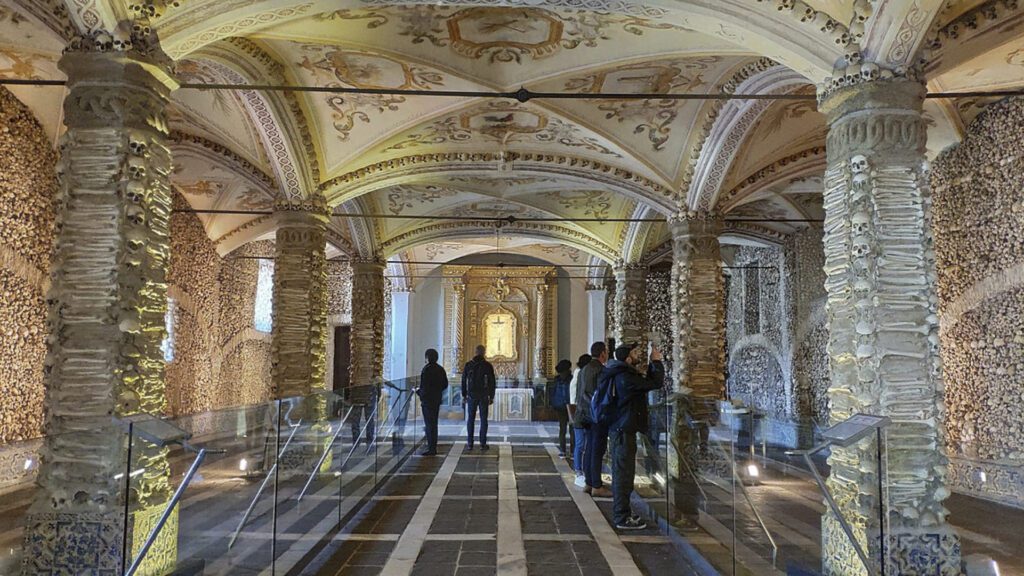
Capilla de los Huesos - Iglesia de São Francisco (Siglo XVII)
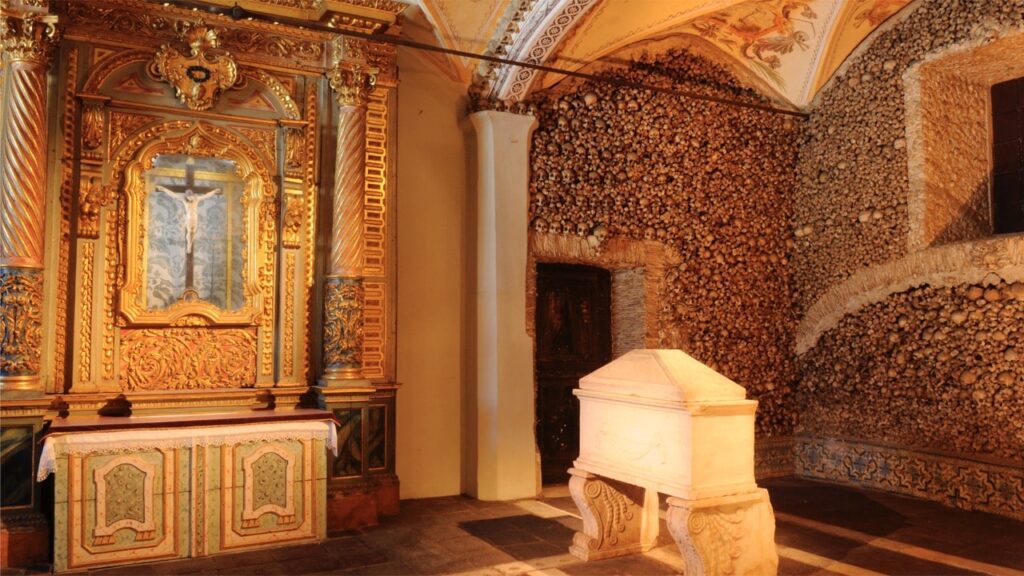
La Capilla de los Huesos Se encuentra dentro de la Iglesia de San Francisco, una iglesia de estilo gótico tardío y manuelino terminada a principios del siglo XVI. La Capilla de los Huesos fue construida a finales del siglo XVI por tres frailes franciscanos como un espacio de meditación sobre la mortalidad humana. Las paredes y columnas de la capilla están revestidas con los huesos y cráneos de aproximadamente 5000 personas, exhumados de los 42 cementerios monásticos que ocupaban terrenos dentro de la ciudad durante el siglo XVI. La decisión de consolidar los restos en un único espacio conmemorativo fue tanto práctica como teológica: los cementerios ocupaban un terreno excesivo dentro de la ciudad amurallada, y la exhumación permitió realizar nuevos entierros.
Acueducto de Agua de Plata - Água de Prata (1532-1537)
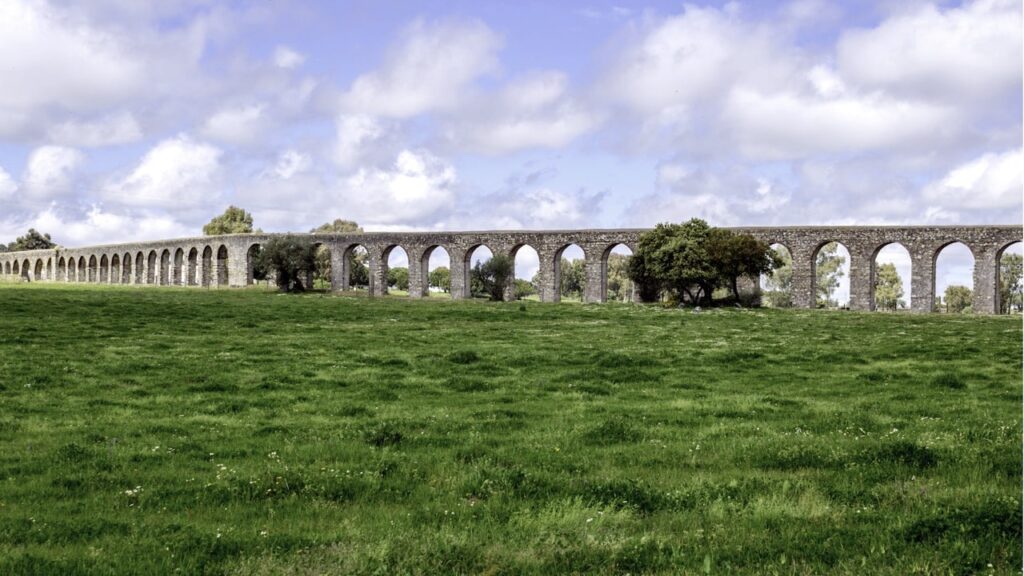
El Acueducto de Água de Prata (Acueducto de Agua de Plata) fue construido entre 1532 y 1537 por orden del Rey Juan III. El arquitecto fue Francisco de Arruda. El acueducto se extiende 18 km desde el embalse de la Barragem do Divor hasta el centro de Évora, alcanzando una altura máxima de 26 metros. El nombre “Agua de Plata” se refiere tanto al costo del proyecto, uno de los proyectos de construcción reales más grandes de la época, como a la excepcional claridad de la fuente de agua.
El acueducto fue inaugurado en 1537 en una ceremonia a la que asistieron el rey João III y la corte real en la Praça do Giraldo, donde se instaló una fuente de león de mármol en el punto final del agua. El acueducto permaneció en funcionamiento hasta el siglo XX.
La sección más visible del acueducto atraviesa directamente el centro de la ciudad, donde los arcos se han incorporado a la estructura de la trama urbana a lo largo de los siglos. Se construyeron casas adosadas a los arcos y encima de ellos, integrando la estructura en el barrio residencial de Bairro de Nora. El acueducto es Monumento Nacional portugués, designado en 1910.
Cromlech de Almendros (6000-4000 a.C.)
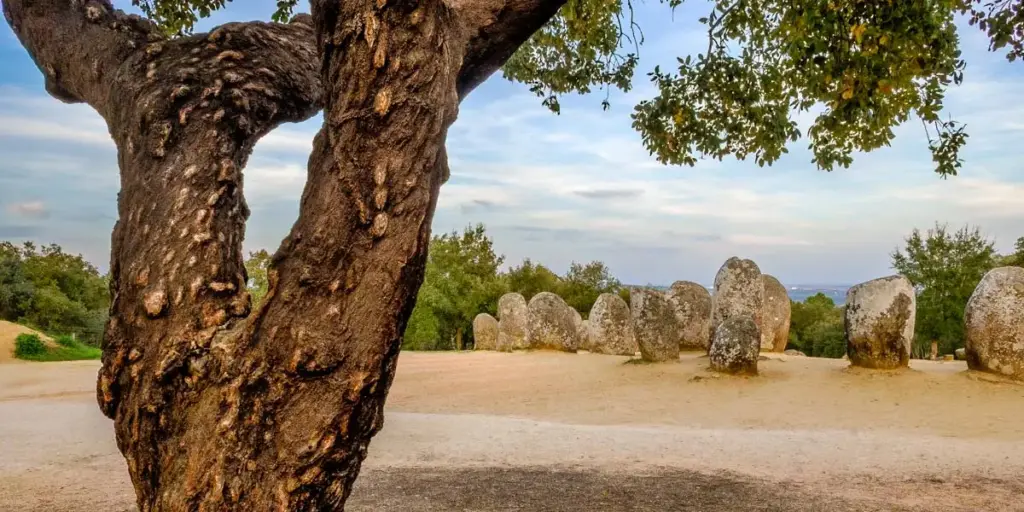
El Cromlech de Almendres (Cromeleque dos Almendres) se encuentra a 16 km al oeste de Évora, en el campo del Alentejo. Es el complejo megalítico más grande conocido de la Península Ibérica y uno de los más grandes de Europa. El sitio consta de 95 menhires de granito que han sobrevivido (originalmente más de 100) dispuestos en dos formaciones ovales superpuestas que cubren un área de 70 × 40 metros.
El sitio se construyó en tres fases:
- Almendres I: aproximadamente 6000 a.C. (Neolítico temprano);
- Almendres II: aproximadamente 5000 a. C. (Neolítico Medio);
- Almendres III: aproximadamente 4000 a.C. (Neolítico tardío).
El eje más largo del cromlech está orientado de noroeste a sureste, lo que sugiere una alineación astronómica. Varios menhires presentan símbolos tallados (círculos, líneas sinuosas y formas geométricas) cuyo significado no se ha establecido de forma definitiva. El sitio es accesible en coche desde Évora; los últimos 2 km del camino de acceso son de tierra. Una visita al Cromlech de los Almendres requiere aproximadamente 40 minutos ida y vuelta desde Évora y se incluye en la mayoría de los tours privados de día completo a la región.
¿Cuándo visitar Évora?
Évora se asienta en la llanura del Alentejo, a una altitud de aproximadamente 300 metros sobre el nivel del mar. El clima es mediterráneo continental: veranos calurosos y secos e inviernos suaves.
Primavera (marzo a mayo): temperaturas de 14 a 22 °C, flores silvestres en la llanura del Alentejo. Este es el período recomendado para combinar una visita a Évora con tiempo al aire libre en el Cromeleque dos Almendres y la campiña circundante. Temperaturas agradables para caminar dentro de la ciudad amurallada.
Verano (junio-septiembre): temperaturas de 32–42 °C en julio y agosto. El Alentejo registra regularmente las temperaturas más altas de Portugal durante estos meses; Évora ha registrado temperaturas superiores a los 45 °C en los últimos años. Los monumentos están abiertos, pero el calor hace que las visitas a pie prolongadas sean incómodas. Se recomiendan visitas por la mañana temprano (antes de las 10:00) si visita en verano.
Otoño (septiembre-noviembre): las temperaturas descienden de 30 °C en septiembre a 16 °C en noviembre. Octubre es un mes viable con temperaturas agradables y menos afluencia de turistas que en verano.
Invierno (diciembre-febrero): temperaturas de 8 a 14°C. El centro histórico tiene muy pocos visitantes. Todos los monumentos principales permanecen abiertos. La terraza de la azotea de la Catedral ofrece una vista clara del paisaje del Alentejo en el aire invernal de baja humedad.
Nota: Évora no es un destino costero y no tiene acceso a la playa. Los visitantes que busquen un itinerario combinado costa-interior deben planificar en consecuencia.
Cómo llegar a Évora desde Lisboa
Évora se encuentra a 140 km al este de Lisboa por la autopista A6 (IP7). Tiempos de viaje.
En coche o vehículo privado: aproximadamente 1 hora y 30 minutos por la A6 desde el centro de Lisboa. Hay aparcamiento disponible al borde del centro histórico; la ciudad amurallada es peatonal en sus áreas centrales.
En tren: Los servicios InterCidades (IC) salen de las estaciones de Lisboa Oriente y Lisboa Santa Apolónia hacia la estación de Évora aproximadamente cada 2 horas. Duración del viaje: aproximadamente 1 hora y 37 minutos. La estación de Évora se encuentra a aproximadamente 1 km al sur del centro histórico (Praça do Giraldo); hay taxis disponibles en la estación. Horarios y tarifas: cp.pt.
Por tour privado: Yellow Cab TT Tours ofrece recogida puerta a puerta en su hotel en Lisboa, Sintra, Cascais, Estoril o en cualquier lugar de la costa. Los tours privados incluyen transporte, un guía autorizado y tiempo flexible en cada sitio.
Excursiones privadas de un día a Évora desde Lisboa
Yellow Cab TT Tours lleva organizando excursiones de un día desde Lisboa desde 2013. Puntuación en TripAdvisor: 5,0/5 basada en 3.364 opiniones. Ocupa el puesto #2 entre 847 actividades al aire libre en Lisboa. Galardonada con el premio ’Lo mejor de lo mejor» de TripAdvisor Travelers’ Choice 2025. Todas las excursiones son privadas. Vehículo y guía en exclusiva para tu grupo. Recogida en tu hotel de Lisboa, Sintra, Cascais, Estoril o cualquier otro lugar de la costa.


Tours de Vino Privados desde Lisboa
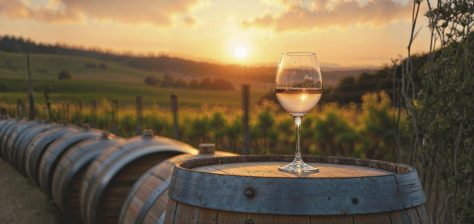
La región vinícola del Alentejo rodea Évora y es una de las regiones vinícolas más productivas de Portugal, ya que representa aproximadamente 45% del volumen total de vino embotellado del país. Las principales variedades de uva cultivadas en la región son la Aragonez (nombre local del Tempranillo), la Trincadeira, la Alicante Bouschet y la Antão Vaz para los vinos blancos. La subregión de la D.O. Évora abarca los viñedos situados en las inmediaciones de la ciudad. Yellow Cab TT Tours organiza experiencias enológicas privadas que combinan visitas a viñedos del Alentejo con una visita al centro histórico de Évora.
Lo que no puede perderse en Évora
Templo Romano

Capilla de los Huesos
Catedral de Évora
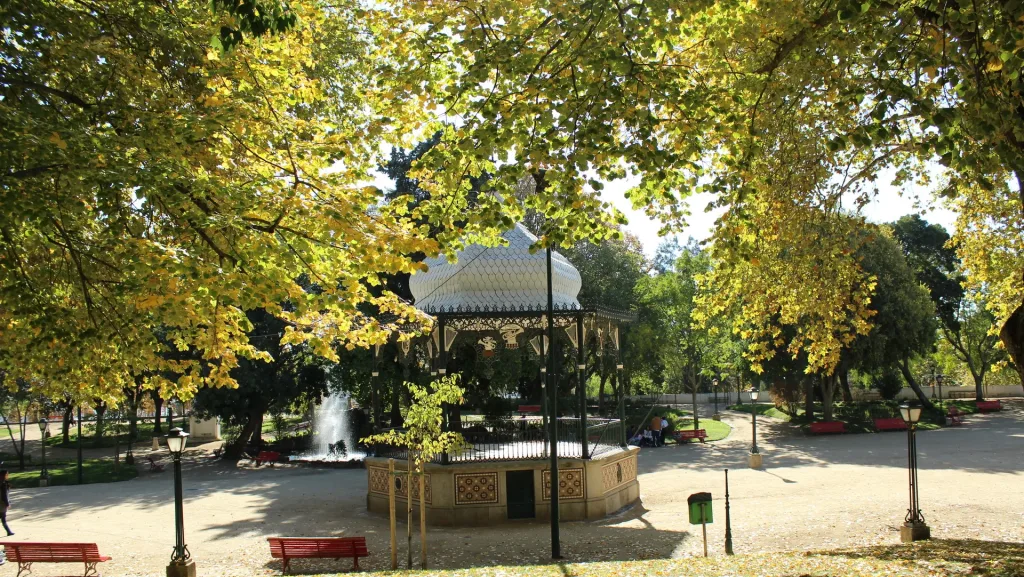
Jardín público de Évora
Preguntas frecuentes
¿Qué tan lejos está Évora de Lisboa?
Évora se encuentra a 140 km al este de Lisboa por la autopista A6 (IP7). En coche o vehículo privado, el viaje dura aproximadamente 1 hora y 30 minutos. En tren InterCidades desde Lisboa Oriente, el viaje dura aproximadamente 1 hora y 37 minutos. Évora es una excursión de un día viable desde Lisboa; la mayoría de los visitantes dedican 5-7 horas en la ciudad para visitar los principales monumentos.
La designación de la UNESCO de Évora es Ciudad histórica de Évora.
El Centro Histórico de Évora fue declarado Patrimonio de la Humanidad por la UNESCO en 1986. La designación abarca toda la ciudad amurallada –aproximadamente 100 hectáreas–, reconociendo la excepcional concentración de monumentos de los períodos romano, morisco, gótico, manuelino y barroco, y la influencia de la arquitectura de Évora en la construcción portuguesa en Brasil. La UNESCO describe a Évora como una “ciudad-museo”.
El Templo Romano de Évora, también conocido como Templo de Diana, es un templo antiguo ubicado en la ciudad de Évora, Portugal. Es uno de los restos romanos mejor conservados de Portugal.
El Templo Romano de Évora es un templo del siglo I d.C. construido en el foro principal de la ciudad romana, que se cree estuvo dedicado al emperador Augusto. Aún se conservan catorce columnas corintias de granito. A pesar de ser conocido comúnmente como el “Templo de Diana”, esta atribución es históricamente incorrecta: fue asignada por un sacerdote portugués en el siglo XVII sin base arqueológica. El templo sobrevivió porque se utilizó como fortificación y, más tarde, como carnicería hasta 1836, lo que impidió su demolición.
¿Qué es la Capilla de los Huesos?
La Capela dos Ossos es un espacio conmemorativo del siglo XVII dentro de la Iglesia de São Francisco. Sus muros y columnas están revestidos con los huesos y cráneos de aproximadamente 5.000 personas, exhumadas de 42 cementerios monásticos que ocupaban un espacio excesivo dentro de la ciudad amurallada en el siglo XVI. La inscripción de la entrada dice: “Nosotros, huesos aquí presentes, por los vuestros esperamos”. Dos figuras momificadas están suspendidas dentro de la capilla; una investigación forense de 2019 estableció que se trataba de una mujer y una niña, y no de un padre y un hijo como se creía anteriormente.
¿Vale la pena hacer una excursión de un día completo a Évora desde Lisboa?
Sí. Los principales monumentos –el Templo Romano, la Catedral, la Capilla de los Huesos y el Acueducto de Água de Prata– se pueden visitar en 4 o 5 horas de paseo por la ciudad amurallada. Incluyendo el almuerzo y una visita al Cromlech de los Almendros (a 16 km de la ciudad, 40 minutos ida y vuelta), un itinerario de día completo requiere entre 7 y 8 horas desde Lisboa. Salir de Lisboa antes de las 08:30 y regresar después de las 18:00 es lo habitual en una excursión privada de un día.
¿Qué es el Crómlech de los Almendros?
El Cromlech dos Almendres es un conjunto megalítico de 95 menhires de granito situado a 16 km al oeste de Évora. Es el mayor conjunto megalítico de la Península Ibérica. La construcción se realizó en tres fases: aproximadamente 6000 a. C. (Neolítico temprano), 5000 a. C. (Neolítico medio) y 4000 a. C. (Neolítico tardío). El sitio es anterior a Stonehenge, que se construyó aproximadamente a partir del 3000 a. C. Varios menhires tienen grabados símbolos geométricos. Los últimos 2 km del camino de acceso no están pavimentados.
La mejor época para visitar Évora es durante la primavera (abril a junio) y el otoño (septiembre a octubre).
Marzo a mayo y septiembre a octubre. Se recomienda la primavera para combinar visitas a monumentos con tiempo al aire libre en el Cromlech de los Almendros y el campo del Alentejo, que tiene flores silvestres hasta abril. Las temperaturas en julio y agosto en Évora suelen alcanzar los 40°C o más; la ciudad es accesible pero las caminatas prolongadas al aire libre son incómodas. El invierno (diciembre-febrero) ofrece la experiencia más tranquila con temperaturas suaves de 8-14°C.
¿Qué estilos arquitectónicos se encuentran en Évora?
Évora contiene edificios de seis períodos importantes: el romano (siglo I d.C. – el templo), el románico-gótico (siglos XII-XIV – el núcleo de la catedral), el manuelino (principios del siglo XVI – añadidos de la capilla, acueducto), el renacentista (siglos XVI-XVII – las arcadas de la Praça do Giraldo), el barroco (siglo XVIII – la capilla mayor de la catedral, 1718–1746) y los edificios urbanos vernáculos encalados con paneles de azulejos que se desarrollaron a partir del siglo XVI. Esta concentración de períodos distintos en un área compacta es la razón principal de la designación por parte de la UNESCO.
¿Puedo combinar Évora con Arrábida o Setúbal en un día?
Sí. Yellow Cab TT Tours opera un itinerario combinado de Évora y Setúbal (costa de Arrábida) desde Lisboa. La ruta cubre Évora por la mañana y el Parque Natural de Arrábida por la tarde. La distancia entre Évora y Setúbal es de aproximadamente 130 km. Es un día largo (10-12 horas desde Lisboa), recomendado para viajeros que desean cubrir ambos destinos sin pasar la noche.
¿Cuál es la región vinícola del Alentejo?
La región vinícola del Alentejo rodea Évora y representa aproximadamente el 45% de la producción total de vino embotellado de Portugal en volumen. Las principales variedades tintas son la Aragonez (Tempranillo), la Trincadeira y la Alicante Bouschet; la principal variedad blanca es la Antão Vaz. La subregión DOC de Évora abarca los viñedos situados en las inmediaciones de la ciudad. Yellow Cab TT Tours ofrece experiencias enológicas privadas en el Alentejo que combinan visitas a viñedos con un recorrido por el centro histórico de Évora.