

Cascais sits 35 kilometres west of Lisbon. Over six million tourists visit the municipality every year. Most spend ninety minutes at Boca do Inferno, eat a pastel de nata on the seafront, and return to Lisbon having missed five museums, the best food, and the World War II spy story at the casino next door.
This is what I tell clients before we go.
Boca do Inferno — The One Thing Everyone Gets Wrong
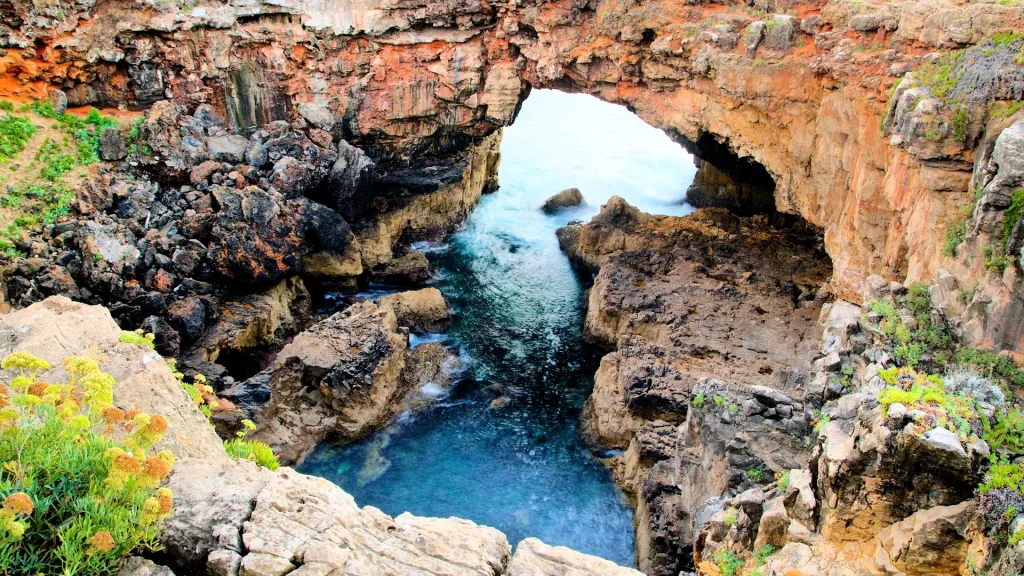
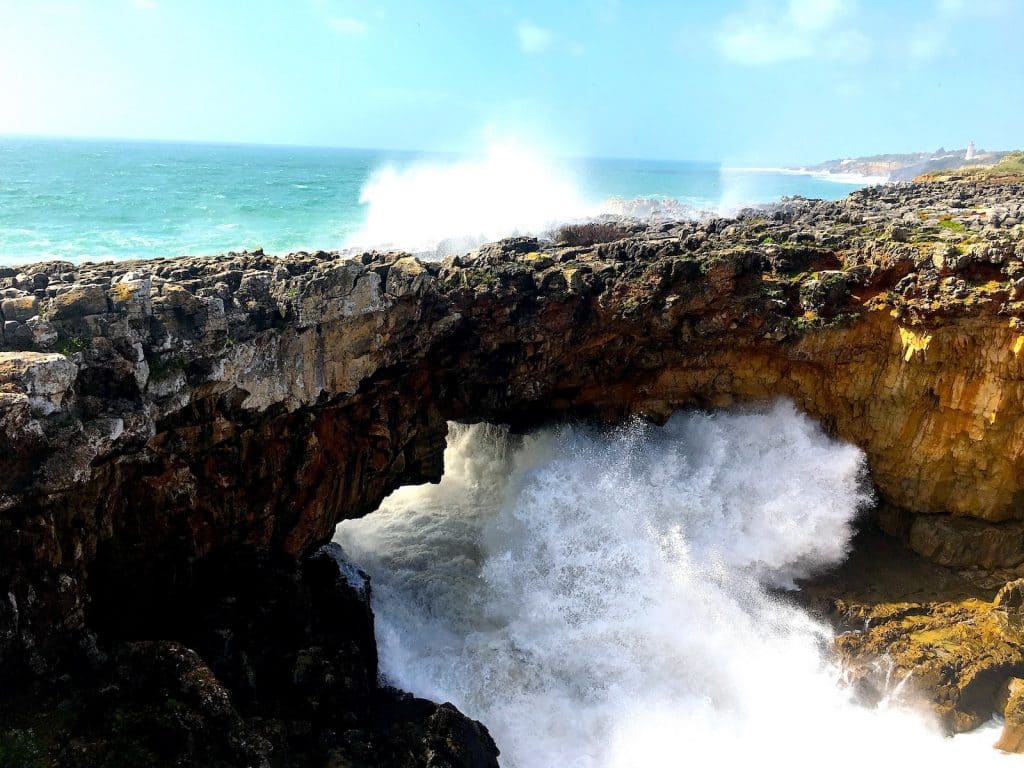
Boca do Inferno (“Hell’s Mouth”) is a collapsed sea cave 1.7 km west of the Cascais town centre. It is the most photographed natural site in the area. It is also the site where I watch the most tourists leave disappointed.
The reason is straightforward: the experience depends entirely on the tide.
At high tide, Atlantic swells push through the natural rock opening and produce the waves in every photograph you have seen online. At low tide on a calm summer day, it is an interesting geological formation and a mild sense of letdown. The difference is not subtle.
Before visiting, check the tide table at hidrografico.pt. High tide cycles occur approximately every 12.5 hours. Check the day before, identify the first or second high tide of the morning, and plan around it. This takes three minutes and changes the experience entirely.
Getting there: 1.7 km west of the town centre on a flat coastal path — 20 to 25 minutes on foot. From the train station: 3.5 km, approximately 45 minutes. Free entry.
Summer crowds: heaviest between 11:00 and 14:00 in July and August. Before 10:00 or after 17:00 are both preferable. There is no shade on the path and none at the site.
Casino Estoril — Where Ian Fleming Found James Bond
One stop before Cascais on the Linha de Cascais train is Estoril. Most visitors skip it. Ian Fleming did not.
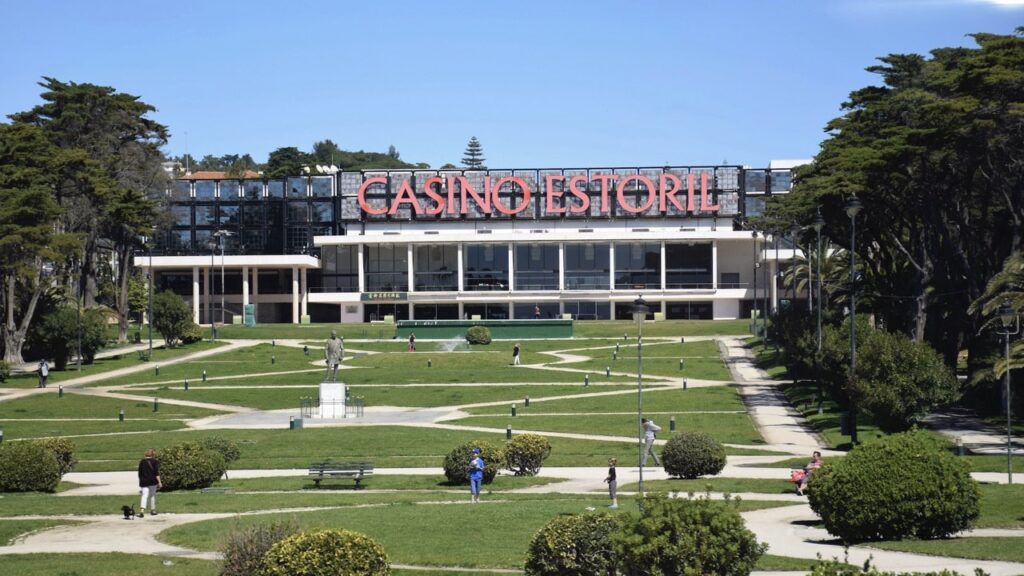
The casino dates to 1916 — licensed years before Portugal legalised gambling nationally — and is still one of the largest in Europe today. In August 1941, Fleming watched a fellow guest at the neighbouring Palácio Hotel bet a small fortune at the baccarat table; he reused the scene almost unchanged twelve years later in *Casino Royale*, the first James Bond novel.
The walk from Cascais to Estoril along the seafront promenade (Paredão) takes 25 to 30 minutes; by train, five. For the full story — the actual bet, who was really at that table, and why a casino existed here before gambling was even legal — see our complete Casino Estoril guide.
Cascais Museums: Three Worth Your Time
Museu Condes de Castro Guimarães
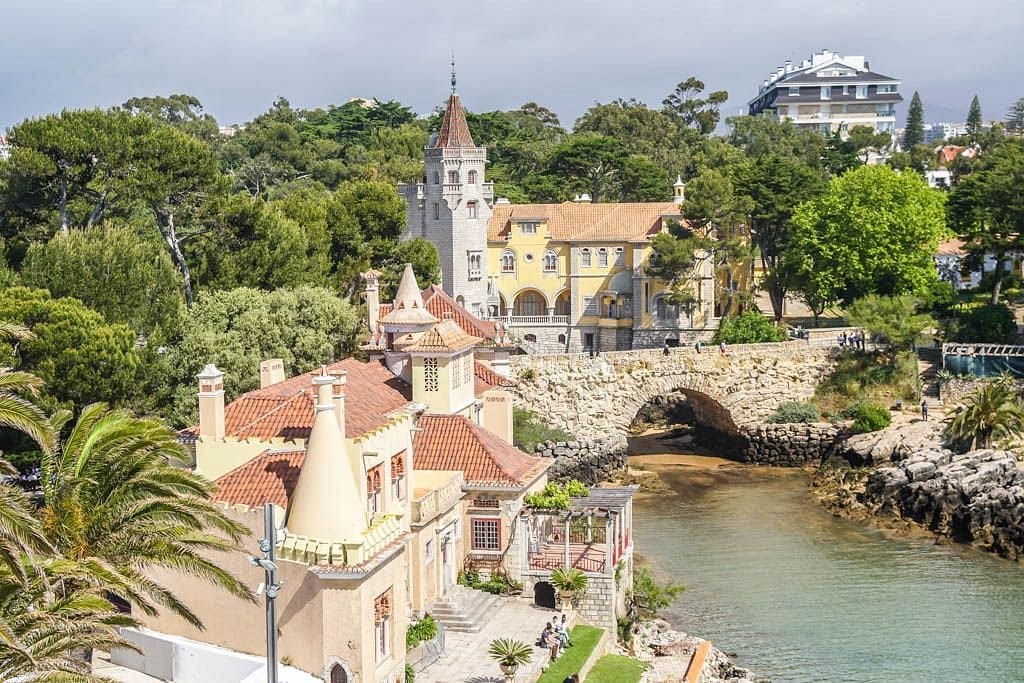
A palace built in 1900 in Parque Marechal Carmona for Jorge O’Neill, to the designs of architect Francisco Vilaça, in an eclectic revivalist style combining Neo-Gothic, Neo-Manueline, and Moorish elements. The Count of Castro Guimarães acquired it in 1910 and bequeathed the property to the municipality of Cascais; the museum opened officially in 1931.
Its library holds approximately 25,000 volumes. The most significant item in the collection is an illuminated manuscript of the Crónica de Dom Afonso Henriques, dated to 1505 — one of the oldest surviving accounts of Portugal’s first king. The museum also holds paintings, porcelain, furniture, and a neo-Gothic organ.
Open Tuesday–Sunday 10:00–13:00 and 14:00–18:00; closed Monday. Admission: free (per bairrodosmuseus.cascais.pt). Located 700 m from the Cidadela.
Casa das Histórias Paula Rego
A contemporary art museum dedicated to Paula Rego (1935–2022), one of the most internationally recognized Portuguese artists of the 20th century. The building was designed by Eduardo Souto de Moura, winner of the Pritzker Architecture Prize in 2011. The two rust-red conical towers are a visual landmark on the Cascais seafront.
Opened in 2009. Approximately 80 works spanning 50 years of Rego’s figurative paintings, prints, and pastels. Rego spent much of her adult life in the UK but returned frequently to Portugal; Cascais was her family’s coastal base.
Admission: €5. Open Tuesday–Sunday 10:00–18:00; closed Monday.
Santa Marta Lighthouse
Built in 1868 on the ruins of a 17th-century fort, adjacent to the Cidadela. The square tower is clad entirely in blue-and-white azulejo tiles with geometric patterns — one of the most visually distinctive lighthouses in Portugal. The adjacent Casa de Santa Maria (1902) was designed by architect Raul Lino, known for promoting Portuguese vernacular architecture.
The lighthouse museum covers the history of Portuguese maritime navigation. Open Wednesday–Sunday; closed Monday–Tuesday. Admission: free (per bairrodosmuseus.cascais.pt). Ten to fifteen minutes is sufficient.
Cascais Beaches — Which One and When
Three beaches sit within walking distance of the centre:
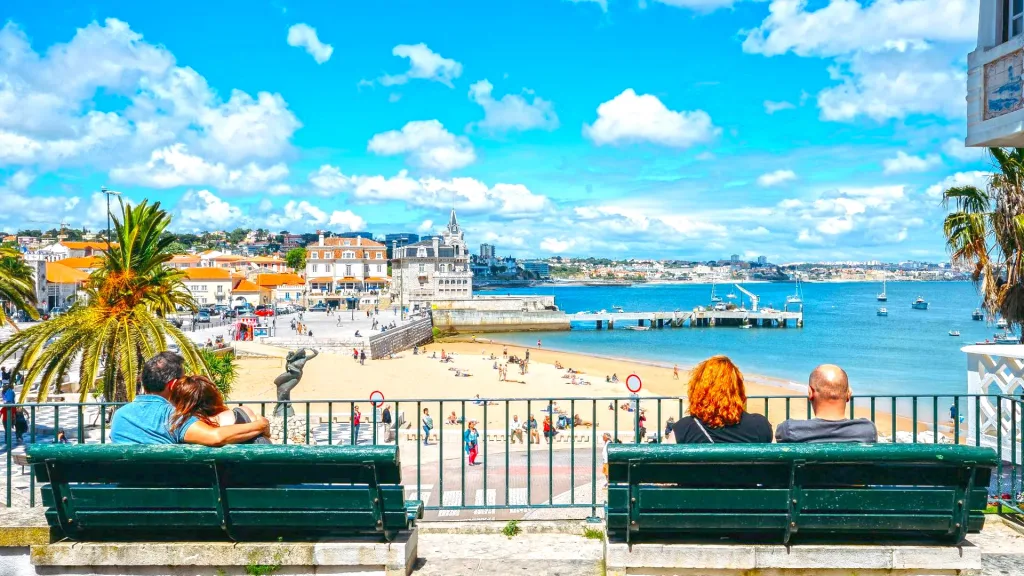
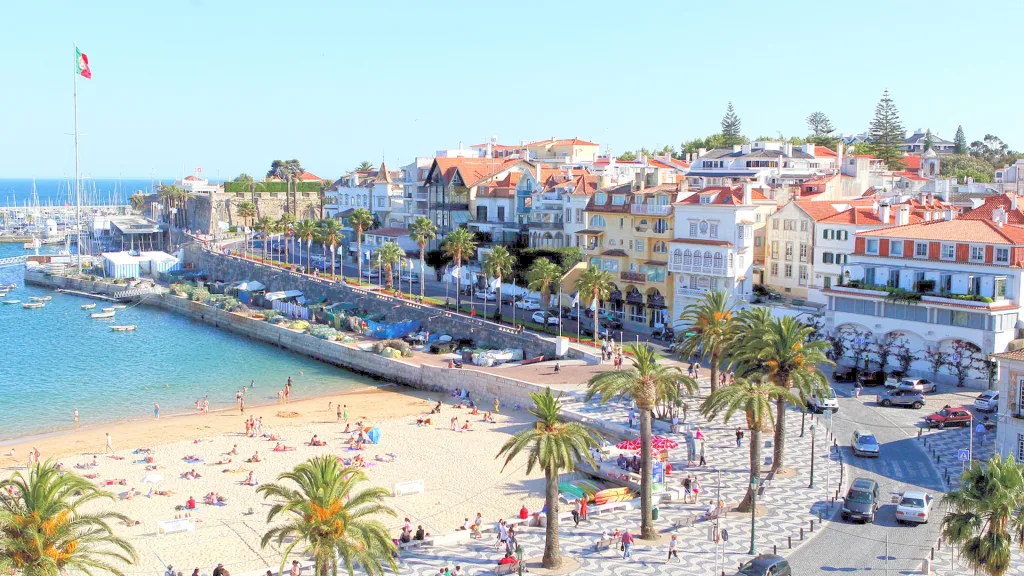
- Praia da Ribeira (~500 m, adjacent to the marina): the principal town beach. Sheltered, calm, suitable for families. Reaches capacity by noon in July and August.
- Praia da Rainha (300 m from the Cidadela): historically the private beach of Queen Amélia of Portugal since 1889. Small and sheltered.
- Praia da Duquesa (500 m west): quieter, popular with local families.
For open Atlantic beach: Praia do Guincho, 9 km northwest of the town centre, within the Sintra-Cascais Natural Park. Consistent northwest winds, dunes, strong currents — a primary windsurfing and kitesurfing venue. Not recommended for casual swimming. No direct public transport; taxi approximately €12 each way.
Water temperatures in peak summer: 20–22°C. The Atlantic breeze keeps Cascais 2–3°C cooler than Lisbon in July and August.
What to Eat in Cascais
- Santini gelato: established 1949 in Estoril by Attilio Santini. The Cascais branch is the original family venue; Lisbon branches came later. Queue is standard; it moves quickly enough.
- Nozes de Cascais: walnut-shaped pastries with egg cream and walnut filling. Local specialty, approximately €1.50 each.
- Areias de Cascais: traditional shortbread rounds, a local recipe dating to the 19th century. Available in most pastry shops near the centre.
- Seafood: restaurants near Mercado da Vila tend to be more straightforwardly priced than terrace seating on the main square. Sit-down seafood lunch: €15–25 per person.
What I Would Skip
After 20 years of guiding, three things consistently underdeliver:
Horse-drawn carriage tours (€15–20 for 20 minutes): a slow circuit through the centre. Nothing you cannot walk in the same time, and considerably less atmospheric than the photographs suggest.
Tuk-tuk city tours: same logic applied to a smaller vehicle. The town centre is 800 metres across. It does not benefit from narrated transport.
Guided boat tours from the marina: generally overpriced relative to what is offered. If the water is the point, Arrábida on a separate day is a substantially better experience — 40 km south, with turquoise water and limestone cliffs reaching 500 m above the Atlantic.

Getting to Cascais from Lisbon
By Train — The €2.55 Option
The Linha de Cascais has been operating since 1889. It departs from Cais do Sodré Station on Lisbon’s waterfront and reaches Cascais in 40 minutes.
Key details:
- Single ticket: €2.55
- Viva Viagem card: €0.50 (one-time purchase, reusable across Lisbon transport)
- Frequency: every 20 minutes off-peak; every 12 minutes at peak hours
- First departure from Cais do Sodré: approximately 05:30
- Last return from Cascais: approximately 01:30
Sit on the ocean-facing side of the train. Between Estoril and Cascais, the line runs directly along the Atlantic coast. There is always one person in the group who sits on the wrong side and spends the final ten minutes leaning across their neighbour.
By Private Tour — What the Train Does Not Give You
The train delivers you to Cascais town centre. It does not reach Cabo da Roca — the westernmost point of continental Europe, 14 km northwest — which has no direct public transport link. It also makes combining Cascais with Sintra logistically awkward: by train, you must return to Lisbon between the two, adding 1.5 hours of unnecessary transit.
Our Sintra + Cascais Private Tour runs the route linearly: Lisbon → Cascais → Cabo da Roca → Sintra. No backtracking. Three destinations in one day without the transit overhead.
Cascais and Sintra in One Day
Sintra and Cascais are 25 km apart by road. Several travel guides recommend never combining them in one day. That advice describes the train version of this trip, which is genuinely awkward — the two lines do not share a station and require a return to Lisbon between stops.
It does not describe the private tour version.
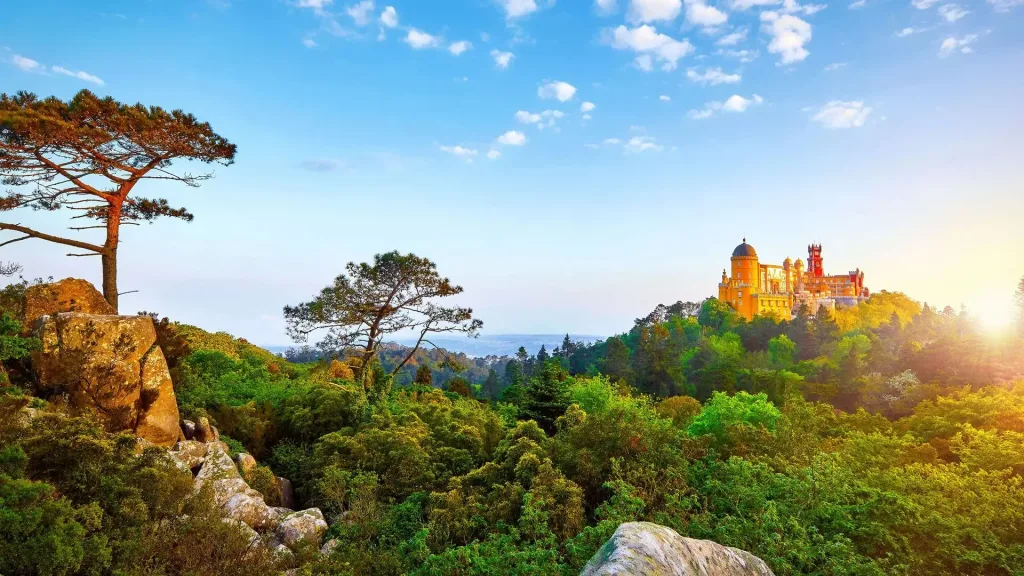
Sintra (27 km northwest of Cascais): UNESCO World Heritage Site since 1995. Romantic-era palaces — Pena Palace (built 1842–1854 at 529 m elevation), Moorish Castle (8th–9th century, 412 m), Quinta da Regaleira (completed 1910) — set in a forested mountain range with its own microclimate. Requires significant walking. Minimum 4–5 hours on the ground.
Cascais: flat, Atlantic coast resort. Marina, beaches, 19th-century centre. No hills. Best suited to an afternoon.
The sequence that works: Lisbon → Cascais (morning, Boca do Inferno before the midday crowds) → Cabo da Roca (early afternoon) → Sintra (mid-afternoon, when day-trippers are already leaving). This is how our Sintra + Cascais Private Tour is structured — from €285 per vehicle (up to 8 passengers, equivalent to €36/person in a group of 8).
Already in Cascais, check out “Day Trips from Cascais: 7 Routes a Local Guide Recommends“.
FAQ
What are the best things to do in Cascais?
Is Cascais worth visiting from Lisbon?
What is Boca do Inferno?
What is Casino Estoril famous for?
What museums are in Cascais?
How much time do you need in Cascais?
How do you get from Lisbon to Cascais?
Can you combine Cascais and Sintra in one day?

Founder & Director of Yellow Cab TT Tours. Guiding in Portugal for 20+ years.
Founded Yellow Cab TT Tours in 2013. 3,372 five-star reviews on Tripadvisor.