
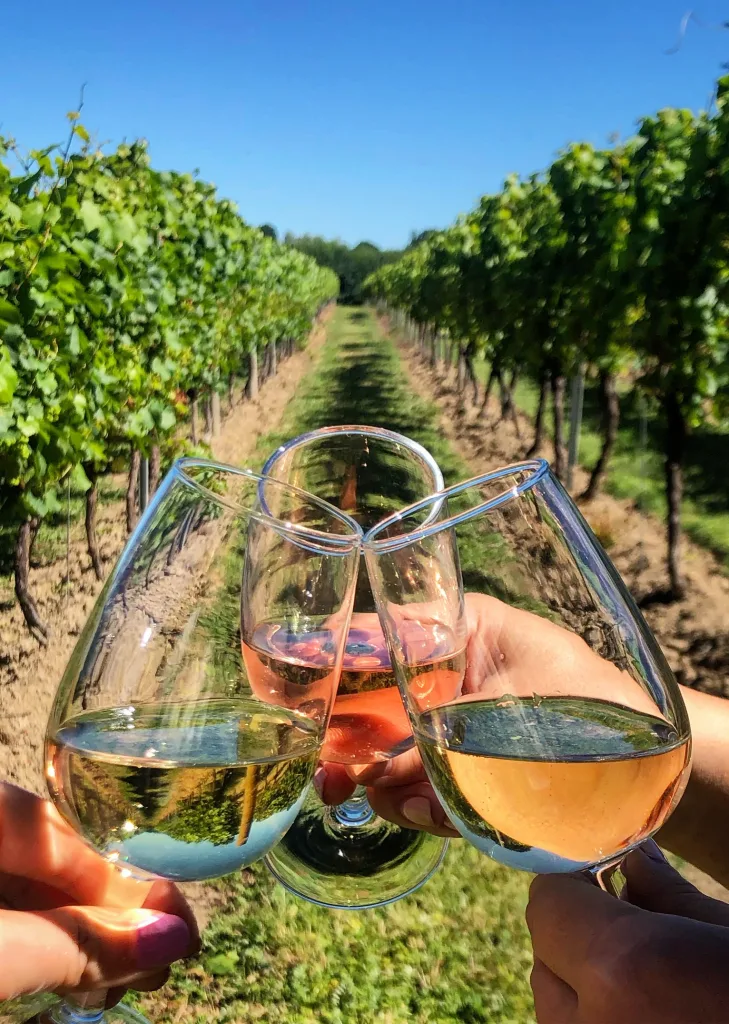

The Douro is routinely introduced as the world’s oldest wine region. It isn’t. Chianti’s boundaries were fixed in 1716, Tokaj’s in 1730, and the Douro didn’t get its official demarcation until 1756 — arriving third, forty years behind Chianti. What the Douro did first was turn that boundary into continuous law: a regulatory system that has operated, with modifications, for close to 270 years. That’s a less romantic claim than “the oldest,” and also the true one.
It’s a useful place to start, because most guides to Portuguese wine repeat the same handful of facts without checking them, then move straight to tasting notes. Portugal regulates wine through 31 official DOC regions and grows more than 250 indigenous grape varieties — a higher concentration than almost anywhere else in Europe — and the differences between these regions explain more about the country than most itineraries get around to.
This guide covers the regions that actually matter for a visitor based in Lisbon: the Douro, Vinho Verde, Alentejo, and the grapes behind Portugal’s reds — plus which of these you can taste on a day trip, and which require a proper trip north.
Portugal’s Wine Regions at a Glance
Portugal has one of Europe’s most diverse wine landscapes. Despite covering an area of just 92,212 km²—roughly the size of Indiana—the country is home to 31 DOC (Denominação de Origem Controlada) wine regions and 14 Vinho Regional appellations. More than 250 indigenous grape varieties are cultivated here, many of them found nowhere else. Portugal’s position on Europe’s Atlantic edge allowed local grape varieties to evolve with relatively little influence from the international cultivars that spread across much of the continent.
The country’s wine regions follow a broad geographic pattern. Vinho Verde occupies the cool, Atlantic-facing north, while the Douro and Dão lie further inland on schist and granite soils. Bairrada, between them and the coast, is particularly known for sparkling wines. Around Lisbon are the Lisboa, Tejo, and Setúbal Peninsula regions, while Alentejo stretches across the warm plains south and east of the capital. Offshore, Madeira follows its own historic classification system and produces one of the world’s longest-lived fortified wines.
For travellers staying in Lisbon, three wine regions make practical day trips: Alentejo, the Setúbal Peninsula, and Colares, the small Atlantic appellation near Sintra. The Douro Valley and Vinho Verde are different journeys altogether. Both lie more than 300 km north, making them better suited to a multi-day itinerary from Porto or a private transfer rather than a day of wine tasting from Lisbon.
Douro: Where Port Wine Started (and Didn’t Stay)
The Douro is often described as the world’s oldest demarcated wine region. The reality is slightly more nuanced. Chianti established its official boundaries in 1716, Tokaj followed in 1730, and the Douro was formally demarcated in 1756 under the Marquis of Pombal. What distinguishes the Douro is not simply its age, but the continuity of its regulatory system, which—with various reforms—has governed the region for nearly 270 years. Whether this makes it “the oldest” depends on how the claim is defined.
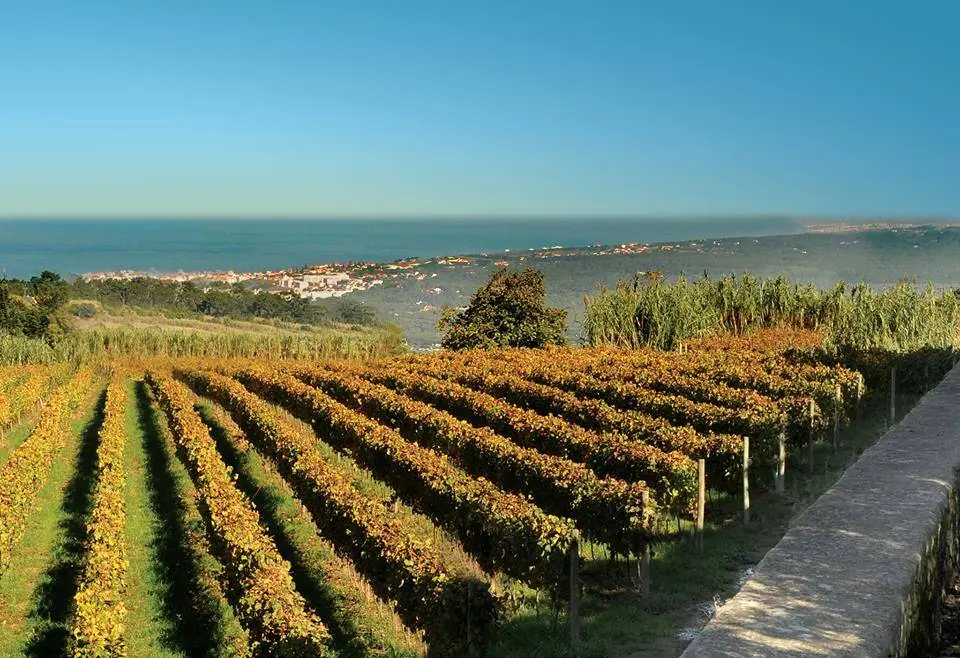
The valley itself is shaped by steep schist hillsides where vineyards are carved into narrow terraces. The rock is so dense that vine roots must work through natural fractures to reach water, while the terrain remains too steep for much mechanised farming. In 2001, the Alto Douro Wine Region was designated a UNESCO World Heritage Site, recognised as a cultural landscape created through nearly two millennia of viticulture.
The Douro built its international reputation on Port wine—a fortified wine made by adding grape spirit during fermentation, preserving natural sweetness. Traditional Port blends rely on indigenous varieties including Touriga Nacional, Touriga Franca, Tinta Roriz, and Tinta Barroca.
Over the last few decades, however, the region has undergone a quiet transformation. The same vineyards that historically produced grapes almost exclusively for Port now make some of Portugal’s most highly regarded dry red wines. A category that was commercially insignificant a generation ago has become one of the Douro’s defining strengths, standing alongside the fortified wine that first made the valley famous.

Vinho Verde: The Green Wine of the North
Despite the name, Vinho Verde (“green wine”) is rarely green. The term refers to the wine’s youth rather than its colour. Most examples are pale gold, while rosé and red versions also exist. The misunderstanding has followed the region for decades and remains one of Portugal’s most persistent wine misconceptions.
Located in Portugal’s cool, Atlantic-facing northwest, the Vinho Verde region was formally demarcated in 1908 and received DOC status in 1984. It is divided into nine sub-regions, each with its own climate and grape varieties. The northernmost, Monção e Melgaço, bordering Spain, is particularly renowned for Alvarinho—the same grape known across the border in Galicia as Albariño.
Traditional Vinho Verde is defined by its freshness: high natural acidity, moderate alcohol—typically 9–11% ABV—and, in some styles, a slight natural spritz. These wines are intended to be enjoyed young, when their bright citrus, orchard fruit, and mineral character are at their peak. They are made for immediate drinking rather than long-term ageing, which is exactly what the name “green” was meant to convey.

Alentejo: Portugal’s Wine Powerhouse
Alentejo produces approximately 14–15% of Portugal’s total wine volume—not the majority many visitors assume after seeing its labels throughout the country. Where the region truly dominates is the domestic market. Alentejo wines account for roughly 43–45% of all wine purchased by Portuguese consumers and contribute around 30% of the country’s wine exports. Production share and market share are different measures, and they’re often mistakenly treated as the same figure.
Stretching across the broad, sunlit plains south and east of Lisbon, Alentejo is also Portugal’s cork country, with vineyards interwoven among cork oak forests that supply around half of the world’s natural cork.
The warm, dry climate produces generous, fruit-forward wines. The region’s reds are typically made from Aragonez (Portugal’s name for Tempranillo), Trincadeira, and Alicante Bouschet, while the flagship white variety is Antão Vaz. The resulting wines tend to be full-bodied, with ripe dark fruit, soft tannins, and enough richness to be enjoyable even when young.
That approachable style has helped Alentejo become Portugal’s everyday wine region. It may not produce the country’s largest share of wine, but it is the region most commonly found on Portuguese dining tables.

Portuguese Red Wines and the Grapes Behind Them
Ask which grape defines Portuguese red wine and the honest answer is that no single one does. With more than 250 indigenous grape varieties, the answer changes by region — and sometimes by valley.
Touriga Nacional is the closest thing to a national signature: small, thick-skinned, deeply coloured, and naturally high in tannins. It forms the backbone of many of the Douro’s Port blends and also plays a leading role in the granite-soil reds of Dão, Portugal’s first region officially demarcated for still (non-fortified) wine in 1908.
Baga, concentrated in Bairrada on the Atlantic coastal plain, produces structured, high-acidity reds with excellent ageing potential. Since Bairrada’s sparkling wine DOC was recognised in 1991, the grape has also become an important component of Portugal’s traditional-method sparkling wines.
Further south, Aragonez (Portugal’s name for Tempranillo) and Trincadeira dominate vineyards across Alentejo, producing generous, fruit-driven reds suited to the region’s warm climate. Around Lisbon and the Setúbal Peninsula, Castelão remains one of the defining local varieties, valued for its ability to thrive in sandy soils and produce balanced wines with moderate tannins.
None of these are simply Portuguese versions of internationally famous grapes. Touriga Nacional and Baga, in particular, remain planted almost exclusively in Portugal. That relative isolation preserved a remarkable diversity of native varieties while much of Europe increasingly replaced local grapes with internationally recognised cultivars over the last two centuries.
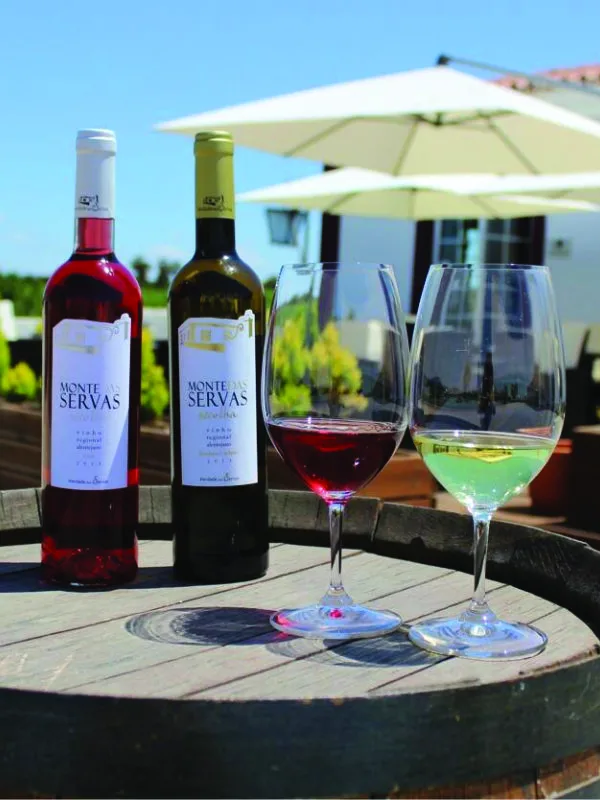
Tasting Portugal’s Wines from Lisbon
Three of Portugal’s best-known wine regions are within easy reach of Lisbon for a day trip. Two others deserve considerably more time.
Alentejo, Setúbal, and the Colares sub-region near Sintra are all realistic day-trip destinations. Alentejo’s wineries are typically 90 minutes to two hours from Lisbon, depending on the estate. Setúbal is under an hour away and is best known for Moscatel de Setúbal, Portugal’s celebrated fortified dessert wine. Colares is closer still and offers one of the country’s most unusual wine stories: its vineyards grow ungrafted in deep coastal sand, making them some of the few in Europe that survived the 19th-century phylloxera epidemic without needing American rootstocks.
The Douro and Vinho Verde regions are different propositions altogether. Both lie more than 300 km north of Lisbon, near Porto, making them better suited to a multi-day itinerary or a private transfer rather than a same-day wine excursion.
At Yellow Cab TT Tours, our wine experiences from Lisbon focus on the regions that genuinely work as day trips. Rather than rushing between distant wineries, we spend time where the landscape, history, and wines can actually be appreciated in a single day.
Taste Portugal’s Wine Regions from Lisbon
Alentejo, Setúbal, and Sintra’s Colares sub-region are all within day-trip reach of Lisbon — no overnight required, no producer names dropped for the sake of it, just the region and whatever’s actually in the glass.
FAQ
What are Portugal's main wine regions?
Is the Douro really the world's oldest wine region?
What does "Vinho Verde" mean?
What is the biggest wine-producing region in Portugal by volume?
What grape is considered Portugal's signature red wine grape?
Which Portuguese wine regions can I visit as a day trip from Lisbon?
How many grape varieties does Portugal have?
What is the difference between Port and Douro red wine?
Is Alentejo wine the same as Port?
Can I visit the Douro Valley from Lisbon in a day?

Founder & Director of Yellow Cab TT Tours. Guiding in Portugal for 20+ years.
Founded Yellow Cab TT Tours in 2013. 3,372 five-star reviews on Tripadvisor.