

Casa Piriquita has operated from Rua das Padarias in Sintra since 1862, making it one of the oldest continuously operating pastry shops in Portugal. It makes two products that define Sintra’s food identity: the queijada — a cheese tart with a recipe older than the shop itself — and the travesseiro — a puff pastry with almond cream invented by the founder’s granddaughter during the 1940s.
The travesseiro is the more photographed of the two. The queijada is the older. When I ask first-time visitors to Sintra what they remember most about the food, the answer is almost always one of two things: the view from a miradouro, or the icing sugar on their shirt from a travesseiro.
Travesseiro vs Queijada – at a glance
| Travesseiro | Queijada de Sintra | |
|---|---|---|
| Shape | Rectangular pillow | Small round tart |
| Pastry | Puff pastry (massa folhada) | Short pastry shell |
| Filling | Ground almonds + egg custard | Requeijão (fresh cheese) + eggs + sugar + cinnamon |
| Temperature | Served warm | Served at room temperature |
| Invented | 1940s (WWII era) | Medieval – predates 1862 shop |
| Where to buy | Piriquita I and II | Piriquita I and II, Sapa factory |
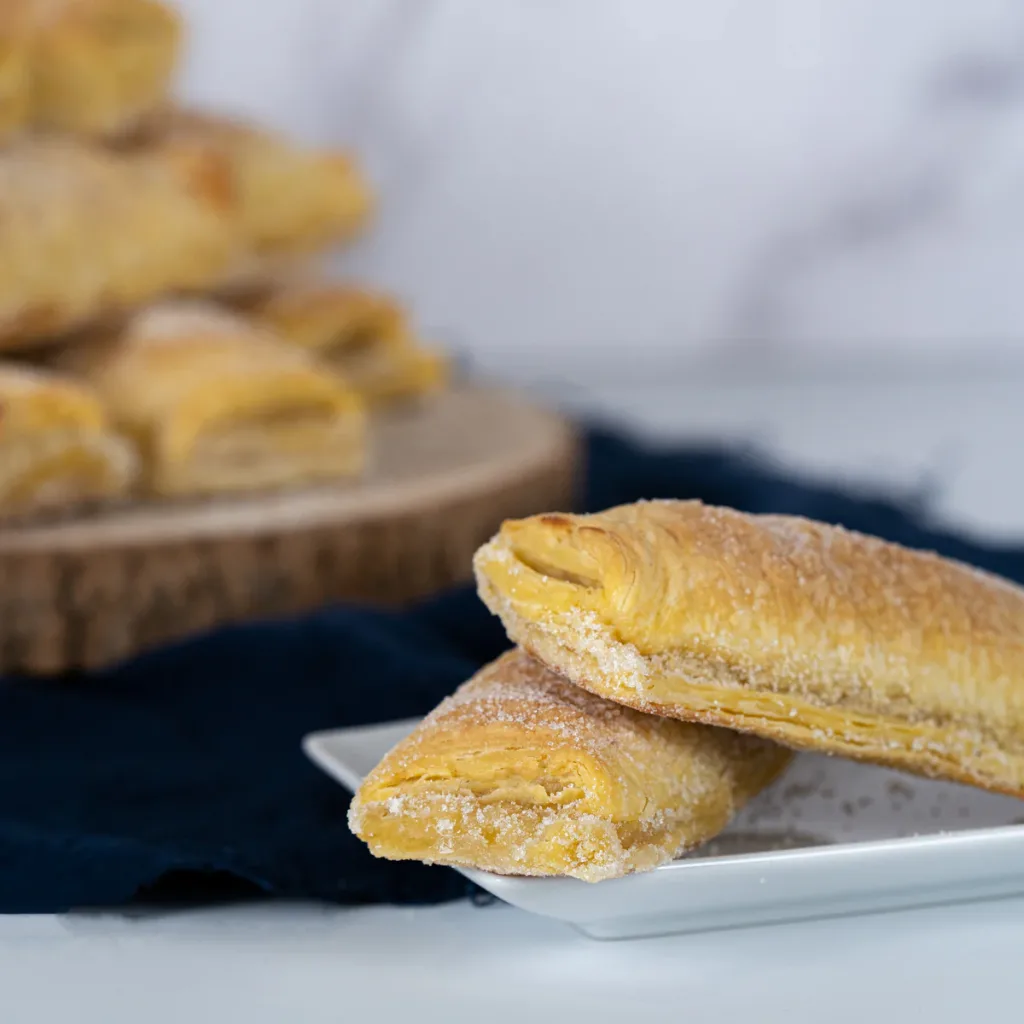
Travesseiro de Sintra
What It Is
A travesseiro is a rectangle of puff pastry – approximately 15–18 cm long – filled with a cream of ground almonds and egg custard (creme de ovos), folded, and baked until the pastry is golden and flaky. It is dusted with icing sugar and served warm. The name means “pillow” in Portuguese.
The combination of the flaky exterior and the dense, sweet interior means that eating a travesseiro without icing sugar reaching your clothing requires specific technique. The Piriquita staff are patient about this.
Where It Comes From
The travesseiro was invented at Casa Piriquita in the 1940s – during the Second World War – by Constança Luísa Cunha, the granddaughter of the bakery’s founders. She found the recipe in an old cookbook during the wartime period when innovation in pastry production became necessary. The original recipe has been maintained by the family for five generations and has never been published.
Several pastelarias in Sintra and elsewhere in Portugal sell travesseiros. The results are, by all accounts, acceptable. They are not the Piriquita version. The family considers the recipe proprietary, and its specific almond-to-custard ratio has not been successfully reverse-engineered in any published form.
Check out our Pastel de Nata guide.

Queijada de Sintra
What It Is
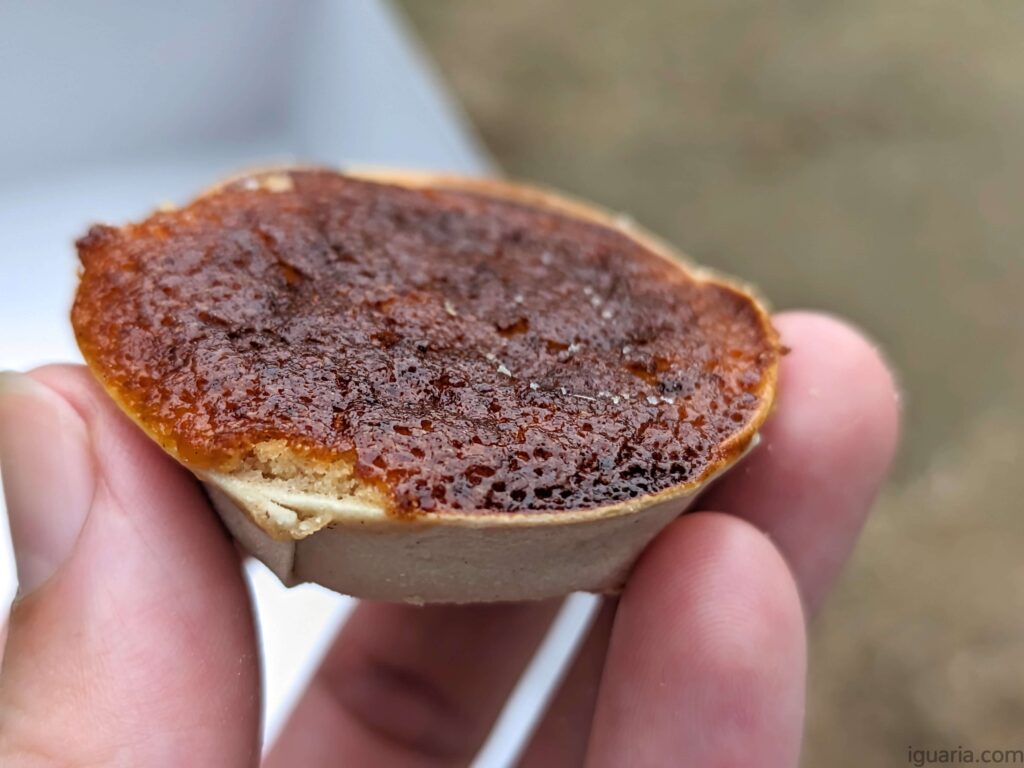
A queijada de Sintra is a small, round pastry tart — approximately 5–6 cm in diameter — with a thin, slightly crisp pastry shell and a dense filling of requeijão (a Portuguese fresh cheese similar to ricotta), eggs, sugar, flour, and cinnamon. It is served at room temperature, not warm. The texture of the filling is firm, slightly grainy from the cheese, and noticeably less sweet than the travesseiro.
History
The queijada de Sintra pre-dates the travesseiro by centuries. The exact origin is disputed — some sources attribute the recipe to Sintra’s Capuchin monks in the 16th century; others point to local farm women producing cheese-based tarts for the court at the National Palace. What is documented is that queijadas were already an established Sintra tradition by the time Casa Piriquita opened in 1862.
King Carlos I of Portugal (r. 1889–1908) spent summers in Sintra and visited the shop on Rua das Padarias. According to the shop’s own history, it was the king who encouraged the owner to focus on queijadas and formalise production. He also gave the founder’s wife — Constância Gomes — the nickname “Piriquita” (parakeet), a reference to her small stature. The nickname became the shop name.

Casa Piriquita — the Main Shop
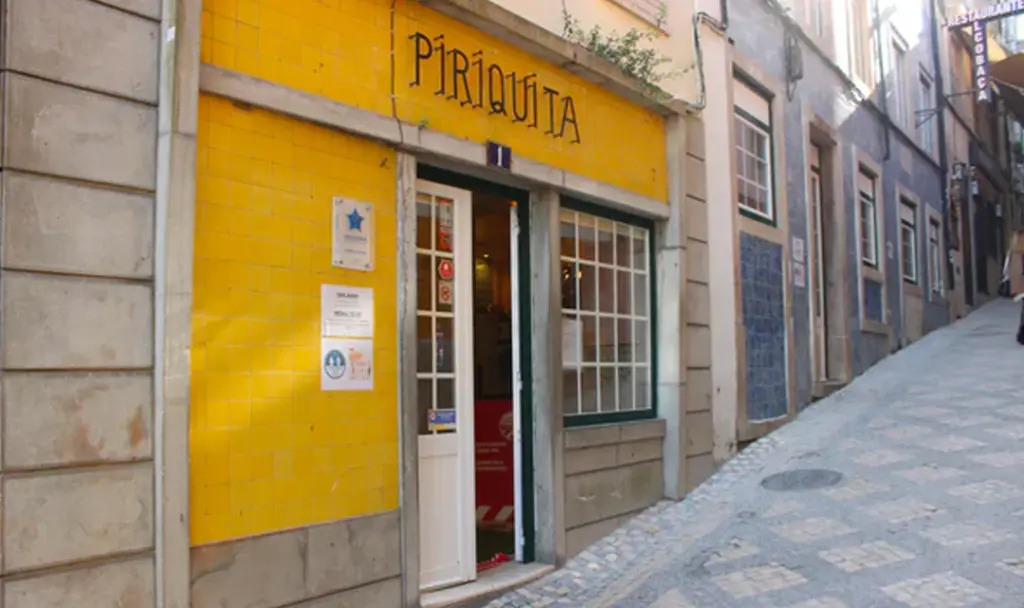
Casa Piriquita was founded in 1862 by Amaro dos Santos and his wife Constância Gomes. The shop occupies a corner position on Rua das Padarias in Sintra’s historic centre, approximately 300 metres from Sintra station. It is listed in Portugal’s Comércio com História registry – a government programme recognising historic retail businesses.
There are currently two Piriquita locations in Sintra:
| Piriquita I (original) | Piriquita II | |
|---|---|---|
| Address | Rua das Padarias 1-3, Sintra | Rua das Padarias 18, Sintra |
| Distance from station | ~300m | ~350m |
| Products | Full range | Full range |
| Seating | Limited indoor | Some indoor |
Opening hours change seasonally. Verify current hours at piriquita.pt before visiting.
Both locations sell travesseiros, queijadas, and a range of other Portuguese pastries. Buy travesseiros from the counter for warm pastries – pre-packaged versions sold for take-away are not warm.
A third Casa Piriquita location has recently opened in Lisbon – useful if you want to taste before the Sintra visit, but the originals are made in Sintra.
Where Else to Find Them
Travesseiros: Available at several pastelarias in Sintra’s historic centre. Piriquita’s version is the most widely rated. Expect to pay approximately EUR 1.50–2.50 per travesseiro (a box of six runs around €8.80). Check current prices at piriquita.pt.
Queijadas: Piriquita sells queijadas, but there is a second traditional producer: Fábrica das Verdadeiras Queijadas da Sapa, located at Volta do Duche 12, Sintra (on the road connecting the train station to the historic centre). The Sapa factory claims historical continuity of the queijada recipe and sells only queijadas. Worth visiting if you specifically want a comparison between the two producers’ versions – the Sapa queijada has a slightly firmer filling.
Both travesseiros and queijadas are sold in packages suitable for transport – useful if bringing to family or colleagues. Both travel well for 2–3 hours without refrigeration.

Practical Tips
When to go: Arrive at Piriquita before 10:30 or after 15:00. The queue at lunch (12:00–14:00) can extend onto the street, particularly in July and August.
What to order: If this is your first visit, order one travesseiro (warm, from the counter) and two queijadas. The contrast in temperature, texture, and flavour gives you the full picture. Total cost: approximately EUR 4–5. Verify current prices at piriquita.pt.
Packaging for travel: Both pastries are available boxed for travel. Travesseiros are best eaten warm on the day; queijadas keep well for 48 hours at room temperature.
Standing vs sitting: Most people eat at the counter standing or on the pavement outside. Seating is limited at both Piriquita locations during peak season.
Our Sintra Tours from Lisbon
Yellow Cab TT Tours includes a stop for travesseiros and queijadas in several Sintra itineraries. Our guides know which days Piriquita queues are shortest.
- See the full guide to spending a day in Sintra: Things to Do in Sintra.
- Transport options from Lisbon: How to Get from Lisbon to Sintra.
- Overview of Sintra’s palaces and history: Sintra destination guide.






Private Sintra Panoramic 4x4 Tour

FAQ
What is a travesseiro de Sintra?
What is a queijada de Sintra?
When was Casa Piriquita founded?
Where is Casa Piriquita in Sintra?
What is the difference between a travesseiro and a queijada?
How much do travesseiros and queijadas cost?
When is the best time to visit Piriquita in Sintra?

Founder & Director of Yellow Cab TT Tours. Guiding in Portugal for 20+ years.
Founded Yellow Cab TT Tours in 2013. 3,372 five-star reviews on Tripadvisor.