

Biester Palace was conceived in 1880 by Ernesto Biester, a Lisbon playwright and theatre impresario, who commissioned one of Portugal’s leading 19th-century architects to design a neo-Gothic mansion on the edge of the Sintra hills. Biester died the same year he commissioned the project — without seeing a single stone placed. His brother Frederico and Frederico’s wife Amélia Freitas Guimarães Chamiço inherited the commission and completed the construction.
In 1999, Roman Polanski chose the completed palace as a filming location for The Ninth Gate — a film about a rare book dealer searching for a manuscript said to summon the devil. The palace has been open to visitors since 2022.
Key facts:
- Location | Sintra hills, approximately 15-minute walk from National Palace of Sintra.
- Open since | 2022.
- April–September | 10:00–20:00 (last admission 19:00).
- October–March | 10:00–18:30 (last admission 17:30.
- Adult (18–65) | EUR 16.
- Advance booking | Recommended for weekends.
Chalet Biester History
Ernesto Biester and the Commission (1880)
Ernesto Biester (1828–1880) was a prominent figure in 19th-century Lisbon cultural life: a playwright, journalist, and theatre director whose works were performed at the Teatro Nacional D. Maria II. He identified a property in Sintra suitable for a private residence and in 1880 commissioned an architect to design it.
He died in 1880, childless, before construction began. The playwright did not get to see his own production.
Responsibility for the project passed to his brother, Frederico Biester, and Frederico’s wife Amélia Freitas Guimarães Chamiço, who came from a prominent banking family. They oversaw construction and the completion of the interior.
I have walked past this building hundreds of times in the last twenty years. It was closed for most of that time.
Who Built It
The architect was José Luis Monteiro (1848–1942), one of the most significant Portuguese architects of the late 19th century. Monteiro designed the Rossio railway station in Lisbon (1886–1890) — the neo-Manueline station with the distinctive horseshoe arches at the entrance, through which millions of passengers travel to Sintra each year on the Linha de Sintra.
The interior was designed by Luigi Manini (1848–1936), an Italian architect and opera set designer who also worked at La Scala in Milan and the Teatro São Carlos in Lisbon.
Manini is best known in Portugal as the designer of the interior of Quinta da Regaleira — built at almost exactly the same time, 1.2 kilometres away. The two buildings share no obvious visual style but share an interior designer.
Manini was versatile.
The building’s style is eclectic revivalist, with dominant neo-Gothic elements — pointed arches, stone towers, ornamental tracery — combined with Romantic landscape design in the gardens. The overall effect is of a building designed to look as though it has been there for centuries longer than it has.
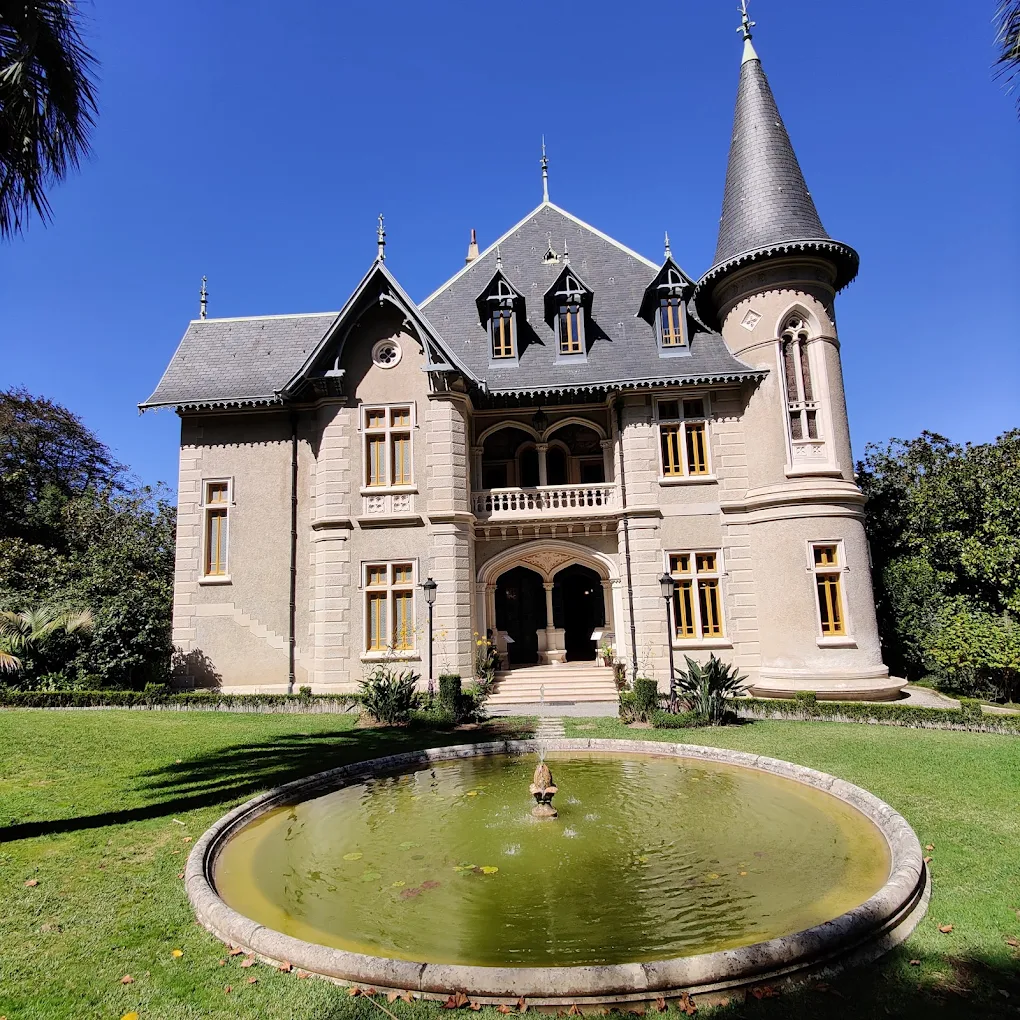
The Ninth Gate (1999)
The Ninth Gate (1999) was directed by Roman Polanski and starred Johnny Depp as Dean Corso, a rare book dealer hired to authenticate copies of a 17th-century manuscript. Lena Olin and Frank Langella co-starred. The film was based on The Club Dumas (1993) by Spanish novelist Arturo Pérez-Reverte.
Polanski filmed at locations in Portugal, France, and Spain. Biester Palace was used as the library and residence of Boris Balkan (played by Frank Langella) — the collector who hires Corso. The palace’s neo-Gothic interior provided the film’s atmospheric private library setting.
Since 2022, visitors to Biester Palace can see a dedicated room that screens footage from *The Ninth Gate* filmed on location at the palace, and displays a book and postcards used as props in the film.
Roman Polanski chose Biester Palace because he needed a building that looked like it concealed secrets. The palace has been doing this successfully since 1880.

Visiting Biester Palace in 2026
- April–September | 10:00–20:00 (last admission 19:00).
- October–March | 10:00–18:30 (last admission 17:30).
Tickets:
- Adult (18–65) | EUR 16.
- Youth (6–17) | EUR 12.
- Senior (65+) | EUR 12.
- Child under 5 | Free.
- Family (2 adults + 4 youth) | EUR 45.
The palace is privately managed, not by Parques de Sintra. Advance online booking is recommended for weekends from April to October to avoid sold-out entry windows.
How to Get There
Biester Palace is approximately 15 minutes by foot from the National Palace of Sintra, uphill along the Volta do Duche road. The entrance gate and stone towers are visible from the road before the signage.
Bus 434 passes near the palace on its route to Pena Palace but does not have a dedicated stop. During the summer season (April–October), there is a stop at Estrada da Pena 16 for the summer entrance — this reduces the walk to approximately 5 minutes. Check the current Bus 434 route map at carrismetropolitana.pt.
Taxi or Uber from Sintra town centre: approximately 5-minute drive.
To reach Biester Palace on foot from the National Palace of Sintra, follow the Volta do Duche road uphill. The walk from the National Palace takes approximately 15 minutes. This combination — National Palace of Sintra followed by Biester Palace — is manageable in a single half-day without using Bus 434.
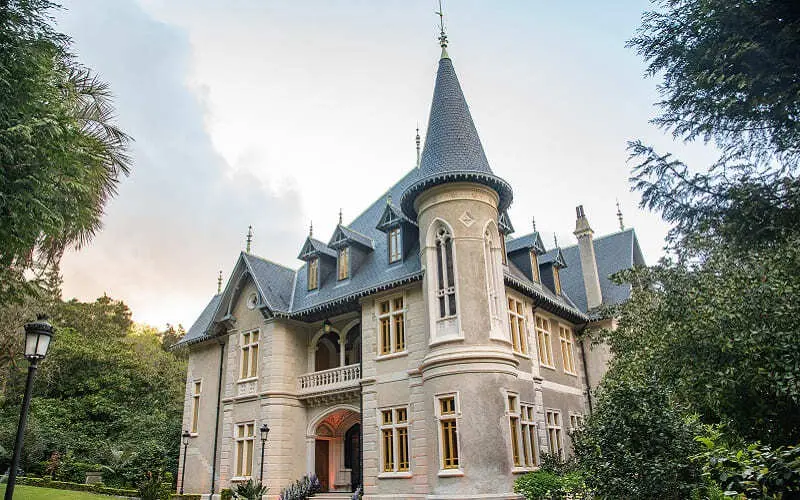
What You Can See
The visit covers the palace interior and gardens:
The Ninth Gate room: a dedicated space screening footage filmed at Biester Palace during the 1999 production, with props from the film on display. For visitors specifically interested in the film connection, this is the primary draw.
Palace rooms: the neo-Gothic reception rooms, with Luigi Manini’s interior decorative scheme — carved stonework, painted ceilings, and period furnishings. The interior is substantially more intact than many comparable Sintra properties.
Gardens: the grounds cover approximately 1 hectare, with mature trees and the Romantic-style landscaping typical of 19th-century Sintra properties. Smaller than Quinta da Regaleira or Monserrate, but with good views of the Serra de Sintra.
The visit duration is approximately 45–60 minutes. Biester Palace is not large — this is not a full-day destination — but it works well as an addition to a half-day that includes the National Palace.
The most frequent question I get about Biester Palace: “Is it actually worth going to, or is it just because of the film?” The answer is: both. The Ninth Gate connection is the reason most visitors know the name. The building itself — neo-Gothic, largely intact, with a layered history of commission, death, and completion — is worth seeing on its own terms.

Our Sintra Tours from Lisbon
Yellow Cab TT Tours has operated Sintra day tours from Lisbon since 2013, under RNAAT licence No. 119/2013. Our departure time of 08:30-09:00 places groups at Sintra’s first monuments before the Bus 434 queue builds at the train station.
Palace and monument tickets are purchased separately at official websites (parquesdesintra.pt, regaleira.pt). For a broader overview of Sintra’s geography, history, and UNESCO status: Sintra destination guide.

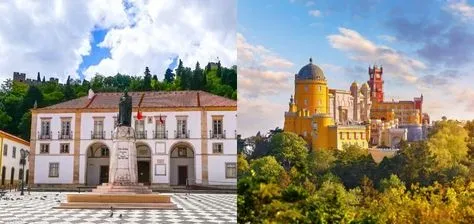
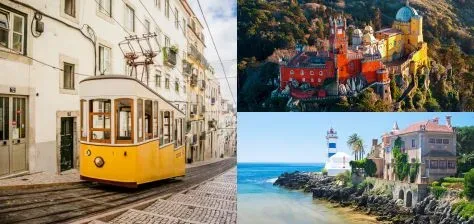

Private Sintra Panoramic 4x4 Tour

FAQ
What is Biester Palace in Sintra?
Biester Palace (Palácio Biester or Chalet Biester) is a neo-Gothic 19th-century mansion in Sintra, conceived in 1880 by playwright Ernesto Biester and completed by his brother Frederico. The architect was José Luis Monteiro (who also designed Rossio railway station). The interior was designed by Luigi Manini, who also designed the interior of Quinta da Regaleira. The palace was used as a filming location for The Ninth Gate (Roman Polanski, 1999) and has been open to visitors since 2022.
Was The Ninth Gate filmed at Biester Palace?
Yes. Biester Palace was used in The Ninth Gate (1999), directed by Roman Polanski and starring Johnny Depp, Lena Olin, and Frank Langella. The palace served as the interior library and residence of the character Boris Balkan. A room inside the palace now screens footage from the filming and displays props from the film.
How much does Biester Palace cost to visit?
What are the opening hours of Biester Palace?
April to September: 10:00–20:00 (last admission 19:00). October to March: 10:00–18:30 (last admission 17:30). Verify current hours before visiting — check the official Biester Palace website or visitsintra.travel.
How do I get to Biester Palace from Sintra station?
15-minute walk from the National Palace of Sintra, uphill along Volta do Duche road — approximately 20–25 minutes total from the train station. Bus 434 passes nearby; in summer (April–October) a stop at Estrada da Pena 16 reduces the walk to approximately 5 minutes. Taxi from Sintra town: approximately 5-minute drive.
Who designed Biester Palace?
Architect: José Luis Monteiro (1848–1942), who also designed Rossio railway station in Lisbon (1886–1890). Interior designer: Luigi Manini (1848–1936), Italian architect and opera set designer who also worked at La Scala Milan and the Teatro São Carlos Lisbon, and designed the interior of Quinta da Regaleira. Ernesto Biester died in 1880 before construction began; the palace was completed by his brother Frederico and Frederico’s wife Amélia.
Is Biester Palace worth visiting?
Yes, particularly for visitors interested in the Ninth Gate filming connection, 19th-century neo-Gothic architecture, or the Luigi Manini interior style. The visit takes approximately 45–60 minutes. Biester Palace works best as part of a half-day that includes the National Palace of Sintra (15-minute walk away). Standalone visit: worthwhile if the film connection is of interest; less essential than the five main Sintra palaces for a first-time visitor.

Founder & Director of Yellow Cab TT Tours. Guiding in Portugal for 20+ years.
Founded Yellow Cab TT Tours in 2013. 3,372 five-star reviews on Tripadvisor.