


Lisbon is surrounded by day trips that range from 28 km to 180 km away. That distance difference matters more than most travel guides admit. Sintra takes 40 minutes by train from Rossio. Évora takes 90 minutes by car on the A6. You can do both in the same week — but you cannot do both in the same day and do either properly.
I have been running private day tours from Lisbon since 2013. The question I get most often is some version of: “We have three days — what should we see?” The honest answer depends on what the group actually wants, how they travel, and how much time they are willing to spend in a vehicle.
This guide ranks 12 destinations reachable as day trips from Lisbon. Each entry covers: distance and travel time, what you will actually see, how long you need, and whether it combines well with another stop. The goal is to help you decide which destinations deserve a full day and which can be paired.
How to Use This Guide
The 12 destinations below are grouped by geographic direction and distance from central Lisbon, not by subjective “must-see” ranking. Each entry is honest about constraints: what you give up by going independently versus with a private guide, how long you actually need, and what the common mistake is.
One rule applies throughout: a destination that takes 3 hours of travel for 2 hours of content is not a good day trip. Several popular suggestions fall into this category.
Sintra — UNESCO World Heritage, 28 km
Distance from Lisbon: 28 km northwest | Travel time: 40 min by train (Rossio → Sintra), 35–50 min by car | Recommended time: full day (6–8 hours).
Sintra is the strongest day trip from Lisbon by almost any measure. The Sintra Cultural Landscape was designated a UNESCO World Heritage Site in 1995, covering the historic centre, the palaces, and the surrounding natural park. The main attractions — Pena Palace (529 m elevation, construction 1842–1854), Quinta da Regaleira (early 20th century, neo-Manueline), the Moorish Castle (8th–10th century), and the National Palace of Sintra (medieval, royal residence until 1910) — are all within a compact area but require significant walking and time.
The train from Rossio station runs every 15–20 minutes and costs approximately €2.45 each way — the cheapest option by a significant margin. The challenge is that everything in Sintra involves hills, queues, and logistics that are substantially easier to handle with a guide and a vehicle.
Common mistake: Arriving after 10:30 in summer. Pena Palace queues at that point can exceed 45 minutes. The palace sells out its timed-entry tickets online before peak-season dates arrive. Groups that arrive by 08:30–09:00 have a fundamentally different experience from those who arrive at 11:00.
Combines well with: Cascais (30 min drive), Cabo da Roca (20 min from Sintra), Estoril (en route back to Lisbon).

Cascais & Cabo da Roca — Atlantic Coast, 30–42 km
Distance from Lisbon: Cascais 30 km west, Cabo da Roca 42 km west | Travel time: 40 min by train to Cascais, 50–60 min by car to Cabo da Roca | Recommended time: 3–5 hours as a standalone; 2–3 hours as part of Sintra day.
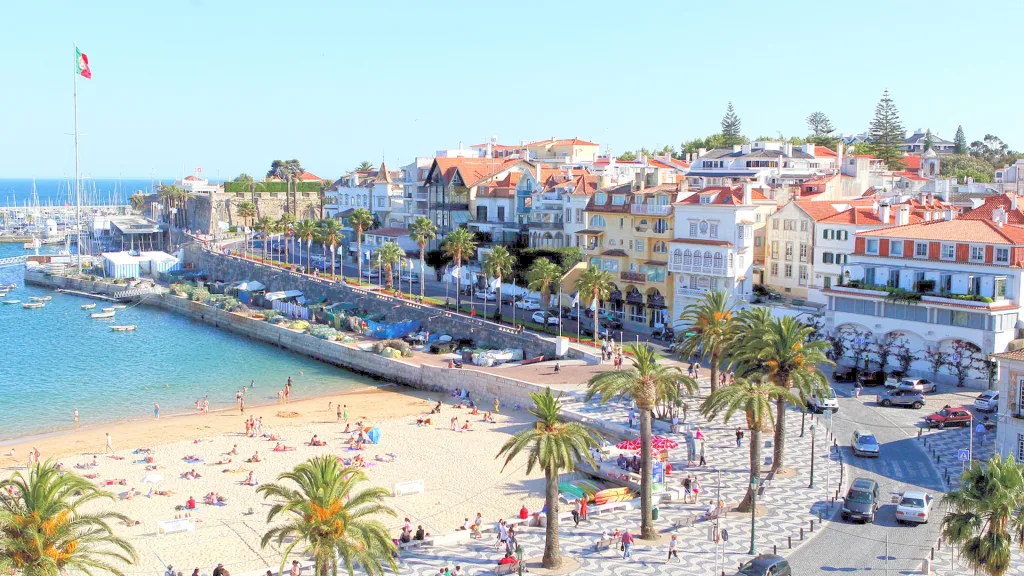
Cascais is a former royal summer residence and fishing town on the Atlantic coast. The historic centre, the Boca do Inferno sea cave (1.5 km west of the marina), and the Cascais seafront are all walkable and free. The town itself does not require more than 2–3 hours.
Cabo da Roca, 18 km northwest of Cascais, is the westernmost point of continental Europe (38°46’N, 9°30’W) at 140 metres above the Atlantic. The lighthouse has operated since 1772. The stop typically takes 20–40 minutes: viewpoint, the Camões stele, and the certificate if desired. On its own it is short; combined with Cascais and Sintra it becomes the geographic anchor of the full western circuit.
Common mistake: Treating Cascais as a full-day destination. It is excellent for 2–3 hours and works far better as a second stop after Sintra than as a standalone day trip.
Combines well with: Sintra (the standard western circuit), Estoril (10 min drive).
Fátima — Pilgrimage Sanctuary, 135 km
Distance from Lisbon: 135 km north | Travel time: 1h45 by private car, ~2h by Rede Expressos bus | Recommended time: 3–5 hours at the site; full day with Batalha and Nazaré.
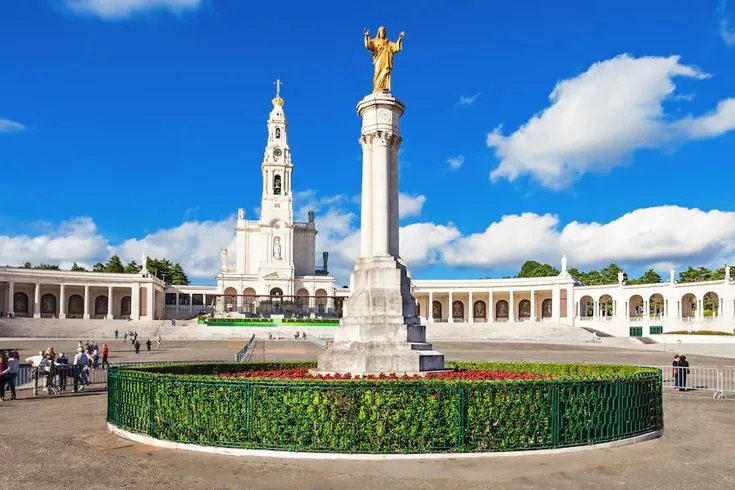
Fátima received 6.2 million visitors in 2024 — more than any other Catholic pilgrimage site in Iberia. The Sanctuary of Our Lady of Fátima comprises the Basilica of Our Lady of the Rosary (completed 1953), the Chapel of Apparitions (marking the site of the 1917 apparitions), and the Basilica of the Holy Trinity (completed 2007, capacity 8,600 — one of the largest churches in the world). Entry to all is free.
The apparitions occurred on the 13th of each month from May to October 1917, witnessed by approximately 70,000 people at the final apparition on 13 October 1917. Fátima is a functioning pilgrimage site, not a heritage attraction: the atmosphere depends entirely on when you visit. The 13th of May and October draw hundreds of thousands of pilgrims. Any other weekday in autumn or winter is quiet.
Common mistake: Going to Fátima and nothing else. At 135 km from Lisbon, the drive justifies combining with Batalha Monastery (14 km north, UNESCO 1983) and Nazaré (35 km west of Batalha) or Óbidos (55 km south of Fátima) for a full northern circuit.
Combines well with: Batalha (14 km), Nazaré (50 km from Fátima), Óbidos (55 km from Fátima).
Nazaré & Óbidos — Atlantic and Medieval, 120–130 km
Distance from Lisbon: Nazaré 120 km north, Óbidos 80 km north | Travel time: 1h30–1h45 by private car | Recommended time: 2–3 hours each; comfortably combined in one day.
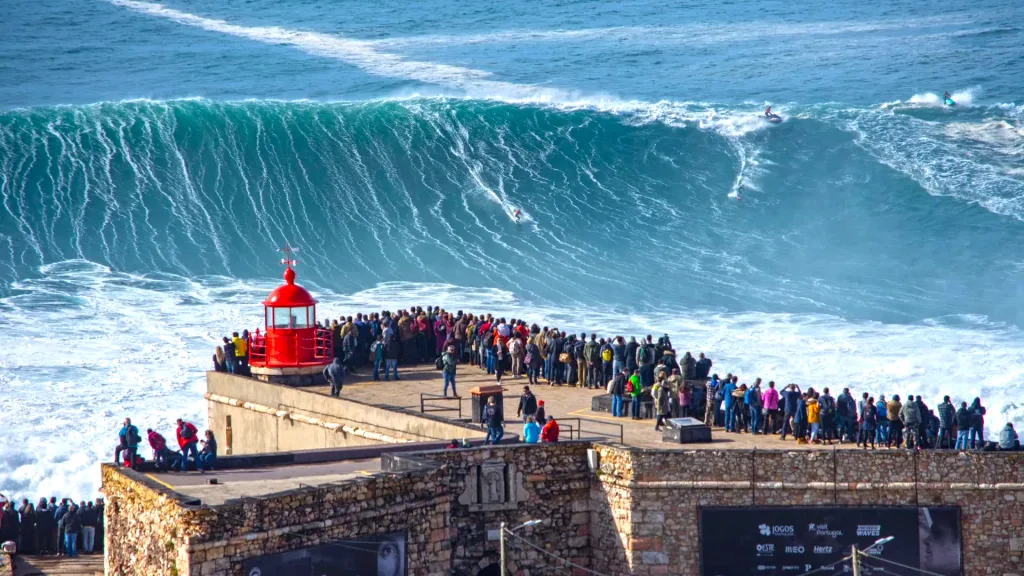
Nazaré is best known for the giant waves at Praia do Norte, produced by the Nazaré Canyon — a 230 km underwater canyon that concentrates Atlantic swell into surf exceeding 20 metres in height. Sebastian Steudtner set the current world record at 26.21 m here in October 2020. The wave season runs October to March. Outside this window, Nazaré is a traditional fishing town with a functioning funicular (built 1889) connecting the beach to the clifftop Sítio quarter.
Óbidos, 55 km south of Nazaré, is a medieval walled town with a perimeter wall (1.6 km) that visitors can walk in its entirety. The town is compact — the main street, Rua Direita, is 350 metres long. Óbidos is famous for ginjinha (sour cherry liqueur traditionally served in a chocolate cup), the Óbidos Lagoon, and the Livraria de Santiago bookshop inside a 12th-century church. Visit time: 1.5–2 hours.
Common mistake: Going to Nazaré only for the waves outside wave season (April–September). The town is pleasant but the surf spectacle does not exist in summer. If the waves are the reason, go October–March.
Combines well with: Fátima (50 km), Batalha (35 km from Nazaré), Alcobaça (15 km from Nazaré, UNESCO Monastery).
Évora — Roman and Alentejo, 140 km
Distance from Lisbon: 140 km east | Travel time: 1h30 by private car via A6 | Recommended time: full day (6–8 hours).
Évora’s historic centre was designated a UNESCO World Heritage Site in 1986. Within the walled city: the Roman Temple of Évora (1st century AD, the best-preserved Roman temple on the Iberian Peninsula), the Gothic Cathedral of Évora (begun 1186, the largest medieval cathedral in Portugal), and the Chapel of Bones — a 16th-century ossuary chapel lined with the remains of approximately 5,000 people inside the Igreja de São Francisco.
The city is compact and walkable. The Roman Temple is 400 metres from the Cathedral; the Chapel of Bones is 400 metres south of the Cathedral. A cork factory visit is available as an add-on — Évora is in the heart of the Alentejo cork region, which produces approximately 50% of the world’s cork supply.
Common mistake: Underestimating the distance. At 140 km, Évora is the furthest east of the standard day trips. The drive on the A6 is fast and straightforward, but the round trip is 280 km. It is a full day, not a half day.
Combines well with: Almendres Cromlech (16 km west of Évora — largest megalithic complex in the Iberian Peninsula, predates Stonehenge).
Also take a look at Alentejo wine tours and cork factory visit.

Batalha — Gothic Monastery, 120 km
Distance from Lisbon: 120 km north | Travel time: 1h20 by private car | Recommended time: 1.5–2 hours.
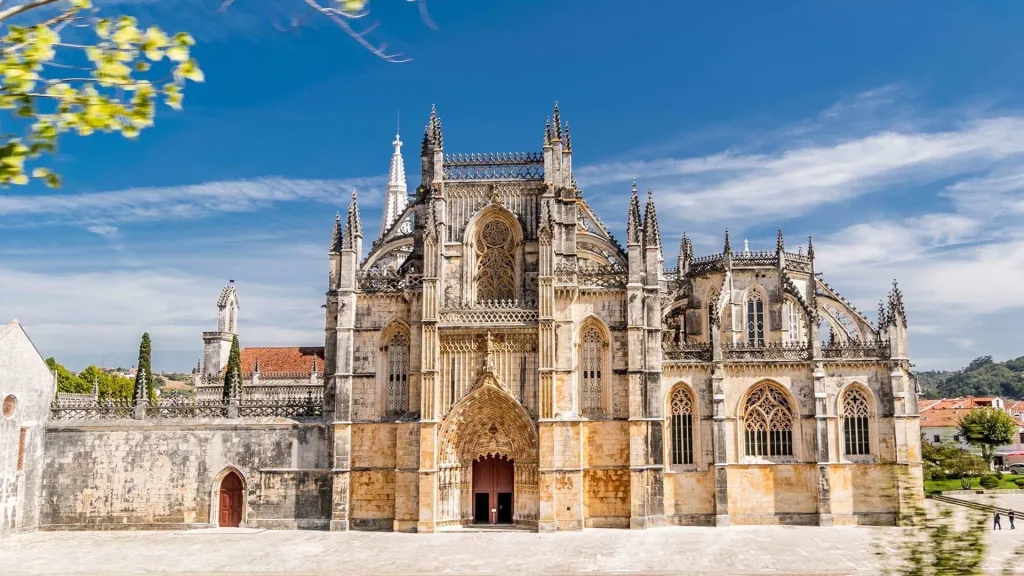
The Monastery of Batalha (Mosteiro de Santa Maria da Vitória) was built by King João I to fulfil a vow made before the Battle of Aljubarrota in 1385 — the decisive battle in which Portugal defeated Castile and secured its independence. Construction began in 1386 and continued across seven reigns; the Unfinished Chapels (Capelas Imperfeitas) were never completed, halted by the shift in royal attention to the Manueline projects of Manuel I.
The monastery was designated a UNESCO World Heritage Site in 1983. The Founder’s Chapel contains the tomb of King João I and his English wife Philippa of Lancaster (daughter of John of Gaunt, married 1387) — a medieval alliance that produced Henry the Navigator and remains the foundation of the oldest diplomatic alliance in the world, the Anglo-Portuguese Alliance (1373).
Common mistake: Skipping Batalha because Fátima is nearby. Batalha is 14 km from Fátima and architecturally among the finest Gothic buildings in Europe. Most Fátima-only tours miss it entirely.
Combines well with: Fátima (14 km), Nazaré (35 km), Alcobaça (20 km — also UNESCO).
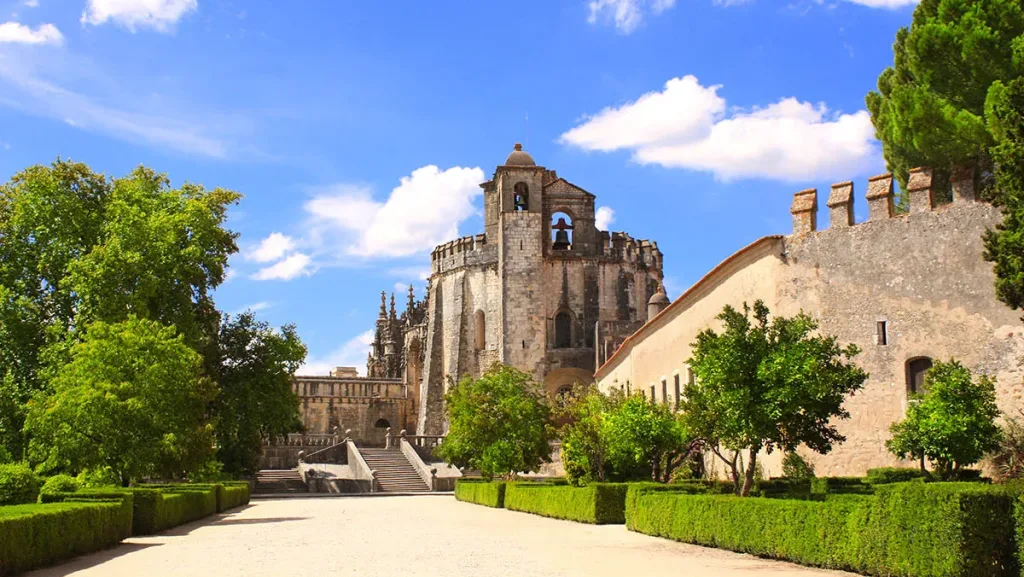
Tomar — Knights Templar, 140 km
Distance from Lisbon: 140 km north | Travel time: 1h30 by private car | Recommended time: 3–4 hours.
The Convent of Christ in Tomar (Convento de Cristo) was the headquarters of the Knights Templar in Portugal and later the Order of Christ. The Charola — a 12th-century Templar rotunda modelled on the Church of the Holy Sepulchre in Jerusalem — is the architectural centrepiece: a 16-sided rotunda that knights could attend Mass from horseback. The complex was designated a UNESCO World Heritage Site in 1983.
Tomar is less visited than Sintra or Évora, which means less competition for space inside the monuments. The town’s medieval Jewish quarter (Judiaria) and the Synagogue of Tomar (15th century, one of the best-preserved in Portugal) add a second layer to a visit.
Combines well with: Almourol Castle (20 km south — river island castle, 12th century, Knights Templar), Fátima (50 km west).
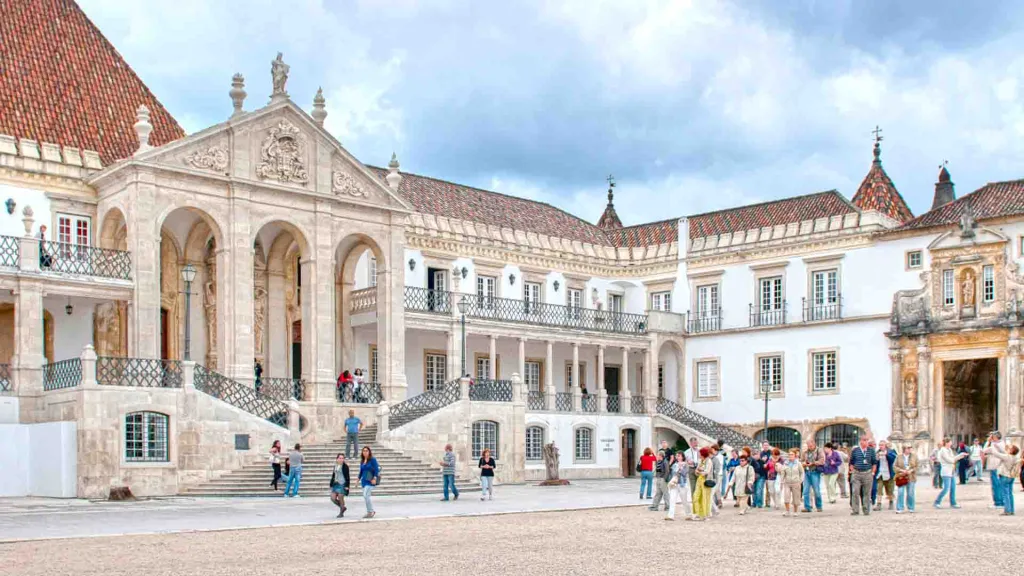
Coimbra — University City, 200 km
Distance from Lisbon: 200 km north | Travel time: 2h by private car, 2h15 by Alfa Pendular train | Recommended time: 4–5 hours minimum.
Coimbra was Portugal’s capital from 1139 to 1255 and is home to the University of Coimbra, founded 1290 — one of the oldest universities in continuous operation in the world and a UNESCO World Heritage Site (2013). The Biblioteca Joanina (Joanine Library, built 1717–1728) is the principal attraction: a Baroque library on three floors with gilded woodwork, frescoed ceilings, and a colony of bats that emerge at night to protect the books from insects.
At 200 km, Coimbra is the longest day trip on this list. The train is comfortable and practical. The city repays the distance — the university complex alone takes 2–3 hours — but it is a committed day, not a casual addition to another stop.
Common mistake: Combining Coimbra with Fátima (65 km apart) and thinking both can be done properly. They can be visited in one day; they cannot both be done well in one day.
Combines well with: Nothing — Coimbra works best as a standalone day trip.
Setúbal & Arrábida — Natural Park, 50 km
Distance from Lisbon: 50 km south | Travel time: 50 min by private car | Recommended time: 4–6 hours.
The Arrábida Natural Park covers the southern slope of the Serra da Arrábida mountain range — limestone cliffs dropping to clear turquoise water, with beaches (Portinho da Arrábida, Galapinhos) rated among the best in mainland Portugal. Setúbal is the gateway town, known for Moscatel de Setúbal (a fortified dessert wine produced in the peninsula since the 16th century).
Critical restriction: Private cars are banned from the main park road (EN379-1) from 7 June to 15 September, 07:00–19:00, under the Arrábida O2 programme. During this period, access requires a licensed operator vehicle with a municipal permit (TVDE or equivalent). Self-drive visitors in summer cannot access the best beaches by car.
Common mistake: Attempting to drive the park road independently in summer without checking the restriction. Most visitors who discover the ban at the checkpoint simply turn around.
Combines well with: Setúbal wine tasting tour.

Which Destinations Combine Well?
The most practical section for anyone planning multi-stop days.
Western circuit: Sintra + Cabo da Roca + Cascais + Estoril — ~130 km loop. Verdict: Standard — strongest single-day combination.
Northern circuit: Fátima + Batalha + Nazaré + Óbidos — ~270 km loop. Verdict: Works well — four distinct stops with a natural geographic flow.
Alentejo: Évora + Almendres Cromlech — ~300 km return. Verdict: Full-day route — no additional stops recommended.
Templar circuit: Tomar + Almourol — ~300 km loop. Verdict: Works well — two complementary sites in a logical sequence.
Coast: Arrábida + Setúbal — ~120 km return. Verdict: Works — suitable as a half-day or relaxed full-day option.
Coimbra + Fátima: University of Coimbra + Fátima Sanctuary — ~330 km loop. Verdict: Possible but rushed — only suitable for early departures and tight scheduling.
Évora + Fátima: Roman Évora + pilgrimage site Fátima — ~400 km loop. Verdict: Not recommended — excessive distance and opposite directions (~280 km apart).

Private Tour vs Train vs Bus — What Works for Each
Sintra:
Train: Best option (40 min, €2.35).
Bus: No direct service.
Private tour: Ideal when combined with Cascais + Cabo da Roca.
Cascais:
Train: ~40 min from Cais do Sodré.
Bus: No.
Private tour: Typically part of the Sintra circuit.
Fátima:
Train: No direct train.
Bus: Rede Expressos ~2h, ~€13.
Private tour: Best option when combined with Batalha and Nazaré.
Nazaré:
Train: No direct train.
Bus: Rede Expressos ~2h.
Private tour: Recommended as part of the northern circuit.
Évora:
Train: CP train ~1h40 from Oriente.
Bus: Rede Expressos ~1h45.
Private tour: Most flexible option for exploring surroundings.
Batalha:
Train: No train connection.
Bus: Rede Expressos (to nearby town).
Private tour: Only practical option when combined with other stops.
Tomar:
Train: CP train ~1h40.
Bus: Available.
Private tour: Required for Almourol Castle (not reachable by public transport).
Coimbra:
Train: Alfa Pendular ~2h15.
Bus: Available.
Private tour: Offers maximum flexibility within the city.
Arrábida:
Train: No rail connection.
Bus: No direct service.
Private tour: Only practical option (especially in summer; access permits may apply).

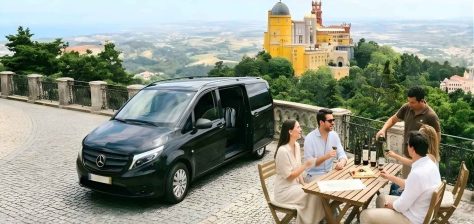
Private Day Tours from Lisbon
FAQ
What is the best day trip from Lisbon?
How many day trips can you do from Lisbon in one week?
What is the easiest day trip from Lisbon by public transport?
Can you do Sintra and Fátima in the same day?
Is Évora worth a day trip from Lisbon?
Is Arrábida accessible without a car?
What is the furthest day trip from Lisbon that still works?
Which day trips from Lisbon are best for families with children?
How far in advance should you book day trip tours from Lisbon?

Founder & Director of Yellow Cab TT Tours. Guiding in Portugal for 20+ years.
Founded Yellow Cab TT Tours in 2013. 3,372 five-star reviews on Tripadvisor.