


Lisbon’s food does not need a marketing campaign. It needs a clear list.
Here are the 15 dishes worth ordering, what each costs in 2026, and where to find the version a local would actually eat — not the version designed for a tourist menu.
After more than 20 years of bringing visitors to Lisbon — and eating lunch here most days of the working week — I can tell you the best food experiences in this city are rarely expensive. A proper tasca lunch costs €8.50–€12 and includes soup, a main, bread, and wine. A pastel de nata at Manteigaria costs €1.50. A shot of ginjinha near Rossio costs €1.50. Lisbon remains one of the most affordable food cities in Western Europe, and the quality-to-price ratio at a neighbourhood tasca is difficult to match anywhere on the continent. What follows is what to eat — in order of importance.
The Non-Negotiables
Pastel de Nata – €1.30–€1.50
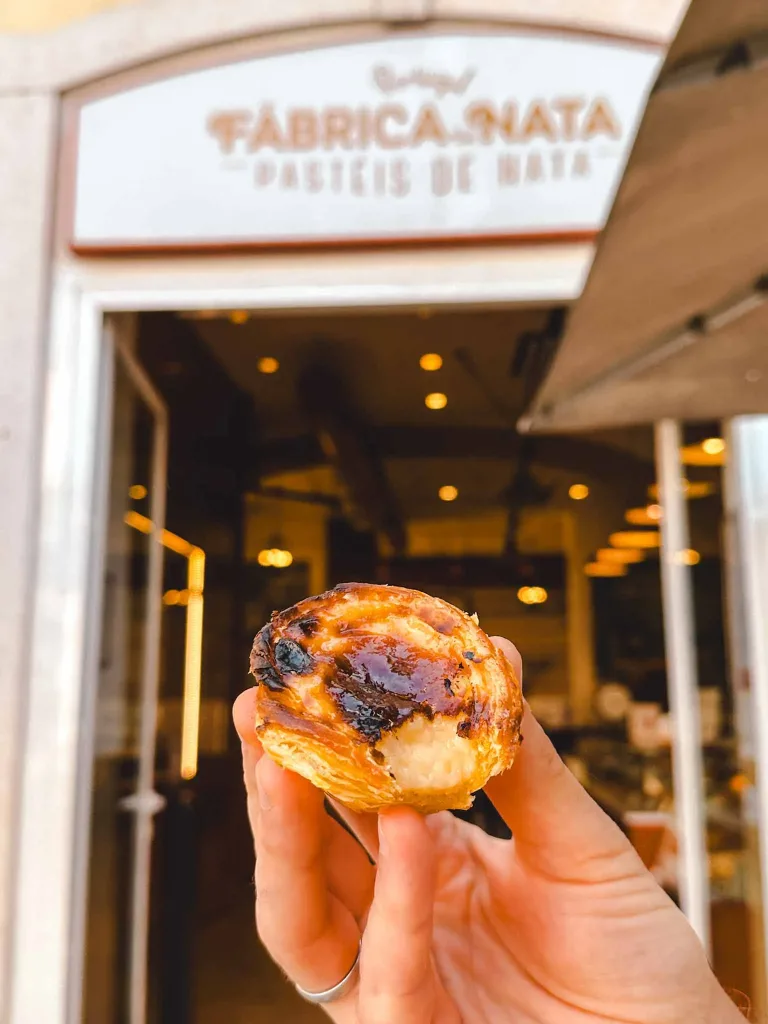
The pastel de nata is a custard tart in flaky puff pastry, dusted with cinnamon and eaten warm. It is the most replicated Portuguese food in the world and, in Lisbon, the most argued about.
The recipe originates with the monks of Jerónimos Monastery in Belém. When the Liberal government dissolved Portugal’s monasteries in 1834, the monks sold the formula to the Fábrica de Pastéis de Belém, which has been producing them since 1837. The recipe is held by three people and has never been published.
Two addresses define the Lisbon debate: Pastéis de Belém (Rua de Belém 84–92, Belém): the original factory. Approximately 20,000–25,000 tarts per day. Price: €1.50 each. The pastry is brittle; the custard barely set at the centre. The queue outside is a constant, but it moves faster than it looks. Worth the journey to Belém — which is also where you find the Jerónimos Monastery (UNESCO 1983) and Belém Tower (1514–1521). Manteigaria (Rua do Loreto 2, Chiado): €1.50. A slightly firmer, sweeter custard. Easier to reach from most hotels. The Chiado location has an open kitchen — you can watch the tarts being made through the window.
Eat them immediately. Cold pastel de nata is a different, lesser thing. You will discover this independently within your first hour in Lisbon, usually from a hotel breakfast buffet.
Bifana — €3–€4
A bifana is a thin pork steak — marinated overnight in white wine, garlic, and paprika — served in a soft bread roll. That is everything. It is Portugal’s answer to the question of what you eat when you have 10 minutes and €4.
The quality difference between a good bifana and a forgettable one comes down to marinade time and bread. The roll should be slightly crisp outside, soft inside. Mustard is optional. Piri-piri sauce on the side.
Best in Lisbon: Casa das Bifanas (Praça da Figueira 6) or any café between Rossio and Intendente. Avoid bifanas at tourist restaurants — the pork is usually thicker, drier, and costs twice as much.
Price at a tasca or neighbourhood café: €3–€4.
Ginjinha — €1.50
Ginjinha is a liqueur made from ginja berries (a variety of sour cherry), steeped in aguardente (Portuguese grape spirit) with sugar and cinnamon. It has been made in Lisbon since the 1840s when a Galician friar named Espinheira opened a small shop near Rossio. A Ginjinha (Largo de São Domingos 8): the original shop. Barely 2 metres wide. No tables. Order at the window, drink on the street. €1.50 per shot. Served com ela (with the cherry in the glass) or sem ela (without). The cherry, when present, has been soaking in alcohol for months. It does not taste of anything subtle. The chocolate cup version is a Óbidos innovation adopted by tourist shops. In Lisbon, ginjinha is served in a small glass. Order accordingly.
Bacalhau — The National Obsession
Portugal claims 365 recipes for bacalhau (salt cod) — one per day of the year. The number is rhetorical. No one has ever verified it. No one has ever tried.
Salt cod is not fresh cod. It is codfish preserved in salt, a technique that dates to the early 15th century when Portuguese fishermen began salting their catch in Newfoundland and Greenland waters. Today, over 80% of the bacalhau consumed in Portugal is imported from Norway, where the Atlantic cod population is better managed. The Portuguese preservation process remains essentially unchanged: gutted, salted, dried.
Before cooking, bacalhau requires 24–48 hours of desalting in cold water, changed several times. This is why it tastes different from fresh fish — mellower, denser, with a texture that absorbs sauce rather than releasing moisture.
Three versions to know:
- Bacalhau à Brás: Shredded salt cod, matchstick-fried potatoes, loosely scrambled eggs, black olives, parsley. The egg must be just set — creamy, not dry. A well-made Brás takes patience and precision. At a tasca: €11–€14.
- Pastéis de Bacalhau (codfish cakes): Oval fried cakes of salt cod, mashed potato, parsley, onion, and egg. Eaten as a starter or petisco. €1–€2 each at a café; €6–€8 for a plate of four at a tasca.
- Bacalhau à Lagareiro: Whole salt cod baked with *batatas a murro* (potatoes baked whole, then “punched” flat and finished in olive oil and garlic). The name refers to the olive oil press operator (*lagareiro*). This is a substantial, slow-cooked dish. Budget €14–€18 at a traditional restaurant.

Grilled Sardines — And Why June Matters
The season for fresh sardines in Lisbon runs May through October, peaking in June and July when the fish is fattest and most flavourful. Outside this window, what most restaurants serve is frozen. The difference is significant — a fresh sardine grilled over charcoal in June and a frozen sardine served in November are not the same dish.
The festival connection: Festas de Lisboa (Santos Populares) runs throughout June, culminating on the night of 12–13 June (Santo António). Alfama and Mouraria fill with charcoal grills. This is the correct context to eat sardines: outside, standing up, using bread to mop the plate.
At a restaurant in 2026: a portion of 4–6 sardines costs €10–€16, depending on location. Restaurants in the Alfama festival zone charge the top end. A neighbourhood tasca in Mouraria or Intendente charges less. Avoid sardines listed on a menu outside the May–October window unless the menu specifies fresh.
How to eat them: use a fork to run along the backbone, fold the flesh flat, eat the whole side. The skin is the most flavoured part. Leave the head. Use the bread — this is not optional.

Seafood Worth Ordering
Lisbon sits at the mouth of the Tagus estuary, 30 km from the Atlantic. The fish is fresh, the preparation tends toward the minimal, and the prices are significantly lower than in most northern European cities.
Polvo à Lagareiro: Octopus roasted until the exterior is slightly crisped, served on batatas a murro finished in olive oil, garlic, and herbs. The octopus must be fully tender — any chewiness means under-cooking. Price at a traditional restaurant: €14–€18.
Ameijoas à Bulhão Pato: Clams steamed in white wine, garlic, olive oil, and fresh coriander. The dish is named after the 19th-century poet Raimundo António de Bulhão Pato (1828–1912), who reportedly ate them obsessively and is credited with popularising the recipe. Eaten with bread — the broth is the point. At Cervejaria Ramiro (open since 1956, the city’s most respected seafood restaurant): €22–€28. At a neighbourhood tasca: €10–€14.
Gambas à Guilho: Large prawns sautéed in olive oil, garlic, and chili. Straightforward and correctly reliable in almost any Portuguese restaurant. Price depends on prawn size: €12–€22.

The Soups
Caldo Verde: Thinly sliced dark kale (couve galega), a potato broth base, olive oil, and a slice of chouriço sausage. It originates in the Minho region of northern Portugal and became a national staple in the 20th century. The technical detail: the kale must be sliced paper-thin — this is a mark of quality and care. Thick-cut kale produces a different, coarser texture. At any functioning tasca, it is the opening course of the prato do dia and included in the price.

How the Tasca Lunch Works — And Why It’s the Best Value in the City
A tasca is a small traditional tavern, often family-run, with no printed menu and a prato do dia written on a board near the entrance. The mechanics:
- Arrive between 12:30 and 14:00.
- The prato do dia (daily dish) is not a suggestion — it changes daily, usually with two options: fish or meat.
- Price in 2026: €8.50–€12, which includes soup, a main course, bread, and a glass of house wine or beer.
- Coffee is either included or costs €0.80–€1.00 extra.
What you do not get: a printed menu, a wine list, or a dessert cart. What you do get: the most honest food in the city at the lowest possible price.
The reason tascas are consistently better value than tourist restaurants: they buy fresh ingredients every morning for a fixed number of covers. There is no freezer backup, no standardised bulk purchasing, no incentive to economise on quality. The cook made one dish today. It either works or it doesn’t.
Practical note: do not ask for the menu at a tasca that does not have one. This will not end in a menu. It will end in a conversation you were not prepared for. Ask instead: “Qual é o prato do dia?” (What is today’s dish?).

The Sandwich Counter
Prego: A thin beef steak in a bread roll, sometimes topped with a fried egg. Older and more serious than the bifana. The name translates as “nail” — referring, it’s said, to the speed of preparation. Beef marinated briefly in garlic and white wine, pan-seared, in a crusty roll. Price: €4–€6.
Pão com Chouriço: Bread with chouriço sausage. The most theatrical version: a whole chouriço grilled tableside in a clay dish over alcohol flame, then pressed into bread. Common at market food stalls. Price: €3–€5.
Alheira: A smoked sausage made from poultry, game meat, and bread — notably without pork. The origin: during the Inquisition, Jewish converts (*conversos*) who continued to observe dietary laws in private created a sausage that looked like chouriço but contained no pork, so it could hang visibly in the home without suspicion. Today alheira is produced across northern Portugal and available in Lisbon restaurants, usually pan-fried or grilled and served with egg and chips. Price at a tasca: €10–€13.

Petiscos — The Portuguese Small Plates Culture
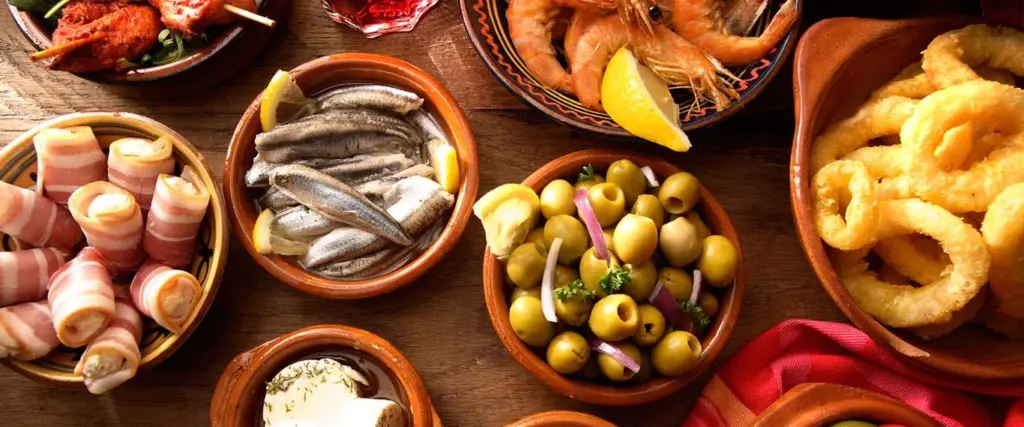
Petiscos are Portugal’s equivalent of tapas: small plates ordered for sharing, eaten slowly over wine. The tradition is old but the modern petisco bar is a relatively recent Lisbon institution.
Common petiscos:
- Pastéis de bacalhau (codfish cakes).
- Queijo fresco (fresh cheese) with olive oil.
- Chouriço assado (grilled sausage, tableside).
- Rissóis de camarão (prawn turnovers).
- Caracóis (snails in garlic and herbs) — June–September only.
A petisco evening at a neighbourhood wine bar: budget €20–€28/person including wine.
Where to Eat — Practical Geography
Neighbourhood tascas (Mouraria, Intendente, Graça, Penha de França): Best value. Prato do dia €8.50–€12. No English menus in the better ones. This is where to eat lunch every day you are in Lisbon.
Cervejaria Ramiro (address: Av. Almirante Reis 1): Open since 1956. The city’s most respected seafood address. Ameijoas, gambas, percebes (goose barnacles), carabineiros (scarlet prawns). Book in advance or queue. Budget €45–€65/person.
Time Out Market (address: Mercado da Ribeira, Cais do Sodré): Opened 2014. 35 food stalls, 8 bars. Useful for one visit to survey the range — individual dishes from Lisbon’s known chefs, €12–€18 per plate. Not the cheapest option. Best used at lunch, before the tourist evening crowd.
Alfama in June for sardines: Any restaurant with a grill on the street. Follow the smoke. Prices peak during the festival period, but the atmosphere on 12–13 June is worth the premium — once.
What to avoid: Restaurants on Rua Augusta and the Praça do Comércio tourist corridor. The quality-to-price ratio is the worst in the city — the same dish costs 40–60% more and tastes worse than a neighbourhood equivalent 10 minutes’ walk away. Avoid restaurants with photographs of food outside — a universal indicator of tourist pricing, and occasionally of food that does not resemble the photographs.

What to Drink
Coffee: A bica is an espresso. A galão is espresso in a tall glass with hot milk (similar to a latte). A meia de leite is espresso with hot milk in a cup. Price at a café: €0.90–€1.30 for a bica. Expect to pay double or triple on a tourist terrace.
Wine: At a tasca, a small carafe of house wine is included in the prato do dia. Ask for vinho da casa. For something more specific: Alentejo reds are the safe and affordable choice (a bottle at a mid-range restaurant: €15–€22). Vinho Verde from the Minho is the correct summer lunch wine — light, slightly sparkling, €10–€15 a bottle.
Colares DOC: A wine you will not find in most restaurants. Produced in the coastal dunes of Sintra from ungrafted Ramisco vines — fewer than 50,000 bottles per year. We include a visit to Adega Regional de Colares in our Sintra Land Rover panoramic tour. Worth seeking out if wine is a priority.
Beer: Sagres and Super Bock are the national brands. Both are competent lagers. Price at a café: €1.20–€1.80 for a small draught (fino).

FAQ
What is the most famous food in Lisbon?
The pastel de nata. A custard tart in flaky pastry, produced commercially since 1837. The original recipe belongs to the Fábrica de Pastéis de Belém — a 10-minute drive from central Lisbon. Price: €1.50 at the source.
What should I order at a Portuguese tasca?
Whatever the prato do dia is. Ask “Qual é o prato do dia?” The answer will be one fish dish and one meat dish, both made fresh that morning. It comes with soup, bread, and wine for €8.50–€12. Do not order from a printed menu if the chalkboard option exists.
Is food expensive in Lisbon?
No, if you eat where locals eat. A tasca lunch: €8.50–€12 with wine. A bifana: €3–€4. A pastel de nata: €1.50–€1.80. A ginjinha: €1.50. The tourist restaurant tier (Rua Augusta, Alfama main streets) is double or triple these prices for inferior food.
When is the best time to eat fresh sardines in Lisbon?
May through October for fresh sardines; the peak is June–July. The best context is the Festas de Lisboa festival in June (culminating 12–13 June, Santo António), when Alfama fills with charcoal grills on the street. Outside this window, most restaurants serve frozen.
What is bacalhau and why is it so important in Portugal?
Bacalhau is salt cod — codfish preserved in salt and dried. Portuguese fishermen began salting cod in Newfoundland waters in the early 15th century during the Age of Discovery. Over 80% of the bacalhau eaten in Portugal today comes from Norway. The number of claimed recipes (365 — one per day of the year) is rhetorical but indicative of its cultural importance.
Where do locals eat in Lisbon?
Neighbourhood tascas in Mouraria, Intendente, Graça, and Penha de França. Look for a chalkboard with the prato do dia in the window and no English menu. Avoid restaurants with photographs of food outside — this is a universal indicator of tourist pricing.
What is a petisco?
A petisco is a small plate, the Portuguese equivalent of a tapa, ordered for sharing. Common examples: codfish cakes, fresh cheese with olive oil, grilled chouriço, prawn turnovers. A petisco dinner at a neighbourhood wine bar costs €20–€28/person including wine.
Is there vegetarian food in Lisbon?
Yes, though traditional Portuguese cuisine is meat and seafood-heavy. Peixinhos da horta (fried green beans in batter — literally “little fish from the garden”) was created to simulate fish during religious fasting periods and is one of the earliest examples of fried vegetables in Portuguese cooking. Caldo verde, fresh cheese, and pataniscas de legumes (vegetable fritters) are other tasca options. Most restaurants now offer vegetarian alternatives on request.
Planning a full day in Lisbon?
Our private Lisbon city tour covers Alfama, Belém (Pastéis de Belém, Jerónimos Monastery, Belém Tower), the Baixa, Cristo Rei, and Parque das Nações in 8 hours with a licensed driver-guide. The guide can route the day around a specific tasca lunch or a Belém stop timed to avoid the main queue. From €285 per vehicle. Up to 8 passengers. 29 Tripadvisor reviews, 5.0/5.

Founder & Director of Yellow Cab TT Tours. Guiding in Portugal for 20+ years.
Founded Yellow Cab TT Tours in 2013. 3,372 five-star reviews on Tripadvisor.