

Phylloxera destroyed roughly two-thirds of Europe’s vineyards in the second half of the 19th century, reaching Portugal’s Douro Valley in 1868 and crippling the country’s Port estates within a few years. The fix everywhere was the same: rip out the vines and graft European varieties onto phylloxera-resistant American rootstock. Twenty-five kilometres from Lisbon, on a strip of Atlantic coastline called Colares, nobody had to do that — the local vines are still growing on their own roots, because phylloxera cannot burrow through loose sand. That single geological accident is why Colares is one of the few places left in Europe where Vitis vinifera vines were never grafted at all.
It’s also, less romantically, why Colares nearly stopped existing. The same sandy soil that saved the vines from an insect couldn’t save them from Lisbon’s suburbs, which swallowed most of the region’s vineyard land across the 20th century. What was roughly 2,000 hectares at the time of the region’s 1908 demarcation is around 24 hectares today — a decline of over 98%, on some of the most historically important vineyard land in the country.
This is what makes Colares wine what it is: the grapes, the sand-planting method nobody else bothers with, the aging rules, and where to actually taste it near Lisbon.
Check out also our Portugal Regions Guide.
What Is Colares Wine?
Colares is a DOC (Denominação de Origem Controlada) — Portugal’s top wine classification tier — covering the parishes of Colares, São Martinho, and São João das Lampas, inside the municipality of Sintra, about 25 km northwest of Lisbon. The region sits between the Atlantic Ocean to the west and the Serra de Sintra to the south and east, inside the Sintra-Cascais Natural Park.
It was demarcated on 18 September 1908, by the same Letter of Law that simultaneously created three other Portuguese wine regions — Dão, Carcavelos, and Vinho Verde — a single piece of legislation covering four regions at once, regulated in detail by a further Decree on 25 May 1910. That put Colares one year behind its neighbour to the south, Setúbal, demarcated in 1907 — we’ve written about that region’s own wine separately, and the two demarcation dates check out against each other.
DOC rules require red wines to contain a minimum of 80% Ramisco, with up to 20% of other local varieties — mainly Molar and João Santarém — permitted in the blend. White wines require a minimum of 80% Malvasia de Colares. Both colours must come primarily from vines planted in sandy soil; the DOC allows a maximum of 10% of the fruit to come from vineyards on the region’s clay-limestone soils instead, a rule that exists precisely because the sand is the point.
Colares holds two informal titles worth knowing before the numbers get smaller: it’s the westernmost wine DOC in continental Europe, and — at its current size — the smallest still-wine-producing DOC in Portugal.
The DOC boundary itself sits inside the Sintra-Cascais Natural Park, a protected area formally established in 1994 (built on a landscape that had already been protected since 1981) covering the coastal strip between Sintra’s mountains and the Atlantic. The Colares parish spreads across a scatter of small settlements — the village of Colares itself, plus the coastal hamlets of Praia das Maçãs and Azenhas do Mar — connected by a stretch of road that runs through dune sand for most of its length. None of that scenery is incidental to the wine: the same wind, fog, and sand that shape the coastline are what shape what’s in the glass.
How Phylloxera Never Reached These Vines
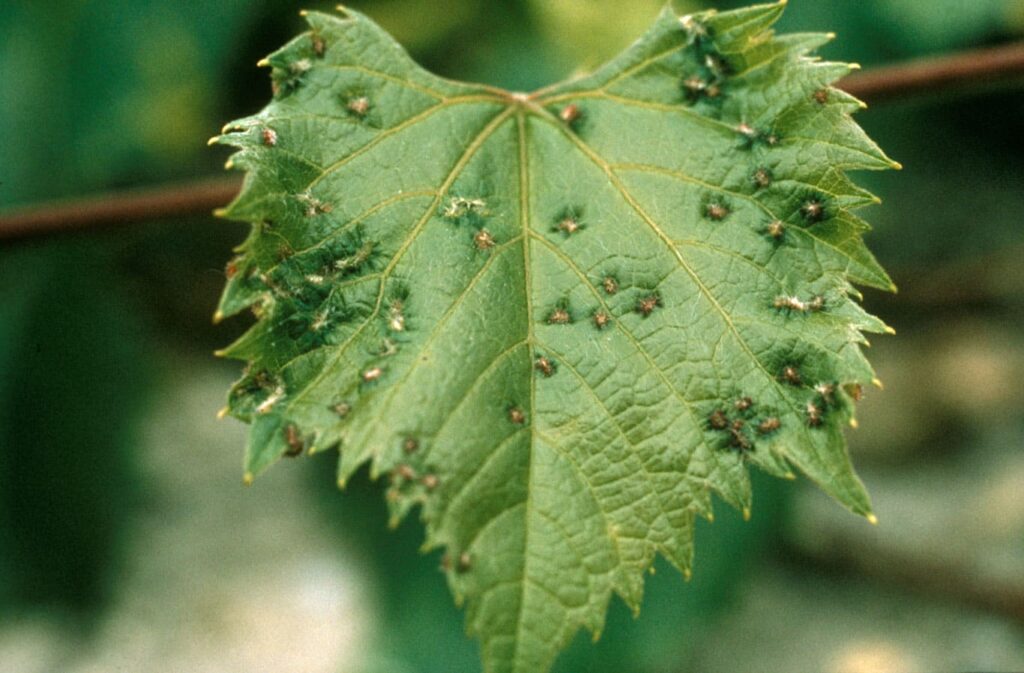
Phylloxera vastatrix — a root-feeding aphid native to North America — arrived in Europe in the 1860s and went on to destroy an estimated two-thirds of the continent’s vineyards by the century’s end. Portugal was the second European country hit, with the insect first recorded near Sabrosa in the Douro Valley in 1868. Within four years it had crippled Port estates across the region, and within a decade grape growers nationwide were grafting their vines onto phylloxera-resistant American rootstock — the only fix anyone found, and still standard practice almost everywhere in the world today.
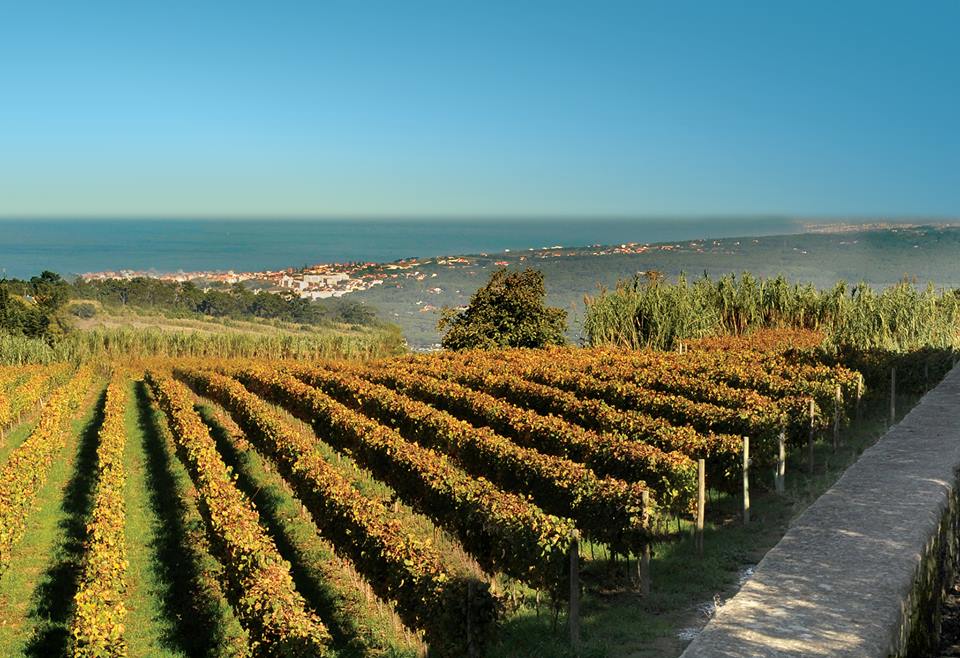
Colares never needed it. Phylloxera feeds by burrowing through soil to reach a vine’s roots, and it cannot move through loose sand — there’s nothing for the insect to grip. The Colares vineyards sit on deep coastal dune sand, so while the rest of the country was tearing out and replanting, Colares simply kept growing on its own roots. That makes it one of a small handful of places left in Europe — Santorini’s volcanic ash soils are another — where Vitis vinifera vines were never grafted at all, some descended in an unbroken line from plantings that predate the epidemic entirely.
Growing wine in sand isn’t free, though. Sand alone can’t support a root system, so Colares growers plant in trenches dug down through the dune — typically two to three metres, sometimes considerably more — until they reach the clay underneath, where the roots can actually anchor. It’s a slower, more labour-intensive way to plant a vineyard than almost anywhere else in Portugal — one more reason nobody expanded Colares much even when there was land to expand into. The louse that beat every ungrafted vine on the continent lost to a beach, and the beach still made the growers dig for it.
This sand-planted method — chão de areia, “sand ground” — is only half the DOC. The other soil type, chão rijo (“hard ground”), is a separate stretch of clay-limestone terrain elsewhere in the demarcated area, where vines are grafted onto rootstock in the ordinary way and planted directly, no trench required. It’s where João Santarém — one of the varieties permitted in the red blend — traditionally comes from. DOC rules cap how much of that grafted, chão rijo fruit can go into a bottle still labelled Colares: a maximum of 10%. The rest has to come from vines that never needed grafting in the first place.
There was, for a while, an upside to being the exception. As phylloxera worked through the rest of Europe between the 1860s and 1900, wine regions that survived it did so by grafting onto American rootstock — a fix that changed how the vines grew, even if it saved them. Colares didn’t have to make that trade. For decades afterward, its wine carried a specific kind of prestige in export markets precisely because it was one of the last sources of true, ungrafted Vitis vinifera left on the European mainland — the same vines, the same roots, that had been there before the epidemic. It’s a reputation the region built on an accident of geology, and then spent the next century slowly losing to a different problem entirely.
Ramisco and Malvasia de Colares — The Two Grapes
Ramisco is the DOC’s defining red grape — high in tannin, high in acidity, and comparatively low in alcohol, typically finishing around 11–12% ABV, a level most modern reds don’t bother with anymore. Those tannins are aggressive young; historically, growers held their best Ramisco for a decade or more before selling it, well beyond anything the DOC actually requires. It’s a wine built to age, in a region that spent most of the 20th century too small to have much of a surplus to age.
Malvasia de Colares, the white counterpart, grows in the same sandy, fog-cooled conditions along the coast. The Atlantic proximity — persistent sea fog, high humidity, and a narrower daily temperature swing than inland Portugal — produces whites with a mineral, saline character that’s structurally different from Malvasias grown elsewhere in the country.
DOC rules allow reds to include up to 20% of other varieties alongside the required 80% Ramisco, with Molar and João Santarém the most commonly used — both older Portuguese varieties that add softness to Ramisco’s naturally aggressive tannin without diluting the wine’s character. Whites require a minimum of 80% Malvasia de Colares. Reds have historically dominated the region’s output, accounting for around three-quarters of total production, with Malvasia de Colares making up most of the rest. Neither grape is exclusive to Colares in a botanical sense, but the combination — Atlantic-facing dune sand, ungrafted vines, and a century of legal minimums nobody actually drinks to — is.
If you’ve had a young Nebbiolo or an unripe Bordeaux blend and remember the tannin gripping the inside of your cheeks, that’s roughly the territory a young Ramisco starts in — except with less fruit softening the blow and more salt-and-mineral undertone from the sand and sea air underneath it. It’s not a wine designed to be liked immediately, which is probably part of why it never became a supermarket staple even in the years when the region had far more than 24 hectares to sell from.
How Colares Wine Is Made
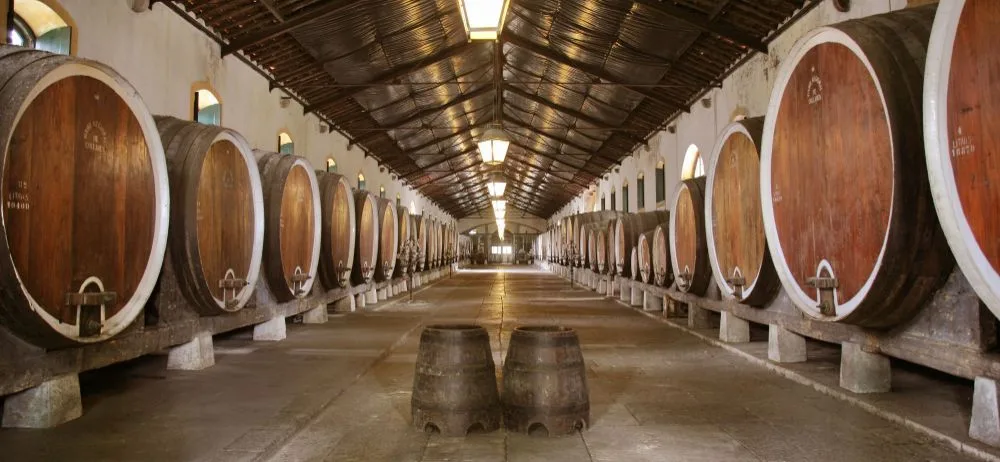
Beyond the trench-planting method, the DOC sets legal minimum aging periods before any Colares wine can be sold: red wines require at least 18 months in wood followed by 6 months in bottle; whites require at least 6 months in wood and 3 months in bottle. These are floors, not targets — a Colares Ramisco released at the legal minimum is, by regional standards, a wine sold before it’s finished arguing with itself.
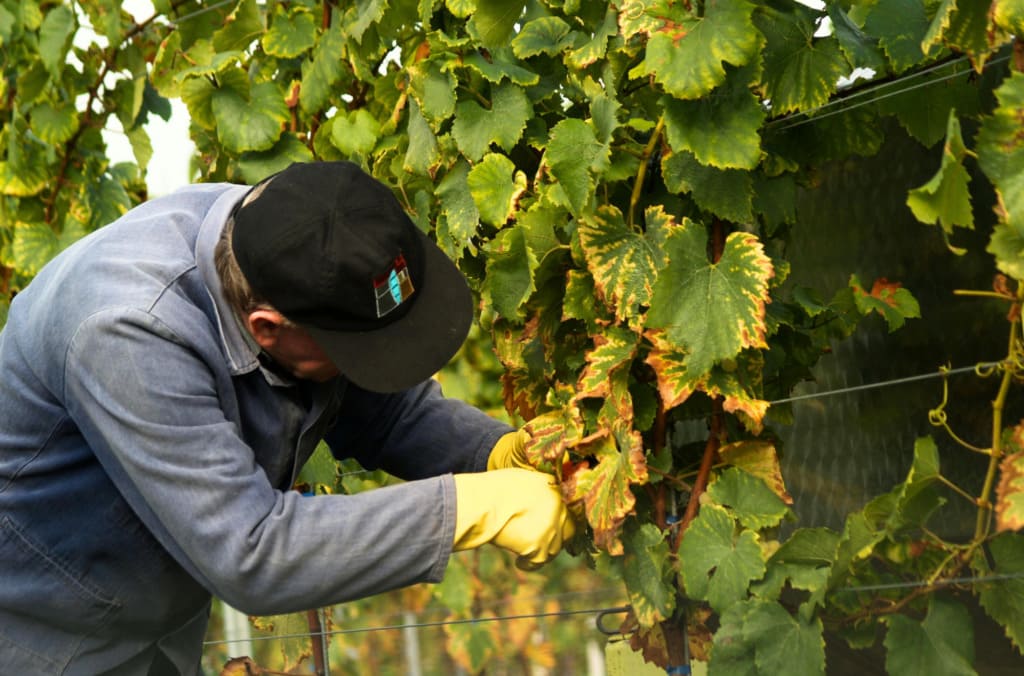
The vines are trained low and close to the ground, partly as a defence against the same Atlantic wind that cools the Malvasia grapes — anything trained higher gets scoured by salt-laden gusts coming straight off the ocean with nothing in the way to slow them down. Harvest generally runs through September and October, later than most of inland Portugal, for the same reason the region stays cooler in summer: the Atlantic doesn’t rush anything.
Because the vines were never grafted, replanting after disease, storm damage, or simple old age isn’t as straightforward as ordering rootstock from a nursery catalogue — growers propagate from existing Colares vines, which keeps the ungrafted lineage intact but also keeps expansion slow. It’s the same story as the aging rules, in miniature: everything about making this wine happens on the vine’s schedule, not the market’s.
Yields reflect all of this. The average Portuguese vineyard produces somewhere around 5–7 tonnes of grapes per hectare; Colares estimates run well below that, with figures cited anywhere from under one tonne to a few tonnes per hectare depending on the plot and the year — low by any measure, and consistent with vines that are old, ungrafted, and planted in about the least accommodating soil available. Combined with the region’s total planted area, annual output across the whole DOC is measured in tens of thousands of litres, not the hundreds of thousands or millions that define most named wine regions. A single mid-sized Douro producer can out-produce the entire Colares DOC in a single vintage.
From 2,000 Hectares to 24: A Region’s Near-Disappearance
At the time of the 1908 demarcation, Colares had roughly 2,000 hectares under vine. A cooperative founded in 1931 to represent the region’s growers once counted close to 500 members farming around 1,500 hectares between them. What happened next wasn’t a slow fade so much as a structural one: Sintra sits inside greater Lisbon’s commuter belt, and through the second half of the 20th century, vineyard land was worth more as housing plots than as sand that happened to grow wine.
A 1938 survey, published as a regional study of the area’s vineyards, recorded just over 1,000 hectares still under vine — already less than half the 1908 figure, but still a working wine region by any normal measure. The real collapse came after that. From the 1960s onward, Sintra’s rural land started converting to semi-urban housing at a pace the vineyards couldn’t compete with economically; a hectare of sand growing a wine that legally can’t be sold for eighteen months doesn’t outbid a hectare zoned for houses. By the late 1990s, the DOC had shrunk to somewhere around 12 hectares.
It has recovered modestly since — current plantings sit at roughly 20–24 hectares (estimates vary by source and year), farmed by around a dozen growers, which still makes Colares the smallest still-wine-producing DOC in the country by a wide margin. For comparison, the Douro — Portugal’s largest wine region — has close to 38,000 hectares actually under vine. You could fit the entire Colares DOC inside the Douro’s planted vineyard area over 1,500 times and still have room left over.
None of that recovery happened because Colares wine got cheap or easy to make. It happened because a handful of growers kept planting in sand trenches for a wine that takes over a year just to become legally sellable, in a region where the land underneath it was worth more paved over. That’s not really a business case. It’s closer to stubbornness with a DOC stamp on it.

Visiting Colares on a Wine Tour From Lisbon
Colares is a 30–40 minute drive from central Lisbon — close enough to visit as a stop on a longer day rather than a dedicated trip of its own, which is how most people end up tasting it, combined with Sintra’s palaces, Cabo da Roca, or the coast toward Cascais. September and October, the harvest window, occasionally let visitors see the pressing itself; outside that period, cellar visits typically mean barrel or bottle tastings across a few vintages.
We run a wine tours that stops at a working winery in the Colares DOC area before continuing on to Sintra, Cabo da Roca, and Cascais — the specific winery depends on harvest schedule and availability, since with only around a dozen active growers in the region, nobody keeps a fixed public visiting schedule the way a larger wine region can. Expect to taste a Ramisco red and, depending on the season, a Malvasia de Colares white, with an aged reserve if your tasting option includes one.
The visit itself is unhurried by design — you’re not touring a production facility built for coach groups, you’re walking through a working vineyard that happens to be smaller than some vineyards’ parking lots. Non-drinkers are always accommodated with non-alcoholic alternatives, and the sightseeing portion of the day — Sintra’s palaces, the cliffs at Cabo da Roca, Cascais’ old town — runs exactly the same whether or not anyone in the group drinks a drop of wine. Comfortable, closed-toe shoes are worth packing regardless; between the dune paths at the vineyard and Sintra’s cobblestones later in the day, sandals don’t hold up well.
Given how little of this wine gets made, tasting it here is a more reliable plan than looking for a bottle once you’re home — Colares barely exports, and most of what does leave Portugal doesn’t travel far past specialist wine shops. Even within Portugal, a fair number of restaurants that would happily sell you a Douro red or a Vinho Verde won’t have a bottle of Colares on the list at all; annual production across the whole DOC is small enough that distribution stays local almost by default, not by design.
Taste Colares Wine at the Source
Reading about ungrafted vines in sand is one thing — tasting a Ramisco that’s been fighting its own tannins for a decade is a different kind of understanding.
- Sintra Wine Tasting Tour → Colares DOC winery visit, Sintra, Cabo da Roca & Cascais, from Lisbon.
FAQ
What is Colares wine?
Why is Colares wine so rare?
Why weren't Colares vines destroyed by phylloxera?
What grapes are used to make Colares wine?
How long is Colares wine aged before it can be sold?
How big is the Colares wine region today?
What does Colares wine taste like?
Can I visit the Colares wine region from Lisbon?
Is Colares wine available outside Portugal?

Founder & Director of Yellow Cab TT Tours. Guiding in Portugal for 20+ years.
Founded Yellow Cab TT Tours in 2013. 3,372 five-star reviews on Tripadvisor.