
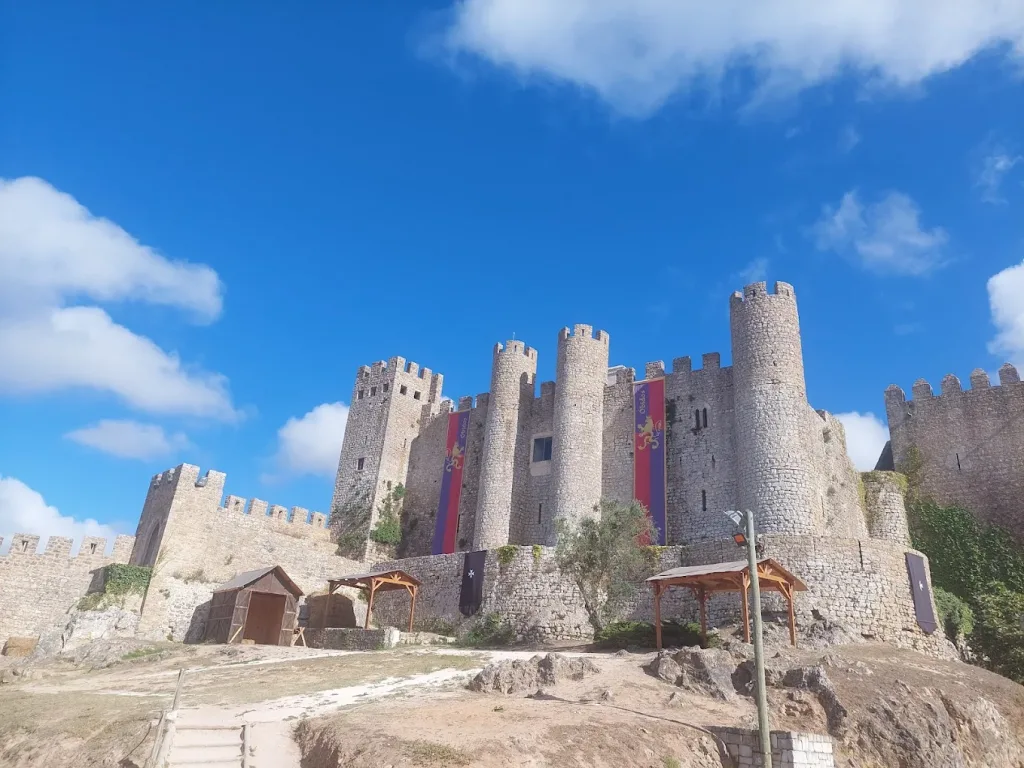

Óbidos takes 3 hours. That is not a criticism — it is the most useful thing to know before you plan a day around it.
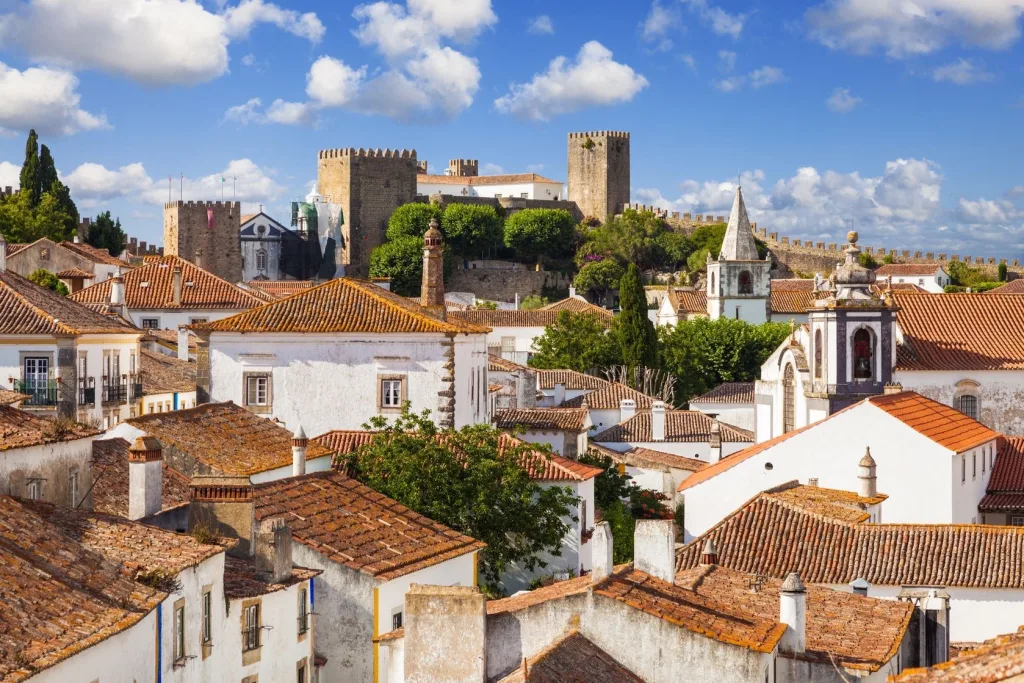
The town sits about 80 km north of Lisbon, enclosed by 1,565 metres of medieval walls. You can walk the full perimeter, visit the church, see the castle exterior, and have a ginja in a chocolate cup on Rua Direita in 2.5–3 hours at a relaxed pace. Add lunch inside the walls and you are at four hours. After that, there is genuinely nothing left to see that you have not already walked past twice.
Most “Óbidos day trip” articles treat it as a full-day destination. It is not. It is a half-day stop — an excellent one — that fits naturally into a longer Silver Coast route combining it with Nazaré (approximately 35 km to the north) or with Batalha, Fátima, and Nazaré on a single day north of Lisbon.
This guide covers how to get from Lisbon to Óbidos, how long to allow, which combinations actually work, and when the timing is worth it. For what to do once you are inside the walls, the complete guide to Óbidos covers each attraction in detail.
How long does Óbidos actually take?
The honest answer is 2–4 hours, depending entirely on pace.
Two hours: Porta da Vila gate, Rua Direita, Igreja de Santa Maria (20 minutes inside), and the castle exterior. That is Óbidos covered at a steady walk. If you skip the rampart circuit, which takes 40–50 minutes on its own, you see the town completely in under two hours.
Three to four hours: add the full rampart walk (1,565 metres, free, no ticket required), a sit-down lunch at one of the restaurants inside the walls, and a slower look at the azulejo tilework inside the Porta da Vila gate. That is a satisfying half-day.
The reason this matters for planning is straightforward. If you drive an hour from Lisbon to spend 2.5 hours in Óbidos and then drive back, the ratio of travel to experience is unfavourable. If you add Nazaré to the same day — approximately 35 km further north, another 2–3 hours of sea cliffs, beaches, and the funicular up to Sítio — the drive pays for itself. The vast majority of clients I take to Óbidos do not go to Óbidos; they go to the Silver Coast, and Óbidos is where the day ends.
Getting from Lisbon to Óbidos
By car
By bus
By train
On a private tour

How to combine Óbidos with other destinations
Option 1: Óbidos + Nazaré (Silver Coast day)
This is the combination that makes the most sense for most visitors. Nazaré is approximately 35 km north of Óbidos — about 30 minutes by car. The towns are entirely different from each other: Nazaré is a working fishing village on a flat beach, sitting below cliffs from which the 5,000-metre-deep Nazaré Canyon generates the largest waves in Europe. Óbidos is the walled hilltop town with the medieval architecture. Together, they fill a full day without overlap.
The typical order: arrive Nazaré mid-morning, take the funicular up to Sítio (the clifftop with the view over Praia do Norte), walk back down, lunch in Nazaré, then drive approximately 30 minutes south to Óbidos for the afternoon. Arrive Óbidos around 14:00–15:00; most of the day-trippers from Lisbon have already left by then.
Option 2: Fátima + Batalha + Nazaré + Óbidos (full central Portugal day)
This is the route we run as a group tour — four destinations in a single day north of Lisbon. Fátima (the Marian sanctuary, approximately 6.2 million pilgrims per year) anchors the morning; Batalha Monastery (UNESCO World Heritage Site, Gothic construction begun in 1386) is approximately 20 km from Fátima; Nazaré is approximately 34 km from Batalha; Óbidos is approximately 35 km from Nazaré and closes the route on the way back south toward Lisbon. Total driving from Lisbon and back: approximately 300 km; total day including all stops: 10–11 hours. It is a long day and deliberately so — the four destinations reinforce each other in a way that visiting any of them individually does not replicate.
For a full breakdown of this itinerary, see Fátima, Batalha, Nazaré and Óbidos in one day.
Option 3: Óbidos alone — when it works

When to go — and when not to
March–May: The best window. Temperatures 15–20°C, the surrounding Silver Coast countryside is green from the winter rains, and visitor numbers are manageable on weekdays. A Tuesday or Wednesday morning in April is Óbidos at its quietest.
June: The town is busy on weekends but workable on weekdays. Temperatures rising toward 25°C. Accommodation inside the walls starts booking out on summer weekends.
July: Peak season. Temperatures 25–30°C. The Medieval Market runs 16–26 July — the town reaches maximum capacity during this period and accommodation requires months of advance booking. The market itself is one of the better medieval recreation events in Portugal; the town as a quiet historic destination is, in July, not particularly quiet.
August: The hottest month and the busiest. The castle hotel (Pousada Castelo de Óbidos) books out from February. Arrival times before 10:00 make a practical difference to crowd levels on Rua Direita.
September–October: A useful shoulder window. Temperatures drop to 20–25°C, visitor numbers fall noticeably after mid-September, and the walls and church are accessible without the summer peak crowds.
November–February: Very few visitors. Some restaurants inside the walls reduce hours or close midweek. The landscape around the town is cooler and greener. A reasonable choice if you prefer empty streets and do not need sunshine.
The specific crowd bottleneck in Óbidos is the Porta da Vila gate and Rua Direita between 11:00 and 14:00 on any day from April through September. Arriving at 09:30 or after 15:00 on those days makes a practical difference.

What to see in Óbidos
The five things that genuinely repay attention inside Óbidos:
The rampart walk. The full 1,565-metre perimeter is walkable and free. Narrow in places (approximately 80 cm), with no handrail on most outer sections at heights up to 13 metres. The section from the Porta da Vila gate northwest toward the castle gives the best views with the most manageable exposure.
Porta da Vila. The main arched entrance to the town. The interior walls of the gate are completely lined with 18th-century azulejo tiles depicting scenes from the Passion of Christ — a quality of tilework you would normally pay to see inside a Lisbon church. Most visitors walk straight through in 30 seconds. Stop inside the arch and look up.
Igreja de Santa Maria. The main church in Praça de Santa Maria. The lower interior walls are lined with 17th-century blue and yellow tiles. The altarpiece of Saint Catherine of Alexandria was painted by Josefa de Óbidos (1630–1684) — the most significant female Baroque painter in 17th-century Portugal — and is the only work by Josefa still in its original location.
Castle exterior. The castle interior is a pousada heritage hotel (17 rooms, not open for walk-in visits). The exterior and towers are visible from the rampart walk and from the streets below. Worth understanding before you arrive, since a significant number of people expect it to function as an open monument.
Ginja on Rua Direita. Ginja de Óbidos is a morello cherry liqueur (~20% ABV) with PDO status, served in a small dark chocolate cup — a tradition introduced in 1987. It costs €1.00–2.00 per cup. Vendors near the gate typically charge more.
For the full historical and practical breakdown of each of these, with opening hours and what to prioritise by visit length, see the complete guide to Óbidos.

Day Trips to Óbidos and the Silver Coast
- Nazaré & Óbidos Private Tour — Private day from Lisbon. Nazaré coast in the morning, Óbidos walls in the afternoon. Return by early evening.
- Nazaré, Óbidos & Sintra Private Tour — Silver Coast in the morning, Sintra palaces in the afternoon. A full day covering maximum geographic range.
- Fátima, Batalha & Nazaré Group Tour — Group tour that includes an Óbidos stop on the return route. Fixed departures from Lisbon.
FAQ
Is Óbidos worth a day trip from Lisbon?
How far is Óbidos from Lisbon?
How do I get from Lisbon to Óbidos by bus?
Can you get from Lisbon to Óbidos by train?
How long do you need in Óbidos?
What is the best way to combine Óbidos with Nazaré?
What is the Mercado Medieval de Óbidos?
Is parking available in Óbidos?
What should I know about ginja de Óbidos?
Can you visit Óbidos Castle?

Founder & Director of Yellow Cab TT Tours. Guiding in Portugal for 20+ years.
Founded Yellow Cab TT Tours in 2013. 3,372 five-star reviews on Tripadvisor.