Private Nazaré, Óbidos & Silver Coast Tour from Lisbon
(Full Day)
nazaré - são martinho do porto - foz do arelho - óbidos
- (Private Tour with Vehicle and Driver/Guide just for you!)


8 Hours
Private
Máx. 8px/Van
Hotel or apartment pickup in Lisbon, Sintra, Cascais, Estoril, or anywhere along the coast
Nazaré, São Martinho do Porto, Foz do Arelho, Óbidos
From €310 per private vehicle (see pricing below)

based on +3.387 reviews
Tour at a Glance
- Duration: 8 hours.
- Departure: Suggested 08:30–09:00 – hotel or apartment pickup in Lisbon, Sintra, Cascais, Estoril, or anywhere along the coast.
- Return: ~17:00–17:30 to your pickup location.
- Tour Type: 100% private — your group only.
- Group Size: Up to 8 passengers.
- Vehicle: Air-conditioned private van.
- Guide: Licensed driver-guide available in English, Spanish, French, and Portuguese.
- Destinations: Nazaré, São Martinho do Porto, Foz do Arelho, and Óbidos.
- Price From: €310 per vehicle.
- Tripadvisor Rating: 5.0/5 based on 3,387 reviews.
- License: RNAAT 119/2013.
- Cancellation Policy: Free cancellation up to 24 hours before departure.
Tour Overview
This full-day tour from Lisbon covers four stops on Portugal’s Silver Coast: Nazaré (120 km north of Lisbon, home to the Guinness World Record for the largest wave ever surfed – 26.21 m, set by Sebastian Steudtner on 29 October 2020), São Martinho do Porto (a shell-shaped bay with a 3 km beach and a 250 m ocean opening that keeps the water calm year-round), Foz do Arelho (where the Lagoa de Óbidos, the largest coastal lagoon in Portugal at 6.9 km², meets the Atlantic Ocean), and Óbidos (a medieval walled town with 1,565 m of walkable walls standing 13 m high, captured by the first King of Portugal in 1148).
The tour is 100% private – your group, your vehicle, your licensed driver-guide. No shared transfers, no strangers, no fixed group schedule. The route follows the Atlantic coast north from Lisbon along the A8 motorway and returns via the same corridor, covering approximately 230 km of driving.
This itinerary pairs well for travellers who want the Silver Coast without the Fátima pilgrimage context. Nazaré’s surf credentials are the entry point into a working fishing village with a distinct three-neighbourhood layout and an 1889 funicular railway. Óbidos provides medieval architecture, a full wall circuit, and cherry liqueur served in chocolate cups. The stops at São Martinho and Foz do Arelho give the day a coastal and lagoon quality that routes focused on Sintra lack entirely.
Why Travellers Choose This Tour
- 3,387 verified reviews · 5.0 Tripadvisor — highest-rated private tour operator from Lisbon on the platform.
- Only Silver Coast tour combining 4 stops in a single private full-day itinerary: Nazaré (world-record wave site), São Martinho do Porto (shell-shaped bay), Foz do Arelho (Portugal’s largest coastal lagoon), and Óbidos (intact medieval walled town) — most competitors cover only 2 stops in a shorter half-day format at similar per-person pricing for groups of 4+.
- Full 8-hour private experience: Dedicated vehicle and flexible pacing, compared to standard half-day group tours.
- Accurate wave record reference: 26.21 m (Sebastian Steudtner, 29 October 2020) — ensuring correct historical and scientific attribution versus outdated or incomplete figures used elsewhere.
- Óbidos wall circuit: 1,565 m, free access, fully walkable in ~30 minutes with the guide.
- Strong per-vehicle value: Approx. €90 per person for a group of 4, covering four distinct coastal destinations with a licensed driver-guide.
- Included service: Hotel pickup in Lisbon, Sintra, Cascais, Estoril, or anywhere along the coast and a multilingual licensed guide (English, Spanish, French, Portuguese).
Tips for Visiting Nazaré
The wave viewpoint is at the Fort of São Miguel Arcanjo. The lighthouse at the north end of Sítio – originally built in 1577 as a defensive fort – sits directly above Praia do Norte. This is the location used by photographers during surf events and where the scale of the beach and canyon context becomes most visible. Outside the surf season, the ocean is flat, and the viewpoint functions more as a geological observation point than a spectacle. Both conditions are worth experiencing.
Big waves happen November–March. Record-breaking surf is driven by North Atlantic storm swells – there is no fixed schedule. A single swell event can produce waves of 20 m or more, or remain at 5 m depending on conditions. If the goal is to observe large surf, November through February offers the highest statistical probability. Outside this window, Praia do Norte is typically a calm, accessible Atlantic beach with clear water and minimal swell activity.
The older part of Nazaré is Sítio, not Praia. Most first-time visitors stay along the main beachfront and leave without seeing the historical core. Sítio includes the Ermida da Memória (1182), the fort, traditional residential streets, and the primary cliff-edge viewpoint. A minimum of 45 minutes in Sítio is recommended, separate from time spent on Praia do Norte or the town center.
What You Can See
Nazaré – Where the Record Wave Was Set
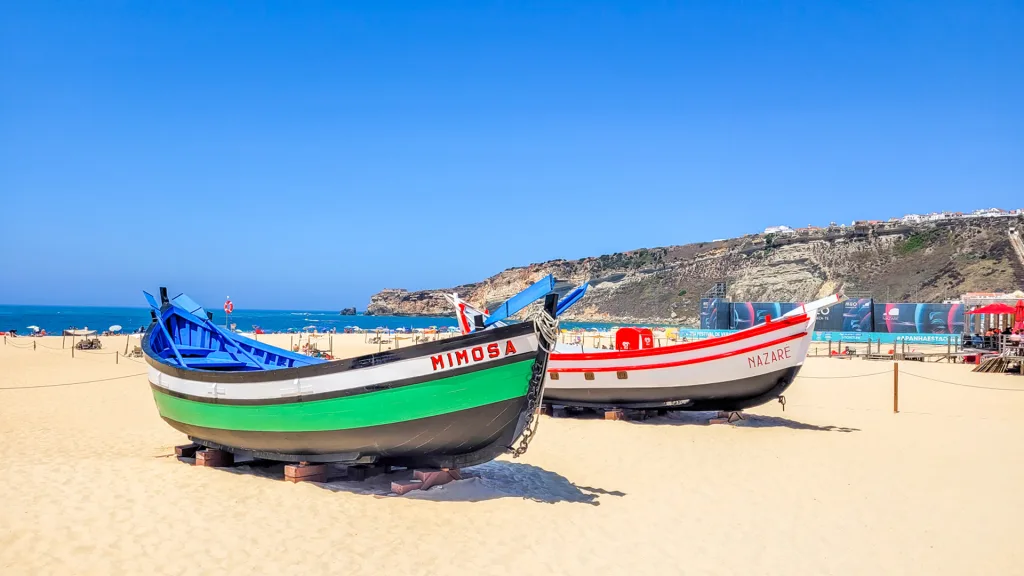
Nazaré is where the world-record wave was filmed – and the submarine canyon that generates it begins less than 1 km from the cliff where you are standing. The town is divided into three distinct neighbourhoods: Praia (the beach-level settlement along the 2.5 km main beach), Pederneira (a hilltop district above the town), and Sítio (the historic upper village located on a promontory approximately 110 m above sea level).
Sítio is accessed via the Nazaré Funicular – a 318 m inclined railway built in 1889 by a disciple of Gustave Eiffel. The funicular climbs from sea level to Sítio in under 3 minutes and operates at regular intervals of approximately 15 minutes. From the top, the viewpoint spans the full length of Praia de Nazaré (2.5 km) and extends north toward Praia do Norte, where the largest recorded Atlantic waves form.
The religious history of Sítio dates to 1182, when the Portuguese knight Dom Fuas Roupinho is said to have experienced a miraculous intervention by the Virgin Mary, preventing his horse from falling off the cliff edge during a hunt in dense fog. The Ermida da Memória (Chapel of Memory), built directly on the cliff edge, commemorates this event and still stands today.
At the northern end of Sítio is the Fort of São Miguel Arcanjo, constructed in 1577 as a coastal defense against pirate incursions. The fort now houses the lighthouse and serves as the primary elevated observation point for Praia do Norte during big wave surfing events. Visitor numbers at the fort increased significantly after global surf record coverage, rising from approximately 80,000 in 2015 to 174,000 in 2017. The municipality of Nazaré has a population of roughly 15,000.
Praia do Norte and the Nazaré Canyon
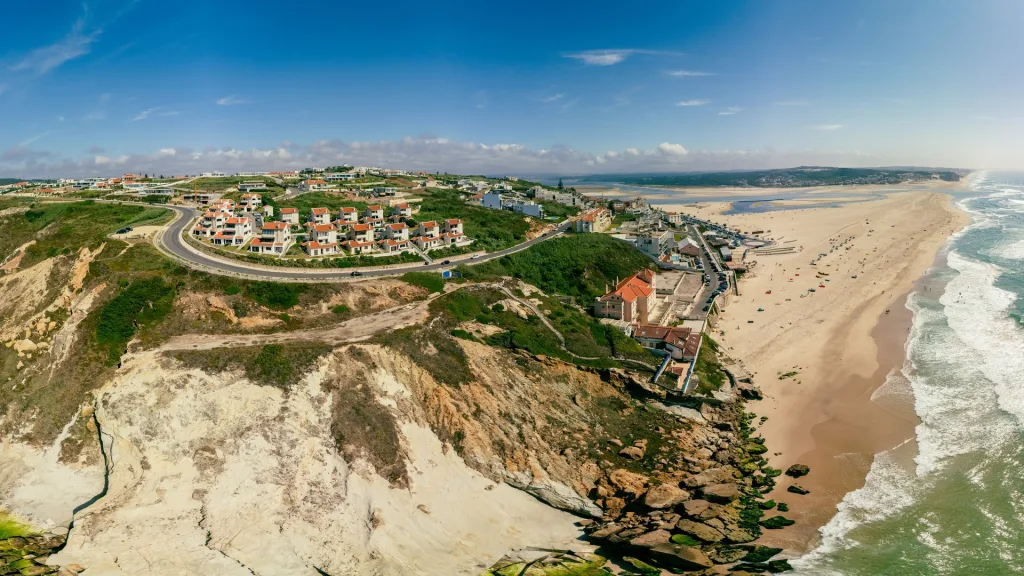
Praia do Norte is a beach located approximately 1.5 km north of Nazaré’s main beach and is the site of the largest surfed waves ever recorded. The waves are generated by the Nazaré Canyon – Europe’s largest submarine canyon, approximately 230 km long, reaching a maximum depth of around 5,000 m at the Iberian Abyssal Plain. The canyon begins less than 1 km offshore and amplifies North Atlantic swells through constructive interference, producing waves significantly larger than those typically found along the Portuguese coastline.
Garrett McNamara, a Hawaiian big-wave surfer, brought Praia do Norte to global attention on 1 November 2011, when he surfed a wave later measured at 23.77 m (78 ft) – the first official world record at this location, marking Nazaré’s emergence on the international big-wave surfing map. On 29 October 2020, German surfer Sebastian Steudtner surfed a wave measured at 26.21 m (86 ft) at Praia do Norte, establishing the current Guinness World Record for the largest wave ever surfed (unlimited – male). The record was officially confirmed in May 2022 following photogrammetric analysis of footage from two independent camera positions, verified by the World Surf League as part of the Red Bull Big Wave Awards.
Record-breaking wave events occur exclusively during autumn and winter North Atlantic storm cycles, typically November through March. Between April and October, Praia do Norte is generally a calm Atlantic beach with safe swimming conditions. The Fort of São Miguel Arcanjo provides the elevated viewing platform used during surf events – the canyon geometry and wave formation are most clearly understood from this vantage point year-round.
When to come for waves: November–March. No specific day guarantees are possible. If a significant swell is forecast during your tour date, your guide will adjust timing to maximize viewing conditions.

São Martinho do Porto
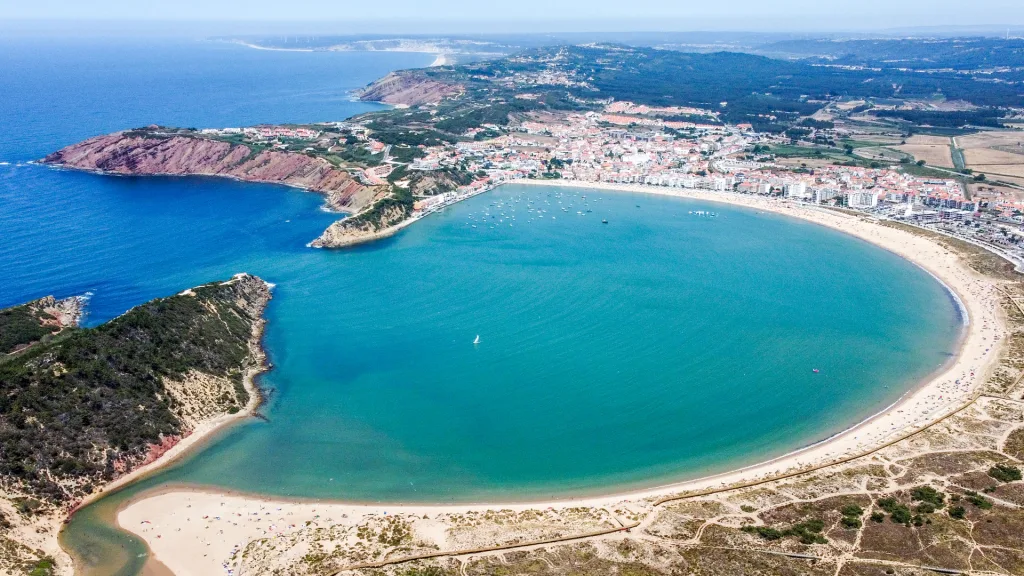
São Martinho’s bay has one of the most unusual geometries on the European Atlantic coast – a near-perfect shell shape formed by two limestone headlands, with an ocean opening of only 250 m. The restricted entrance produces flat, calm water inside the bay regardless of Atlantic swell conditions – the beach extends approximately 3 km along the inner shore.
The village was first recorded in 1257 in a letter by Friar Estevão Martins, the 12th Abbot of the Monastery of Alcobaça, which used the bay as its sea port for fishing and shipbuilding. By the late 19th century, the enclosed bay had become a resort for Portuguese royalty and aristocracy – King Carlos I described the beach among the most notable coastal formations in Portugal. The parish population is 2,868 (INE 2011 census).
Water temperature in the bay reaches 20–22°C in July and August, and the calm conditions make it suitable for swimming from April through October. On clear days, the Serra dos Candeeiros mountains are visible to the east. The stop on this tour is approximately 40 minutes – time for a walk along the bay, a coffee with water views, and a swim during the summer months.
Foz do Arelho and the Óbidos Lagoon
Foz do Arelho is a village at the Atlantic outlet of the Lagoa de Óbidos – the largest coastal lagoon in Portugal. The lagoon covers 6.9 km², with a maximum length of 6 km and a width of 1–1.5 km. Average depth is 2 m, reaching 5 m in the deepest navigable channel near the ocean outlet. The lagoon supports 175 identified bird species including Greater Flamingo, Black-winged Stilt, Bar-tailed Godwit, and Sandwich Tern – species that use it as a staging point during Atlantic migration.
At Foz do Arelho, the lagoon narrows to a shifting channel that connects to the Atlantic. The width of this opening varies seasonally – up to 200 m after winter storms, narrowing to approximately 50 m in summer. The village has a dual character: the lagoon side offers flat, shallow water for paddleboarding and kayaking; the Atlantic side faces open ocean swells.
The stop at Foz do Arelho is approximately 30 minutes – a coastal walk along the channel point where lagoon and ocean meet, with views across the water in both directions. The drive from São Martinho do Porto takes 15 minutes.

Óbidos – The Walled Medieval Town
Óbidos is the final stop and the one most travellers want to return to – a fully intact medieval walled town where the entire 1,565 m wall circuit is walkable in 30–45 minutes and the interior streets have remained architecturally consistent since the 18th century.
The town was captured by King Afonso Henriques of Portugal in 1148 during the same southward campaign that led to the conquest of Lisbon from Moorish control. The name derives from the Latin oppidum, meaning “fortified town.” In 1282, King Dinis I gave Óbidos as a wedding gift to Queen Isabel of Aragon, beginning a tradition that made the town part of the queens’ dowry for nearly five centuries. Óbidos remains known as Vila das Rainhas (Village of the Queens).
The perimeter wall measures 1,565 m in length and reaches up to 13 m in height. The full circuit is walkable in approximately 30–45 minutes. The wall path is narrow (around 1–2 m wide) and lacks handrails in certain sections, requiring caution. The walk provides uninterrupted views over the whitewashed historic centre and the surrounding agricultural plains. The castle at the northern end of the walls has operated as a Pousada (state heritage hotel) since 1950.
In 2007, Óbidos was selected as one of the Seven Wonders of Portugal in the village category. In 2015, UNESCO designated it a Creative City of Literature, making it part of the global network of literary cities.
Ginja de Óbidos: The local cherry liqueur is made from Morello cherries (Prunus cerasus austera) macerated in aguardente (grape spirit) with cinnamon and cloves, a tradition often attributed to Cistercian monastic practices in the 17th century. In Óbidos specifically, it is served in an edible chocolate cup. This presentation format was introduced in 1987 by Dário Pimpão on Rua Direita, the town’s main pedestrian street.
Check out our complete Óbidos Guide.


Return to Lisbon
In the end, after a tour day full of good times, we will return to Lisbon with a drop-off at the place where you are installed.
The suggestions are ours, but the decision is yours. Enjoy to the fullest this tour made for you and thinking of you.
What’s Included
- 8 Hours Tour
- Private air-conditioned vehicle (up to 8 passengers)
- Hotel/apartment pickup and drop-off in Lisbon, Sintra, Cascais, Estoril, or anywhere along the Estoril Coast
- Mandatory passenger insurance
- Fuel, tolls, and parking at all stops
Not included
- Meals and drinks
- Tickets to Monuments
- Tips
Tour Price
Prices are per vehicle, not per person.
Cancellation up to 24 hours before departure. Cancellations within 24 hours are non-refundable.
Contact us and Book your Tour
Best Time of Year for This Tour
- November–March (wave season):
Best period to observe large surf at Praia do Norte. Coastal temperatures typically range 8–14°C with Atlantic wind exposure. Óbidos is at its quietest, with weekday wall walks often nearly empty. São Martinho do Porto and Foz do Arelho are colder but visually striking in low winter light. Nazaré maintains its working fishing character, with the summer tourist layer absent. - April–June (recommended):
Temperatures average 16–22°C. Atlantic swells remain possible in April and gradually decrease through May. Vegetation across the Serra dos Candeeiros is at its greenest following winter rainfall. Óbidos is visited before peak summer crowds. São Martinho do Porto typically begins transitioning toward comfortable swimming conditions from May. - July–August (peak season):
Temperatures reach 24–30°C in Lisbon and 18–24°C along the Silver Coast. São Martinho do Porto is at full summer capacity, with calm bay waters around 20–22°C suitable for swimming. Nazaré is busy but manageable with early arrival. Óbidos hosts seasonal medieval events in late July and August. Nazaré funicular queues peak in August, making early-morning Sítio visits preferable. - September–October (second recommended window):
Temperatures range 18–26°C. Visitor numbers decline after the August peak. São Martinho do Porto remains suitable for swimming through September. The surf season begins in late October, with early Atlantic swells occasionally producing significant wave events at Praia do Norte.
FAQ
What is the Nazaré Canyon and why does it create such large waves?
What is the Guinness World Record for the largest wave surfed at Nazaré?
Can we see big waves on this tour?
Is the price per person or per vehicle?
Is the Óbidos wall walk included?
What is Ginja de Óbidos?
Can we swim at São Martinho do Porto?
What languages does the guide speak?
Can we customise the itinerary?
Is this tour suitable for children?
What is the cancellation policy?
What Our Guests Say
You may also be interested in
Fátima Group Tour - Fátima, Batalha, Nazaré & Óbidos
Same four destinations in a small-group format (max 8 passengers). Fixed schedule; mixed group. €84/person.
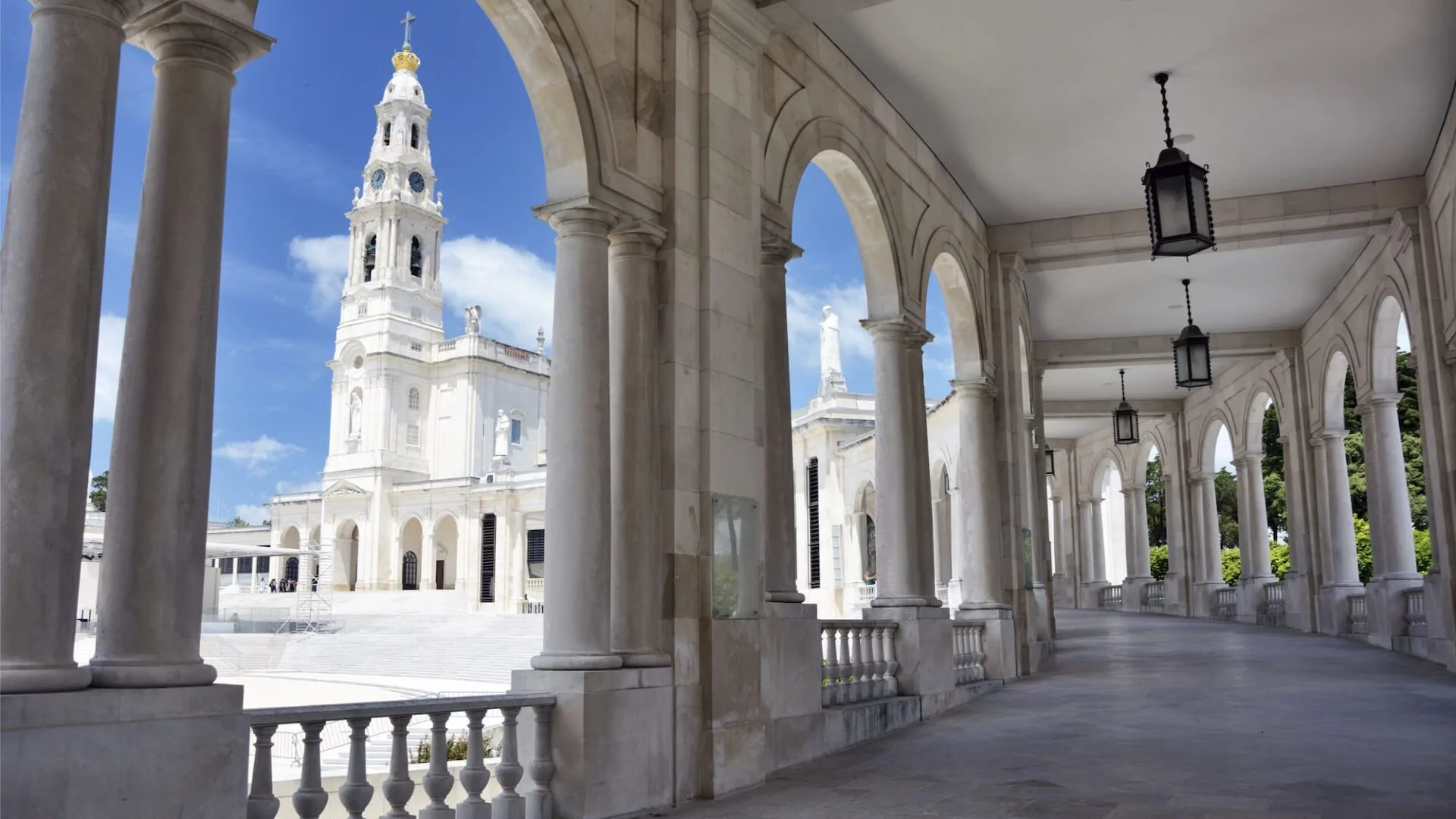
Private Fátima, Batalha, Nazaré & Óbidos Tour
Same 4 northern destinations — Fátima, Batalha, Nazaré, Óbidos — in an exclusive private vehicle. From €330/vehicle.
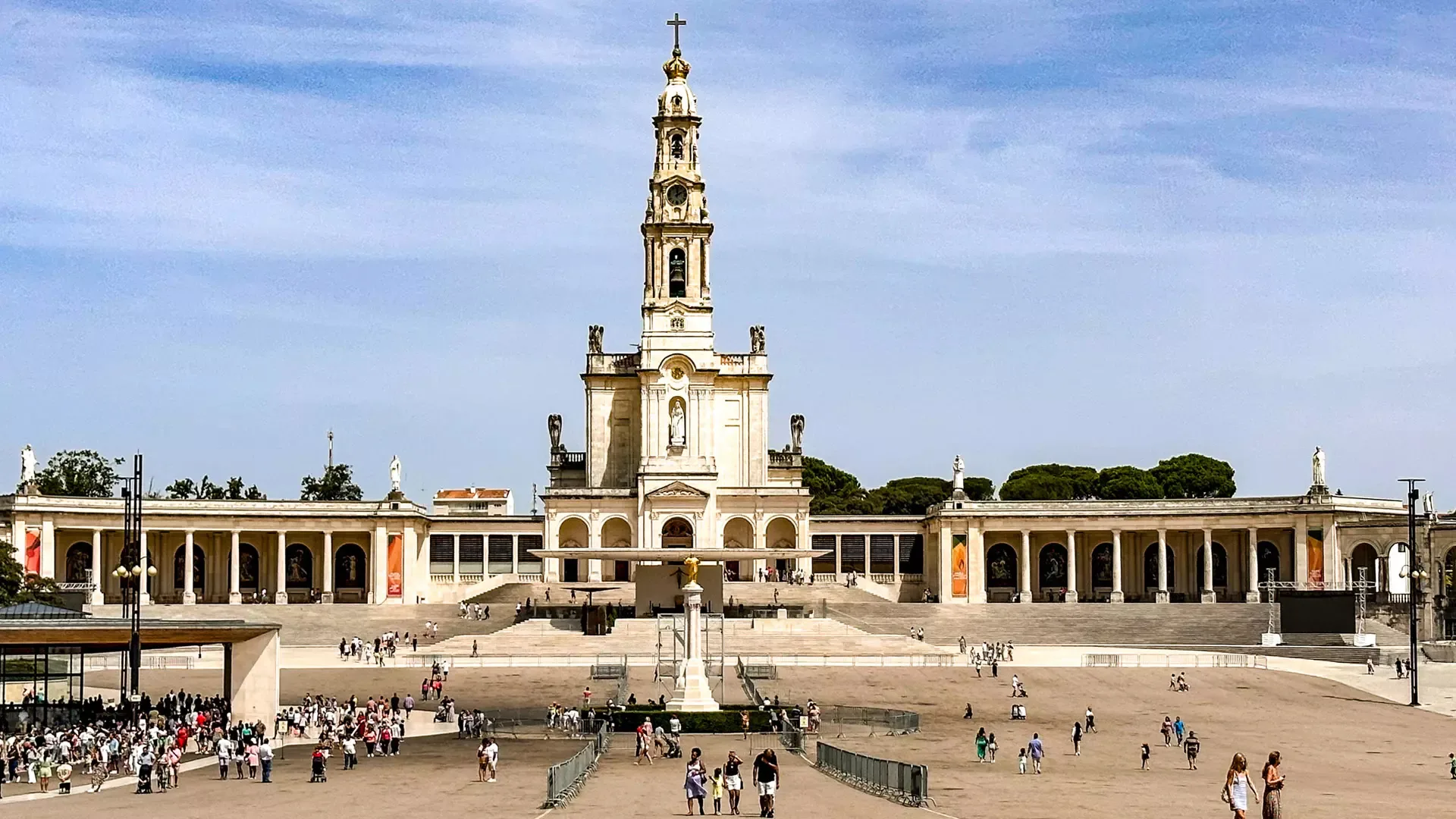
Tomar, Almourol & Medieval Portugal Private Tour
Medieval route combining the Templar Castle at Tomar (built 1160) and Castle of Almourol (river island, 11th century). From €310/vehicle.