


Ask someone to name a Portuguese fortified wine and they’ll say Port — reasonably, since Port is the one with the international marketing budget. Forty minutes south of Lisbon, on the Setúbal Peninsula, there’s a second fortified wine tradition that’s nearly as old as an officially regulated region: Setúbal was demarcated in 1907, making it Portugal’s second-oldest protected wine region after the Douro itself (1756). Most visitors to Lisbon never taste it, not because it’s obscure in Portugal, but because nobody outside the wine trade tends to mention it exists.
Moscatel de Setúbal shares Port’s basic trick — fermentation is stopped early by adding grape spirit, locking in natural sweetness — but the similarity ends there. After fortification, Moscatel de Setúbal does something Port never does: the skins stay in the wine for months, sometimes half a year, steeping like a very slow tea. That single extra step is why the wine smells the way it does, and almost nobody explains it before diving into tasting notes.
This is what the wine actually is, how it’s made, how it changes with age, and where to taste it properly — on the peninsula itself, not from a shelf.
What Is Moscatel de Setúbal?
Moscatel de Setúbal is a fortified white wine made on the Setúbal Peninsula, roughly 40 km south of Lisbon across the Tagus.
The DOC (Denominação de Origem Controlada) covers the municipalities of Setúbal, Palmela, and Montijo, plus the parish of Castelo in the municipality of Sesimbra — a relatively tight geographic footprint for a wine with an outsized reputation among people who actually know it.
The region was first delimited by decree on 10 May 1907 — with its boundaries confirmed by a further decree in October 1908 — making it Portugal’s second officially demarcated wine region after the Douro (1756).
A single law passed the following year, on 18 September 1908, created four more demarcated regions at once: Dão, Carcavelos, Colares, and Vinho Verde — which is why Dão is sometimes wrongly cited as the runner-up to the Douro, when Setúbal’s initial 1907 decree actually came first.
By DOC rule, the wine must be made from a minimum of 85% Moscatel de Setúbal (Muscat of Alexandria) or Moscatel Roxo grapes, fortified partway through fermentation, then aged a minimum of 18 months in wood before release.
Documented interest in the wine abroad goes back centuries before any of that regulation existed: records show Richard II of England was importing Setúbal’s muscat wines as early as 1381.
The DOC framework is barely over a century old; the wine’s export reputation predates it by more than five hundred years.

How It’s Made — and What Makes It Different From Port
The first step is the one Moscatel de Setúbal shares with Port: partway through fermentation, while there’s still plenty of unfermented sugar left in the must, a neutral grape spirit (around 77% ABV) is added.
The alcohol kills the yeast, fermentation stops dead, and the wine keeps its natural sweetness while gaining strength — finished Moscatel de Setúbal typically lands at 17–19% ABV, with the legal range running 16–22%.
Here’s the step Port skips entirely.
Instead of pressing the grapes off their skins right after fortification, Moscatel de Setúbal producers leave the skins soaking in the fortified wine for months — commonly three, sometimes stretching to six.
Muscat grape skins carry an unusually high concentration of aromatic terpene compounds, the same family of molecules responsible for a lot of what makes Muscat grapes taste and smell like Muscat grapes rather than just “sweet white wine.”
Months of contact pulls those compounds out of the skins and into the wine, which is the real reason Moscatel de Setúbal smells the way it does — heavily floral, orange blossom, honeyed — in a way that fortified reds simply can’t replicate, because red fortified wines are built around tannin and colour extraction, not aromatic oils.
Only after that extended maceration is the wine finally pressed, then aged in wood for a minimum of 18 months before it’s legally allowed to be sold.
Everything that happens to the wine after that point — five years, ten, twenty, longer — is where the real differences between bottles start to show up.
I’ve had clients ask, reasonably, why nobody just does this with Port.
The short version is that red fortified wine and this kind of aromatic maceration solve different problems — one is about extracting colour and tannin from red skins, the other about pulling scent out of white ones.
They’re not interchangeable techniques, just because both start with a splash of brandy.
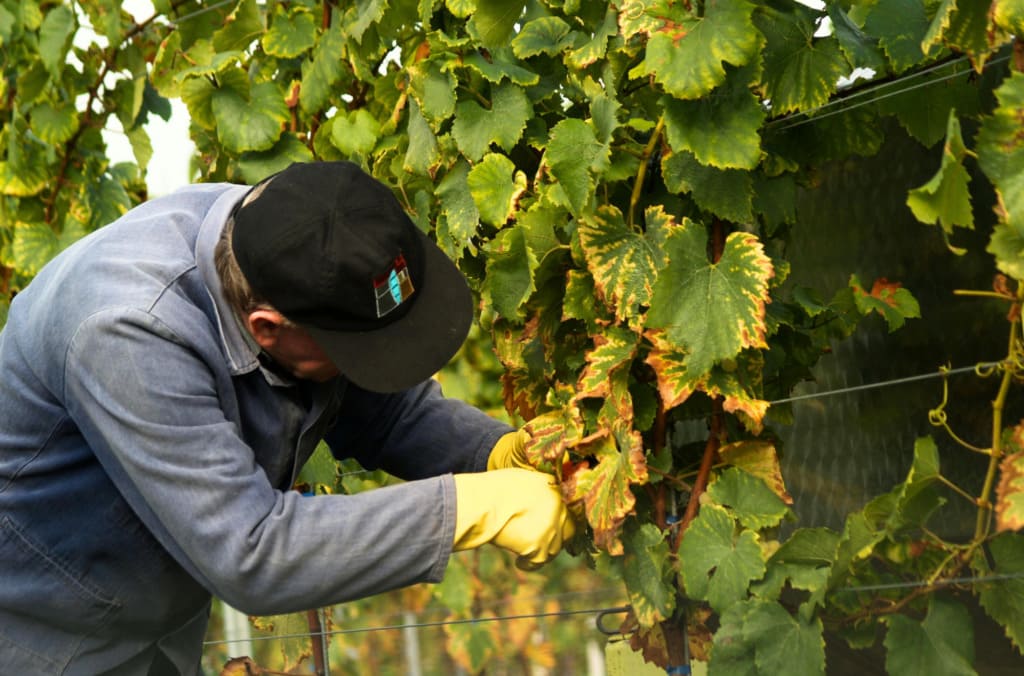
Moscatel de Setúbal vs. Moscatel Roxo
DOC rules permit two grapes for this wine, and they’re not close cousins in practice, even if they share a name.
Moscatel de Setúbal (Muscat of Alexandria) is the workhorse — the large majority of what’s planted and bottled under the DOC.
It’s the grape behind the honeyed, orange-blossom character most people associate with the wine.
Moscatel Roxo is a pink-skinned mutation of the same family, planted on a genuinely small footprint of the peninsula’s vineyards compared to its white sibling.
It’s rarer on shelves, generally regarded within the trade as the more intense and complex of the two, and when a bottle is labelled specifically as Moscatel Roxo, DOC rules require the same 85% minimum varietal purity that applies to the standard Moscatel de Setúbal bottling.
Neither grape is unique to Setúbal in a botanical sense — Muscat of Alexandria grows across the Mediterranean under a dozen different names.
What’s specific to Setúbal is the combination: this exact grape, this fortification method, and that months-long skin maceration step, applied together in one place since long before anyone wrote the rules down.
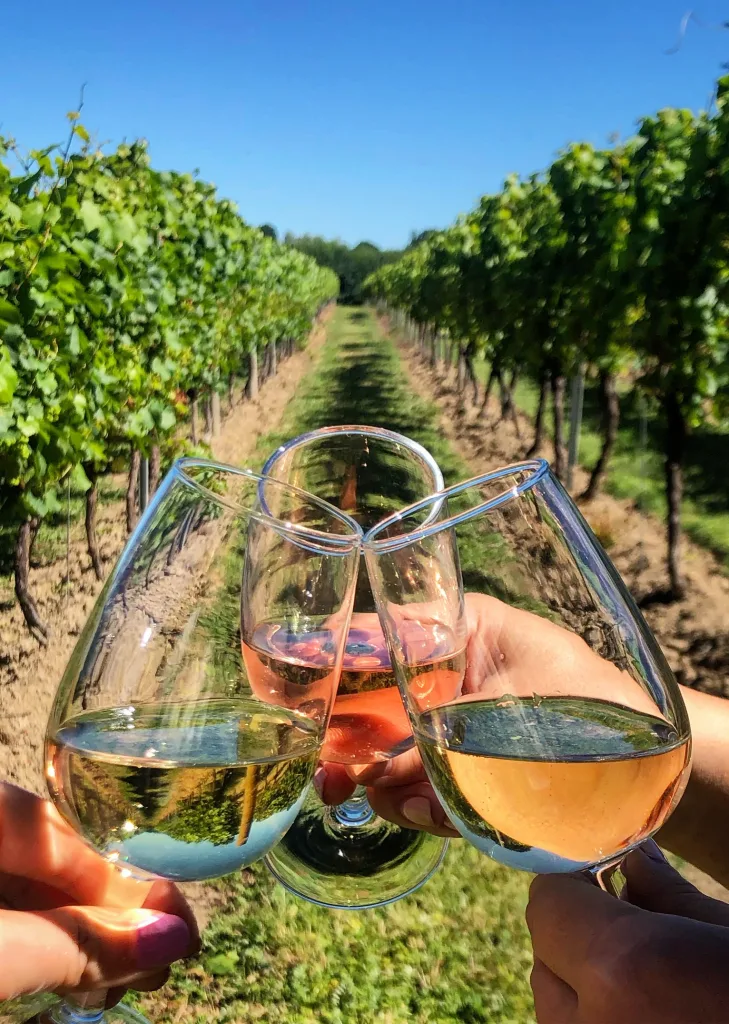
How It Ages, and Why the Number on the Label Matters
An 18-month-old Moscatel de Setúbal and a 20-year-old one are almost different beverages, and the label terminology reflects that.
Young (roughly 2–5 years):
Bright, perfumed, and unmistakably Muscat — orange blossom, apricot, rose water, honey.
This is the everyday expression, the one most likely to turn up as an aperitif rather than a special-occasion pour.
Around 10 years:
The floral top notes start folding into something denser — dried apricot, candied citrus peel, caramel, and the first hint of a nutty, oxidative character that wasn’t there at year two.
20 years and beyond:
This is where the wine stops resembling its younger self.
Roasted coffee, dried orange peel, walnut, marmalade, and a deep rancio quality — the same slow oxidative development, deliberately induced through barrel ageing, that defines old Sherry and Madeira.
Wines this age function almost as a category apart, sold and priced accordingly.
Portuguese labelling adds two more distinctions worth knowing before you order one.
Superior requires a minimum of five years’ age plus a quality classification above the basic bottling.
Datado means a single, stated vintage; Não Datado means a blend of multiple vintages — the age statement on a blended bottle reflects the youngest wine in it, not an average, so a “10-year” blend may well contain wine considerably older than that.

How to Serve and Pair It
Moscatel de Setúbal works as either an aperitif or a dessert wine, and which role it plays depends mostly on age.
Younger bottlings, served lightly chilled (around 10–14°C), work well before a meal — bright enough not to feel heavy.
Older, darker bottlings suit the end of a meal rather than the start of one.
On pairing: blue cheese is the classic match, particularly with anything past 10 years old — the wine’s sweetness and acidity cut through the cheese’s saltiness in a way few other wines manage cleanly.
Dark chocolate, foie gras, and orange-based desserts all work for similar reasons.
Portugal’s own egg-yolk-based sweets — ovos moles, pastéis de nata — sit comfortably alongside it too, which isn’t surprising given both traditions come out of the same convent-kitchen sugar economy that shaped so much of Portuguese pastry.
What doesn’t work: treating it like a casual glass of white wine with dinner.
At 17–19% ABV and built around concentrated sweetness, it’s a considerably more serious pour than the “wine” category suggests, and it’s meant to be drunk in smaller measures than a standard glass.

Tasting Moscatel de Setúbal on the Setúbal Peninsula
Reading about a fortification method is one thing; watching a guide pull a barrel sample of an 18-month-old wine next to a 10-year-old one from the same cellar is a different kind of understanding, and it’s only available on the peninsula itself.
Setúbal sits roughly 40 km south of Lisbon — closer than the Douro’s 300-plus kilometres by a wide margin, and reachable as a half-day or full-day private trip rather than an overnight commitment.
Visits during September and October, the harvest and fortification window, occasionally let visitors see the actual mid-fermentation spirit addition — the exact moment that defines the whole category.
Outside harvest season, cellar visits more typically show wines at different points in their ageing, sometimes drawn straight from the barrel.
We run wine tastings on the Setúbal Peninsula as a day trip from Lisbon, generally combined with the Arrábida coastal drive — the wine on its own is a strong reason to go, but the two make an easy match on the same day out.
- Setúbal Wine Tasting Tour → cellar visit, Arrábida Natural Park coastal drive, from €310/vehicle.
FAQ
What is Moscatel de Setúbal?
Is Moscatel de Setúbal the same as Port?
How old is the Setúbal wine region?
What grapes are used to make Moscatel de Setúbal?
What does "Superior," "Datado," and "Não Datado" mean on the label?
How strong is Moscatel de Setúbal?
What does Moscatel de Setúbal taste like?
What food pairs well with Moscatel de Setúbal?
Where can I taste Moscatel de Setúbal near Lisbon?
Can I visit Setúbal wine country in a day from Lisbon?

Founder & Director of Yellow Cab TT Tours. Guiding in Portugal for 20+ years.
Founded Yellow Cab TT Tours in 2013. 3,372 five-star reviews on Tripadvisor.