


There is no direct train from Lisbon to the Douro Valley, and there is no direct road either — and the two routes don’t even follow the same path. The only railway into the valley branches off the Porto–Régua line, so every train journey goes through Porto, no way around it. The road route does the opposite: it cuts inland through Coimbra and Viseu on the A1 and IP3, and never touches Porto’s city limits at all.
Most guides to this route gloss over that distinction, because most of them are written from Porto, where the Douro is a 90-minute side trip. Starting from Lisbon changes the math. The distance is close to 390 km, and the fastest option — a direct private transfer — still takes the better part of four hours before you’ve stopped anywhere.
This article covers the three practical ways to make the trip: train, bus, and private transfer, each with the current 2026 price, the realistic travel time, and the station or road details that most comparison guides skip. It also covers what’s worth stopping for on the way, since a transfer with a planned stop costs less than most people expect and covers ground the train never will.
How Far Is the Douro Valley from Lisbon?
The Douro Valley isn’t one town — it’s a demarcated wine region roughly 100 km long along the Douro River, and “Lisbon to Douro Valley” in practice means Lisbon to Peso da Régua, the region’s main gateway town, or to Pinhão, its scenic core 27 km further upriver.
Key facts:
- Road distance Lisbon → Peso da Régua: approximately 385–390 km.
- Rail distance (via Porto): 314 km to Porto Campanhã, plus 69 km on to Régua.
- Driving time direct: 3h30min–4h, depending on the exact route and traffic through Coimbra.
- The Alto Douro Wine Region has been a UNESCO World Heritage Site since 2001.
- The region’s boundaries were formally fixed in 1756 under the Marquis of Pombal — making it the third officially demarcated wine region in the world, after Chianti (1716) and Tokaj (1737), though the first to operate under continuous, unbroken government regulation, a system still in force today.
That last point is worth being precise about. The Douro is routinely called “the world’s oldest demarcated wine region” — it isn’t, by 40 years. What it pioneered was regulatory continuity, not priority, and the two claims get conflated often enough that it’s worth separating here before moving on to logistics.

Train: Lisbon to Porto, Then the Douro Line
There is no single ticket for this journey. It’s two trains, on two different operators’ schedules, connected at Porto.
Leg 1 — Lisboa Oriente to Porto Campanhã (Alfa Pendular):
- Journey time: 2h 39min.
- Price (2026, 2nd class): €35.50.
- Frequency: roughly hourly.
Leg 2 — Porto to Peso da Régua (InterRegional, Linha do Douro):
- Journey time: approximately 2h 10min.
- Distance: 69 km.
- Price (2026, official CP fare): €10.90 full fare / €9.90 youth.
- Frequency: 4 trains per day, first departure 06:30.
- Departure station: Campanhã or São Bento — both serve the Douro line, an 8-minute ride apart.
The detail most travellers miss: you do not need to backtrack into central Porto to continue on to the Douro. The Alfa Pendular arrives at Campanhã, and Campanhã is also a departure point for the Douro line — so a same-station connection is possible, no transfer into the city required, though the timetables don’t always line up conveniently.
Total journey: roughly 5–5.5 hours door-to-door including the connection, at a combined fare of about €46.40 in 2nd class. Past Régua, two direct InterRegional services a day continue on to Pinhão; for other times, a further local change is needed.
The line itself is the reason people put up with the two-train hassle. Past Régua, the track runs close enough to the river that the window becomes the point of the trip, not a distraction from it.

Bus: Rede Expressos to Peso da Régua
The bus is the simplest public transport option for reaching the Douro Valley. Unlike the train, it doesn’t require a change in Porto — you stay on the same coach all the way to Peso da Régua.
Key facts:
- Journey time: approximately 4h 45min to 5h 45min, depending on the service.
- Price: typically €25–28 one way.
- Frequency: several direct departures daily.
- Departure: Sete Rios Bus Terminal, Lisbon.
- Arrival: Peso da Régua Bus Station (some services continue to Lamego).
- Operators: Rede Expressos and Citi Express.
The route follows Portugal’s inland motorway network rather than the coast, making it more direct than the rail journey. Travel times vary depending on intermediate stops, so it’s worth comparing departures instead of choosing purely by departure time.
For travelers whose priority is getting to the Douro with the least hassle, the bus often makes more sense than the train. You avoid the connection in Porto, arrive in Régua in a single journey, and usually pay less than the combined rail fare. The downside is flexibility: once you’re on board, there are no scenic stops, and five hours in a coach can feel considerably longer than the equivalent time split between two trains.
If you’re planning to explore Coimbra, Porto, or another stop along the way, the train or a rental car is usually the better fit. If your goal is simply to reach the Douro Valley efficiently, the direct bus is hard to beat.

Private Transfer: Lisbon to the Douro Valley with Stops
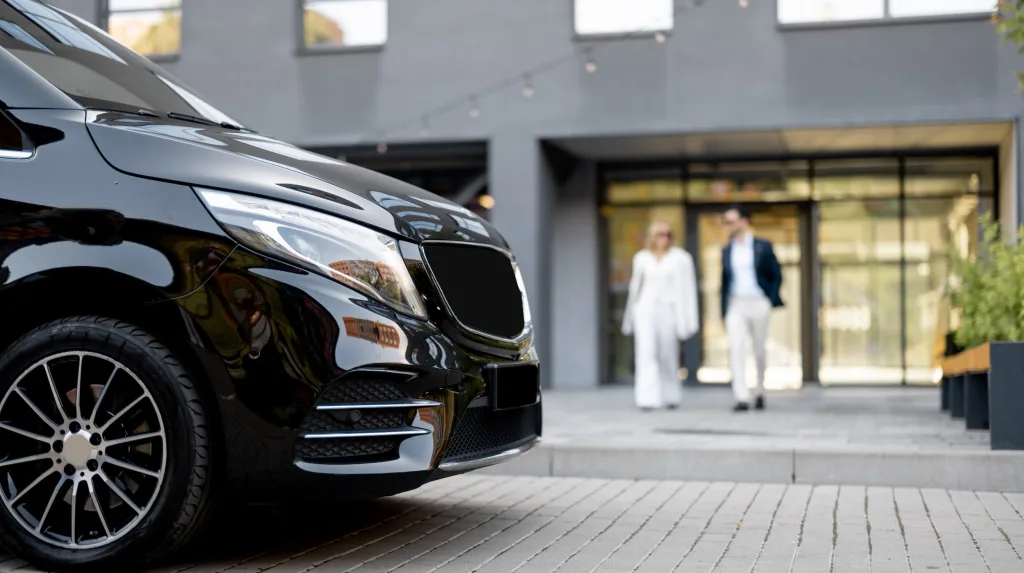
A private transfer is the only one of the three options that follows the direct inland road route without a station change, a fixed timetable, or someone else’s stops.
Yellow Cab TT Tours pricing (per vehicle, 2026):
Sedan (1–3 passengers): from €690.
Van (4–6 passengers): from €840.
Optional stop (1 stop en route): +€60.
Optional stop (2 stops en route): +€100.
Departure: flexible — your hotel or any Lisbon address.
Arrival: your hotel or accommodation in the Douro Valley.
What is included: private vehicle, English-speaking driver, door-to-door service, tolls.
What is not included: entrance tickets or tastings at any intermediate stops.
Journey time without stops: approximately 3h30min–4h via the A1, IP3, and A24 — the same inland route the bus takes, bypassing Porto entirely.
The price is per vehicle, not per person, which changes the comparison for anyone travelling as a pair or a group. A sedan for three people at €690 works out to €230 per person — more than the combined train fare for three (about €139 in total, or roughly €46 each), but without the connection at Porto, the fixed timetable, or the option to stop in Coimbra on the way.
The train gets you to the Douro. The transfer gets you to the Douro having already decided, an hour outside Lisbon, that a coffee break in Coimbra was worth the detour — a decision the Alfa Pendular’s timetable does not allow you to make.
What to See Along the Way
The drive from Lisbon to the Douro follows Portugal’s main inland corridor, making it easy to include one or two worthwhile stops before reaching the valley.
Coimbra — around 2 hours from Lisbon
Coimbra sits directly on the A1 motorway before the route turns east toward Viseu, making it the most logical stop. The University of Coimbra, founded in 1290 by King Dinis I, is Portugal’s oldest university and has been a UNESCO World Heritage Site since 2013. Its Joanina Library, completed in 1728, is the highlight — a Baroque masterpiece with painted ceilings, gilded shelves, and a well-documented colony of bats that protects the collection by feeding on book-eating insects after dark.
Allowing 2–3 hours is enough to visit the library, climb the university tower if it’s open, and walk through Coimbra’s historic centre before continuing towards the Douro.
Check out also our Lisbon to Coimbra guide.
Peso da Régua and the N222
Peso da Régua marks the practical entrance to the Douro Valley. It’s the region’s main transport hub and the point where the landscape changes from rolling countryside to steep vineyard terraces.
From Régua, the N222 follows the Douro River for 27 km to Pinhão through one of Portugal’s most scenic drives. In 2015, Avis named it the world’s best driving road using a scoring system developed with researchers from the University of Warwick, combining road geometry with scenic quality. The stretch contains 93 bends and remains one of the country’s classic driving routes.
Many visitors spending the night in the valley choose to drive—or have their driver continue—along the N222 on arrival before beginning winery visits the following day. It’s one of the few places where travelling by road is genuinely part of the experience rather than simply a way of getting from one destination to another.
Aveiro and Óbidos, although popular stops on the Lisbon–Porto route, don’t fit naturally into a Douro itinerary. The inland route turns away from the coast long before reaching either town, making both significant detours rather than convenient stops.

Which Option Is Right for You?
| Train | Bus (Rede Expressos / Citi Express) | Private Transfer | |
|---|---|---|---|
| Journey time | ~5–5.5h (including connection) | ~4h45min–5h45min | ~3h30min–4h |
| Price (1 person) | ~€46.40 | ~€25–28 | From €690 per vehicle |
| Price (3 people) | ~€139.20 | ~€75–84 | From €690 per vehicle |
| Route | Via Porto (Campanhã) | Direct inland route | Direct inland route |
| Stops en route | No | No | Optional (up to 2 stops) |
| Door-to-door | ❌ | ❌ | ✅ |
| Best for | Rail enthusiasts and flexible schedules | Budget-conscious travellers | Couples, families, and groups wanting flexibility |
Choose the train if you enjoy rail travel, don’t mind changing trains in Porto, and are happy to spend most of the day getting to the Douro.
Choose the bus if keeping costs down is your priority and you’d prefer one direct journey without changing vehicles.
Choose a private transfer if you’re travelling with family or friends, want the fastest and most comfortable journey, or plan to stop in Coimbra or another destination along the way before arriving in the Douro Valley. It also gives you the flexibility to reach the valley early enough to drive the N222 or enjoy your hotel before dinner, rather than arriving in the evening after a full day on public transport.
Private Transfer from Lisbon to the Douro Valley
A private transfer is the only way to reach the Douro on the direct inland route, door-to-door, with the option to stop in Coimbra or elsewhere along the way. Vehicles depart from your Lisbon hotel and arrive at your Douro accommodation.
- Private Transfer Lisbon → Douro Valley → door-to-door, sedan or van, from €690/vehicle.
- Private Transfer Lisbon → Porto → for travelers routing through Porto first, from €580/vehicle.
- Portugal’s Wine Regions Guide → what makes Douro’s wine distinct, and how it compares to Alentejo and Vinho Verde.
- Private Tours from Lisbon → full-day private tours to other destinations.
FAQ
How far is the Douro Valley from Lisbon?
By road, approximately 385–390 km to Peso da Régua, a drive of 3h30min to 4h. By rail, it’s 314 km to Porto plus a further 69 km on the Douro line — closer to 5–5.5 hours door-to-door once the connection is included.
Is there a direct train from Lisbon to the Douro Valley?
No. Every train journey goes through Porto — take the Alfa Pendular to Porto Campanhã (2h39min, €35.50), then change to an InterRegional service on the Douro line to Peso da Régua (about 2h10min, €10.90). The connection is possible at Campanhã itself, without continuing into central Porto.
Can I do a day trip to the Douro Valley from Lisbon?
Not comfortably. Even the fastest option — a direct private transfer — takes 3h30min to 4h each way, meaning 7–8 hours in a vehicle for a same-day round trip with almost no time in the valley itself. Most visitors either stay overnight in the Douro or treat the transfer as a one-way leg of a longer trip.
How much does a private transfer from Lisbon to the Douro Valley cost?
Yellow Cab TT Tours charges from €690 for a sedan (1–3 passengers) and from €840 for a van (4–6 passengers), one-way. One optional stop adds €60; two stops add €100. The price is per vehicle, not per person.
Does the road to the Douro Valley go through Porto?
No. The road route runs inland via the A1 to Coimbra, then the IP3 and A24 through Viseu, reaching Peso da Régua without passing through Porto. Only the train route goes via Porto, since the Douro railway line branches off the Porto–Régua corridor.
What is the N222 and why is it worth driving?
The N222 is a 27 km road between Peso da Régua and Pinhão, named the world’s best driving road in 2015 by the car rental company Avis. It has 93 bends and runs along terraced vineyard hillsides for its full length, and is best experienced by car rather than train or bus.
Is the Douro really the world's oldest wine region?
No. Its boundaries were fixed in 1756, after Chianti (1716) and Tokaj (1737) — making it the third officially demarcated wine region, not the first. What the Douro did pioneer was continuous government regulation of a wine region, a system still running with modifications after roughly 270 years.
How much does the bus from Lisbon to the Douro Valley cost?
Rede Expressos and Citi Express both run from Sete Rios terminal to Peso da Régua, with journey times of about 4h45min to 5h45min depending on the service. Fares typically run €25–28 one-way, with several direct departures per day across both operators.
Can I stop in Coimbra on the way to the Douro Valley?
Yes, by private transfer. Coimbra sits directly on the road corridor before it turns east toward Viseu, so a stop of 2–3 hours at the University of Coimbra and the Joanina Library adds relatively little to the total drive. Neither the train nor the direct bus allows for a stop here.
Should I go via Porto instead of straight to the Douro?
Many travelers do, and it’s a reasonable way to break up the trip — Porto to Peso da Régua is only 69 km by train (about 2h10min) or roughly 100 km by road. But it’s a separate leg, not part of the direct Lisbon–Douro route, and adds at least a night if done properly rather than as a rushed stopover.

Founder & Director of Yellow Cab TT Tours. Guiding in Portugal for 20+ years.
Founded Yellow Cab TT Tours in 2013. 3,372 five-star reviews on Tripadvisor.