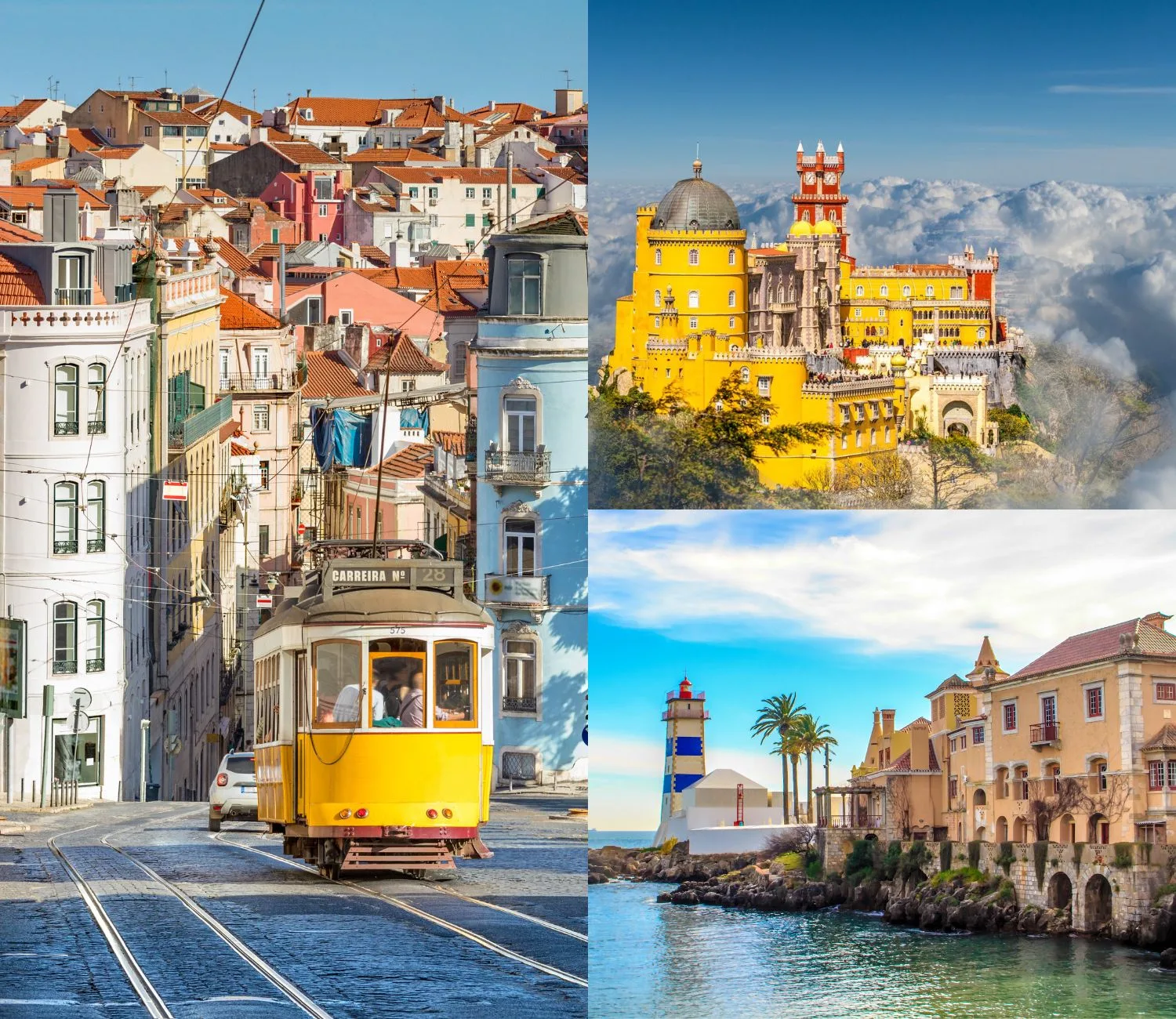
Guided Sintra & Cascais Small-Group Day Trip from Lisbon
Sintra – Cabo da Roca – Cascais – Estoril
- (Máx. Group of 8 People per Vehicle.)


Duration
8 Hours
Tour Type
Group
Group Size
Máx. 8px/vehicle
Pickup & Drop-off
Lisbon city centre (outside centre on request)
Main highlights
Sintra, Cabo da Roca, Guincho, Cascais
Price
€ 69 per person

Rated 5/5 on TripAdvisor.
based on +3.000 reviews
Tour Details
This guided small-group day trip from Lisbon departs at 08:30 and covers five destinations in 8 hours: the coastal strip from Estoril Casino (opened 1931) through Cascais (royal summer resort since 1870) and Guincho Beach (Atlantic Natural Park), across to Cabo da Roca – the westernmost point of mainland Europe at 38°47’N 9°30’W, 165 m above sea level – and finishes in Sintra, a UNESCO World Heritage Site listed on 4 December 1995. Maximum group size is 8 people per vehicle. Price: €69 per person.
Why Choose a Guided Small-Group Tour
A guided small-group tour places a maximum of 8 passengers in a comfortable, air-conditioned car. There are no crowded aisles, no waiting for large groups to reboard, and the guide accompanies the group throughout all five destinations, providing historical and cultural context at each stop. This format is well suited to solo travellers, couples, and small parties who want a structured, knowledgeable guide and reliable transport across multiple destinations in a single day.
The itinerary is fixed and departure is at 08:30 – the logistics are handled, and the group format means you share the experience alongside other travellers from different parts of the world. The €69 per-person price is fixed regardless of party size.
Tips for Visiting Sintra
Book palace tickets before you travel. Pena Palace is the most visited site in the Sintra region – in July and August, available entry slots sell out 3–4 weeks ahead. Tickets are sold through the Parques de Sintra website (parquesdesintra.pt). If you do not have tickets, your guide will focus the Sintra time on the historic centre, Moorish Castle (generally available same-day), and the village streets.
Wear comfortable footwear. Sintra’s historic centre is built on a hillside with narrow cobblestone streets and uneven surfaces. Pena Palace involves a 15-minute uphill walk from the park entrance to the palace itself. Quinta da Regaleira has gravel paths, steep staircases, and narrow underground tunnels. Flat, closed-toe shoes are essential.
Timing in Sintra. The historic centre is most crowded between 11:00 and 15:00. Arriving before 10:00 or after 15:30 reduces waiting at cafes and along the main street. Our guide plans Sintra time around these patterns when possible.
Weather in the serra. The Serra de Sintra generates its own microclimate – it is frequently cloudy or misty even when Lisbon is sunny. Bring a light jacket. Views from Pena Palace and the Moorish Castle can be spectacular in partial mist; on fully overcast days, the historical value of the palaces remains unchanged.
Estoril
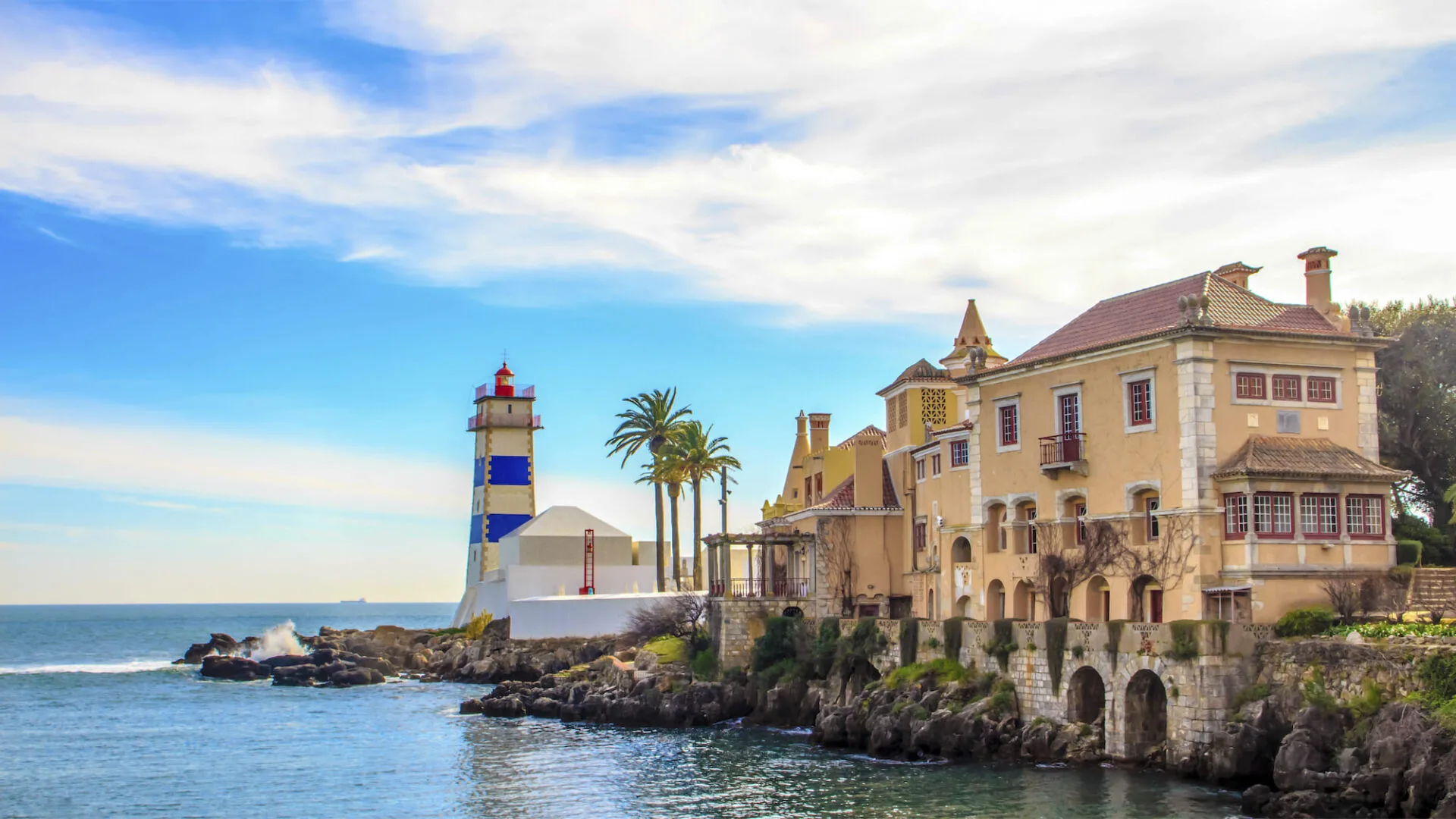
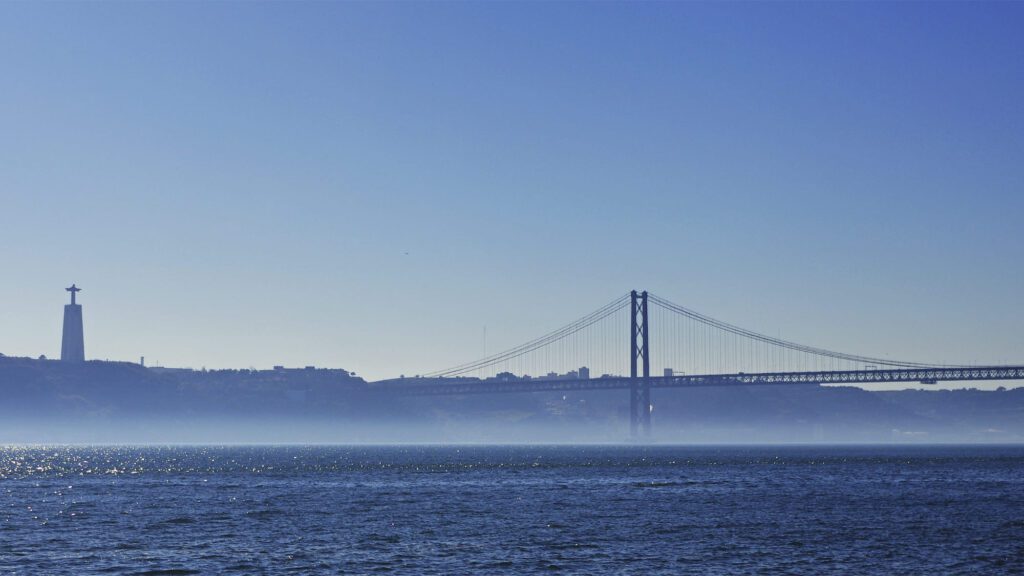
The tour departs Lisbon along the EN6, the coastal road that follows the northern bank of the Tagus estuary as it opens into the Atlantic. The first landmark is Estoril, a town of approximately 26,000 residents (Cascais municipality, 2021 census) situated 24 km west of Lisbon. Casino Estoril opened on 8 July 1931, designed by architect Adães Bermudes.
During World War II (1939–1945), when Portugal maintained neutrality, Estoril became one of Europe’s principal destinations for displaced royalty, intelligence agents, and refugees. The casino operated continuously throughout the war and was, for a period, the largest active casino in the world. British Naval Intelligence officer Ian Fleming visited in 1941 while stationed in Lisbon; his observations of the casino’s atmosphere and clientele contributed to the conception of James Bond. Fleming published Casino Royale in 1953, setting the novel’s central scenes in a thinly veiled version of Estoril.
The Hotel Palácio Estoril, opened in 1930 adjacent to the casino, still displays memorabilia from that era.
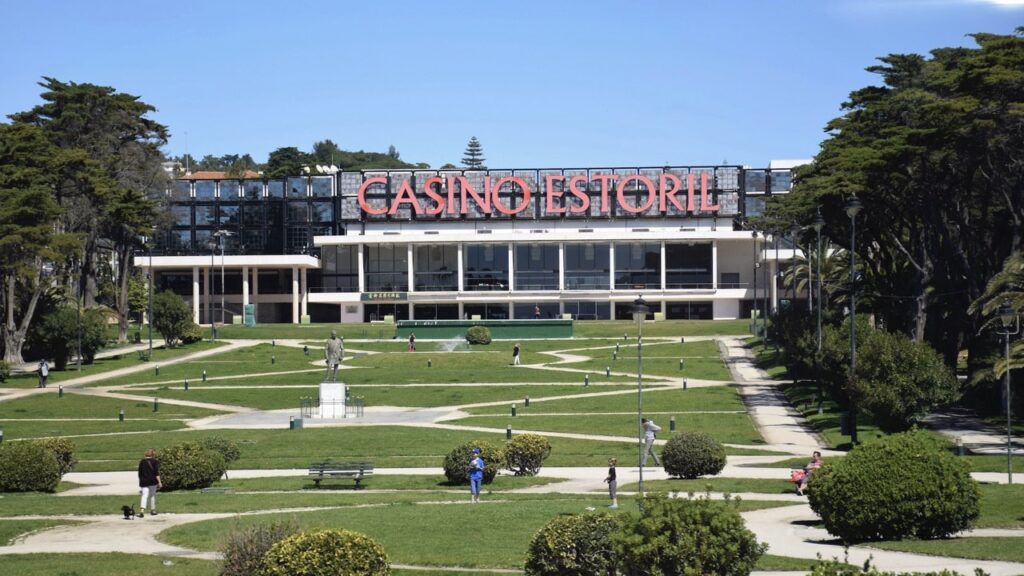
Cascais
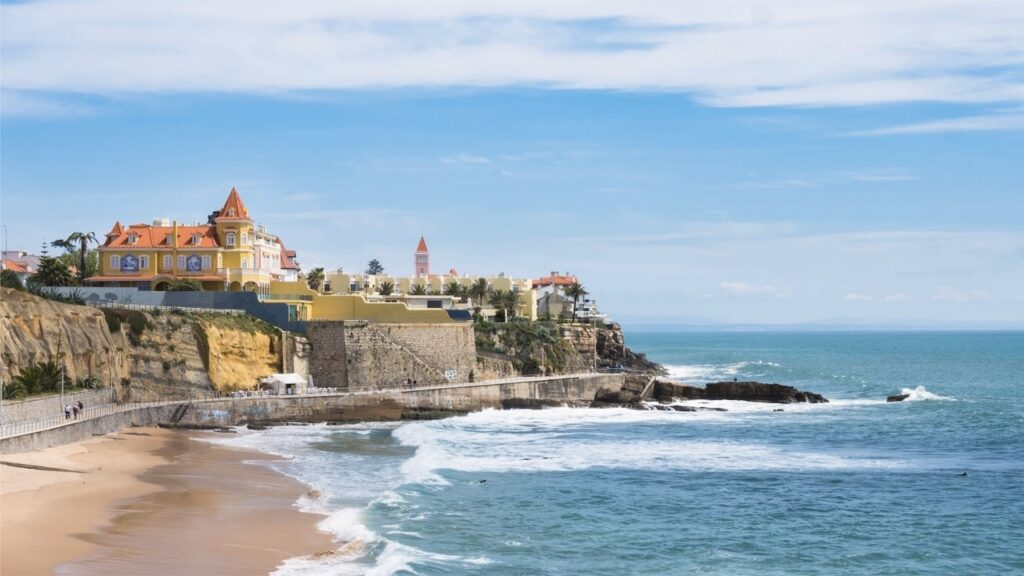
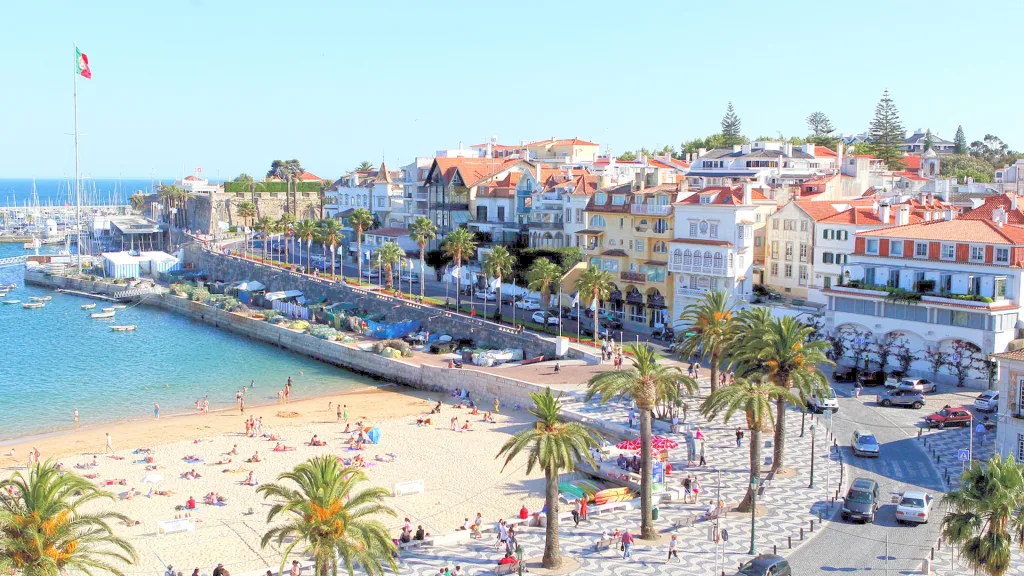
Cascais received its town charter in 1364 during the reign of King Fernando I. For five centuries it remained a fishing village, documented in historical records for its sardine and anchovy exports. In 1870, King Luís I (r. 1861–1889) relocated the royal summer court to Cascais, transforming the town into a resort destination for the Portuguese aristocracy and, subsequently, for European royalty in exile. The historic centre retains its 19th-century urban fabric: narrow cobblestone streets, whitewashed houses with azulejo tilework, and the bay (Baía de Cascais) forming a natural amphitheatre facing southwest.
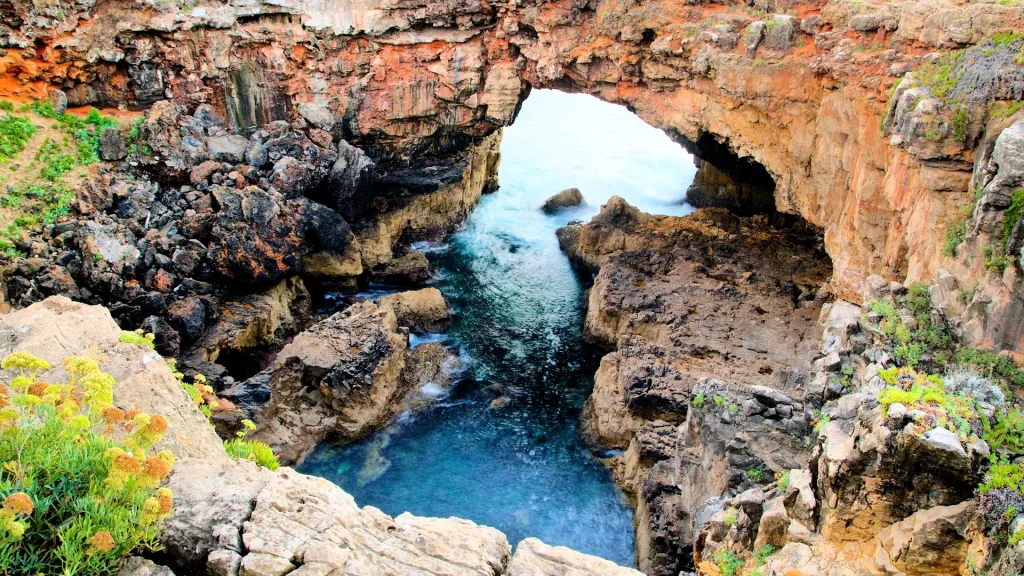
The group visits: Boca do Inferno (Mouth of Hell): A natural rock formation 2 km west of Cascais town centre, where Atlantic waves have carved a sea arch and blowhole into Jurassic limestone cliffs over millions of years. The cavity measures approximately 30 m deep and produces a distinctive low-frequency resonance when waves enter under pressure. The site entered popular consciousness in October 1930, when the occultist Aleister Crowley staged a fake suicide here, leaving his diary and belongings at the edge; he reappeared in Berlin three weeks later. The stunt generated international press coverage.
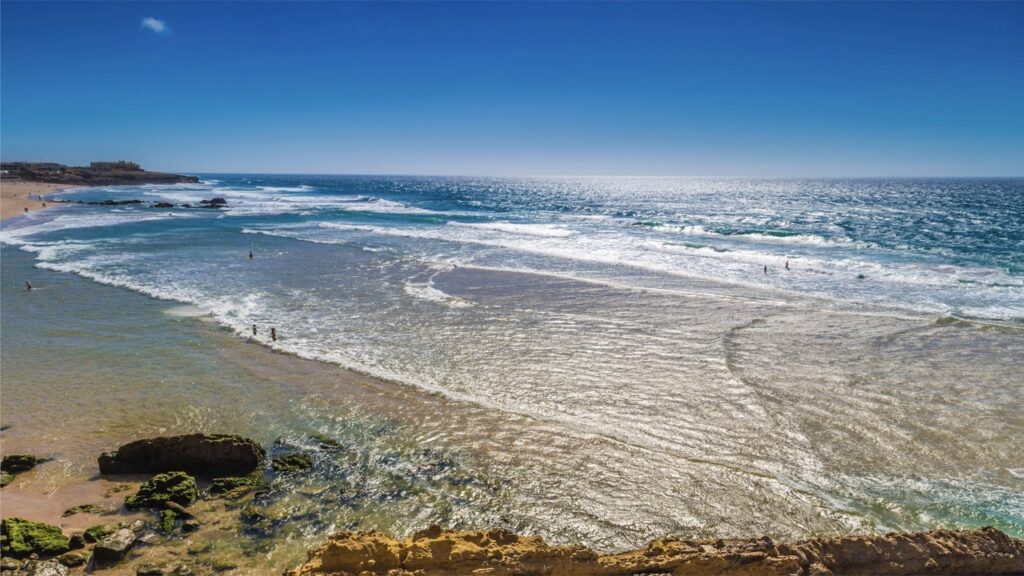
Guincho Beach lies 9 km north of Cascais, within the Sintra-Cascais Natural Park (Parque Natural de Sintra-Cascais), a protected area of 145 km² established by Decree-Law 292/76 in 1976 and expanded in 1981. The beach is a Natura 2000 habitat (code PTCON0008) under EU Habitats Directive 92/43/EEC. The beach faces directly into the prevailing Atlantic northwesterly winds, averaging 25–35 km/h in summer months and reaching 70 km/h during storms.
This consistency made Guincho the site of the PWA Windsurfing World Championship in 1986, one of the first international windsurfing competitions held in southern Europe. The area is now a designated spot for windsurfing, kitesurfing, and longboard surfing, with no swimming flags typically red or yellow depending on swell height.
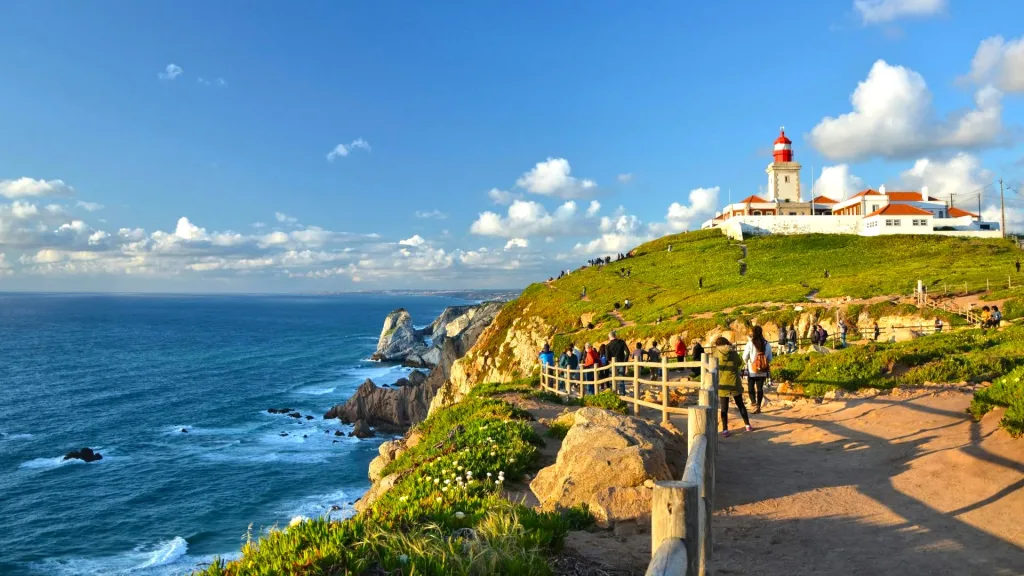
Cabo da Roca
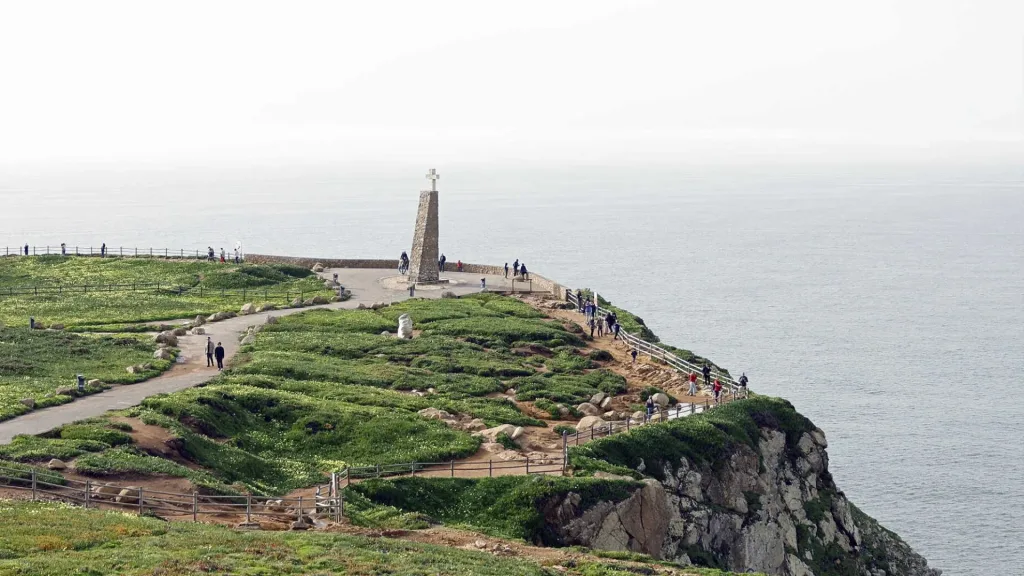
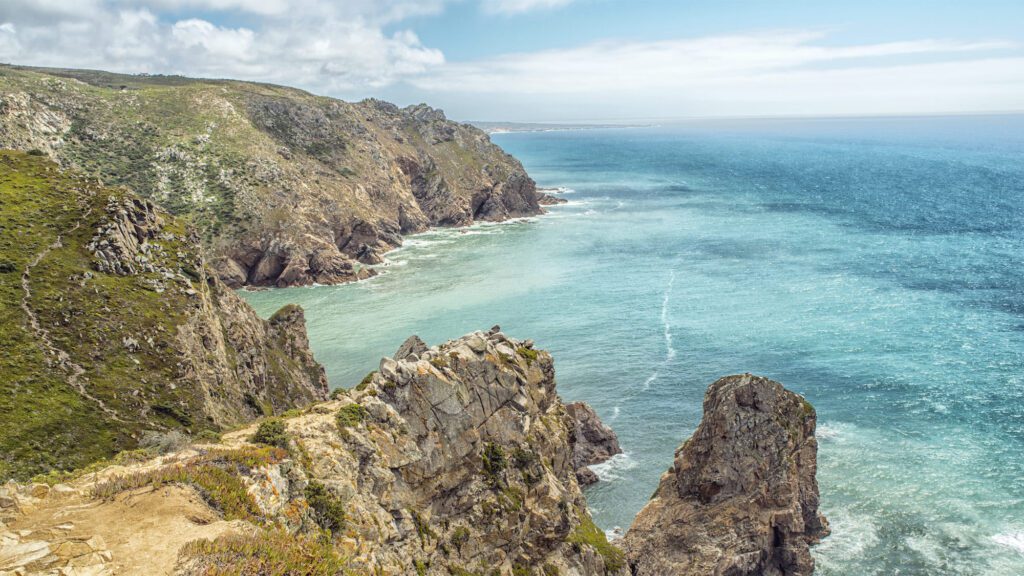
Cabo da Roca is a promontory on the Atlantic coast at coordinates 38°47’N 9°30’W, constituting the westernmost point of mainland Europe — confirmed by the Institut Géographique National and referenced in the UNESCO World Heritage listing of the Sintra Cultural Landscape (1995, reference number 723).
The cliff face stands 165 m above mean sea level. The lighthouse (Farol do Cabo da Roca) was built in 1772 during the reign of King José I and the administration of Prime Minister Marquis of Pombal; at 33 m tall, it was the tallest lighthouse on the Portuguese coast at the time of construction. The lighthouse was automated in 1991 and is managed by the Autoridade Nacional de Emergência e Proteção Civil. It continues to operate as an active navigational aid.
The stone monument at the cape bears an inscription from Luís de Camões’ Os Lusíadas (1572): “Aqui… onde a terra se acaba e o mar começa” – “Here… where the land ends and the sea begins.” Camões wrote the epic during Portugal’s Age of Discovery, referencing the strategic significance of Cape Roca as the limit of the known European continent before the Atlantic crossings.
Sintra
Afterward, we take scenic, less-traveled roads toward the magical town of Sintra, listed as a UNESCO World Heritage Site since 1995 in the category of Cultural Landscape – one of the first three cultural landscapes to receive UNESCO designation worldwide. The citation notes the concentration of 19th-century Romantic architecture within a forested mountain range 28 km northwest of Lisbon.
The Serra de Sintra rises to 528 m at Cruz Alta. The mountain range produces a microclimate: moist Atlantic air condenses against the range, creating year-round cloud cover, higher precipitation than coastal areas, and the dense vegetation (including species of oak, laurel, and fern) that made it attractive to Portuguese royalty as a summer retreat since the 12th century.
Along the way, enjoy glimpses of the Monserrate and Seteais Palaces, nestled among lush forests and hills.
Once in the village, you’ll have time to explore Sintra’s charming center, try local delicacies like Travesseiros and Queijadas. Here, you can also find Sintra National Palace and Quinta da Regaleira.
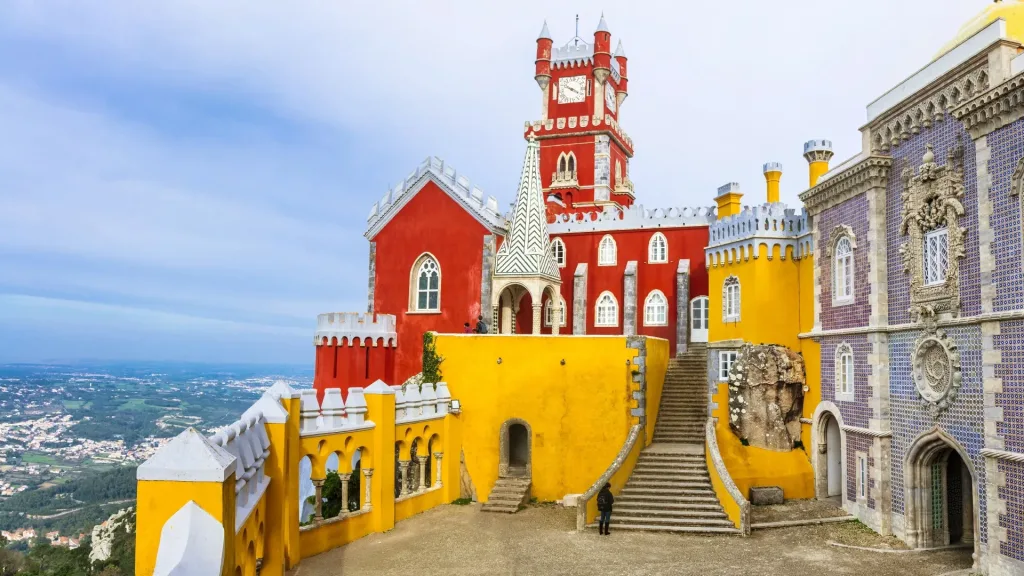
Then, we ascend further into the mountains, passing the ancient Moorish Castle on our way to Pena Palace – a colorful and eclectic masterpiece of Romantic architecture.
During the visit, wander through its vibrant interiors and stroll through its gardens, filled with hidden paths, exotic trees, and panoramic views over the region. Without a doubt, this is one of Portugal’s most iconic palace.
Details:
Sintra National Palace (Palácio Nacional de Sintra) – The only medieval royal palace in Portugal still intact and in its original location. Construction began in the 14th century under King João I (r. 1385–1433) and continued through the 16th century. The palace’s two conical kitchen chimneys – each 33 m tall – are the most recognisable feature of Sintra’s skyline. The palace served as the summer residence of the Portuguese royal family until the proclamation of the Republic in 1910.
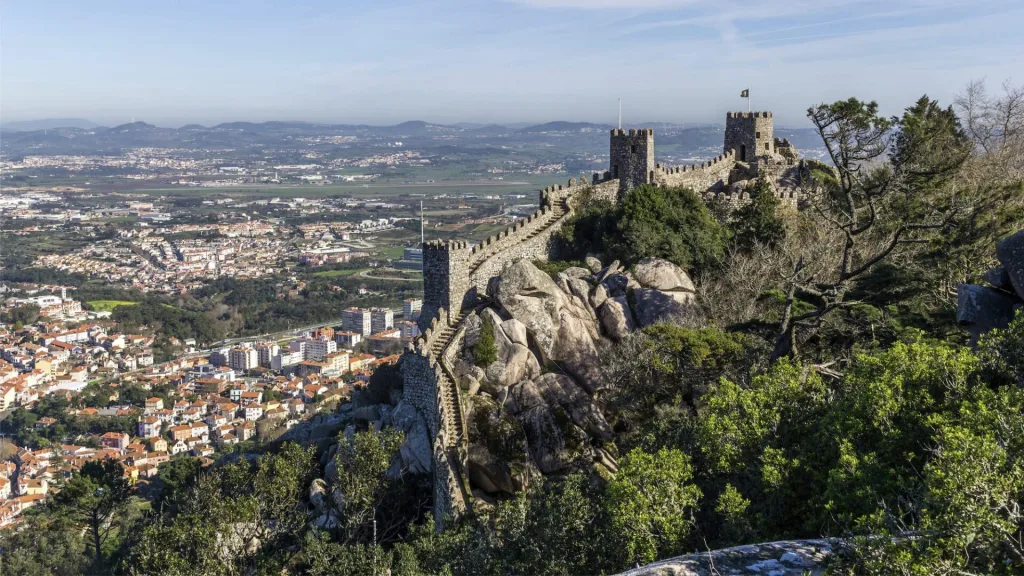
Moorish Castle (Castelo dos Mouros) – Built by the Moors in the 8th–9th century CE on the Serra de Sintra ridge at 412 m altitude. The castle was captured by Afonso Henriques (Afonso I, first King of Portugal) in 1147, the same year as the Siege of Lisbon. The walls extend 450 m across the ridge, incorporating four towers and an alcáçova (fortified palace area).
Pena Palace (Palácio Nacional da Pena) – Built 1838–1854 on the ruins of a 15th-century monastery (Mosteiro de Nossa Senhora da Pena) destroyed in the 1755 earthquake. Commissioned by King Fernando II (Ferdinand of Saxe-Coburg and Gotha, 1816–1885), who purchased the ruins in 1838 for 18,000,000 réis. The architects were Wilhelm Ludwig von Eschwege (initial design) and Possidório da Silva (completion). The palace stands at 529 m above sea level and incorporates eclectic architectural elements: Romanesque arches, Gothic towers, Manueline decoration, and Moorish tilework — a stylistic mixture reflecting Romantic-era historicism. The complex includes approximately 200 rooms.
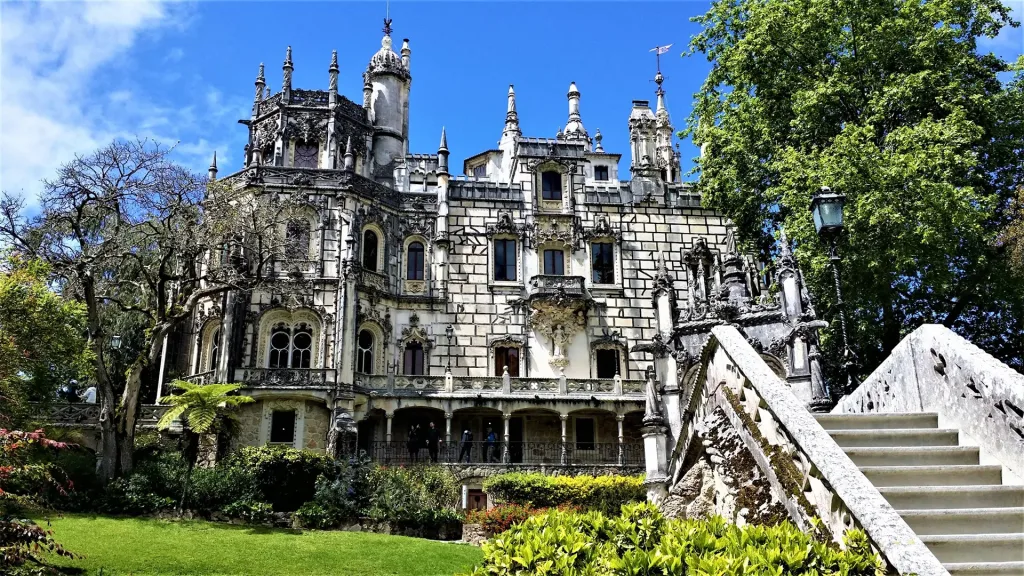
Quinta da Regaleira – Built 1904–1910 for António Augusto Carvalho Monteiro (1848–1920), a Brazilian-born Portuguese millionaire and collector. Designed by Italian architect Luigi Manini, known for his work at the Teatro alla Scala in Milan. The estate features Gothic-Manueline revival architecture, formal gardens, and two initiation wells – vertical tunnels 27 m deep, connected by underground tunnels. The wells were not functional water sources; they were used for Masonic or Rosicrucian initiation ceremonies and symbolic descent/ascent rituals.
Return to Lisbon
At the end of this enriching day, we return comfortably to Lisbon, where you’ll be dropped off at your accommodation.
This is more than just a Sintra tour – it’s a journey through Portugal’s elegance, natural beauty, and historic charm, designed to leave lasting memories.
What’s Included
- 8 hours with licensed driver-guide
- Air-conditioned vehicle (up to 8 passengers)
- Local Guide in English, Spanish, French, or Portuguese
- Hotel/apartment pickup and drop-off in Lisbon city centre
- Mandatory passenger insurance
- Fuel, tolls and parking at all stops
Not included:
- Meals and drinks
- Palace/monument entrance tickets
- Tips (optional and appreciated)
Tour Price
-
per person €69
Free cancellation of the service up to 24 hours before departure. Cancellations within 24 hours of departure are non-refundable.
contact us and book your tour
Best Time of Year for This Tour
This tour operates year-round. Every season has its own character and charm – there is no bad time to visit Sintra, only different experiences.:
April – June (recommended): Daytime temperatures 18–23°C. Palace queues manageable. Serra de Sintra vegetation is green from spring rainfall. Pena Palace exterior colours appear most saturated in clear spring light. Book palace tickets 1–2 weeks in advance.
July – August (peak season): Temperatures 25–32°C in Lisbon, 20–26°C in the serra. Highest visitor numbers. Pena Palace and Quinta da Regaleira tickets sell out 3–4 weeks ahead. Guincho Beach vehicle restriction applies. Cascade bay beaches are crowded. Early departure (08:30) is especially valuable in this period.
September – October (second recommended window): Temperatures 20–26°C, light Atlantic afternoon winds. Crowds reduce from the August peak. Palace tickets available 1–2 weeks in advance. The serra foliage shows early autumn colour. Guincho vehicle restriction ends in September.
November – March (low season): Temperatures 12–17°C in Lisbon; the Serra de Sintra and Cabo da Roca can drop to 5–8°C in January and February with strong Atlantic winds. Dress in warm layers – a jacket and windproof outer layer are essential, especially at the cliff stops. Lowest visitor numbers – some days, Pena Palace is near-empty. Same-day palace tickets generally available. Atlantic light is dramatic in winter. Occasional rain; the guide adjusts itinerary order to minimise exposure on wet days. Serra de Sintra is intensely green after autumn rain.
Private Tour vs Group Tour: What Is the Difference?
Yellow Cab TT Tours offers both private and small-group tours to Sintra and Cascais.
The private tour gives you complete flexibility. You travel only with your own group, enjoy hotel pickup in central Lisbon, and can adjust the schedule and itinerary throughout the day. You can also decide which palace to visit based on your interests and the day’s conditions. Private tours start from €285 per vehicle.
The group tour follows a fixed itinerary and schedule, with departures from a designated meeting point in Lisbon. Groups are limited to 8 passengers, and tours are conducted in English. Prices start from €69 per person.
For families and groups, a private tour can offer excellent value. For example, a group of four would pay €340 in total (€85 per person) for a private experience, compared to €69 per person on the group tour. For a relatively small difference, you get a vehicle exclusively for your group, a flexible schedule, and a more personalised experience.
FAQ
Is this a guided tour of Sintra and Cascais?
Yes. Every departure is led by a licensed driver-guide who accompanies the group throughout all 8 hours and all five stops. The guide provides historical and cultural context at each location from Casino Estoril (opened 1931, WWII intelligence hub) to Sintra (UNESCO World Heritage Site, reference 723, inscribed 4 December 1995). This is not a self-guided or audio-guide tour. Guide languages: English, Portuguese, Spanish.
What is the maximum group size?
The group tour accommodates a maximum of 8 people per vehicle. This ensures a comfortable journey and allows the guide to address individual questions at each stop.
What is the price per person?
€69 per person. The price does not vary by party size – whether you book as a solo traveller or as a pair, the rate is €69 each. Palace and monument entry tickets are purchased separately.
What time does the tour depart?
The tour departs between 08:30 and 09:00. The exact time is confirmed by WhatsApp 24 hours before departure.
Is hotel pickup included?
Yes, hotel pick up included (in Lisbon City center) We don’t do pick up in Oriente/Expo or Oeiras or Cascais for group tours.
Which destinations are covered?
The tour covers Estoril (Casino Estoril, 1931), Cascais (historic centre, Boca do Inferno), Guincho Beach (Atlantic Natural Park, Natura 2000), Cabo da Roca (165 m, lighthouse 1772, westernmost point of mainland Europe), and Sintra (UNESCO World Heritage Site, 1995).
Are palace entry tickets included?
No. Transport, guide, vehicle, and insurance are included. Palace and monument entry tickets are optional and purchased individually. Timed-entry pre-booking is required – check current prices and book at parquesdesintra.pt and regaleira.pt. Your guide can advise on which palaces suit your time and interests.
Can solo travellers book the group tour?
Yes. Solo travellers are welcome. The group tour was specifically designed to allow individual travellers to join a shared vehicle and benefit from a guided tour at a lower per-person cost.
Does the tour operate in rain?
Yes. The tour runs in all weather conditions. Portugal’s Atlantic climate means occasional rain, particularly from October to March. Sintra is statistically wetter than Lisbon due to its elevation; a light waterproof jacket is recommended year-round.
What language is the tour conducted in?
English is the default language. Tours can also be conducted in Portuguese, Spanish, and French. If you need a specific language, confirm when booking so the appropriate guide is assigned.
What is the cancellation policy?
Free cancellation is available up to 24 hours before the scheduled departure. Cancellations made with less than 24 hours’ notice are non-refundable, as the vehicle and guide are already committed.
How is the group tour different from the private tour?
The group tour shares a vehicle (max 8 people) with other travellers and follows a fixed departure time and route. The private tour is exclusive to your party, includes hotel pickup, departs at a flexible time, and the route can be customised. Private tours start from €285 per vehicle; the group tour is €69 per person.
Is Pena Palace visit guaranteed?
The tour includes time in Sintra where Pena Palace is accessible. However, palace visits depend on queue conditions (particularly in summer) and individual ticket purchase. The guide recommends pre-booking tickets at parquesdesintra.pt. Pena Palace receives approximately 2.5 million visitors per year.
Are there stairs to reach Pena Palace?
Yes. Reaching Pena Palace involves a 15-minute uphill walk on cobblestone paths from the park entrance, or a shuttle bus (approximately €3 each way). The palace interior has multiple levels connected by stairs. Guests with limited mobility should note this before booking.
Is lunch included?
No. Lunch is at guests’ own expense. Cascais and Sintra both have restaurants within walking distance of the tour stops. The guide can suggest local options; typical lunch cost in Cascais is €12–€20 per person at a sit-down restaurant.
What should I wear and bring?
Comfortable walking shoes with grip (Sintra village streets are steep cobblestone). A light waterproof layer (Sintra is 5–8°C cooler than Lisbon). Water bottle. Sun protection between April and October. Optionally, camera with a wide-angle lens for Cabo da Roca panoramas.
What Our Guests Say
Also Available in Private Tour
If you’re looking for a more exclusive experience, this tour is also available as a Private Tour — with a car and a tour guide/driver dedicated just to your group. Enjoy the same highlights at your own pace, with full flexibility and personal attention throughout the day.
You may also be interested in:
Land Rover 4x4 Tours
Looking for a unique way to explore Portugal?
Hop on a 4x4 Land Rover and discover what most visitors never see!
Off-road Sintra, Cabo da Roca and Cascais in a private Land Rover Defender.

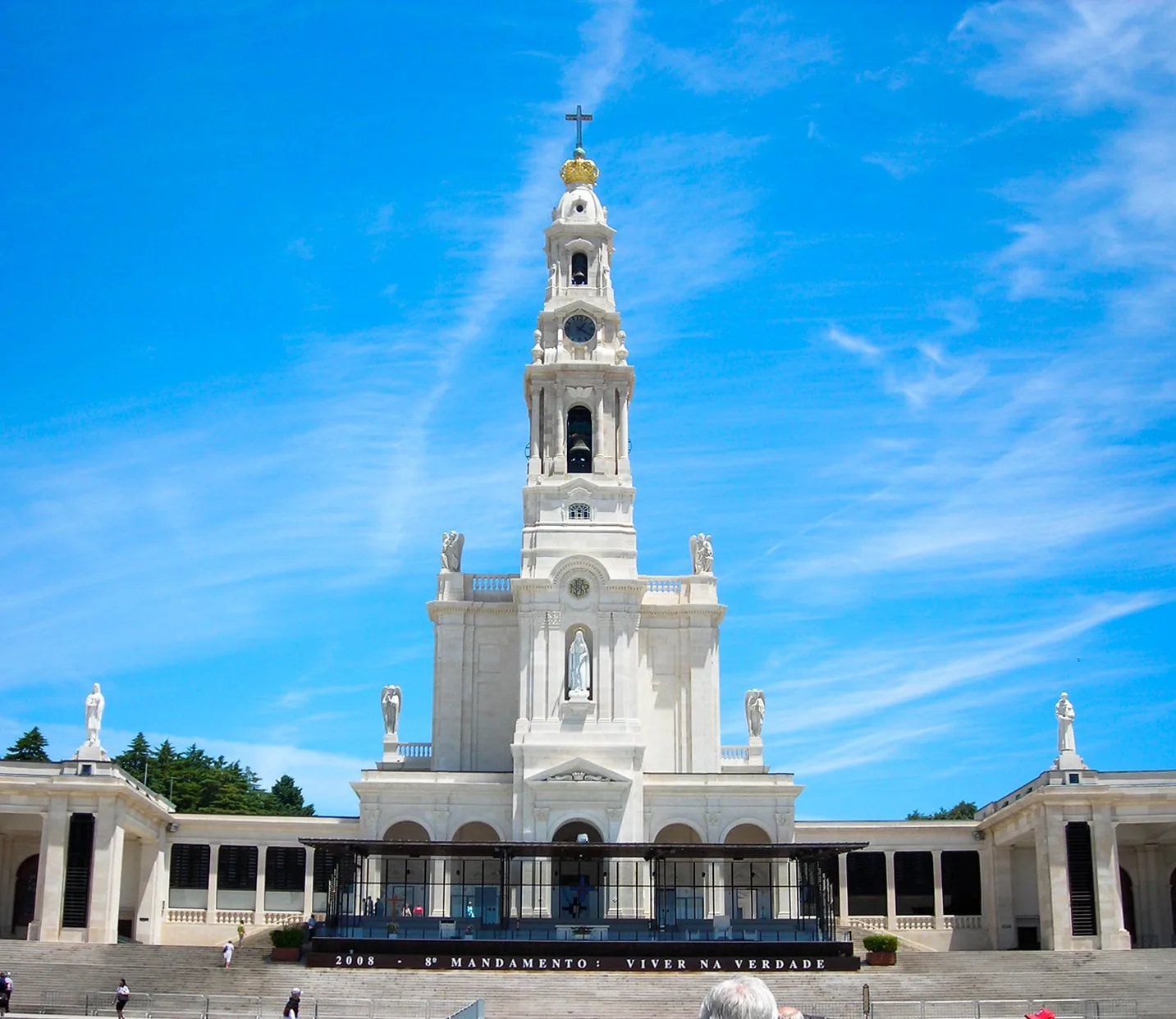
fátima small group tour
This small-group day tour departs Lisbon and visits four destinations across central Portugal in 8 hours: the Fátima Sanctuary, the Batalha Monastery, Nazaré, and Óbidos
Best Solution Tour - Lisbon, Cascais & Sintra
Combines Lisbon city highlights with the Sintra–Cascais coast in one day.