Private Évora Day Tour from Lisbon - Roman Temple & Chapel of Bones
Évora & Surroundings
- (Private Tour with Vehicle and Driver/Guide just for you!)


8 Hours
Private
Máx. 8px/Van
Hotel or apartment pickup in Lisbon, Sintra, Cascais, Estoril, or anywhere along the coast
Évora historic centre · Roman Temple · Chapel of Bones · Água de Prata Aqueduct · Cork Factory
From €330 per vehicle (see pricing below)

Tour at a Glance
- Duration: 8 hours.
- Departure: Suggested 08:30–09:00 – hotel or apartment pickup in Lisbon, Sintra, Cascais, Estoril, or anywhere along the coast.
- Return: ~17:00–17:30 to your pickup location.
- Tour Type: 100% private — your group only.
- Group Size: Up to 8 passengers.
- Vehicle: Air-conditioned private van.
- Guide: Driver-guide available in English, Spanish, French, and Portuguese.
- Destinations: Évora Historic Centre, Roman Temple, Chapel of Bones, Água de Prata Aqueduct, and a Cork Factory (Optional).
- Total Driving Distance: Approximately 280 km round trip (~140 km each way via the A6 motorway).
- Price From: €330 per vehicle.
- Cork Factory Visit: Included in the standard tour price.
- Tripadvisor Rating: 5.0/5 based on 3,387 reviews.
- License: RNAAT 119/2013.
- Cancellation Policy: Free cancellation up to 24 hours before departure.
Tour Overview
This private full-day tour from Lisbon covers Évora — the capital of the Alentejo region, 140 km east of Lisbon via the A6 (IP7) motorway – and a family-run cork factory near the city. Évora’s historic centre was designated a UNESCO World Heritage Site in 1986, recognised for its exceptional concentration of monuments from the Roman, Moorish, Gothic, Manueline, and Baroque periods within a single walled city of approximately 100 hectares. Travel time from Lisbon is approximately 1 hour 30 minutes each way.
The itinerary combines the principal monuments of the walled city – the Roman Temple (1st century AD), Cathedral of Évora (construction began 1186), Chapel of Bones with approximately 5,000 human remains, and the Água de Prata Aqueduct (built 1532–1537) – with a visit to an active cork factory where you can see the full production process from harvested bark to finished product. Portugal supplies approximately 50% of the world’s total cork, and the Évora region is one of the primary production areas.
The tour is 100% private. Your group, your vehicle, your licensed driver-guide. No other passengers, no fixed bus schedule. If you want to add a wine tasting at an Alentejo vineyard, spend more time at the Chapel of Bones, or request an extension to the Almendres Cromlech (the largest megalithic complex in the Iberian Peninsula, 16 km west of the city), the itinerary adapts. This page belongs to a company with a Tripadvisor rating of 5.0 based on 3,364 reviews, ranked #2 of 847 outdoor activities in Lisbon, and awarded Travelers’ Choice Best of the Best 2025.
Tips for Visiting Évora
The Chapel of Bones requires time. Allow 30–45 minutes inside the Church of São Francisco and the chapel. The experience has a particular atmosphere that benefits from a slower pace. Visitors who rush through in 10 minutes consistently report having missed most of it.
Lunch is not included, but it matters in Évora. Alentejo cuisine is distinct from Lisbon food – slow-cooked pork (porco preto), migas (bread-based dishes), açorda, and regional cheeses dominate. Your guide will recommend restaurants. Typical lunch duration is 45–60 minutes. The Sunday market in Évora (Mercado Municipal) is worth a walk-through if you’re visiting on a Sunday.
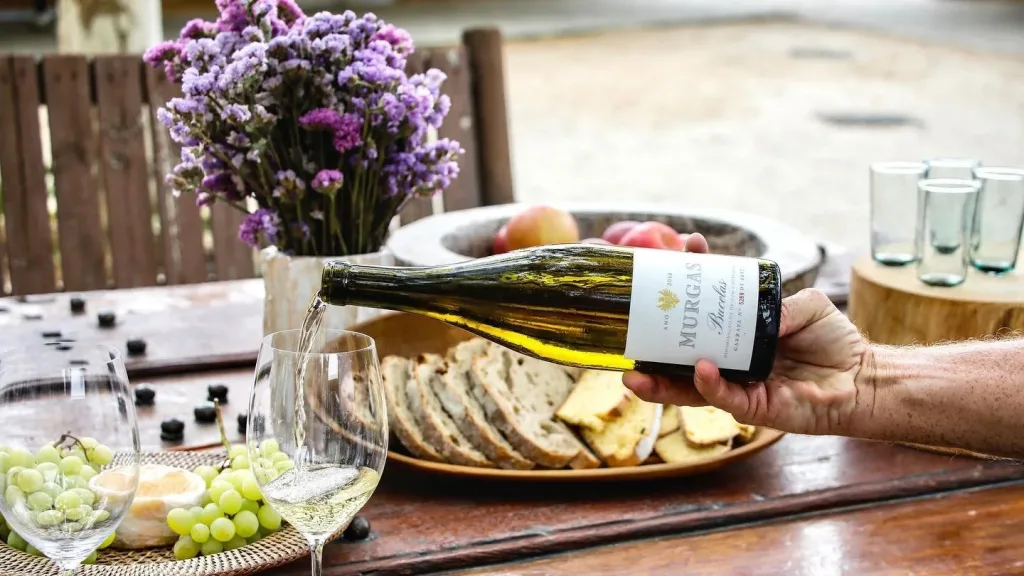
Wine and olive oil tasting. The Alentejo wine region surrounds Évora and accounts for approximately 45% of Portugal’s total bottled wine by volume. A vineyard visit with tasting is available as an add-on to this tour (from €35 per person). Contact us when booking to arrange this – it requires advance coordination with the vineyard.
Footwear. The historic centre is cobblestoned throughout. Cork factory floors may be uneven. Flat, closed-toe shoes are essential for all ages.
Sample Itinerary
Important Note: this is a suggested plan, not stricted. Exact timing may vary depending on traffic, weather and your preferences. Please let us know your route preferences when making your reservation.
- 08:30–09:00 – Hotel pickup in Lisbon city centre (private tours: exact pickup time by arrangement)
- ~09:15–09:30 – Optional: Belém pass-through – Jerónimos Monastery (1502), Belém Tower (1514), Padrão dos Descobrimentos (1960) | 7 km from Lisbon centre.
- ~09:45–10:15 – Estoril – Casino exterior, coastal promenade | 26 km from Lisbon.
- ~10:15–10:50 – Cascais – bay area, old town walk, Boca do Inferno | 3 km from Estoril.
- ~10:50–11:20 – Guincho Beach scenic stop (optional) | 9 km from Cascais.
- ~11:20–12:00 – Cabo da Roca – viewpoint, lighthouse, Camões stele, certificate (optional) | 11 km from Guincho.
- ~12:00–14:00 – Sintra – historic centre + lunch break (restaurant recommended by guide).
- ~14:30–14:30 – Quinta da Regaleira — exterior and gardens photo stop.
- ~14:30–16:00 – Moorish Castle (drive-past or visit) + Pena Palace.
- 16:30–17:00 – Return to Lisbon / hotel drop-off | 28 km from Sintra.
Total driving distance: approximately 120 km.
Palace tickets: Not included in the tour price. All require timed-entry pre-booking – purchase online 2–4 weeks in advance during April–October. Your guide can advise which palaces suit your group’s interests. You can check prices at regaleira.pt and parquesdesintra.pt. Important: please coordinate your palace visit time with us when making your ticket reservation.
What You Can See
Évora Historic Centre – UNESCO World Heritage Since 1986
Évora’s historic centre was added to the UNESCO World Heritage List in 1986 – the designation covers the entire walled city, approximately 100 hectares, recognising what UNESCO calls a “museum-city”: an exceptional concentration of monuments from six distinct historical periods within a single urban area. The Roman Temple dates to the 1st century AD. The Cathedral was begun in 1186. The Manueline aqueduct was completed in 1537. The 18th-century Baroque chapel of the Cathedral was funded by King João V between 1718 and 1746. All of these structures stand within 10 minutes’ walk of each other.
Évora reached its peak importance in the 15th century, when it served as the second city of Portugal and the permanent court residence of Kings Afonso V, João II, and Manuel I. The Jesuit University of the Holy Spirit was founded here in 1559, one of the earliest in Portugal. The city’s relative decline after the 1755 Lisbon earthquake – Évora was 140 km to the east and suffered far less damage – left its 15th and 16th century urban fabric intact. This preserved state was the primary basis for the UNESCO inscription.
The characteristic visual identity of the historic centre is defined by whitewashed buildings with painted azulejo tile panels and wrought-iron window grilles – a style UNESCO specifically identified as influential on Portuguese colonial architecture in Brazil.
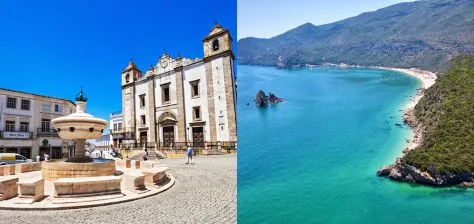
Praça do Giraldo
Praça do Giraldo is the main square of Évora’s historic centre, named after Geraldo Sem Pavor (Gerald the Fearless), the Portuguese commander who led the reconquest of the city from Moorish forces on 1 January 1166. The square is flanked by arcaded buildings from the 16th and 17th centuries. At its eastern end stands the Church of Santo Antão, completed in 1557. The marble fountain at the centre of the square was installed in 1570, designed by António Francisco Rosa at the terminus of the Água de Prata Aqueduct – the first time clean running water had reached this point after 33 years of construction.
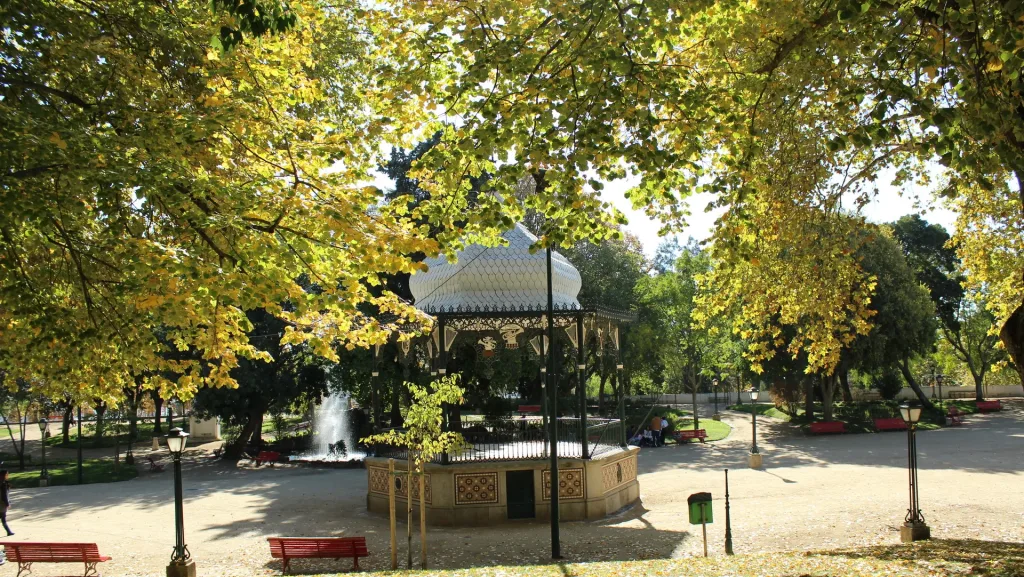
At the southern edge of the Jardim Público (the public garden, a short walk from Praça do Giraldo) stand the surviving Gothic-Manueline arcade arches of the Paço de D. Manuel – the 15th-century Royal Palace of King Manuel I, demolished in 1895 with only the decorative arcade left standing. It is known locally as the “Galeria das Damas” (Gallery of Ladies). The surviving arcade is one of the best examples of Manueline ornamental stone carving in the Alentejo.
Roman Temple of Évora (1st Century AD)
The Roman Temple of Évora stands at the highest point of the historic centre, on the site of the original Roman forum. The temple was built in the 1st century AD and is believed to have been dedicated to Emperor Augustus, who was venerated as a divine figure during and after his rule. It is universally known as the “Temple of Diana” – but this attribution is historically incorrect. A Portuguese priest made this association in the 17th century; no archaeological evidence supports a dedication to Diana.
Fourteen of the original Corinthian granite columns still stand. Each column is composed of several drums topped with carved capitals decorated with acanthus leaves. The temple survived partly because it was incorporated into a medieval fortification in the 14th century, with the spaces between the columns filled with stone. For the following five centuries – from the 14th century until 1836 – the structure served as a public butcher’s shop, a use that paradoxically protected it from demolition by giving it an ongoing economic function. Restoration of its current form was completed in 1871. The temple is a National Monument and part of the UNESCO World Heritage Site designation.
Chapel of Bones – Igreja de São Francisco
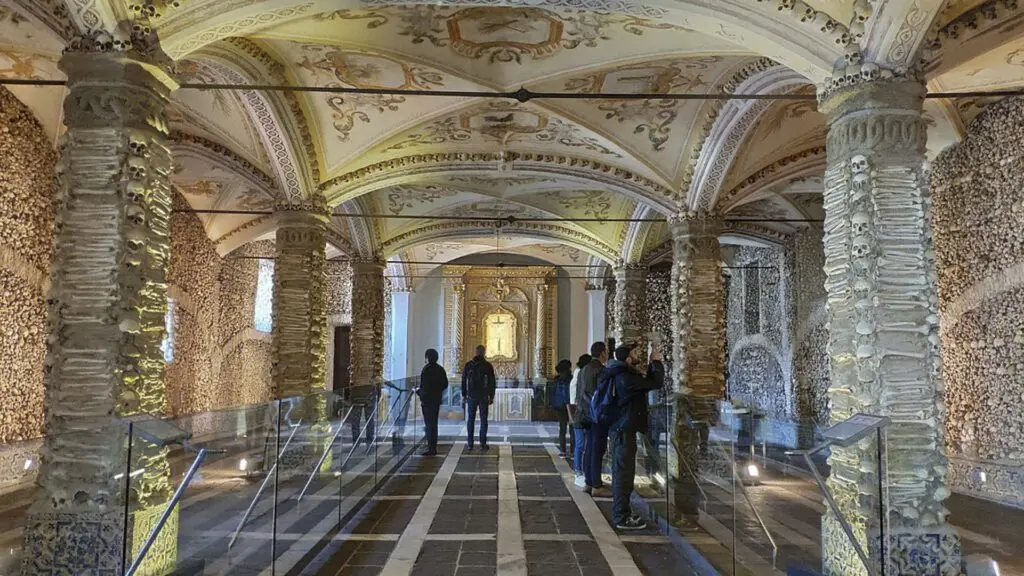
The Chapel of Bones (Capela dos Ossos) is located within the Church of São Francisco, a late-Gothic and Manueline church completed in the early 16th century. The chapel was built in the 17th century by three Franciscan friars – both as a meditation space on human mortality and as a practical response to a specific problem: 42 monastic cemeteries occupied land within the walled city in the 16th century. Exhuming the remains and placing them in a single memorial space freed the cemetery land while creating a permanent site for contemplation.
The walls and columns of the chapel are lined with the bones and skulls of approximately 5,000 people. The inscription above the entrance reads: “Nós ossos que aqui estamos, pelos vossos esperamos” – “We bones that are here, for yours we wait.” Two mummified figures are suspended within the chapel. For many decades they were identified as a father and son who were cursed by the mother/wife; a forensic investigation completed in 2019 established that they are in fact a woman and a girl.
Chapel of Bones admission is not included in the tour price. Check current prices at the Church of São Francisco entrance on the day.

Cathedral of Évora – Sé de Évora (1186)
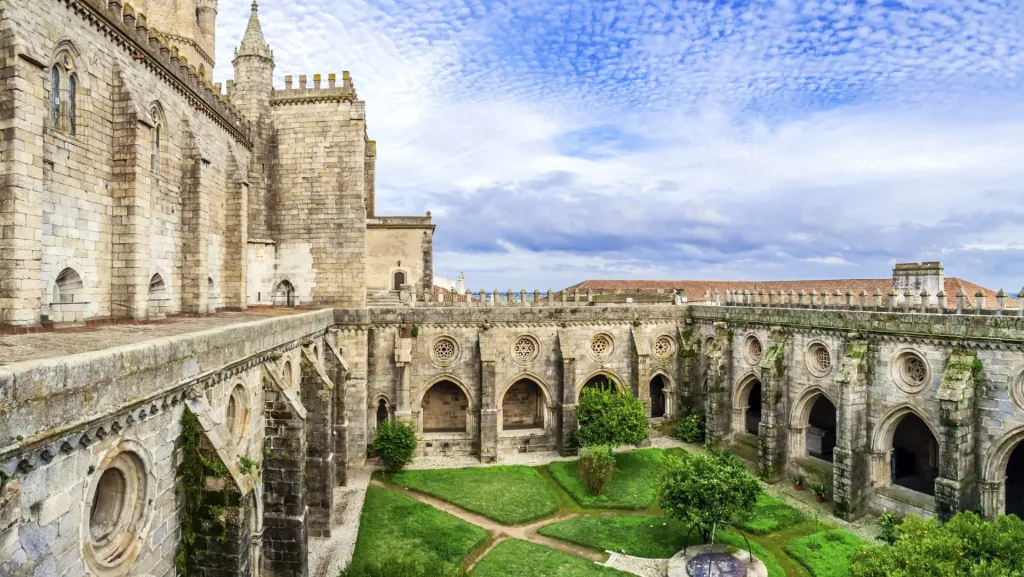
Construction of the Cathedral of Évora began in 1186, making it one of the oldest cathedrals in Portugal. The building shows three distinct architectural phases clearly visible from within: the original Romanesque structure (12th century, two unequal towers on the western facade), the Gothic enlargement completed between 1280 and 1340 (cloisters, nave), and the complete rebuilding of the main chapel in Roman Baroque style between 1718 and 1746 under the patronage of King João V, using polychrome marble in a style comparable to the Jeronimos Monastery in Lisbon.
The cathedral rooftop terrace is accessible to visitors and provides views over the historic centre and the surrounding Alentejo plain. The museum holds one of Portugal’s most important ecclesiastical art collections, including medieval illuminated manuscripts and 13th-century ivory statues of the Virgin. In the 16th and 17th centuries, the cathedral was the centre of the Escola de Évora — a school of polyphonic composition whose works were performed across Europe and in Portuguese colonial territories.
Cathedral admission is not included in the tour price. Check current prices at the cathedral entrance on the day.
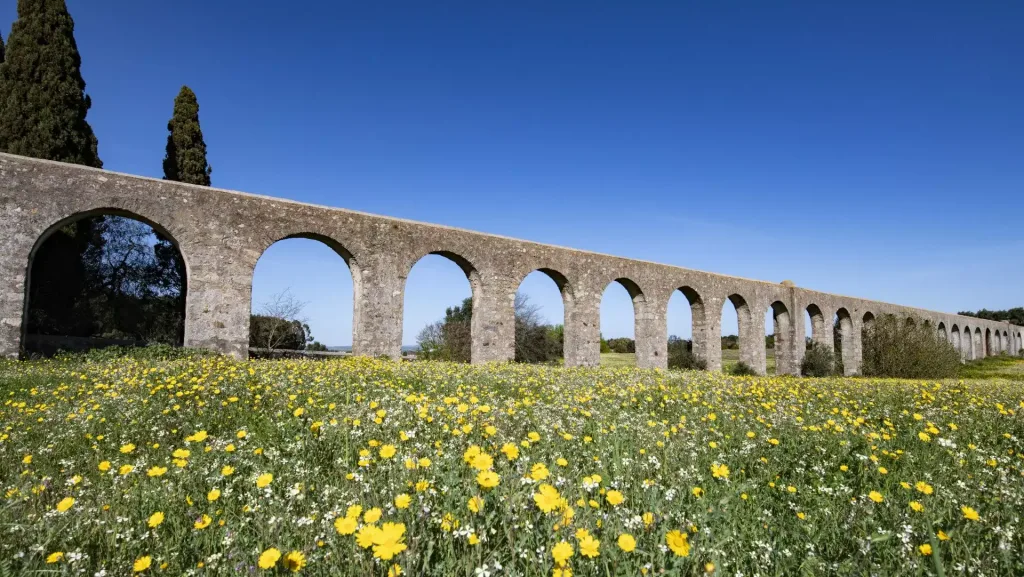
Água de Prata Aqueduct (1532–1537)
The Água de Prata Aqueduct – “Aqueduct of Silver Water” – was constructed between 1532 and 1537 under King João III, designed by architect Francisco de Arruda. The aqueduct extends 18 kilometres from the Barragem do Divor reservoir to the centre of Évora, reaching a maximum height of 26 metres. It was inaugurated in 1537 in a ceremony attended by the king and court in Praça do Giraldo, where the marble lion fountain at the water terminus was installed.
The most visible section of the aqueduct runs directly through the fabric of the city. Over the centuries that followed construction, houses were built against and directly above the arches, incorporating the ancient structure into the residential neighbourhood of Bairro de Nora. This integration of Roman-era engineering into a functioning residential street is among the more unusual urban features in Portugal. The aqueduct remained in operational use into the 20th century and was classified as a Portuguese National Monument in 1910.
University of Évora and the Royal Palace Ruins
The University of Évora was founded in 1559 as the Jesuit University of the Holy Spirit – one of the earliest universities in Portugal. It operated continuously until 1759, when the Marquis of Pombal expelled the Jesuits from all Portuguese territories and closed Jesuit institutions throughout the empire. The university remained closed for 220 years, reopening in 1979 as the modern public University of Évora. The interior of the main university building features extensive decorative azulejo tile panels from the 17th and 18th centuries, covering the walls of the cloister and lecture halls – among the most complete examples of academic azulejo decoration in Portugal.
Adjacent to the southern wall of the historic centre, the Jardim Público contains the surviving Manueline arcade of the Paço de D. Manuel, the 15th-century royal palace where the Portuguese court resided under King Manuel I. The palace was largely demolished in 1895; the remaining arcade, with its characteristic rope-twist columns and spherical finials in Manueline style, is classified as a National Monument and remains standing in the public garden.
Cork Factory Visit – Portugal’s Cork Industry (Optional)
Portugal is the world’s largest producer of cork, supplying approximately 50% of the global total from cork oak forests concentrated in the Alentejo, Ribatejo, and Algarve regions. The cork tree – Quercus suber – cannot have its bark harvested until it reaches 25 years of age. After the first harvest, the bark regrows in a 9-year cycle: a single cork oak typically yields 15–17 harvests across a 200-year lifespan, making cork one of the most sustainably harvested natural materials on earth.
This tour can include (optional) a visit to a family-run cork factory near Évora, where you can follow the full production sequence: stripping of the bark in summer (June–August, when the tree is most pliable), stacking and seasoning for six months to a year, boiling in large tanks to clean and expand the bark, flattening and grading by density and thickness, and cutting into final products. The factory produces both natural wine corks and agglomerated cork products. The Évora region is one of the primary cork-producing areas of Portugal’s Alentejo. No additional charge for the cork factory visit – it is included in the standard tour price.


Wine Tasting (Optional)
In Évora, we’ll visit a local vineyard for a guided wine tasting. Wine has been produced in this area for centuries. The unique climate and soil create ideal conditions for high-quality grapes and excellent wines.
Almendres Cromlech (Optional)
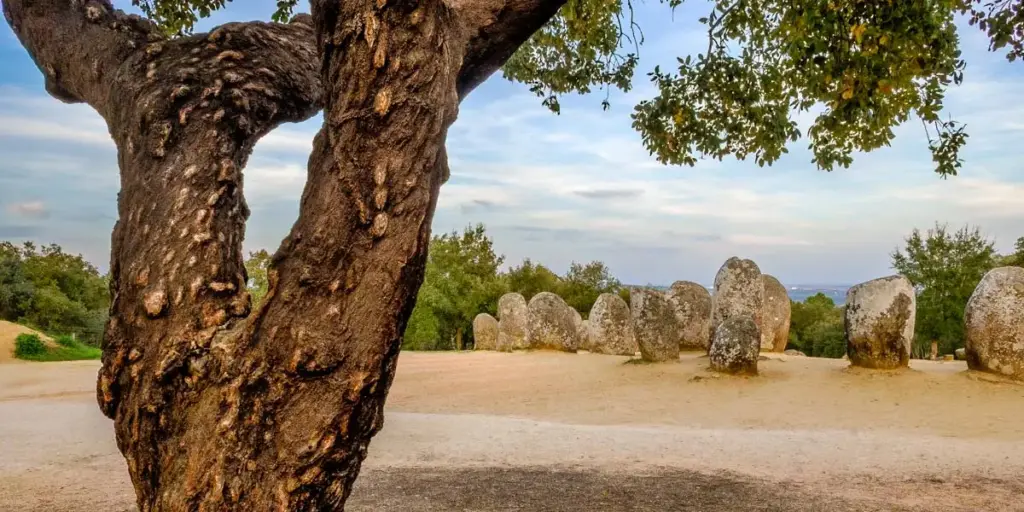
The Almendres Cromlech (Cromeleque dos Almendres) is located 16 km west of Évora in the Alentejo countryside and is the largest megalithic complex in the Iberian Peninsula. The site consists of 95 surviving granite menhirs arranged in two overlapping oval formations covering 70 × 40 metres. Construction occurred in three phases: Almendres I (approximately 6000 BC, Early Neolithic), Almendres II (approximately 5000 BC, Middle Neolithic), and Almendres III (approximately 4000 BC, Late Neolithic). This predates Stonehenge by approximately 1,000–3,000 years. Several menhirs carry carved geometric symbols whose meaning has not been definitively established.
The access road passes through cork oak forest (montado) with the final 2 km unpaved. A visit to the site takes approximately 40 minutes including the drive from Évora.

Return to Lisbon
After a day immersed in history, culture, and craftsmanship, we begin our relaxing return to Lisbon. Take in the rolling landscapes of Alentejo one last time as we bring you back to your accommodation—ending the journey with comfort and care.
The itinerary is carefully curated to provide a rich and varied experience. However, the choice is always yours—enjoy this journey at your own pace, with the comfort of a private or small-group setting.
Yellow Cab TT Tours – always at your service, with the quality our customers are used to.
What’s Included
- 8 hours with private licensed driver-guide
- Private air-conditioned vehicle (up to 8 passengers)
- Hotel/apartment pickup and drop-off in Lisbon, Sintra, Cascais, Estoril, or anywhere along the Estoril Coast
- Mandatory passenger insurance
- Fuel, tolls and parking at all stops
- Guide in English, Spanish, French, or Portuguese
Not included
- Meals and drinks
- Tickets to Monuments
- Tips (optional and appreciated)
- Wine/olive oil tasting (available as add-on from €35/person — contact us when booking)
Tour Prices
Prices are per vehicle, not per person.
-
Up to 2 Pax €330
-
3 to 4 Pax €420
-
5 to 8 Pax €540
Free cancellation up to 24 hours before departure. Cancellations within 24 hours of departure are non-refundable.
additional wine and tapas experiences
-
Option 1 +€35*
Wine Tasting in a Local Wine Shop + Olive Oil Tasting
-
Option 2 +€55*
Visit a Wine Cellar & Wine Tasting + Visit a Cork Factory
-
Option 3 +€85*
Visit a Wine Cellar & Wine Tasting + Visit a Cork Factory + Olive Oil Tasting
*Price per person
Contact us and Book your Tour
Best Time of Year for This Tour
March – May (recommended): Daytime temperatures 14–22°C. The Alentejo plain has wildflowers from March through April. Comfortable walking conditions throughout the walled city. Almendres Cromlech is particularly atmospheric in spring with green vegetation and few visitors. Book 1 week in advance.
June (transitional): Temperatures rise from 25°C in early June to 32°C+ by late June. Still manageable if departure is at 08:30. The cork harvest season begins in late June — if visiting a cork factory during harvest, you may be able to observe active stripping in the groves.
July – August (hot): 32–42°C. The tour operates, but extended outdoor exposure is uncomfortable. Essential to start at 08:30 and plan monument visits (cork factory, Cathedral, Chapel of Bones) during the 11:00–15:00 window. The Almendres Cromlech extension is not recommended in peak summer heat.
September – October (second recommended window): Temperatures fall to 22–30°C in September, 16–24°C in October. Comfortable walking, low visitor numbers, clear Alentejo light. The cork harvest ends in August, but the factory continues production year-round.
November – February (quiet season): 8–14°C. The fewest visitors of the year. All monuments open. The Alentejo plain in winter has its own clarity – treeless, pale gold, with a horizontal light. Same-day monument access universally available. Pack a jacket and windproof layer.
FAQ
Is the cork factory visit included in the standard price?
Yes. A visit to a family-run cork factory near Évora is included in the standard tour price at all vehicle tiers (€330, €420, €540). No additional charge applies for the cork factory stop.
What monument tickets do we need to buy?
Chapel of Bones (inside the Church of São Francisco) and Cathedral of Évora (Sé de Évora) admissions are not included in the tour price. Your guide can advise on current prices at the entrance on the day. The Roman Temple, Praça do Giraldo, Água de Prata Aqueduct, and University exterior are free to visit. The Almendres Cromlech is free to visit.
Is the price per person or per vehicle?
Per vehicle. A group of 4 pays €420 total – €105 per person. A group of 5–8 pays €540 total – between €68 and €108 per person depending on group size.
Can we do a wine tasting at an Alentejo vineyard on this tour?
Yes, as an add-on. The Alentejo wine region surrounds Évora and the vineyard visit can be integrated into the itinerary. This requires advance coordination with the vineyard and costs from €35 per person. Contact us when booking to arrange this. The Évora DOC sub-region produces wines from Aragonez (Tempranillo), Trincadeira, Alicante Bouschet, and Antão Vaz grapes.
How hot is Évora in summer?
Évora sits on the Alentejo plain at 300 metres elevation without coastal influence. July and August temperatures regularly reach 38-40°C and have exceeded 42°C in recent years – making Évora one of the hottest cities in Portugal during summer. The tour operates year-round. For summer visits, departure at 08:30-09:00 is strongly recommended to use cooler morning hours for outdoor stops.
Can we visit the Almendres Cromlech on this tour?
Yes. The Almendres Cromlech – 95 granite menhirs dating from 6000 to 4000 BC and the largest megalithic complex in the Iberian Peninsula – is located 16 km west of Évora. Adding it to the itinerary extends the day by approximately 1.5 hours and is available on request. The final 2 km of the access road is unpaved. Tell your guide at pickup if you’d like to include this stop.
What languages does the guide speak?
English, Spanish, French, and Portuguese. Please specify your preferred language in the booking form.
Can we customise the itinerary?
Yes. The sample itinerary is a starting point. You can add or remove stops, spend more time at one location, or request specific interests (archaeology, wine, architecture). The Cork factory is included in all standard versions of the tour. If you prefer not to visit the cork factory, advise us when booking and we will adjust the day’s schedule.
Is this tour suitable for children?
Yes. Child seats are available on request (provide age and weight when booking). The historic centre involves walking on cobblestones – closed-toe shoes are essential. The Chapel of Bones has a very specific atmosphere; most children from age 10 upward find it interesting rather than disturbing. Younger children should be assessed based on the parents’ judgment.
What is the cancellation policy?
Free cancellation up to 24 hours before departure. Cancellations within 24 hours of departure are non-refundable.
How far in advance should we book?
For June–August, book 2–3 weeks in advance. For all other months, 3–5 days is generally sufficient. We confirm bookings within 24 hours of your request. If you are adding the wine tasting option, earlier booking is preferred to allow vineyard coordination.
Is there a difference between this tour and visiting Évora independently?
The licensed driver-guide also provides historical context for each site that is not available from signage alone. The aqueduct sections, for example, are visually unremarkable without understanding what they are – the guide explains the route, the engineer, the king who commissioned the project, and why 18 km of stone arch ran through what is now a residential neighbourhood.
What Our Guests Say
You may also be interested in
Évora & Reguengos de Monsaraz Tour
Extends the Évora day to include the medieval village of Monsaraz and the Alqueva reservoir.

Alentejo Wine Tour
Full vineyard-focused day in the Alentejo region combining wine tasting, olive oil production, and Évora's historic centre.
Évora & Setúbal Combined Tour
See the Best of Évora and Setúbal in Just One Day.