Private Évora & Setúbal Tour from Lisbon - UNESCO City, Manueline Masterpiece & Arrábida Coast
See the Best of Évora and Setúbal in Just One Day
- (¡Tour privado con vehículo y conductor-guía solo para usted!)


8 Horas
Visita privada
Máx. 8px/Van
Recogida en hotel o apartamento en Lisboa, Sintra, Cascais, Estoril o en cualquier punto de la costa.
Évora, Setúbal, Arrábida coast
Desde 350€ por vehículo privado (ver precios más abajo)

basado en +3387 reseñas
Resumen del recorrido
- Duración: 8 horas.
- Salida: Sugerido 08:30–09:00 – recogida en hotel o apartamento en Lisboa, Sintra, Cascais, Estoril, o en cualquier lugar de la costa.
- Regresar: ~17:00–17:30 a su lugar de recogida.
- Tipo de recorrido: 100% privado: solo para tu grupo.
- Tamaño del grupo: Hasta 8 pasajeros.
- Vehículo: Furgoneta privada con aire acondicionado.
- Guía: Conductor-guía con licencia disponible en inglés, español, francés y portugués.
- Destinos: Évora, Setúbal, and the Sado Estuary / Arrábida coast.
- UNESCO Site: Évora Historic Centre (UNESCO World Heritage Site since 1986).
- Distancia total de conducción: Approximately 315 km circuit.
- Precio desde: €350 per vehicle (see pricing details below).
- Política de Cancelación: Cancelación gratuita hasta 24 horas antes de la salida; no reembolsable dentro de las 24 horas.
- Valoración de TripAdvisor: 5,0/5 según 3.387 opiniones.
- Licencia: RNAAT 119/2013.
Resumen del tour
Évora is 130 km east of Lisbon via the A6 – approximately 1 hour 30 minutes by private car. Classified UNESCO World Heritage Site in 1986, it is the most complete surviving walled Renaissance city in Portugal: a 1st-century AD Roman temple, a Gothic cathedral begun in 1186, a 16th-century aqueduct, and a 17th-century chapel built from human bones — all within a 10-minute walk.
From Évora, the tour heads south through the Alentejo plain to Setúbal (~130 km, ~1h30). Setúbal sits at the northern edge of the Arrábida Natural Park and the mouth of the Sado estuary. The contrast with Évora is immediate: the temperature drops 5–8°C, the landscape changes from dry inland plain to Atlantic coast, and the architecture shifts from Roman and Manueline to a working fishing port with a 16th-century fortress built by the Spanish crown.
Key stops in Setúbal: the Church of Jesus (1494), considered the first Manueline building in Portugal — built by Diogo de Boitac, the same architect who later began the Jerónimos Monastery in Belém; and São Filipe Fortress (1590), built by Philip I of Portugal during the Iberian Union, with views over the Sado estuary, the Arrábida mountains, and the bay.
Por qué los viajeros eligen este tour
Consejos para este recorrido
- São Filipe Fortress operates as a Pousada hotel. The fortress is managed as a Pousada (historic luxury inn). Visitors have free access to the exterior ramparts, courtyard, and panoramic viewpoints. The interior functions as hotel space, although the small azulejo chapel (18th-century panels depicting the life of St. Philip) is often accessible on request at reception. There is no fixed entrance fee for viewpoint access.
- Sado estuary resident dolphin population. The Sado estuary hosts a resident pod of approximately 30 bottlenose dolphins, one of the few permanent coastal populations in Europe. Sightings are possible from the São Filipe Fortress viewpoint or along the riverbanks in Setúbal. This is not guaranteed, as the dolphins are wild and free-moving, but guides can adjust timing based on typical movement patterns in the estuary.
- Church of Jesus is now the Setúbal Museum. The Igreja de Jesus operates as the Museu de Setúbal. Entry provides access to the interior, including its distinctive twisted Manueline columns, ribbed vaulting, and azulejo panels. Admission is typically €3.6 per adult, and timing is coordinated by the guide during the visit.
- Lunch flexibility: Évora or Setúbal. The itinerary includes around 30 minutos for lunch in Évora’s historic centre. Alternatively, the group can opt for a seafood-focused stop in Setúbal, subject to timing. Local specialties include choco frito (fried cuttlefish), grilled sardines, and fresh Atlantic fish served along the waterfront. This preference should be confirmed at booking so the routing and timing can be adjusted accordingly.
Qué puedes ver
Évora Historic Centre
In most European cities, a 1st-century AD Roman temple, a Gothic cathedral begun in 1186, and a Renaissance aqueduct built 1532–1537 would be spread across different museum zones. In Évora, they are within a 10-minute walk of each other — all within the same UNESCO-protected historic centre, classified in 1986. The Roman Temple’s 14 surviving Corinthian columns stand 200 metres from the Cathedral; the Cathedral’s towers are visible from the Temple plaza. The Água de Prata Aqueduct (Silver Water Aqueduct) enters the city from the north and passes through residential streets, with houses built against — and in some cases integrated into — the aqueduct arches.
Praça do Giraldo, the main square, was the site of Inquisition executions. Its marble fountain dates from 1571. The square is named after Geraldo Sem Pavor (Geraldo the Fearless), who reconquered Évora from the Moors in 1165. The University of Évora (Colégio do Espírito Santo) was founded in 1559 by Cardinal Henry; the exterior of the main building is visible from the street without requiring admission.
Capilla de los Huesos – Igreja de São Francisco
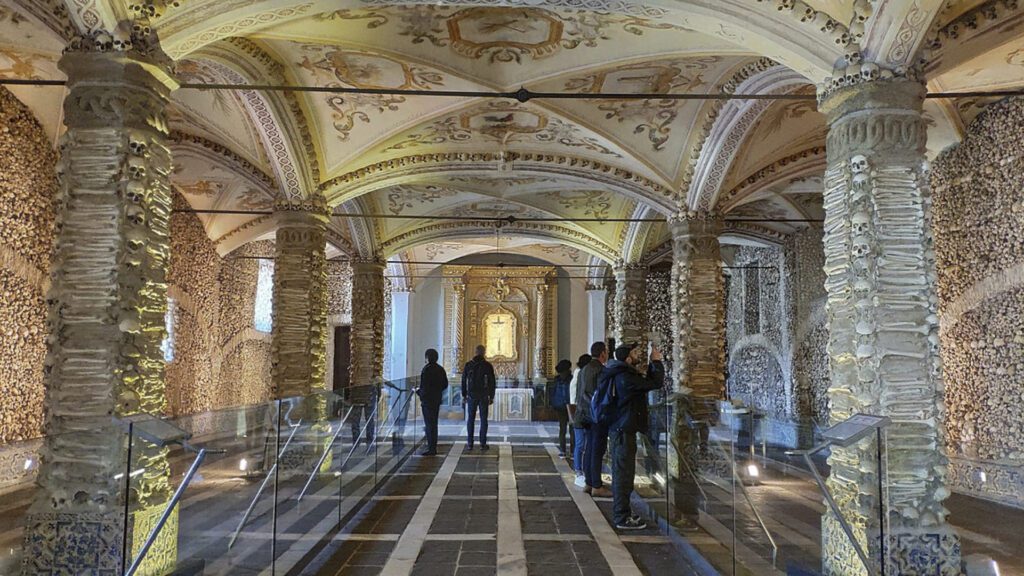
The inscription above the entrance reads: Nós ossos que aqui estamos pelos vossos esperamos. “We, the bones that are here, await yours.”
The chapel was built in the 17th century by Franciscan friars using exhumed bones from overcrowded Évora cemeteries. Approximately 5,000 individuals are represented – skulls and long bones covering walls, pillars, and arches from floor to ceiling. The chapel is housed within the Igreja de São Francisco, a late Gothic and early Manueline structure completed around 1510. Admission approximately €8 at the gate; no pre-booking. In peak season, queue 15–30 minutes – the guide adjusts the morning sequence to manage this.


Church of Jesus, Setúbal – The Manueline Prototype
The Jerónimos Monastery in Belém is the most famous Manueline building in Portugal. Its architect, Diogo de Boitac, tested the style here first – in the Igreja de Jesus in Setúbal, completed in 1494, a decade before construction began on the Jerónimos.
The Church of Jesus is the earliest surviving example of Manueline architecture in Portugal. The defining features – twisted rope-like columns, sculpted stone ornament derived from maritime motifs, Gothic ribbed vaulting overlaid with Manueline decoration – appear here in their original form, without the elaboration that defines later Manueline buildings. The interior columns are made from a single piece of Arrábida marble, a pink-veined limestone quarried from the mountains visible from the fortress a few minutes’ walk away.
The building now functions as the Museu de Setúbal. The museum contains 17th-century azulejo panels, a collection of Flemish paintings from the 16th century, and local archaeological material. Admission approximately €3.6 per adult.
São Filipe Fortress and the Sado Estuary
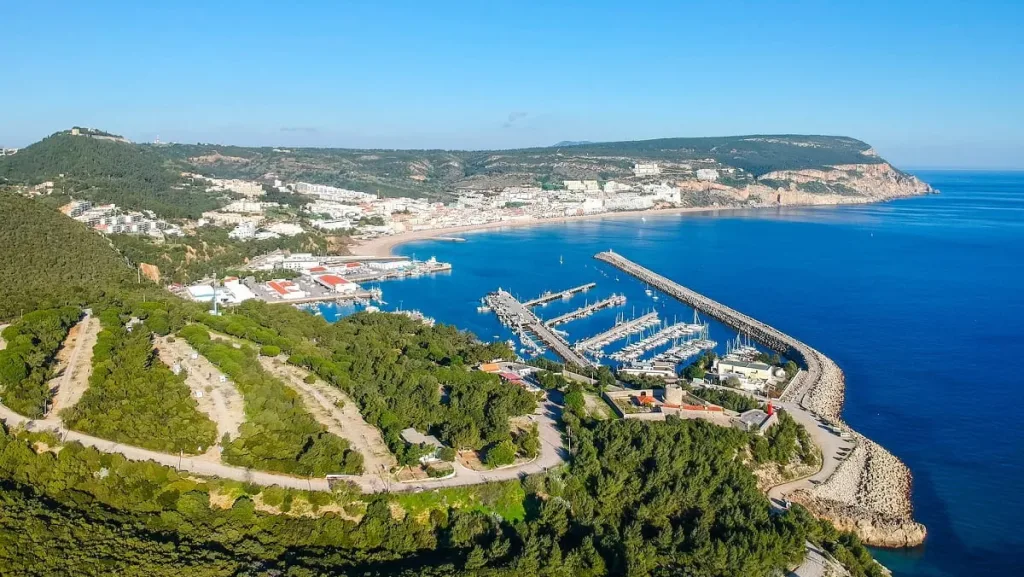
São Filipe Fortress was built in 1590 by order of Philip I of Portugal – who was also Philip II of Spain – following the Iberian Union of 1580, which placed the Portuguese crown under Spanish rule for 60 years. The fortress was designed by the Italian military architect Filippo Terzi, who also worked on Lisbon’s Church of São Vicente de Fora. The purpose was strategic: to control access to the Sado estuary, monitor shipping entering the bay, and defend (or contain) the port of Setúbal during the period of combined Spanish-Portuguese rule.
The fortress is now operated as a Pousada (heritage hotel). The exterior walls, battlements, and courtyard are accessible to visitors. The interior chapel contains 18th-century azulejo panels depicting the life of St. Philip – typically accessible by asking at the hotel reception.
The Sado estuary, visible from the fortress walls, is one of Portugal’s most biologically significant estuaries. A resident pod of approximately 30 bottlenose dolphins has inhabited the Sado for decades – one of only a few permanent coastal dolphin populations in Europe. The pod has been monitored by researchers since the 1980s. Sightings from the fortress or from the Setúbal waterfront are possible but not guaranteed.
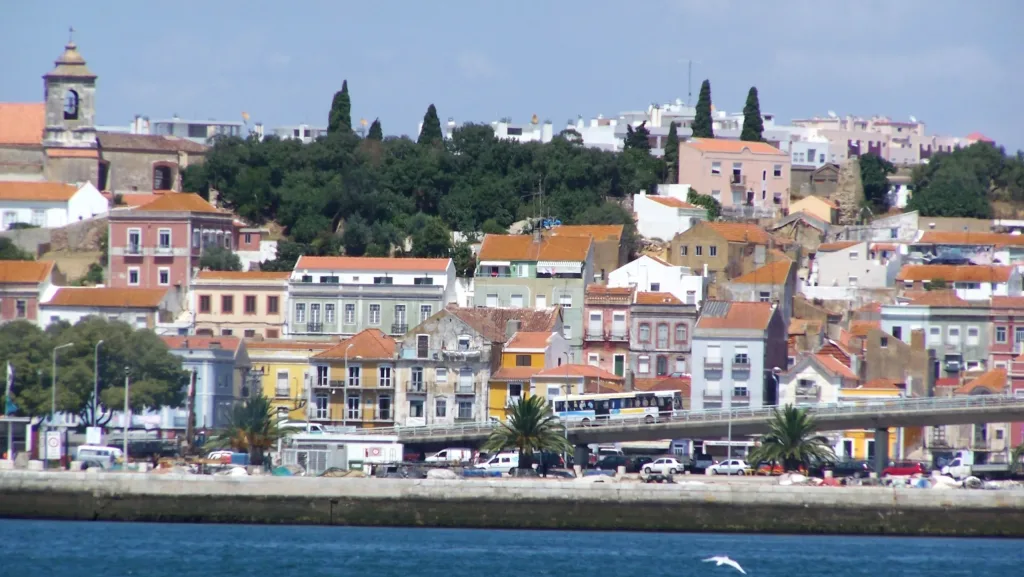
Arrábida Natural Park – Views from the Fortress
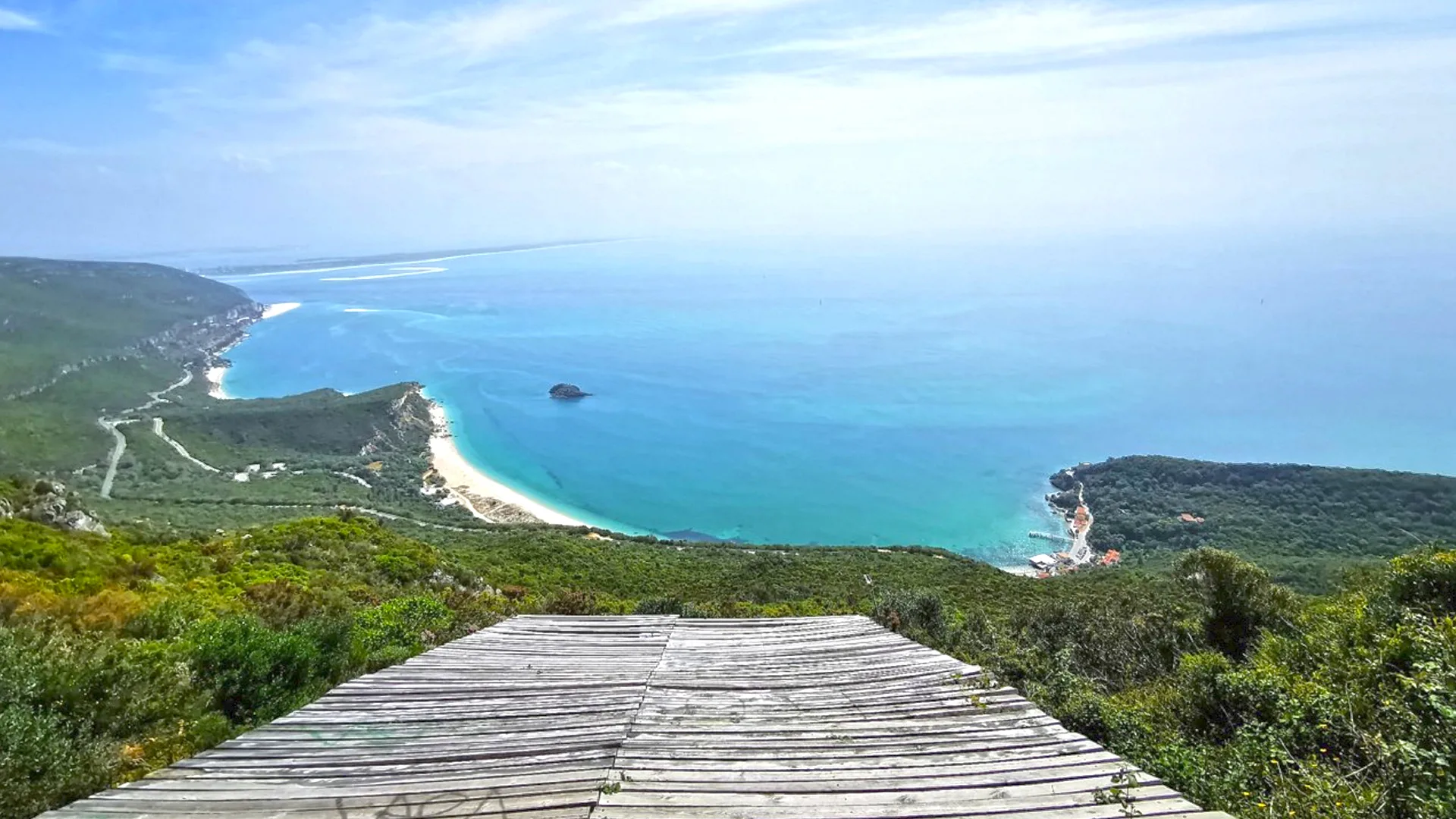
The Serra da Arrábida – the limestone mountain range visible from the São Filipe Fortress battlements – rises from sea level to 500 metres over a distance of approximately 10 km. The Arrábida Natural Park (established 1976) covers 10,800 hectares of limestone cliffs, Mediterranean scrubland, and Atlantic beaches. The water colour at Portinho da Arrábida – the main beach inside the park – is consistently described as the clearest in mainland Portugal, a result of the limestone geology filtering the coastal sediment.
From June 7 to September 15, private cars are banned from entering Arrábida Natural Park between 07:00 and 19:00 (Arrábida O2 programme). Licensed operators with municipal cards – including Yellow Cab TT Tours – are exempt and can access the park year-round. However, this tour does not enter the park’s restricted road: the Arrábida experience on this itinerary is the view from the fortress and the coastal approach via Setúbal. For a beach stop inside Arrábida Natural Park, see the Tour privado por Arrábida.
Regreso a Lisboa
After a fantastic day in our company, we will return, crossing the 25 de Abril bridge, with Cristo Rei as our company and the wonderful view of the city of Lisbon on the horizon.
Llenos de recuerdos y buenos momentos, regresaremos a Lisboa, donde te dejaremos en el lugar donde te recogimos.
Qué incluye
- 8 horas con conductor-guía licenciado privado
- Vehículo privado con aire acondicionado (hasta 8 pasajeros)
- Recogida y regreso en hotel/apartamento en Lisboa, Sintra, Cascais, Estoril o en cualquier lugar de la Costa del Estoril
- Seguro obligatorio para pasajeros
- Combustible, peajes y estacionamiento en todas las paradas
No incluido
- Comidas y bebidas
- Entradas a monumentos
- Propinas
Precios de los tours
Los precios son por vehículo privado (no por persona)
-
Hasta 2 personas €350
-
3 a 4 personas €450
-
5 a 8 personas €570
Contáctanos y Reserva tu Tour
Mejor época del año para este tour
- Marzo–mayo (recomendado): Évora ranges 14–20°C, Setúbal 15–20°C. Alentejo plains are covered in spring wildflowers, while Arrábida scrubland is in bloom. The Chapel of Bones is typically queue-free in March–April. Lighting at the Roman Temple is most favourable before 11:00, with long eastern shadows enhancing the columns and ruins.
- Junio–agosto: Fully operational but warmer. The early departure helps avoid peak inland heat in Évora. Setúbal remains relatively comfortable due to its coastal position, typically 28–33°C. Water visibility around Arrábida peaks in July–August, with visible turquoise tones from São Filipe Fortress viewpoints. Chapel of Bones queues are at their highest during this period, and timing is actively managed by the guide.
- September–October (best overall balance): Temperatures in Alentejo drop to 22–28°C, while Setúbal remains warm with excellent visibility. Vegetation in Arrábida begins recovering after summer dryness. The Sado dolphin pod is often more active in this period, linked to seasonal fish movement patterns.
- Noviembre–febrero: Cooler inland (8–14°C) and mild on the coast (10–16°C). Both Évora and Setúbal are significantly quieter, with minimal crowds at major monuments including São Filipe Fortress and the Church of Jesus. Shorter daylight hours require precise scheduling to maximise afternoon light at coastal viewpoints.
Preguntas frecuentes
What is the Church of Jesus in Setúbal and why is it significant?
Can we stop at the Arrábida beaches?
Why is São Filipe Fortress significant?
¿Están incluidas las entradas a los monumentos?
¿El precio es por persona o por vehículo?
¿Qué idiomas habla el guía?
¿Cuál es la política de cancelación?
¿Está incluido el almuerzo?
Lo que dicen nuestros huéspedes
También te puede interesar
Private Évora Tour from Lisbon - Roman Temple, Cork Factory & Chapel of Bones
Full day in Évora: more time at each monument, Almendres Cromlech optional extension. For those who want Évora in depth.
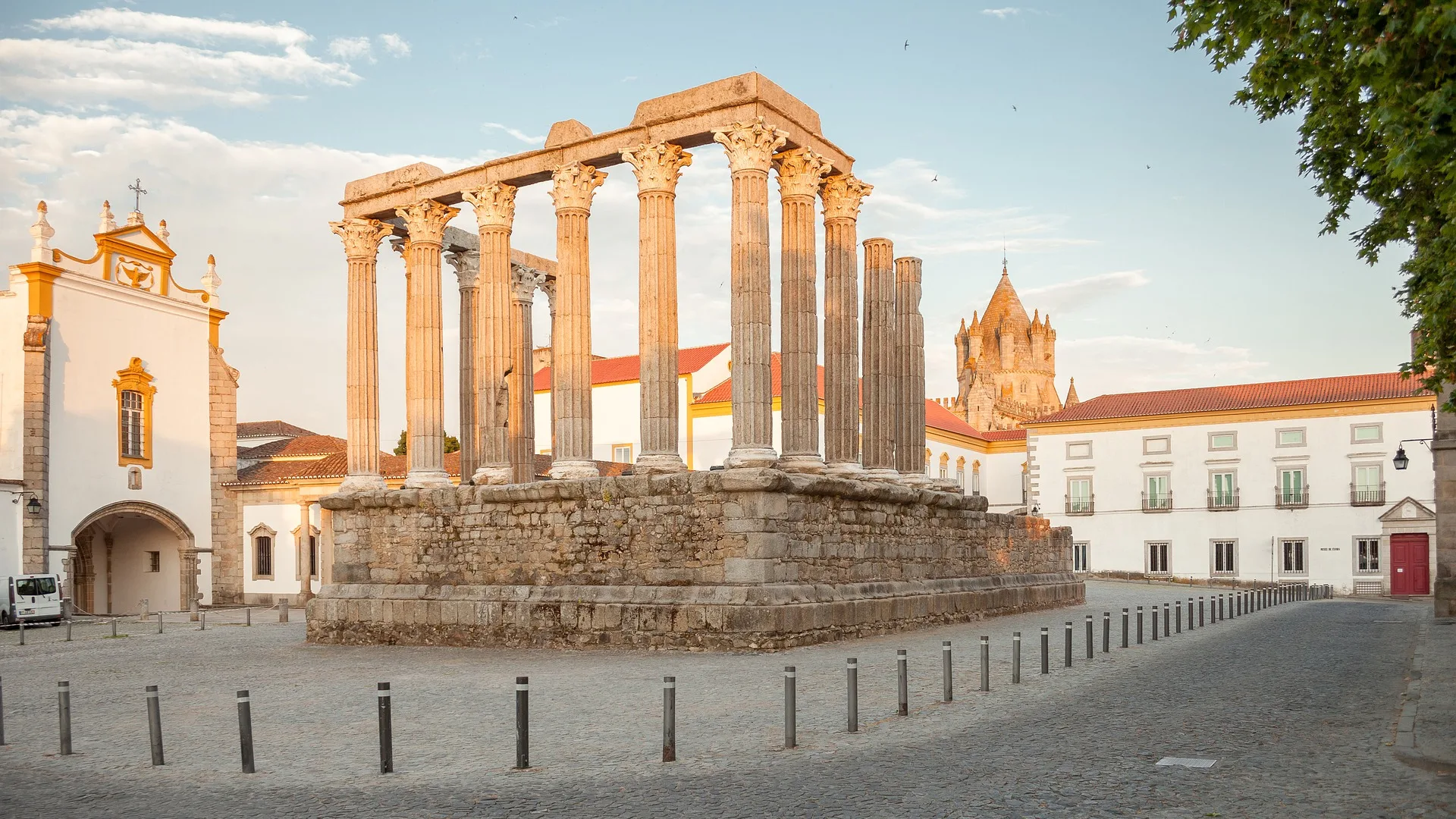
Private Évora & Monsaraz Tour — UNESCO City, Cork Factory & Alqueva
Évora highlights + cork factory + Monsaraz medieval village + Europe's largest artificial lake.

Tour privado por Arrábida
Full day in Arrábida Natural Park: beach access at Portinho da Arrábida, Galapinhos, turquoise Atlantic water.