


These three destinations sit within 130 km of each other north of Lisbon, and combining them in one day is genuinely possible. What most guides don’t mention is that Batalha Monastery — roughly halfway between Fátima and Nazaré — belongs in the same itinerary. Four destinations, one long day.
The route looks like this on a map: Lisbon north on the A1 to Fátima (127 km, about 1h 15min), then 22 km northeast to Batalha, then 29 km west to Nazaré on the coast, then 41 km south to Óbidos, then back to Lisbon via the A8 (90 km, about 1 hour). Total driving: roughly 310 km, 3.5 hours behind the wheel, spread across a 10-hour day.
The problem with most Fátima–Nazaré–Óbidos guides is that they treat four destinations as if they all need the same amount of time. They don’t. Fátima works best in the morning before the main pilgrimage groups arrive. Batalha needs 90 minutes, not 30. Nazaré needs 2 hours minimum if you want to see both the lower town and Sítio. Óbidos needs 45 minutes.
I have been making this route with clients since 2013. This is the version that actually works.
Why these four destinations work together
Most visitors plan a Fátima trip or a Nazaré trip. Fewer think to combine them, and even fewer know where Batalha fits. The reason the four work together is geographic — they form a natural clockwise loop north of Lisbon that adds no significant backtracking.
Fátima is a Catholic pilgrimage site: the Sanctuary of Our Lady of Fátima receives 6.2 million visitors per year, making it one of the most visited religious sites in the world. Batalha is a Dominican monastery built by King João I after the Battle of Aljubarrota in 1385, listed as a UNESCO World Heritage Site. Nazaré is a fishing town on the Atlantic coast best known for the Nazaré Canyon — an underwater canyon about 230 km long and up to 5,000 metres deep that creates the world’s largest surfable waves. Óbidos is a medieval walled town with a 12th-century castle that has been used as a royal residence since the reign of Dinis I, who gave it to his wife Isabel as a wedding gift in 1282.
The four share nothing in common except proximity. That is exactly what makes the day interesting — religious history, Gothic architecture, Atlantic coast, and a medieval hill town, in sequence.
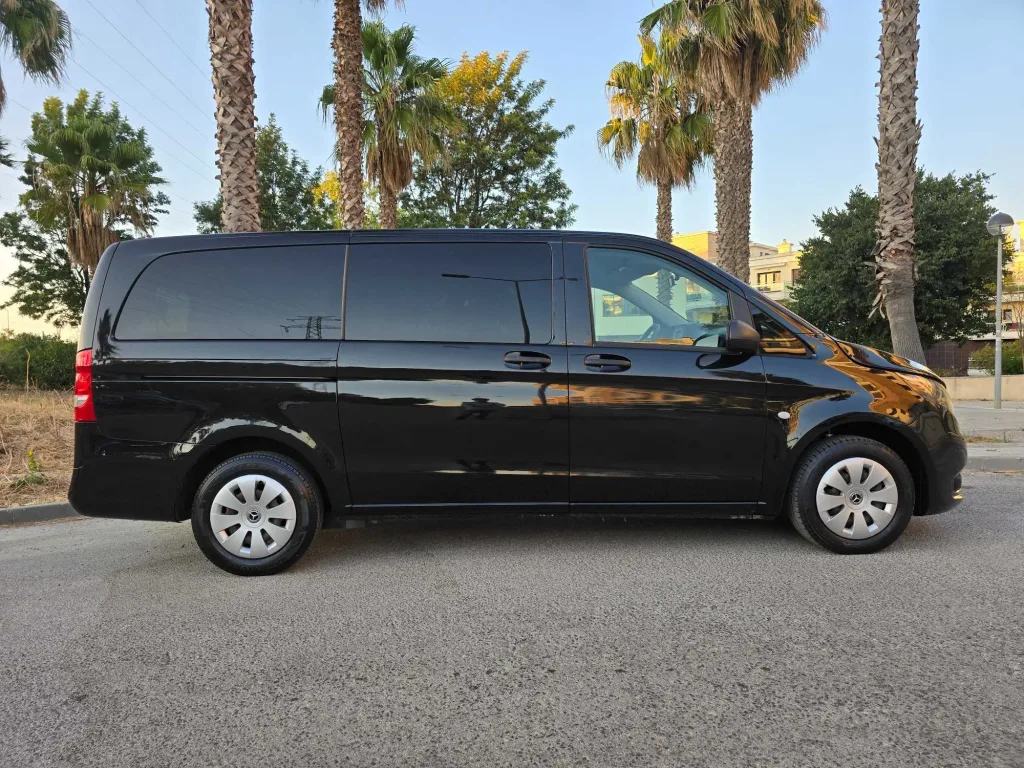
Fátima: what to expect and how long you need
The Sanctuary of Fátima is one of the most visited religious sites in Europe, and the grounds are free to enter. This is not a museum. There are no tickets, no timed entry, no queues at a booth. You park, you walk in, you spend as long as you want.
What you are entering is a 130-hectare complex built around the site where three shepherd children — Lúcia dos Santos and her cousins Francisco and Jacinta Marto — reported apparitions of the Virgin Mary in 1917. Six apparitions occurred between May and October of that year. The last, on 13 October 1917, was witnessed by an estimated 70,000 people who reported seeing the sun move in the sky — an event recorded by secular journalists including Avelino de Almeida of the Lisbon newspaper O Século.
The main elements of the Sanctuary:
Capelinha das Aparições (Chapel of the Apparitions): the small chapel built on the exact site of the first apparition. Open continuously; no ticket. This is what most visitors come specifically to see.
Basílica de Nossa Senhora do Rosário (Basilica of Our Lady of the Rosary): completed 1953, holds the tombs of Francisco and Jacinta Marto, who were canonized by Pope Francis in 2017. Francisco died in 1919 at age 10; Jacinta in 1920 at age 9, both from the flu pandemic.
Basílica da Santíssima Trindade (Basilica of the Holy Trinity): opened 2007, capacity 8,633 — one of the largest Catholic churches in the world. The scale is stark compared to the original chapel nearby.
The museum at the Sanctuary charges approximately €2 for adults. Everything else is free.
Practical note: the most atmospheric time to visit is early morning, before 09:00, when the esplanade is quiet and the pilgrims on their knees crossing the square on the Via Sacra are fewer in number. By 10:30–11:00, tour coaches begin arriving. By midday, the main square holds thousands of people. If you are not a pilgrim yourself, the difference between 09:00 and 11:00 is significant.
Recommended time: 1.5 hours.

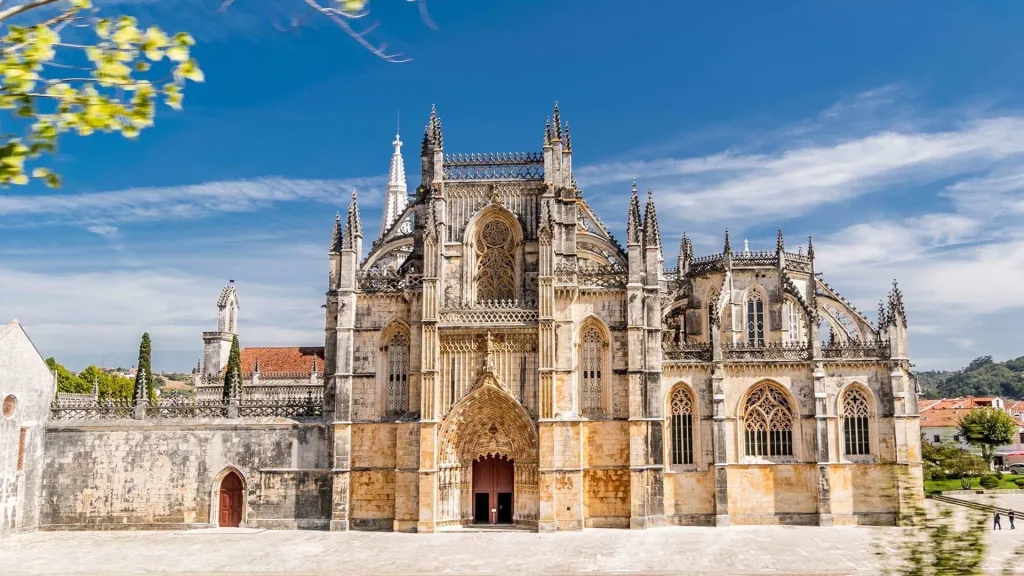
Batalha Monastery: the stop most itineraries skip
Twenty-two kilometres northeast of Fátima, Batalha Monastery is the one site on this route that most day-trip itineraries either skip entirely or compress into 30 minutes. Both are mistakes.
The monastery was built by King João I as a vow fulfilled after his victory at the Battle of Aljubarrota in August 1385 — a battle in which a Portuguese army of roughly 6,500 men defeated a Castilian force of approximately 30,000, securing Portuguese independence. Construction began in 1386 and continued under five successive kings over more than a century. The result is a building that contains traces of Gothic, Manueline, and late medieval Portuguese architecture layered over time.
What you are specifically going to see:
Founders’ Chapel (Capela do Fundador): the octagonal mausoleum where João I and his wife Philippa of Lancaster are buried, side by side. The tomb of Henry the Navigator — their son, the man who launched Portugal’s era of oceanic exploration — is also here, on the south wall. He died in 1460.
Royal Cloister (Claustro Real): Manueline arches added in the early 16th century by architect Mateus Fernandes. The stone tracery on the windows is among the most detailed Gothic-Manueline stonework in Portugal.
Unfinished Chapels (Capelas Imperfeitas): an octagonal rotunda begun by King Duarte in 1437 that was never completed. Seven doorways lead to chapels that were never built. The portal — 15 metres high, covered with Manueline sculptural detail — frames open sky. There is no roof. It is an accidental ruin that became an architectural statement, which is either a comment on the nature of ambition or simply what happens when funding runs out.
Ticket: €6 adult / €3 for visitors 65 and over / free under 12. A combined UNESCO World Heritage ticket covering Batalha, Alcobaça Monastery, and the Convent of Christ in Tomar costs €15 (valid 7 days) — worth buying if you plan to visit any of the other two on a future trip. Free entry on Sundays and public holidays until 14:00 for residents in Portugal.
Recommended time: 1.5 hours minimum. 90 minutes to see everything properly.
Nazaré: lower town, Sítio, and the funicular
Nazaré is two towns in one, separated by a steep cliff. The lower town (Praia) is the beach and fishing village. The upper town (Sítio) is the clifftop district with the sanctuary, the fort, and the view over Praia do Norte — the beach where the world’s largest surfed waves are recorded each winter.
The funicular connecting them opened in 1889 and still operates today. A one-way ticket is €2.50; return is €4.00. The alternative is a 10-minute walk up a steep path from the north end of the lower town.
Lower town: Praia da Nazaré is a broad Atlantic beach. The town behind it has a working fishing quarter — the Mercado Municipal on the western edge is where local commerce actually happens, as opposed to the restaurant strip facing the water. The fish market operates in the morning; by 13:00 most of it is done. The traditional fisherwomen of Nazaré are known for wearing seven skirts — the number is documented in ethnographic records and is specific to this town, not a general Portuguese tradition.
Sítio: The Sanctuary of Our Lady of Nazaré (Santuário de Nossa Senhora da Nazaré) is a 17th-century baroque church housing the statue of Our Lady of Nazaré. According to the legend, Dom Fuas Roupinho, a medieval nobleman, was saved from riding off the cliff in fog by a miraculous appearance of the Virgin — in 1182, which is precise enough for a legend. The fort at the cliff edge (Fort of São Miguel Arcanjo) has been converted into a surfing museum and exhibition space. The view from the edge of the cliff over the 800-metre beach of Praia do Norte — where Rodrigo Koxa surfed an 80-foot wave in 2017, and where Sebastian Steudtner set a new world record in 2020 — is more interesting in context if you know what the winter ocean here looks like.
Recommended time: 2 hours. One hour lower town, one hour Sítio. Less than this and you see the surface without understanding what makes Nazaré different from every other beach town on the Atlantic coast.

Óbidos: medieval walls and ginjinha
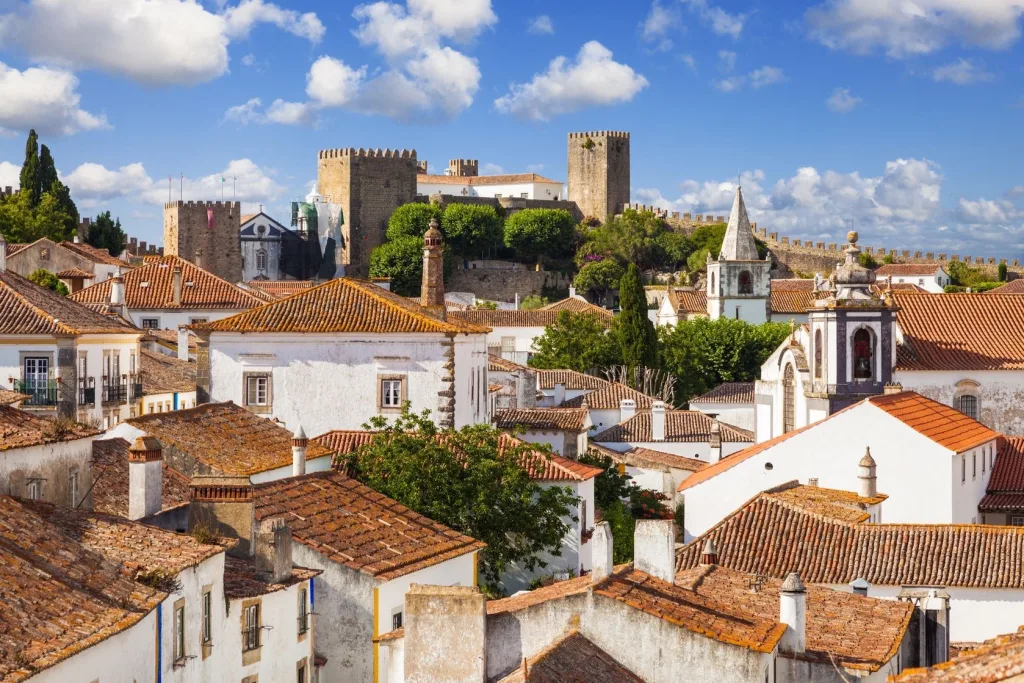
Óbidos is the last stop before the drive back to Lisbon, and it has the lightest logistical footprint of the four. The walled town is free to enter. The castle is free to walk around. There is no ticket, no queue, no museum visit required.
The walls were built by the Moors and substantially modified after the Portuguese reconquest in 1148. The current perimeter walls are largely 14th–15th century. They are walkable for their full length — the path along the top of the walls is 1.4 km and gives a view over the village rooftops and the surrounding agricultural land. The drop on the outer edge is unprotected in several sections; this is not noted with any particular alarm in Portuguese signage, but it is worth knowing before attempting it with young children.
The main street through the village (Rua Direita) is a 400-metre stretch of whitewashed houses with blue and yellow borders, souvenir shops, and ginjinha stalls. Ginjinha is a cherry liqueur specific to Óbidos (and Lisbon, and Alcobaça), served in small chocolate cups that are part of the price. The Óbidos version is slightly different from the Lisbon version; if you have tried Ginjinha at A Ginjinha near Rossio, you will notice the difference, or you will not, depending on how many you drink.
The castle itself houses a Pousada hotel (five-star accommodation inside the castle walls). Access to the exterior is free; the interior is for hotel guests.
Ticket: free. Entry to the town, castle exterior, and walls: free.
Recommended time: 45–60 minutes.
Doing this route independently vs with a guide
By public transport, this route is not practical as a one-day trip. Fátima, Batalha, Nazaré, and Óbidos are all served by buses from Lisbon, but the connections between them — particularly Batalha to Nazaré and Nazaré to Óbidos — require either long waits or multiple changes. A day combining all four is functionally impossible without a car.
By rental car: possible, but the driving is a full workday. You will spend 3.5–4 hours driving across a 10-hour day, which is fine if you are comfortable with Portuguese motorways. All four legs of the route use toll highways; budget approximately €25–30 in tolls for the full circuit. Parking at each stop is available and generally free, except in Nazaré during summer (lower town pay-and-display).
By private tour: the guide drives, handles logistics, and provides context at each stop. The main operational advantage is not having to think about parking, navigation, or timing between sites. The main informational advantage is that a guide at Batalha knows the difference between the Royal Cloister and the Unfinished Chapels, and why one took 70 years to build while the other was never finished.
The distance between “I saw it” and “I understood what I was looking at” tends to be roughly the same distance as the gap between an independent visit and one with someone who knows the building.
Our group tour covers Fátima, Batalha, Nazaré, and Óbidos as a small-group itinerary from Lisbon: Fátima, Batalha, Nazaré & Óbidos Group Tour

One-day itinerary: realistic timeline
This is the sequence and timing that works. The order matters — Fátima in the morning uses the quiet early hours before coach tourism peaks; Óbidos in the late afternoon is less crowded than midday.
07:30 — Depart Lisbon. Motorway A1 north.
08:45 — Arrive Fátima. The esplanade is quiet at this hour. Walk the Via Sacra if it is active (pilgrims arriving from the night before). Visit the Chapel of the Apparitions. Walk the full Sanctuary esplanade — it is 600 metres long and the scale is more legible on foot than any photograph suggests.
10:00–10:15 — Depart Fátima. 22 km to Batalha, approximately 25 minutes.
10:30–12:00 — Batalha Monastery. Founders’ Chapel, Royal Cloister, Unfinished Chapels. 90 minutes.
12:00 — Depart Batalha. 29 km to Nazaré, approximately 33 minutes.
12:30 — Arrive Nazaré. Lunch in the lower town (avoid the restaurants directly facing the beach; the streets one block back have better value and shorter waits).
13:30–14:30 — Lower town and beach. Fish market if it is still running; if not, the beach and town centre.
14:30 — Funicular to Sítio (€2.50 one-way). Fort of São Miguel Arcanjo, sanctuary, cliff viewpoint over Praia do Norte.
15:30 — Depart Nazaré. 41 km to Óbidos, approximately 35 minutes.
16:00–17:00 — Óbidos. Walk the walls, walk Rua Direita, ginjinha in a chocolate cup.
17:00 — Depart Óbidos. 90 km south on A8 to Lisbon, approximately 1 hour.
18:00–18:30 — Back in Lisbon.
Total driving: approximately 310 km / 3h 35min behind the wheel. Total time at stops: 6 hours. No stop feels rushed; none requires more time than allocated.

Visit Fátima, Batalha, Nazaré and Óbidos with a Guide
- Fátima, Batalha, Nazaré & Óbidos Group Tour — small group, licensed guide, all four destinations in one day
- Fátima, Batalha, Nazaré & Óbidos Private Tour — private, flexible timing.
For full destination guides: Fátima · Nazaré · Óbidos · Batalha.
FAQ
Can you do Fátima, Nazaré and Óbidos in one day?
How far is Fátima from Lisbon?
Is entry to the Fátima Sanctuary free?
What is the entry fee for Batalha Monastery?
What is Óbidos known for?
What is the Nazaré funicular?
Is Batalha Monastery worth visiting?
What is the best order to visit these destinations?
Is there a group tour that covers all four destinations?
Yes. Our Fátima, Batalha, Nazaré & Óbidos Group Tour departs from Lisbon and covers all four stops in one day with a licensed guide. See Fátima, Batalha, Nazaré & Óbidos Group Tour

Founder & Director of Yellow Cab TT Tours. Guiding in Portugal for 20+ years.
Founded Yellow Cab TT Tours in 2013. 3,372 five-star reviews on Tripadvisor.