
Batalha Monastery, Portugal: Gothic Masterpiece & Day Tours from Lisbon
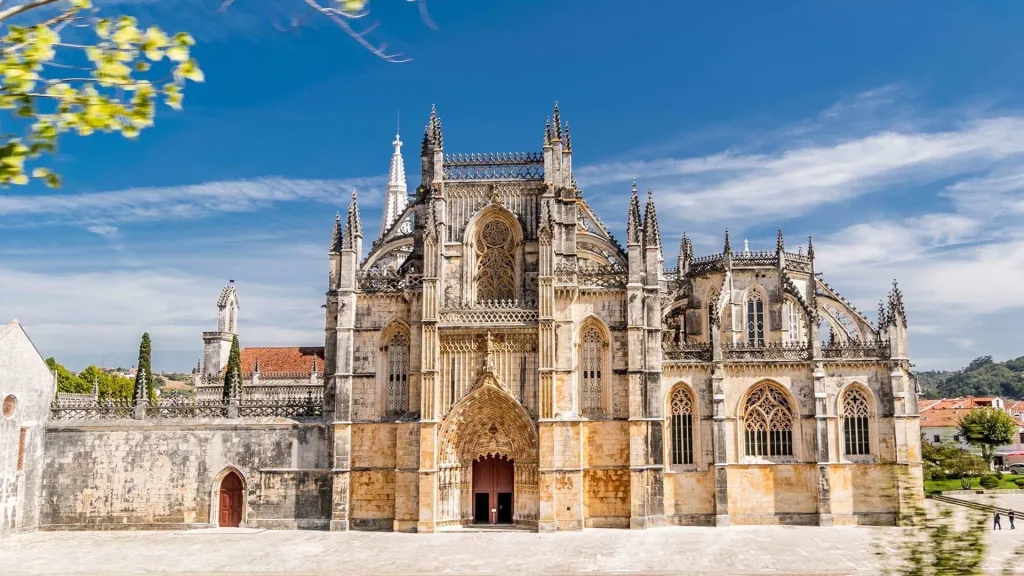
Batalha Monastery – formally the Monastery of Santa Maria da Vitória — stands 120 km north of Lisbon in the small municipality of Batalha (population: 15,557, area: 103.42 km²). UNESCO inscribed it as a World Heritage Site in 1983 (List No. 264), citing it as “one of the absolute masterpieces of Gothic art.” Construction ran from 1386 to approximately 1517 – a span of 131 years and seven kings – producing a building that transitions from French Flamboyant Gothic into some of the earliest and most elaborate Manueline architecture in Portugal. The complex is managed by Direção-Geral do Património Cultural and receives around 500,000 visitors per year.
The Battle That Built a Monastery
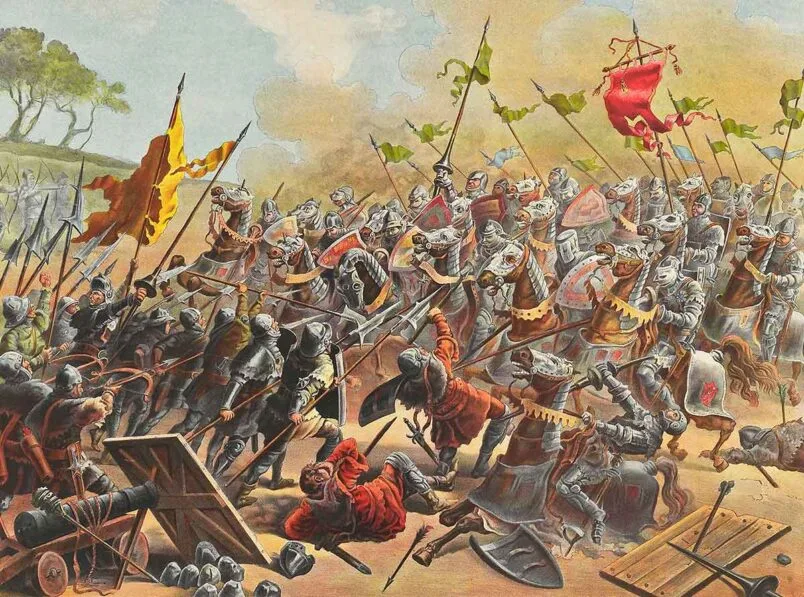
On 14 August 1385, at the plain of Aljubarrota – 13 km south of present-day Batalha – a Portuguese force of approximately 7,000 men commanded by King João I and Constable Nuno Álvares Pereira confronted a Castilian army of approximately 20,000 men under King João I of Castile. The Castilian force included French men-at-arms, Aragonese troops, and Italian allies.
The battle lasted approximately one hour. Portuguese casualties were minimal; Castilian losses totaled an estimated 7,500 dead, including the Masters of Calatrava and Santiago and much of the Castilian nobility. The King of Castile escaped the field. The outcome ended Castile’s claim to the Portuguese throne, confirmed the House of Aviz as Portugal’s ruling dynasty, and secured Portuguese independence for the next two centuries.
Before the battle, João I made a solemn vow to the Virgin Mary: if Portugal prevailed, he would build a great monastery in her honor. He fulfilled that vow the following year.
Construction History - 131 Years, 15 Architects
King João I commissioned the monastery in 1386 and donated it to the Dominican Order. Construction began under architect Afonso Domingues, who established the Gothic framework of the church and Founder’s Chapel.
From 1402, architect Huguet – likely of English or Irish origin – took charge. He introduced Flamboyant Gothic elements: elaborate pinnacles, tracery windows, and the stellar vault in the Founder’s Chapel. Huguet remained master of works until his death around 1438.
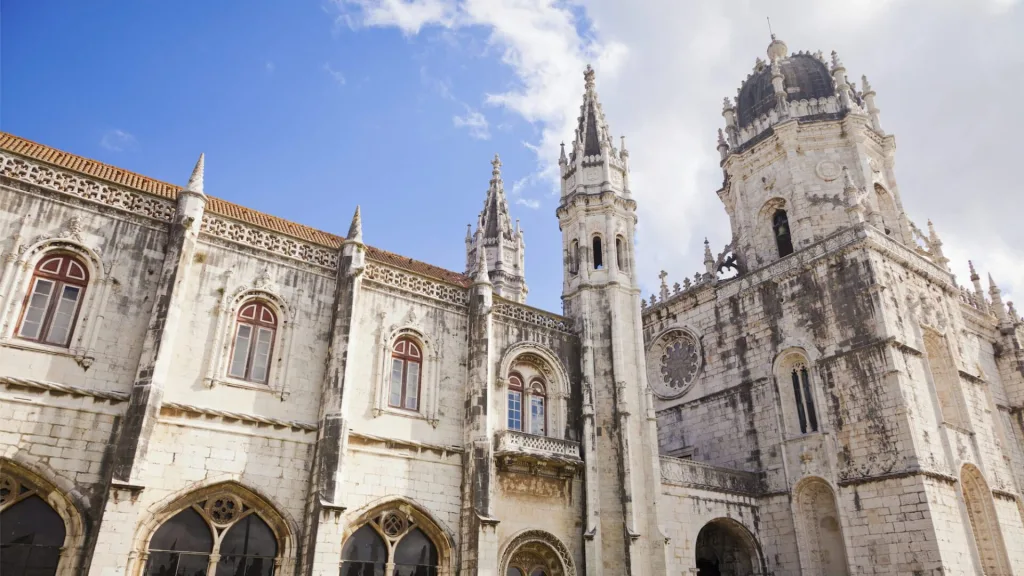
King Manuel I (reigned 1495–1521) financed the final and most visually dramatic phase. Master Mateus Fernandes the Elder, appointed master of works around 1490 and buried in the monastery upon his death on 10 April 1515, designed the portal of the Unfinished Chapels – considered one of the supreme achievements of Manueline decorative carving. Diogo Boitac (the same architect who began the Jerónimos Monastery in Lisbon in 1501) redesigned the Royal Cloister’s tracery screens during this period.
Construction halted permanently around 1517 when Manuel I redirected royal patronage to the Jerónimos Monastery in Belém. Fifteen architects contributed to the building across its construction history. The church interior measures 80 m in length and 32.5 m in height.
The Royal Cloister
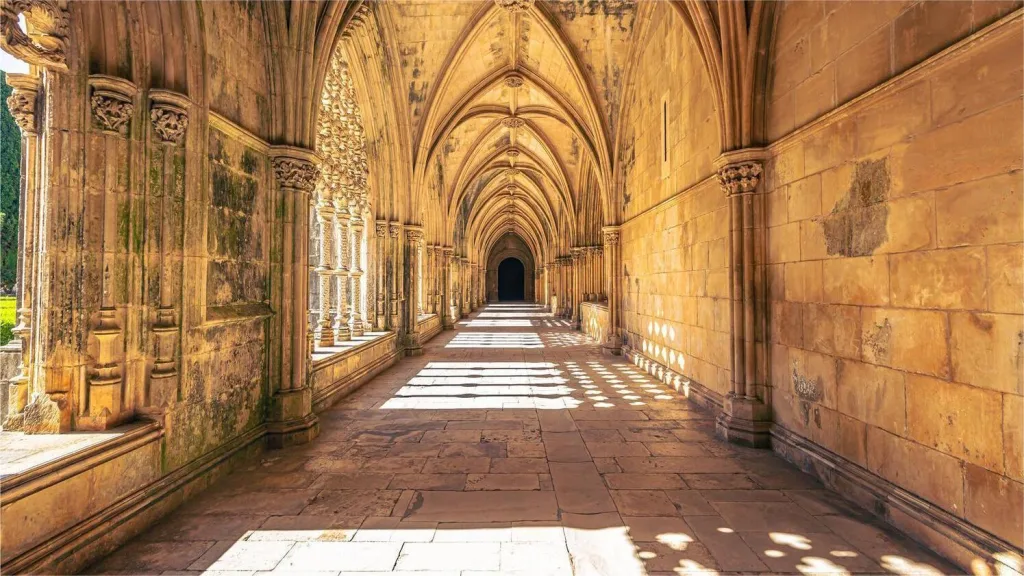
The Royal Cloister (Claustro Real) was begun under architect Fernão de Évora between 1448 and 1477 in Late Gothic style. Under King Manuel I, Diogo Boitac redesigned the arcade screens, adding dense Manueline tracery: armillary spheres (the personal symbol of Manuel I), lotus blossoms, briar branches, pearls, shells, and stylized exotic vegetation derived from Portugal’s maritime contacts with Africa and Asia.
The result is a double layer of ornamentation – the original Gothic structure overlaid with Manueline filigree – that art historians cite as one of the defining examples of the Manueline style. The cloister’s central fountain dates from the 16th century. The chapter house adjoining the cloister contains a stellar vault with a 19-meter span built without supporting columns — an engineering risk that, according to contemporary accounts, no master builder was willing to attempt.

The Founder's Chapel (Capelas do Fundador)
Entered from the south aisle of the church, the Founder’s Chapel (Capelas do Fundador) serves as Portugal’s first royal pantheon. Built under architect Huguet between 1402 and the 1430s, it is an octagonal lantern space covered by a stellar vault with intricate Flamboyant Gothic ribbing.
At the center of the chapel stand the joint tomb of King João I and his English queen Philippa of Lancaster, daughter of John of Gaunt, Duke of Lancaster. The couple are depicted holding hands – an unusual detail in medieval royal effigies. They were married in 1387; Philippa died of plague in 1415; João I died in 1433 at approximately 76 years of age, having reigned for 48 years.
Around the walls of the chapel are the tombs of their sons, including Prince Henry the Navigator (Infante Henrique, 1394–1460), who directed Portugal’s early maritime exploration from Sagres and is credited with initiating the Age of Discovery.

The Unfinished Chapels (Capelas Imperfeitas)
The Unfinished Chapels (Capelas Imperfeitas) are accessible from outside the monastery, through a separate entrance on the east end. King Duarte (Edward I of Portugal) commissioned them in 1437 as a royal mausoleum. He and his queen, Eleanor of Aragon (who died in exile in 1445; her remains were moved here in 1456), are buried in the space.
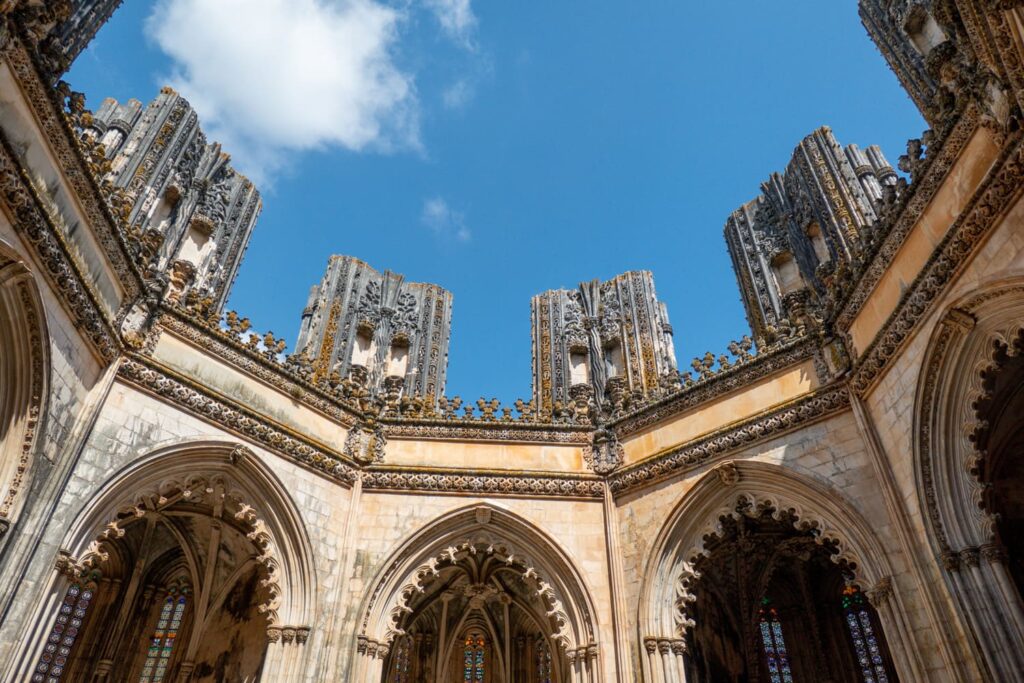
The structure consists of an octagonal rotunda with seven radiating hexagonal chapels. The main portal, designed by Mateus Fernandes the Elder around 1509, rises approximately 15 meters and is encrusted with Manueline carving: armillary spheres, winged angels, ropes, clover-shaped arches, and coral-like stone projections. It is considered one of the finest single pieces of Manueline decorative stonework in Portugal.
The chapels have never had a roof. Construction stopped when Manuel I redirected funding to Jerónimos around 1517, leaving the massive buttresses and walls open to the sky. The incompleteness is now their defining characteristic – the roofless octagon admits direct light onto the carved portal, an effect that no covered building could replicate.

Tomb of the Unknown Soldiers
The Sala do Capítulo (Chapter Room) houses two sarcophagi installed on 6 April 1921. They contain the remains of two unidentified Portuguese soldiers from World War I (1914–1918): one who died on the Western Front in Flanders, where the Portuguese Expeditionary Corps was deployed, and one who died in the African theater in Mozambique, fighting against German East African forces. A guard of honor is maintained continuously. Portugal was one of the first countries to establish a Tomb of the Unknown Soldier, alongside the United Kingdom, France, and the United States in 1920–1921.

Visiting Batalha Monastery: Practical Information
Opening hours: October to March: 09:00 – 18:00 (last admission 17:30); April to September: 09:00 – 18:30 (last admission 18:00); Closed: 1 January, Easter Sunday, 1 May, 25 December.
Admission: Adult: €15.00, Reduced (seniors 65+, students): €7.50, Under 12: free. Free: first Sunday of each month; Portuguese Citizens Card holders (52 days/year)
Recommended visit time: 1.5 to 2 hours for the monastery; allow an additional 30 minutes if visiting the Battle of Aljubarrota Interpretation Center (2 km south). The town of Batalha has a small central square with cafes and restaurants within a 5-minute walk of the monastery entrance.
Getting to Batalha from Lisbon
De carro: 120 km via A1 motorway north, exit Fátima/Batalha (junction 9) then IC9 west. Journey time: approximately 1 hour 20 minutes without traffic. Parking is available adjacent to the monastery (paid, limited spaces).
De autocarro: Rede Expressos operates daily services from Lisbon Sete Rios bus terminal to Batalha. Journey time approximately 1 hour 45 minutes. The stop is in the town center, 300 m from the monastery.
By guided tour: Most private day tours from Lisbon that include Batalha combine it with Fátima (13 km south), Nazaré (22 km west), or Tomar (34 km east) – all within easy driving distance. A standalone trip to Batalha alone is unusual; the monastery is almost always visited as part of a central Portugal circuit.
Private Tours to Batalha from Lisbon
Yellow Cab TT Tours offers private day tours from Lisbon that include Batalha Monastery. All tours depart from your hotel or central address in Lisbon in a private vehicle with an English-, French-, Spanish-, or Portuguese-speaking guide. All tours are private unless otherwise noted. No minimum group size for private tours.
Group Tours to Batalha from Lisbon

Private Tours to Batalha from Lisbon

Perguntas frequentes
Why is the monastery called "Batalha"?
“Batalha” means “battle” in Portuguese. The monastery was built to commemorate Portugal’s victory at the Battle of Aljubarrota on 14 August 1385.
Is Batalha Monastery a UNESCO World Heritage Site?
Yes. UNESCO inscribed it in 1983 under List Number 264, under criteria (i) and (ii), describing it as “one of the absolute masterpieces of Gothic art”.
How long did it take to build Batalha Monastery?
Construction ran from 1386 to approximately 1517 – 131 years – under 15 different architects and spanning the reigns of seven kings.
Who is buried in the Founder's Chapel?
King João I, his English queen Philippa of Lancaster, and their sons – including Prince Henry the Navigator – are buried in the Capelas do Fundador.
Why are the Unfinished Chapels unfinished?
Construction stopped around 1517 when King Manuel I redirected royal patronage to the Jerónimos Monastery in Belém. The roofless octagonal rotunda and its Manueline portal have remained open to the sky ever since.
What are the entry fees for Batalha Monastery?
Adults: €15.00. Reduced (seniors/students): €7.50. Under 12: free.
How far is Batalha from Lisbon?
120 km north of Lisbon via the A1 motorway. Driving time is approximately 1 hour 20 minutes.
Can I visit Batalha and Fátima on the same day?
Yes. Fátima is 13 km south of Batalha – approximately 15 minutes by car. Combined visits are standard and are included in most private day tour itineraries from Lisbon.
Can I combine Batalha with Tomar and Nazaré?
Yes. Tomar is 34 km east (35 minutes) and Nazaré is 22 km west (25 minutes). All three destinations, combined with Fátima, are regularly covered in full-day private tours from Lisbon.
Is there parking at Batalha Monastery?
Yes. A paid parking area is located adjacent to the monastery. It has limited capacity; arriving before 10:00 is advisable during peak season (June–September).