
Coimbra, Portugal: Historic University City & Day Tours from Lisbon
Coimbra is a city and municipality in central Portugal, 197 km north of Lisbon and 116 km south of Porto via the A1 motorway. Population: 140,796 (2021 census, municipality), covering an area of 319.40 km². Coimbra served as the capital of Portugal from 1131 to 1255 – the period during which the kingdom was consolidated – and remains the country’s primary university city, home to one of the oldest continuously operating universities in the world.
In 2013, the University of Coimbra – Alta and Sofia was inscribed as a UNESCO World Heritage Site, the 15th such designation in Portugal. The university’s Joanine Library (1717–1728), Old Cathedral (consecrated 1184), and student Fado tradition place Coimbra among the most historically layered cities in the Iberian Peninsula.

A Brief History of Coimbra
The site of Coimbra was occupied during the Roman period as the settlement of Aeminium, a secondary town subordinate to the regional capital Conimbriga. Aeminium’s cryptoporticus – a subterranean vaulted gallery used for storage – and sections of its aqueduct survive and are accessible today beneath the city centre.
Following the Moorish occupation of the Iberian Peninsula after 711 AD, Coimbra was reconquered by Ferdinand I of Castile and León in 1064, making it one of the earliest major Iberian cities recovered during the Reconquista. In 1131, King Afonso Henriques – who would become the first King of Portugal in 1139 – established his court at Coimbra, which served as the capital of the emerging kingdom until King Afonso III transferred the court to Lisbon in 1255.
This 124-year period as capital shaped the city’s architecture, religious institutions and intellectual culture. The University of Coimbra, founded by King Dinis I in 1290, drew on this heritage when it was definitively relocated to the city in 1537.
University of Coimbra - UNESCO World Heritage Site (2013)
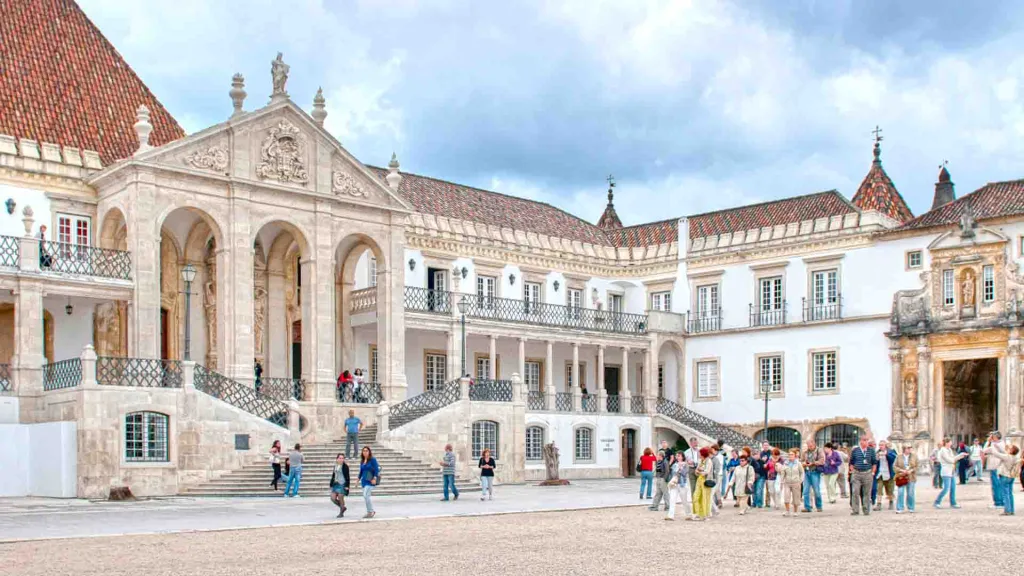
The University of Coimbra traces its founding to 1290, when King Dinis I established a Studium Generale in Lisbon. The institution was transferred to Coimbra in 1308, returned to Lisbon in 1338, and was definitively installed at the former Royal Palace of Alcáçova on the hilltop above Coimbra in 1537, by decree of King João III.
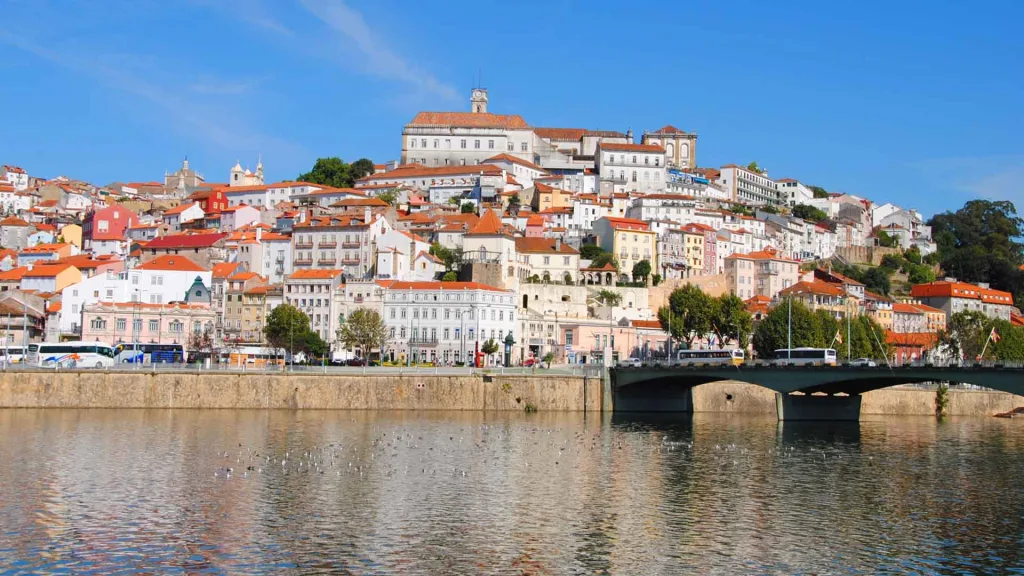
The university’s location – the Alta, or upper city – commands the highest point of a hill rising directly above the Mondego River. The complex developed over more than seven centuries into a series of colleges, chapels, libraries and tower structures. In 2013, UNESCO inscribed the University of Coimbra – Alta and Sofia as a World Heritage Site, recognising its outstanding universal value as a living academic institution with continuous influence over Portuguese language, law, science and culture.
The university currently enrols approximately 26,000 students. Its academic traditions – black capes (batinas), graduation ceremonies, and the annual Queima das Fitas (burning of the ribbons) festival held every May – remain active practices.
Biblioteca Joanina - The Joanine Library (1717-1728)
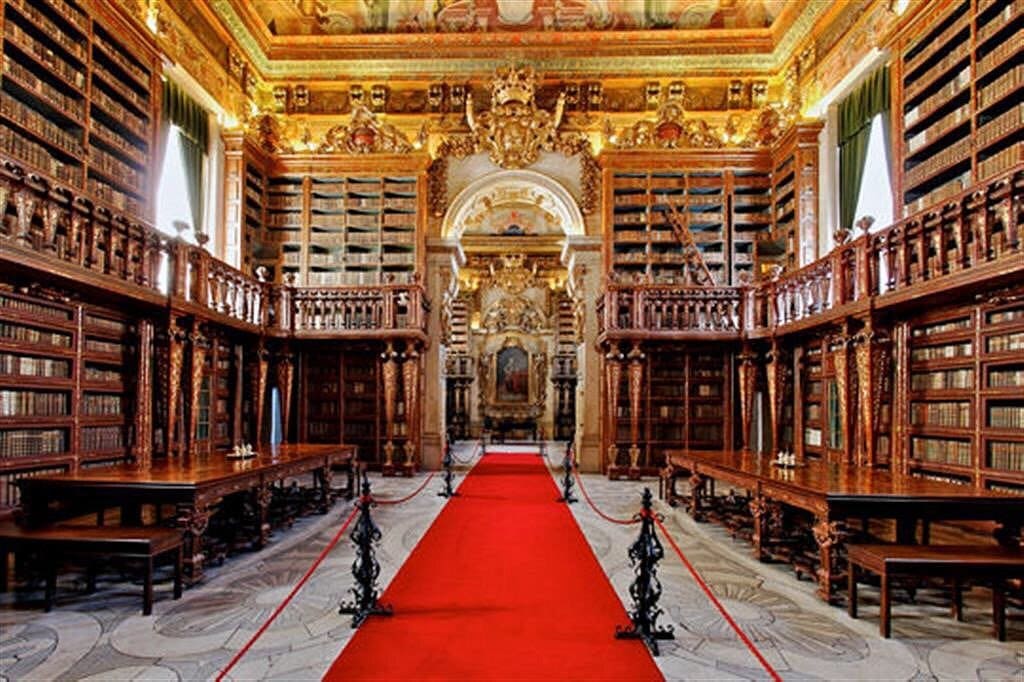
The Biblioteca Joanina is the most visited structure within the University of Coimbra complex. Construction began in 1717 on the commission of King João V – known as “the Magnanimous” — and was completed in 1728. The building holds approximately 70,000 volumes, the majority dating from the 16th to 18th centuries, including a first edition of Os Lusíadas (1572), Luis de Camões’s epic poem of the Portuguese Age of Discovery.
The interior consists of three Baroque halls aligned in sequence, with double-storey shelving units made of original 300-year-old oak, decorated throughout with gold leaf. The shelves still contain their original built-in ladders.
A colony of bats lives permanently inside the library. The bats emerge at night to feed on insects – particularly bookworms and other species capable of damaging the paper and leather bindings. Library staff place leather mats on the tables each evening to protect the surfaces from bat droppings; the mats are removed before opening hours each morning.
The library received its first books in 1750. Timed entry tickets are required; booking in advance is strongly recommended during peak season (June–September).
Sé Velha - The Old Cathedral (1164–1184)
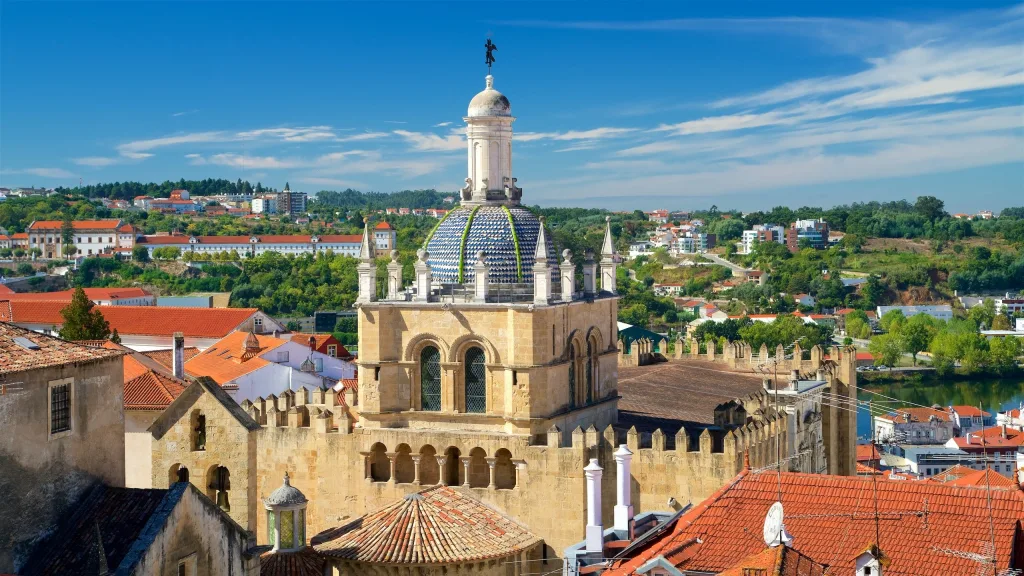
Construction of the Sé Velha (Old Cathedral) began in 1164, commissioned by Bishop Miguel Salomão. The building was consecrated in 1184, and in 1185 King Sancho I – second King of Portugal – was crowned inside it. The cathedral was designed by Master Roberto, a French architect who simultaneously directed the construction of the Lisbon Cathedral (Sé de Lisboa).
The Sé Velha is the only Romanesque cathedral from the period of the Portuguese Reconquista that survives largely intact. Its exterior resembles a military fortress: high crenellated walls and narrow windows reflect the belligerent conditions under which it was built. The interior contains approximately 380 sculpted Romanesque capitals – one of the largest ensembles of Romanesque sculptural decoration in Portugal.
The Gothic cloister was begun in 1218, during the reign of Afonso II, making it one of the earliest Gothic structures in Portugal. The cathedral continues to function as an active place of worship and is open to visitors.
The Sé Nova (New Cathedral), located higher up the hill near the university, dates from the late 16th century and was built by the Jesuits – but the Sé Velha, in the lower Alta quarter, is the older and architecturally more significant of the two.
Fado de Coimbra
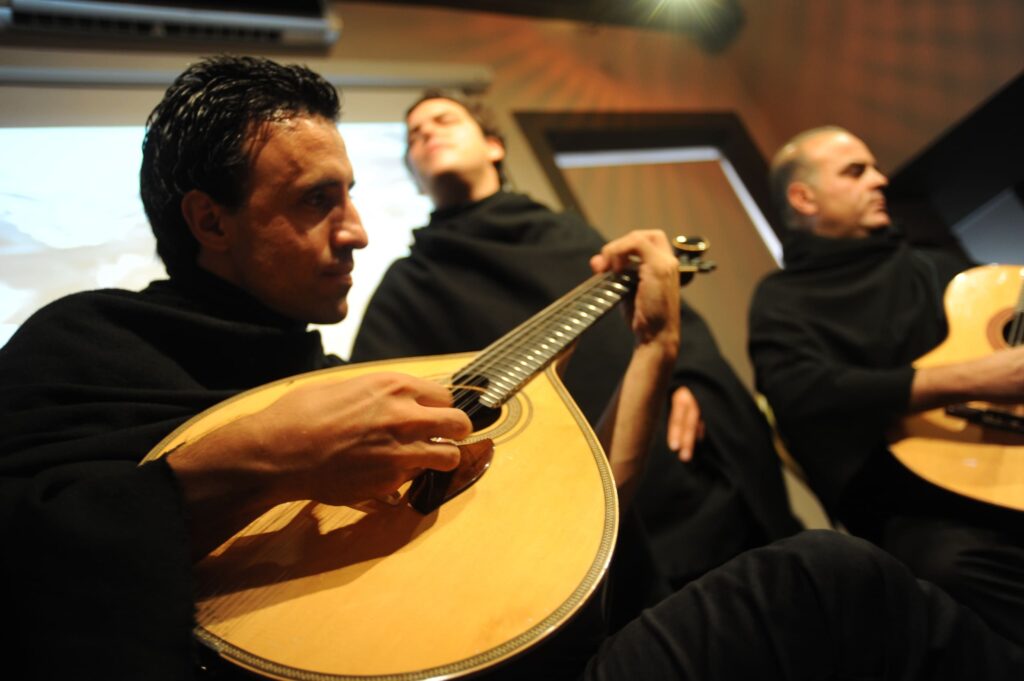
Coimbra has its own Fado tradition, distinct in origin, performance style and social function from Lisbon Fado. Fado de Coimbra is performed exclusively by male university students and alumni, dressed in black academic capes (batinas). The repertoire draws on classical Portuguese poetry – Camões, Antero de Quental, António Nobre – set to music on the Portuguese guitar.
Where Lisbon Fado is associated with sorrow and fate (fado meaning destiny), Coimbra Fado carries a more literary, contemplative register, linked to student life, academic tradition and the city’s medieval heritage. Performances traditionally take place in public, often on the steps or streets near the university at night. The Santa Cruz Café in Coimbra, occupying a former church cloister, is one of the most historically significant venues.
The Mondego River and the Two Cities
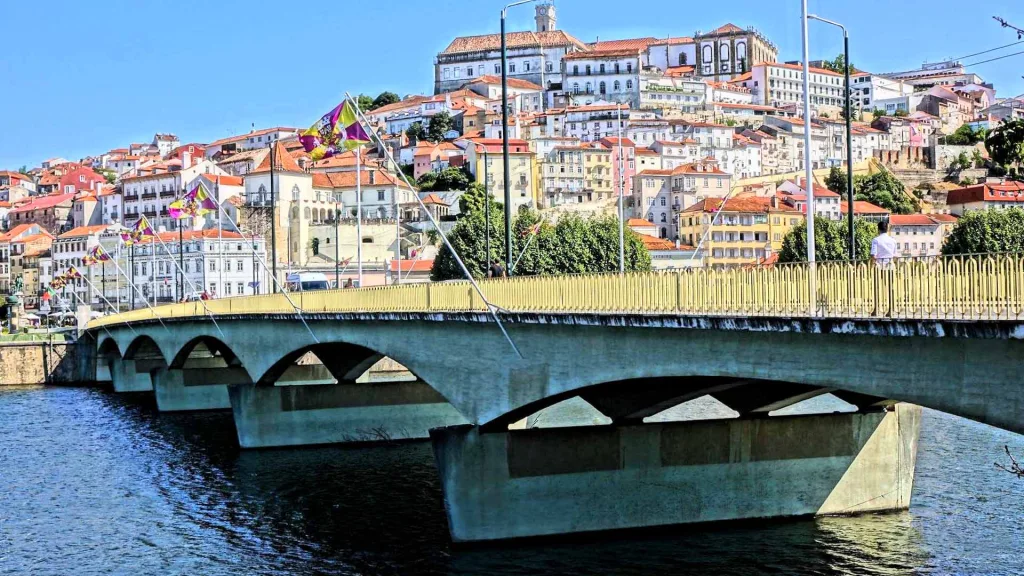
Coimbra is divided physically by the topography of the hill into two distinct zones:
Coimbra Alta (upper city): the university quarter, medieval streets, Sé Velha, and the academic district, all concentrated on the high ground above the river.
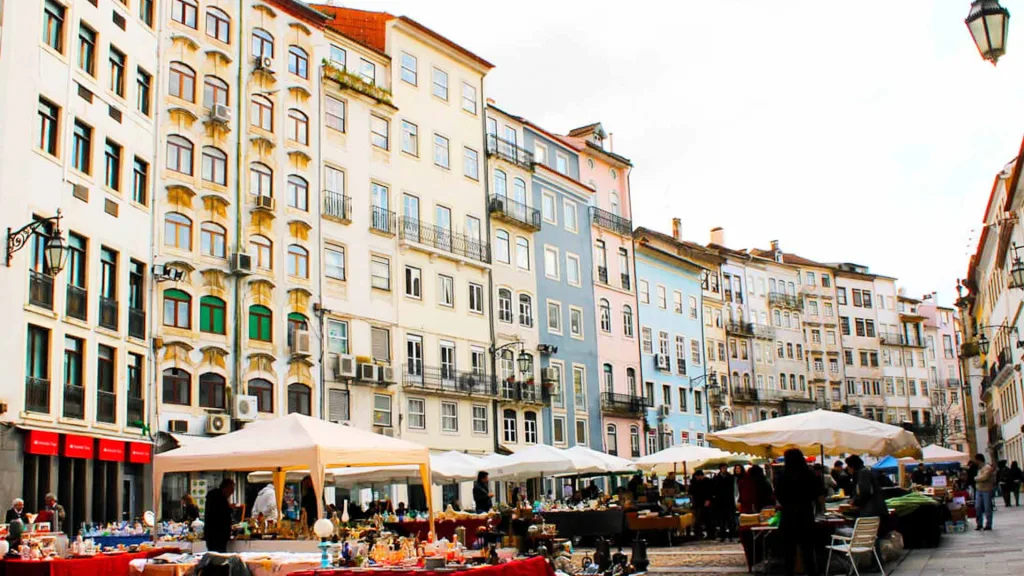
Coimbra Baixa (lower city): the commercial centre, main shopping streets, and the Mondego riverbank, connected to the Alta by stairways and a funicular.
The Mondego River – 258 km long – is the only major river in Portugal that originates entirely within Portuguese territory (source: Serra da Estrela). The riverfront has been developed as a leisure zone with walking paths and cycle lanes. On the south bank stands the Santa Clara-a-Velha monastery, a 14th-century Gothic structure commissioned by Queen Isabel of Portugal (the same figure who received Óbidos as a wedding gift in 1282). The monastery was repeatedly flooded by the Mondego over the centuries and was eventually abandoned; it has since been excavated and is now an archaeological site open to the public.
When to Visit Coimbra
March–May | Mild (14–20°C), low crowds; May hosts Queima das Fitas student festival.
June–August | Warm (22–30°C); highest visitor numbers; Joanine Library requires advance booking.
September–October | Warm (18–25°C), reduced crowds, new academic year begins in October.
November–February | Cool (8–14°C), minimal tourists; all monuments accessible.
Coimbra’s main sights are concentrated in the Alta and can be covered on foot in a full day. The Joanine Library has timed entry with limited capacity – book before arrival during summer.
Getting to Coimbra from Lisbon
De carro: 197 km via A1 motorway (Lisbon -> Coimbra). Journey time approximately 2 hours. Paid parking available near the lower city (Coimbra Baixa); the Alta is largely pedestrian.
By train: Alfa Pendular high-speed service from Lisboa Oriente to Coimbra-B station, then a short connecting train to Coimbra central station. Journey approximately 1h 30min–1h 45min. This is the most practical public transport option.
De autocarro: Rede Expressos operates services from Lisbon Sete Rios bus terminal to Coimbra. Journey approximately 2h 15min–2h 30min.
Private Tours to Coimbra from Lisbon
Coimbra is most naturally combined with Tomar (Convent of Christ, UNESCO 1983; 72 km from Coimbra) and Fátima Sanctuary (77 km from Coimbra) on itineraries covering central Portugal. Almourol Castle (72 km from Coimbra) is a frequent addition. All private tours depart from the client’s hotel in Lisbon at an agreed time. All tours conducted in a licensed vehicle with a professional guide.
Yellow Cab TT Tours operates private day tours from Lisbon including Coimbra:


O que não pode perder em Coimbra
Margem do Mondego
Universidade de Coimbra

Sé Velha de Coimbra

Centro de Coimbra
Perguntas frequentes
How far is Coimbra from Lisbon?
Coimbra is 197 km north of Lisbon via the A1 motorway, approximately 2 hours by car. By Alfa Pendular high-speed train from Lisboa Oriente, the journey takes approximately 1h 30min to 1h 45min.
Is the University of Coimbra a UNESCO World Heritage Site?
Yes. The University of Coimbra – Alta and Sofia was inscribed as a UNESCO World Heritage Site in 2013, the 15th such designation in Portugal. The inscription covers the university complex on the hill above the city, founded definitively in Coimbra in 1537 by King João III.
What is the Joanine Library?
The Biblioteca Joanina is the Baroque library of the University of Coimbra, built between 1717 and 1728 on the commission of King João V. It holds approximately 70,000 volumes including a first edition of Os Lusíadas (1572). The building is renowned for its gold-leaf shelving and for a colony of bats that live inside and protect the books by feeding on insects. Timed entry tickets are required.
What is Sé Velha?
Sé Velha (Old Cathedral) is a Romanesque cathedral begun in 1164 and consecrated in 1184. It is the only intact Romanesque cathedral from the Reconquista period surviving in Portugal. King Sancho I was crowned inside it in 1185. The building contains approximately 380 sculpted Romanesque capitals, one of the largest such ensembles in Portugal.
What is Fado de Coimbra?
Fado de Coimbra is a distinct musical tradition performed exclusively by male university students and alumni in black academic capes. It draws on classical Portuguese poetry and has a more literary character than Lisbon Fado. Informal performances often take place in the streets near the university.
Was Coimbra the capital of Portugal?
Yes. Coimbra served as the capital of Portugal from 1131 — when King Afonso Henriques established his court there – until 1255, when King Afonso III moved the court to Lisbon. During this 124-year period, Coimbra was the political and cultural centre of the emerging Portuguese kingdom.
How long do you need to visit Coimbra?
A full day covers the main sights: Joanine Library, university tower viewpoint, Sé Velha, and the Mondego riverfront. Coimbra is most often included in a tour combining Tomar, Fátima, or both, as part of a central Portugal itinerary from Lisbon.
What is the best time to visit Coimbra?
March to May offers mild weather (14–20°C) and low crowds; May hosts the Queima das Fitas student festival. September and October are warm (18–25°C) with fewer visitors than summer. The Joanine Library has limited capacity year-round — book entry tickets in advance.
Is Coimbra easy to reach by train from Lisbon?
Yes. The Alfa Pendular high-speed train from Lisboa Oriente to Coimbra-B runs multiple times daily, with a journey time of approximately 1h 30min to 1h 45min. A short connecting regional train runs from Coimbra-B to Coimbra central station (Coimbra A), journey 5 minutes.
What is Queima das Fitas?
Queima das Fitas (burning of the ribbons) is the annual end-of-year celebration of the University of Coimbra, held every May. Students burn the coloured ribbons representing their faculty as a graduation ritual. The event includes concerts, processions and traditional serenades, and is one of the largest student festivals in Portugal.