
Private Évora & Monsaraz Tour from Lisbon -
UNESCO City & Alqueva
2 ciudades en un día completo inolvidable
- (¡Tour privado con vehículo y conductor-guía solo para usted!)
8 Horas
Visita privada
Máx. 8px/Van
Recogida en hotel o apartamento en Lisboa, Sintra, Cascais, Estoril o en cualquier punto de la costa.
Évora, Reguengos de Monsaraz, and Monsaraz.
Desde 350€ por vehículo privado (ver precios más abajo)

basado en +3387 reseñas
Resumen del recorrido
- Duración: 8 horas.
- Salida: Sugerido 08:30–09:00 – recogida en hotel o apartamento en Lisboa, Sintra, Cascais, Estoril, o en cualquier lugar de la costa.
- Regresar: ~17:00–17:30 a su lugar de recogida.
- Tipo de recorrido: 100% privado: solo para tu grupo.
- Tamaño del grupo: Hasta 8 pasajeros.
- Vehículo: Furgoneta privada con aire acondicionado.
- Guía: Conductor-guía con licencia disponible en inglés, español, francés y portugués.
- Destinos: Évora, Reguengos de Monsaraz, and Monsaraz.
- UNESCO Site: Évora Historic Centre (UNESCO World Heritage Site since 1986).
- Distancia total de conducción: Approximately 365 km circuit.
- Precio: From €350 per vehicle (see pricing details below).
- Política de Cancelación: Cancelación gratuita hasta 24 horas antes de la salida; no reembolsable dentro de las 24 horas.
- Valoración de TripAdvisor: 5,0/5 según 3.387 opiniones.
- Licencia: RNAAT 119/2013.
Resumen del tour
Évora is 130 km east of Lisbon via the A6. The drive takes approximately 1 hour 30 minutes. Évora was classified UNESCO World Heritage Site in 1986. It is the capital of the Alentejo region and the most complete surviving example of a walled Renaissance city in Portugal: Roman ruins, a Gothic cathedral, a Manueline palace, and a 16th-century aqueduct within a 1-kilometre radius of the main square.
From Évora, the tour continues east to Reguengos de Monsaraz (~40 km, 35 minutes) – the commercial centre of the Monsaraz area. Portugal produces approximately 50% of the world’s cork; the Alentejo region accounts for the majority. A family-run factory in the Reguengos area shows the process from raw bark to finished stoppers.
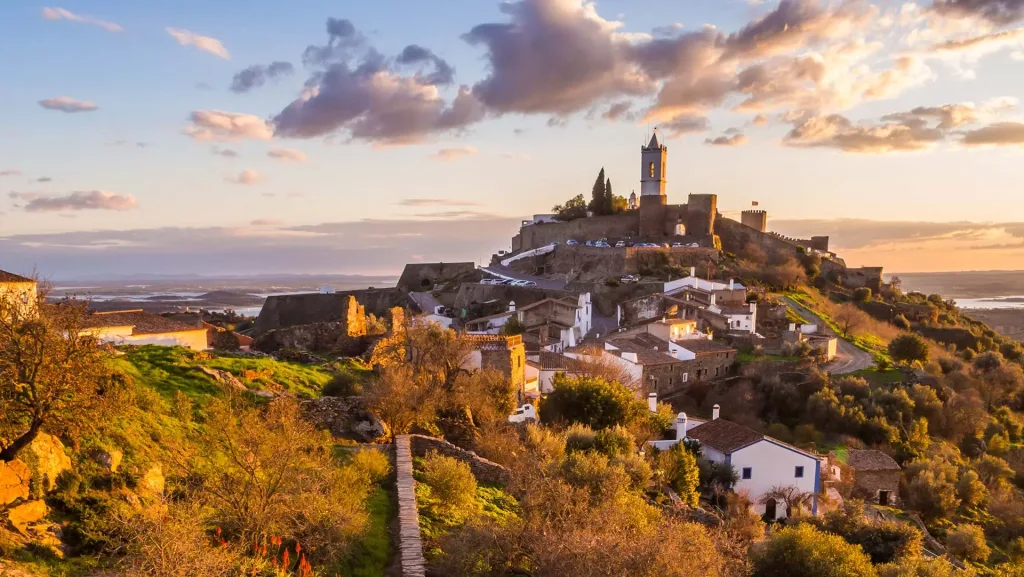
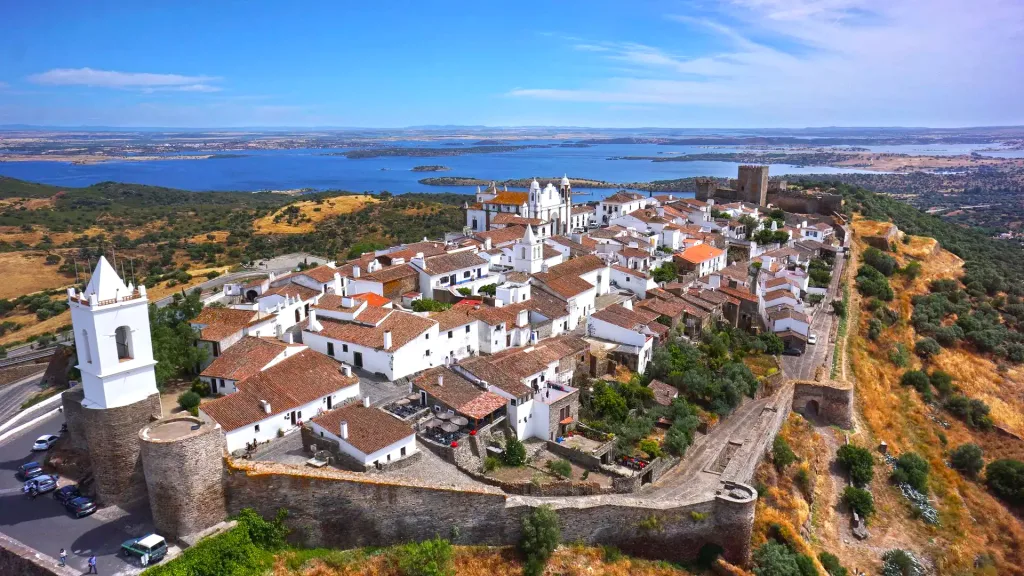
From Reguengos, the tour climbs to Monsaraz – a medieval walled village on a 342-metre ridge (~12 km, 15 minutes). The castle and walls overlook the Alqueva reservoir: 250 km², the largest artificial lake in Western Europe, created by the Alqueva dam completed in 2002.
Por qué los viajeros eligen este tour
- 3.387 reseñas verificadas · 5.0 Tripadvisor – Travelers’ Choice Best of the Best 2025. The only licensed private tour combining Évora (UNESCO 1986), Monsaraz Castle, and the Alqueva viewpoint in a single day from Lisbon with transparent per-vehicle pricing.
- Excellent value for groups – for 5–8 passengers, a total price of €570 works out to approximately €71–114 per person, while comparable private tours are often priced between €150–350 per person.
- More than a scenic stop at Alqueva – the guide explains the construction of the Alqueva Dam (completed in 2002), the relocation of the submerged village of Aldeia da Luz, and the economic and environmental impact of Portugal’s largest reservoir.
- Licensed and insured operator – RNAAT 119/2013 since 2013, with mandatory passenger insurance included and guides with extensive local knowledge of the Alentejo region.
- Flexible itinerary – the order of visits can be adjusted at the time of booking. During summer, Monsaraz can be scheduled earlier in the day to avoid the strongest afternoon heat.
Consejos para este recorrido
- Chapel of Bones: tickets purchased on-site. El Capilla de los Huesos (Igreja de São Francisco) sells tickets at the entrance only and does not require advance booking. During peak season (June–August), queues can reach 15–30 minutes. The guide adjusts the itinerary sequence where possible to minimise waiting times. Entry fee is typically €5–7 per adult; current pricing should be verified on the day.
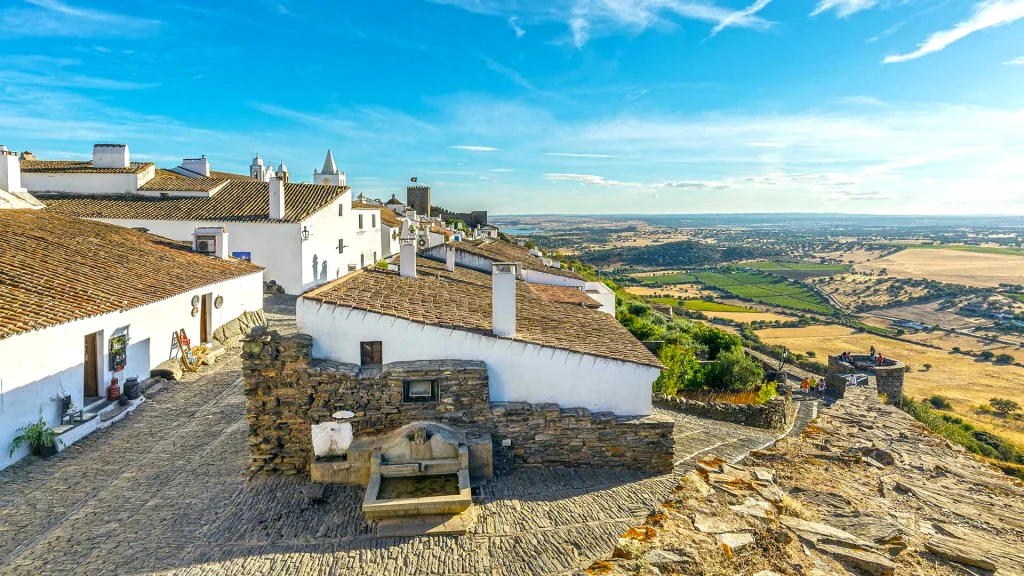
- Monsaraz accessibility. The medieval village streets are paved with uneven schist stone, and the castle grounds contain irregular historic surfaces. Comfortable footwear with good grip is strongly recommended. The site is not suitable for wheelchairs and may be challenging for guests with significant mobility limitations. Accessibility requirements should be discussed at the time of booking.
- Lunch options in Évora or Reguengos de Monsaraz. The itinerary includes approximately 30–40 minutos for lunch. Depending on timing, the guide can recommend restaurants in Évora’s historic centre or in Reguengos town centre. Traditional Alentejo dishes include açorda (bread-and-garlic soup), migas, porco preto (black pork), and regional cheeses. A typical set lunch menu costs approximately €10–18 per person.
Qué puedes ver
Évora Historic Centre
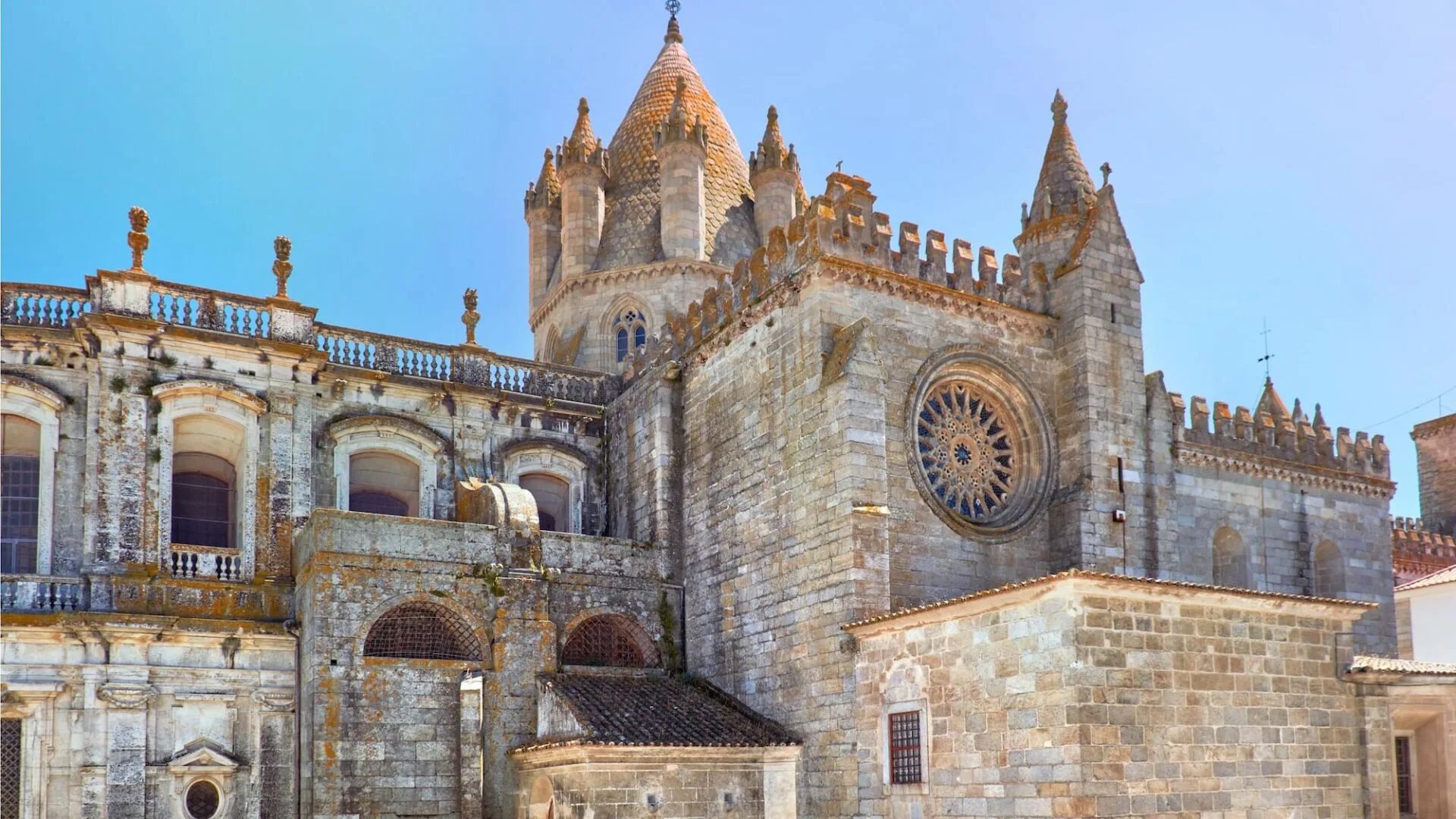
In most European cities, Roman ruins, a Gothic cathedral, and a Renaissance aqueduct would be in separate museum districts with separate admission tickets. In Évora, all three are within a 10-minute walk of each other – and all are within the same UNESCO-protected historic centre, classified in 1986. The Roman Temple dates to the 1st century AD. The Cathedral of Évora was begun in 1186. The Água de Prata Aqueduct was built 1532–1537. The city has been continuously inhabited for over 2,000 years.
The historic centre is also a working city – students from the University of Évora (founded 1559), residents, and market traders share the same streets as the monuments. The population of the walled centre is approximately 4,500.
The main square, Praça do Giraldo, is named after Geraldo Sem Pavor – “Geraldo the Fearless” – who reconquered Évora from the Moors in 1165 by scaling the walls at night. The marble fountain in the centre (Chafariz) was completed in 1571 by Francisco de Arruda. During the Inquisition, public executions were held in this square.
Templo Romano de Évora
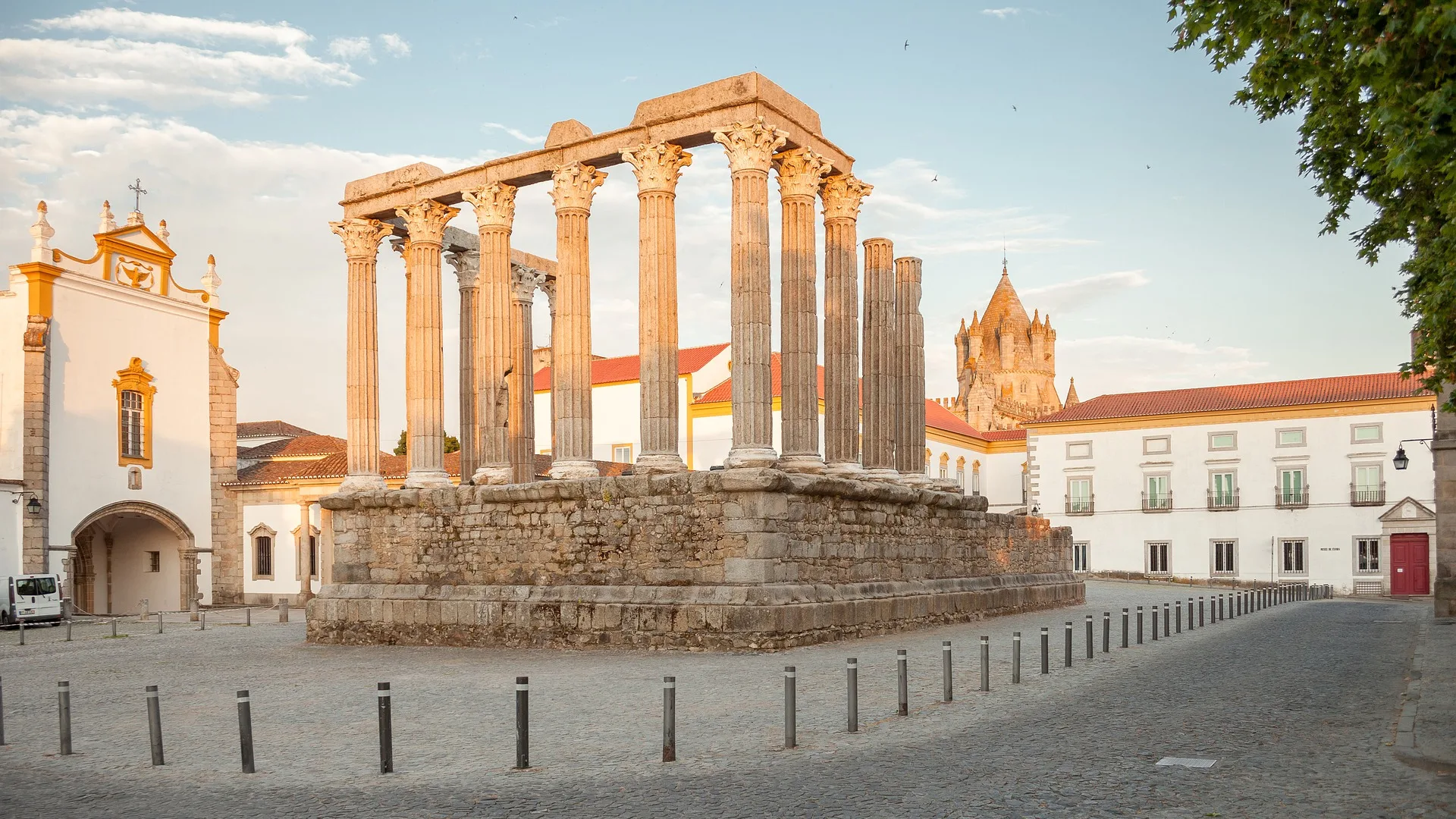
The Roman Temple of Évora is not dedicated to Diana. That attribution was made in the 17th century by a historian who misidentified the column style – the actual deity the temple honours is unknown. What is documented: the temple was built in the 1st century AD, most likely during the reign of Augustus or one of his immediate successors; it served as the administrative and religious centrepiece of Liberalitas Julia, the Roman name for Évora; and 14 of its original Corinthian columns are still standing, making it the best-preserved Roman temple on the Iberian Peninsula.
Adjacent to the temple is the Palace of D. Manuel I (Palácio de D. Manuel) – a 15th–16th century royal palace, now partially ruined. The surviving Manueline arches and windows are visible from the exterior. The style shift from Roman to Manueline – 1,400 years of architecture side by side – is visible from a single viewpoint.
Capilla de los Huesos – Igreja de São Francisco
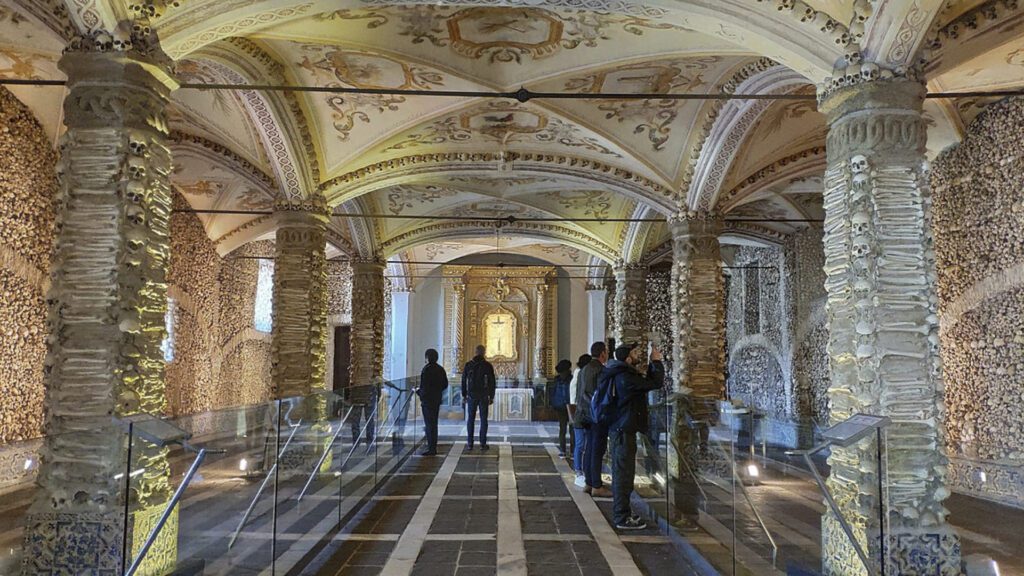
The inscription carved above the entrance reads: Nós ossos que aqui estamos pelos vossos esperamos. “We, the bones that are here, await yours.”
The Chapel of Bones was built in the early 17th century by Franciscan friars using bones and skulls exhumed from overcrowded Évora cemeteries. Approximately 5,000 individuals are represented — skulls and femurs cover the walls and pillars from floor to ceiling. The chapel is approximately 18 metres long and 11 metres wide.
The building housing the chapel is the Igreja de São Francisco (Church of St. Francis), a late Gothic and early Manueline structure completed around 1510. Entry to the chapel requires a separate ticket purchased at the gate. No advance booking. Queues in peak season (June–August) can reach 15–30 minutes.


Monsaraz Castle and the Alqueva View
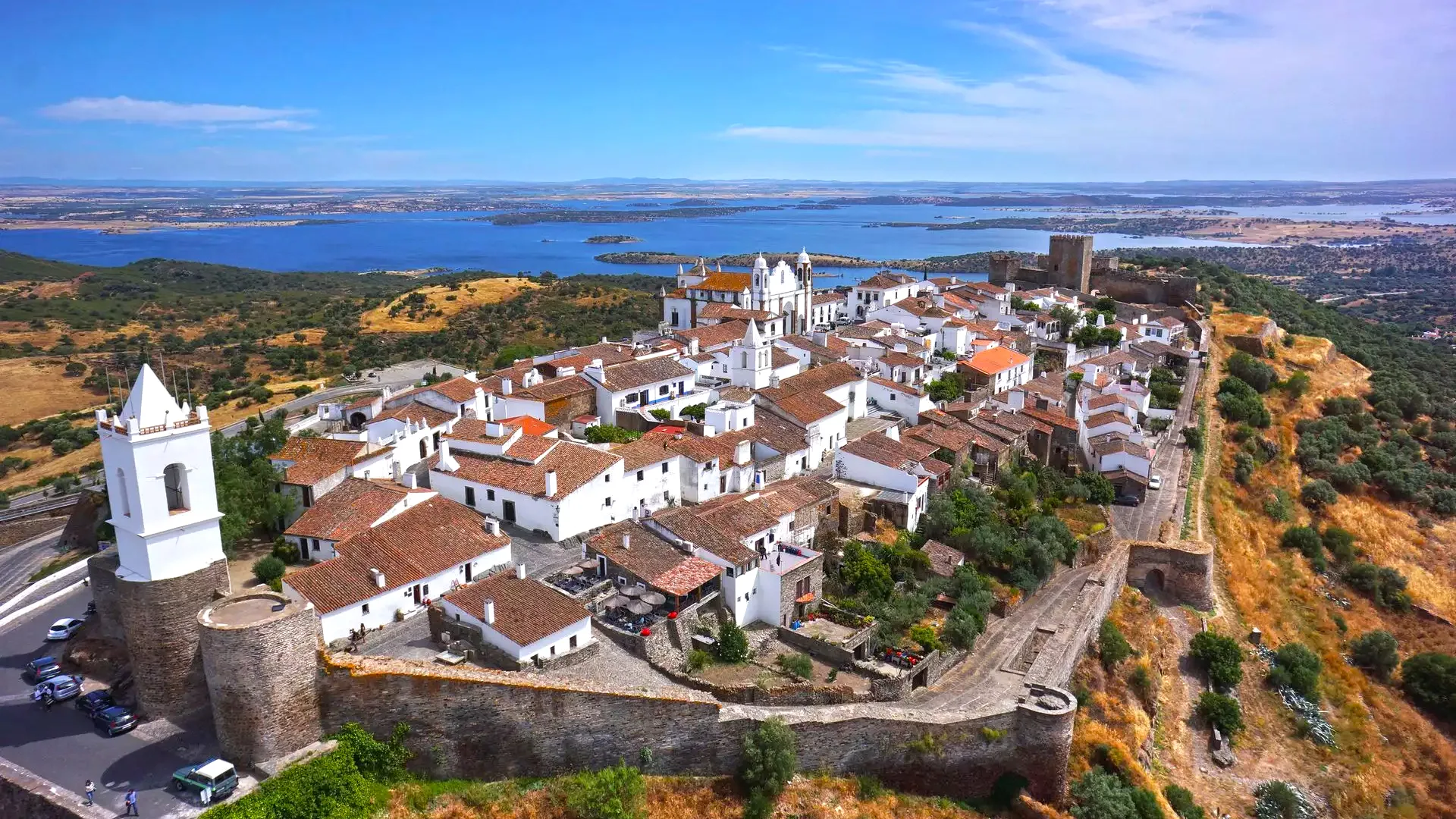
Monsaraz is a medieval walled village built on a quartzite ridge at 342 metres. The current castle was built by the Portuguese in the 13th century – after 1167, when Geraldo Sem Pavor (the same figure who reconquered Évora) took Monsaraz from the Moors – on the foundations of earlier Moorish defensive works. The walls and tower were reinforced in the 14th century.
The view from the castle walls faces east over the Alqueva reservoir. The Alqueva dam was completed in 2002, flooding 250 km² of the Guadiana River valley in the Alentejo. At 250 km², it is the largest artificial lake in Western Europe. Before the dam, this was farmland and the Guadiana riverbed. The village of Aldeia da Luz, which had been inhabited since at least the Roman period, was submerged – its church, cemetery, and houses were disassembled and rebuilt stone by stone in a new location on higher ground before flooding began. The rebuilt village opened in 2002 as the water rose.
Monsaraz itself is designated one of the 12 Historic Villages of Portugal (Aldeias Históricas) and has received certification as a Starlight Tourism Destination for its low light pollution and night-sky visibility – though this is relevant for overnight stays, not day tours.
Regreso a Lisboa
Tras un día inmerso en historia, cultura y artesanía, iniciamos el relajante regreso a Lisboa. Disfruta por última vez de los paisajes ondulados del Alentejo mientras te llevamos de vuelta a tu alojamiento — terminando el viaje con comodidad y cuidado.
El itinerario está cuidadosamente diseñado para ofrecer una experiencia rica y variada. Sin embargo, la elección es siempre tuya — disfruta este viaje a tu propio ritmo, con la comodidad de un entorno privado o en grupo reducido.
Yellow Cab TT Tours – siempre a su servicio, con la calidad a la que nuestros clientes están acostumbrados.
Qué incluye
- 8 horas con conductor-guía licenciado privado
- Vehículo privado con aire acondicionado (hasta 8 pasajeros)
- Recogida y regreso en hotel/apartamento en Lisboa, Sintra, Cascais, Estoril o en cualquier lugar de la Costa del Estoril
- Seguro obligatorio para pasajeros
- Combustible, peajes y estacionamiento en todas las paradas
No incluido
- Comidas y bebidas
- Entradas a monumentos
- Consejos (opcionales y apreciados)
Precios de los tours
Los precios son por vehículo privado (no por persona)
Contáctanos y Reserva tu Tour
Mejor época del año para este tour
- Marzo–mayo (recomendado):
Temperatures 15–22°C. Spring is generally considered the best season for this itinerary, with wildflowers across the Alentejo plains and cork oak landscapes at their greenest. Monument access is straightforward, and visitor numbers remain moderate. Excellent conditions for walking the walls and castle grounds of Monsaraz. - June–mid-September:
Fully operational but hot. Summer queues at the Chapel of Bones are common, although the guide adjusts timings where possible. The Alqueva Reservoir is usually at its most photogenic during this period, particularly when viewed from the Monsaraz walls. - Octubre–Noviembre:
Temperatures 15–24°C with significantly lower visitor numbers. The Chapel of Bones is often queue-free. - Diciembre–Febrero:
Temperatures generally range 6–14°C. All major attractions remain open. Monsaraz is often exceptionally quiet, while Évora’s historic centre can be explored without crowding. Because daylight hours are shorter, the timing of the Monsaraz visit should be coordinated with the guide to ensure optimal visibility and views.
Preguntas frecuentes
Lo que dicen nuestros huéspedes
What is Reguengos de Monsaraz?
What is Alqueva?
How much time do we have in Évora?
Are the monument tickets included?
¿El precio es por persona o por vehículo?
¿Qué idiomas habla el guía?
¿Cuál es la política de cancelación?
También te puede interesar
Private Évora Tour from Lisbon - Roman Temple & Chapel of Bones
Full day in Évora: more time at each monument, Almendres Cromlech optional extension. For those who want Évora in depth.
Excursión Privada Évora + Setúbal
Évora in the morning, Arrábida Natural Park beaches in the afternoon — contrasting Alentejo plains with Atlantic coastline.
Private Lisbon Tour
Full-day private tour of Lisbon: Alfama, Belém, Mouraria. For those wanting the capital before or after the Alentejo.
