Alentejo Wine Tour from Lisbon | Évora, Cork & Vinho de Talha

Duration

8 Hours

Tour Type

Private

Group Size

Máx. 8px/Van

Pickup & Drop-off

Lisbon city centre (outside centre on request)

Main highlights

Alentejo Wine Region, The Cork Factory, Évora - UNESCO World Heritage City

Price

From €330 per private vehicle (see pricing below)

Rated 5/5 on TripAdvisor.
based on +3.000 reviews

Tour Overview

This private wine tour from Lisbon reaches the Alentejo DOC wine region in approximately 1.5 hours (130 km east via the A6 motorway). The Alentejo accounts for approximately 45% of all bottled wine sold in Portugal and is the only region in the country still producing Vinho de Talha — wine fermented in Roman-era clay amphorae (talhas de barro, 500–1,000 litres each). The tour is 100% private: your group, your vehicle, your licensed driver-guide. Wine add-on level (+€35/+€55/+€85 per person) is selected at booking. Options 2 and 3 include a cork factory visit; Option 3 adds an olive oil tasting.

Why Travellers Choose This Private Tour

  • Vinho de Talha – the Alentejo is the only region in Portugal still producing wine in Roman clay amphorae at commercial scale; zero competitor tour pages explain this winemaking technique.
  • Cork factory visit (Options 2 and 3) – no other wine day tour operator in Portugal combines a winery visit with cork processing in a single itinerary.
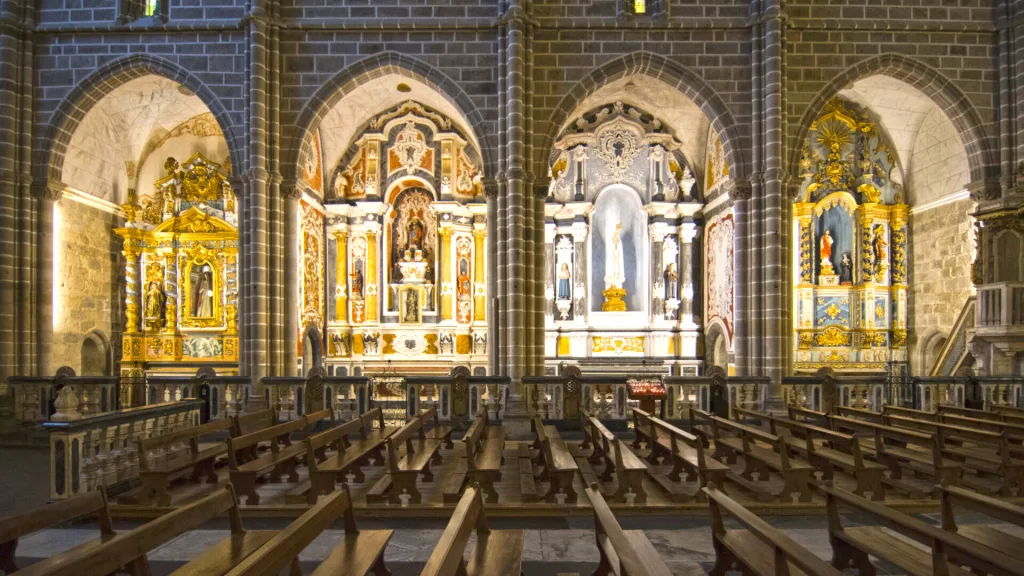
  • UNESCO Évora (Roman Temple 1st century AD, Cathedral founded 1186, Chapel of Bones with approximately 5,000 individuals) combined with the wine experience in a single 8-hour day.

Tips for This Tour

Harvest window (August–October): book 5–7 days in advance. Winery schedules shift with picking activity. This is the only window when Vinho de Talha fermentation is actively underway in clay amphorae – if this is a priority, book specifically for September–October and mention it when booking.

Évora has paid entry for some monuments. The Roman Temple exterior is free. The Cathedral and the Chapel of Bones charge entry – confirm current rates on arrival. Allow 30–40 minutes for both.

July and August: bring water and sun protection. The Alentejo is the hottest region in Portugal; temperatures regularly exceed 40°C near the Spanish border. The winery visit is scheduled for 09:30–11:00, the coolest part of the day. Wine cellars are approximately 14–16°C regardless of outside temperature.

Choose Option 3 if olive oil is part of your interest. The Alentejo DOP olive oils are produced in the same landscape as the wine. Option 3 is the only option that includes an olive oil tasting.

Children are welcome. Child seats available on request – provide age and weight when booking. The Chapel of Bones has a separate entry fee and requires parental judgment on appropriateness for younger children.

The Alentejo Wine Region – 45% of Portugal’s Bottled Wine

The Alentejo is Portugal’s largest wine-producing region by volume. It accounts for approximately 45% of all bottled wine sold in Portugal, despite covering only about 30% of the country’s wine-growing area. The region extends across southeastern Portugal from the Spanish border to the Atlantic slope, with eight official sub-regions: Borba, Évora, Granja-Amareleja, Moura, Portalegre, Redondo, Reguengos, and Vidigueira.


The climate is continental: summer temperatures regularly exceed 40°C and in extreme years reach 45°C near the Spanish border. Annual rainfall is typically under 600 mm, concentrated in winter. This heat and dryness produces powerful, full-bodied red wines with high alcohol levels and concentrated fruit. The dominant red varieties are Aragonês (the same grape as Tempranillo in Spain, but performing differently here due to soil and climate), Alicante Bouschet (a French hybrid, unusually having red-coloured flesh rather than just red skin — it produces deeply coloured, structured wines), and Trincadeira. For whites: Antão Vaz, Arinto, and Roupeiro.


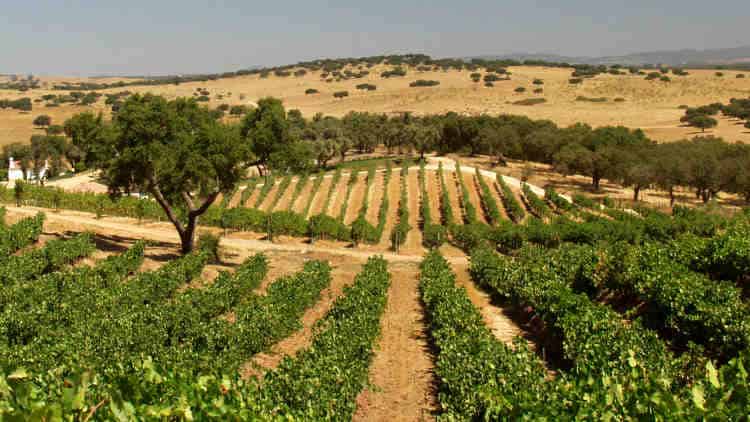
The Alentejo also accounts for approximately 50% of the world’s cork supply. Cork oak (Quercus suber) forests cover an estimated 556,000 hectares of the Alentejo region — approximately 75% of Portugal’s total cork oak area of 736,000 hectares. Portugal supplies approximately 50% of global cork production. The cork forest has a distinctive visual identity: stripped trunks with exposed reddish-brown bark in the lower metre or two, re-growing the protective outer bark every 9–10 years. Cork oak trees can live 200 years and be harvested approximately 15–16 times during their life.

Vinho de Talha – The Roman Amphora Wine

Vinho de Talha is the Alentejo’s most distinctive wine style. It is fermented in clay amphorae called talhas de barro — vessels made of fired clay with a pointed base, embedded in the earth of the cellar floor. Individual talhas range in size from 100 to 2,000 litres; working production talhas typically hold 500-1,000 litres (approximately 130-260 gallons).

The winemaking technique is as follows: grapes are crushed and placed in the talha together with skins, seeds, and stems. Fermentation begins naturally from native yeasts on the grape skins. The wine remains on the skins for approximately one month – on the feast of São Martinho (11 November), traditionally the moment when the wine is ready to drink. The wine is then drawn off from the talha and bottled directly, with no barrel ageing.

This process is documented in the region from Roman times. The Roman agronomist Columella described clay amphora winemaking in *De Re Rustica* (1st century AD). The Alentejo is the only region in Portugal – and one of very few in Europe – still practicing Vinho de Talha production at commercial scale today.

The resulting wines are distinctive: typically reddish-amber in colour (from extended skin contact), with a texture and flavour quite different from conventionally made wines. Tannins are present but soft from the clay contact. Mineral and slightly oxidative notes are common.

We include at least one Vinho de Talha in the tastings for this tour wherever the producer offers it. Not all Alentejo wineries make Vinho de Talha – it depends on the producer.

&

What You Can See

The Alentejo Wine Estates

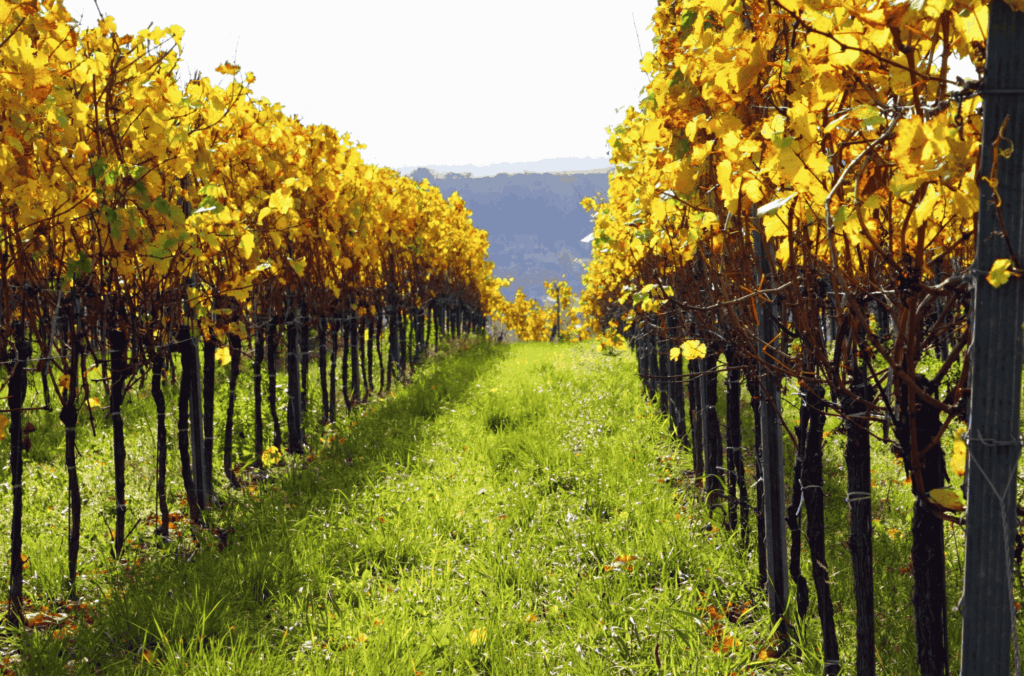
The main wine estate areas on this route are around Évora, Reguengos de Monsaraz, Redondo, and Borba – a zone between 100 and 200 km east of Lisbon. The landscape is characterised by gently rolling plains, cork oak and olive groves, and occasional medieval towns on hilltops. The drive from Lisbon (A6 motorway via Vendas Novas or via the A2 and then east) is approximately 1.5 hours.
We work with several partner wineries in the Alentejo region and select based on your booking date and availability. We do not publicly name specific producers. Your guide confirms the winery before your tour. The winery visit is the centrepiece of the day and takes approximately 1 to 1.5 hours.

The Cork Factory (Options 2 and 3)
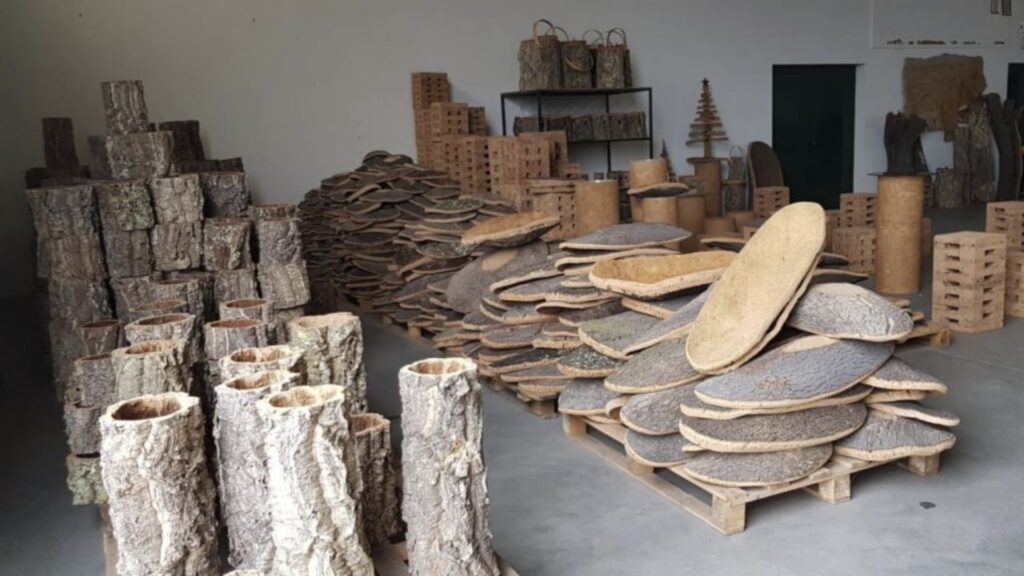
Options 2 and 3 include a visit to a cork processing facility in the Alentejo. Cork processing involves several steps: harvesting the outer bark from cork oak trees (every 9–10 years, from trees at least 25 years old), boiling the planks in large tanks to clean and soften them (approximately 1 hour at 100°C), stamping or punching the stoppers from the planks, and grading by quality. A single large cork oak tree produces approximately 40–60 kg of cork per harvest.
Portugal’s cork production is approximately 100,000 tonnes per year, representing over 50% of global output. Synthetic wine closures have increased market share since the 1990s, but natural cork still accounts for approximately 70% of global wine closures as of the early 2020s.
We do not publicly name the specific facility – we work with partners based on availability. Your guide confirms details before the tour.

Évora – UNESCO World Heritage City

Évora is a walled city 130 km east of Lisbon and the capital of the Alentejo region. It was inscribed on the UNESCO World Heritage List in 1986. Population of the municipality: approximately 57,000.


Roman Temple of Diana: Built in the 1st century AD (Corinthian order, 14 surviving columns, originally part of the Roman forum of Liberalitas Julia). The temple is one of the best-preserved Roman temples on the Iberian Peninsula. Despite the popular name “Temple of Diana,” the deity it served is not confirmed by any historical inscription – the name dates to a 17th-century misidentification.


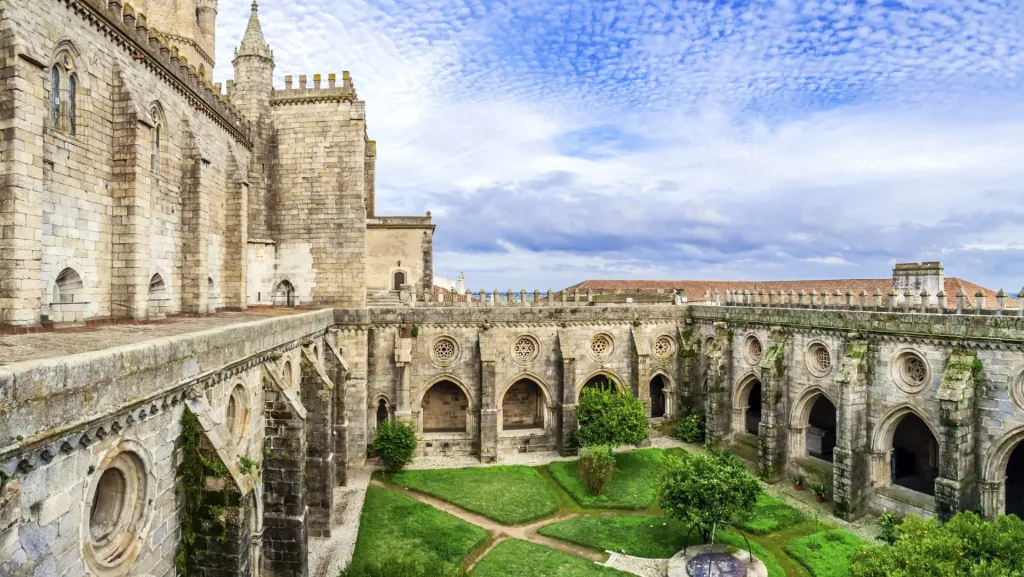
Évora Cathedral (Sé de Évora): Founded in 1186 under King Sancho I of Portugal. The cathedral is the largest medieval cathedral in Portugal in terms of ground plan. Its cloister dates to the 14th century. The portal retains 13th-century Gothic sculpture including the apostle figures in the archivolts – among the finest Romanesque-Gothic stone carvings in the country.


Chapel of Bones (Igreja de São Francisco): Built in the 16th–17th century by Franciscan monks, the interior walls and columns of the ossuary chapel are lined with the bones and skulls of approximately 5,000 individuals, exhumed from some 43 cemeteries in and around Évora to free up overcrowded burial grounds. The inscription above the entrance: “Nós ossos que aqui estamos, pelos vossos esperamos” (“We bones here await yours”).


Évora is approximately 30–40 minutes east of the main Alentejo wine estates on the route.

The Wine Experience

The wine experience is a dedicated winery visit in the Alentejo, lasting approximately 1 to 2 hours, typically in the morning before Évora. We work with several partner wineries in the Alentejo region and select based on your booking date and harvest schedule. The specific producer varies with availability.


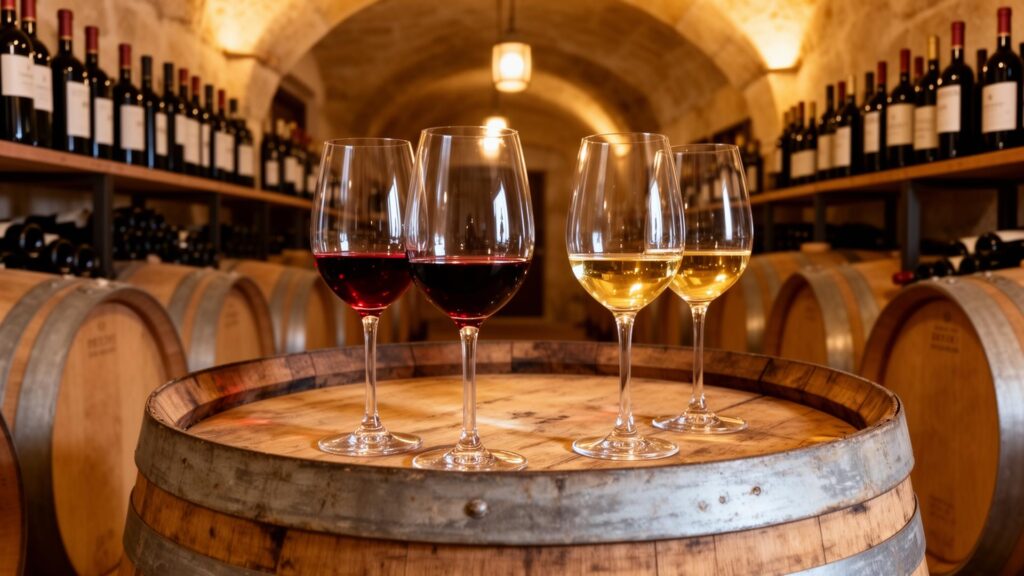
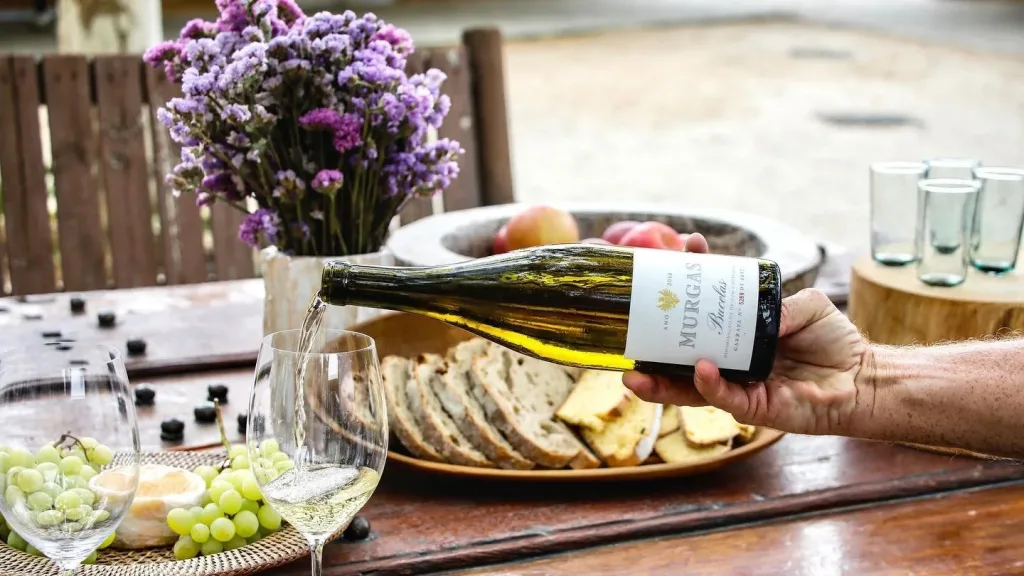
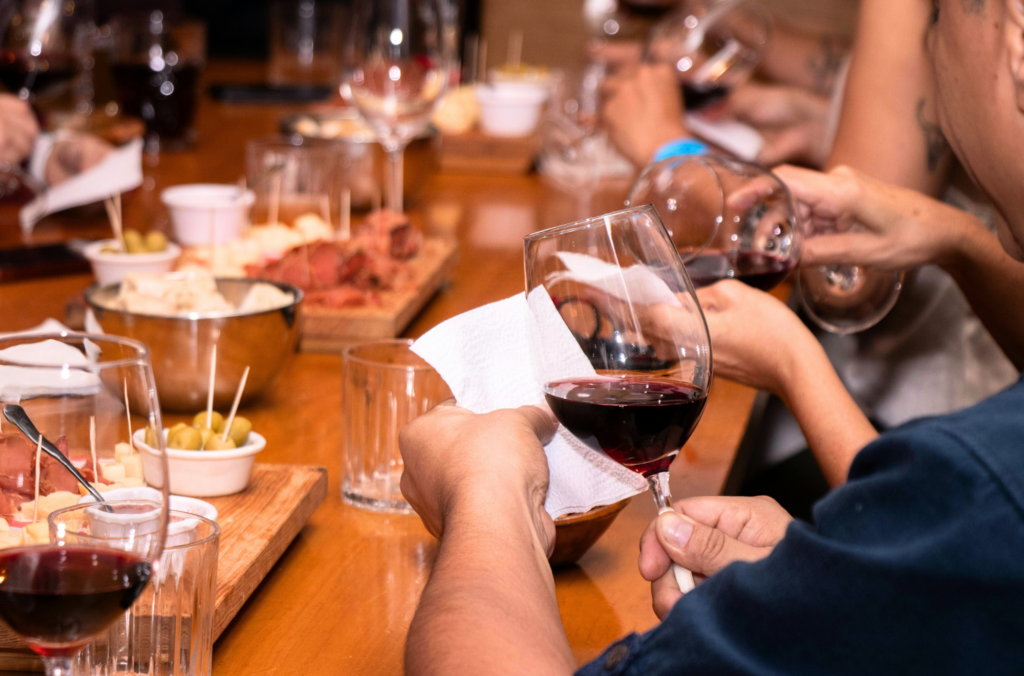
Option 1 (€35/person): Tasting at a local wine shop in the Alentejo area. You’ll try 3–4 wines (typically an Aragonês red, a white such as Antão Vaz, and a Vinho de Talha if available) with an olive oil tasting (Alentejo produces DOP olive oils including Moura DOP and Azeite do Alentejo DOP). Duration: approximately 45–60 minutes.


Option 2 (€55/person): Full winery visit -cellar tour, guided tasting of 4–6 wines, plus a visit to a cork processing facility. See the cork oak bark processing, stamping, and grading. Duration: approximately 1.5 hours total (winery + cork factory).


Option 3 (€85/person): The complete Alentejo experience – winery cellar tour, guided tasting of 5–7 wines including a premium reserve, cork factory visit, plus an olive oil tasting with regional bread and accompaniments. The Alentejo produces multiple DOP olive oils including Moura DOP, Alentejo DOP, and Azeite do Ribatejo. Duration: approximately 1.5–2 hours total.

&

What’s Included

Not included:

Prices

Alentejo Wine Tour

Prices are per vehicle, not per person.

  • Up to 2 Pax €330
  • 3 to 4 Pax €420
  • 5 to 8 Pax €540

Free cancellation up to 24 hours before departure.

Cancellations within 24 hours of departure are non-refundable.

additional wine and tapas experiences

  • Option 1 +€35*

    Wine Tasting in a Local Wine Shop + Olive Oil Tasting

  • Option 2 +€55*

    Visit a Wine Cellar & Wine Tasting + Visit a Cork Factory

  • Option 3 +€85*

    Visit a Wine Cellar & Wine Tasting + Visit a Cork Factory + Olive Oil Tasting

*Price per person 

Example: 4 people, Alentejo Wine Tour + Option 2, €420 (vehicle) + 4 × €55 =€640 total = €160 per person 

Contact Us and Book Your Tour

Best Time of Year for This Tour

This tour runs year-round. The wine experience is available in all seasons. Each period offers a different view of the Alentejo production cycle.

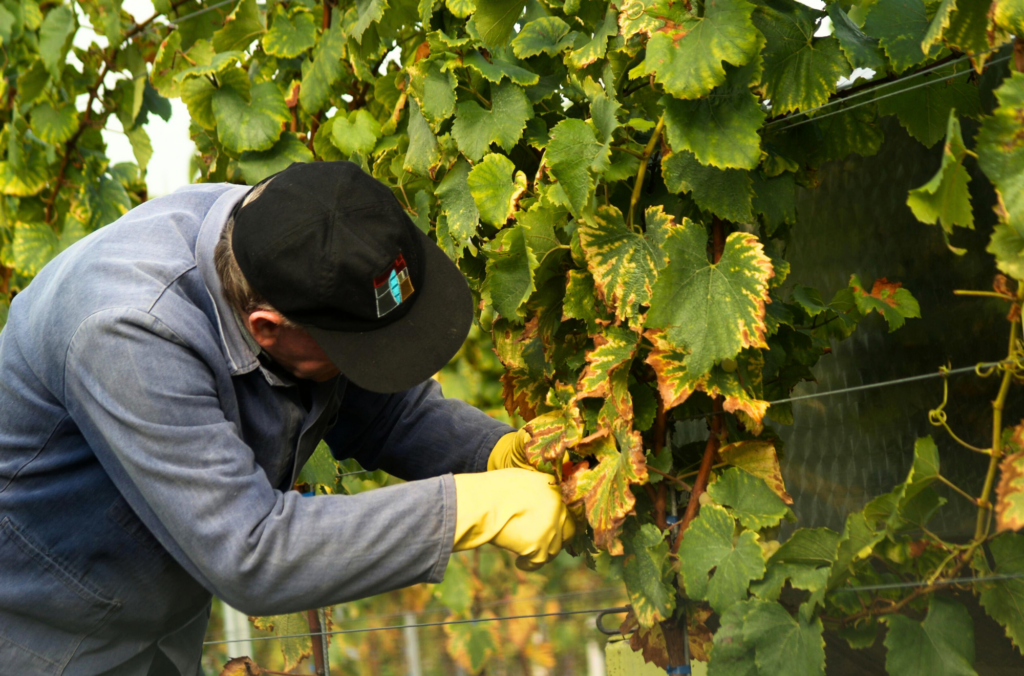
August–October (harvest window): The Alentejo harvest begins mid-August for white varieties (Antão Vaz, Arinto) and runs through October for reds (Aragonês, Alicante Bouschet, Trincadeira). This is 3–4 weeks earlier than northern Portugal because of the continental heat. Winery visits during this period include active fermentation in tanks – some producers still use lagar (foot-treading) for premium reds. Vinho de Talha fermentation starts in September: grapes are crushed directly into clay amphorae, fermentation runs on native yeasts for approximately one month. Book 5–7 days in advance — harvest schedules shift weekly.

October–November (Vinho de Talha season): The feast of São Martinho (11 November) is the traditional moment when the year’s Talha wine is first tasted. Winery visits in October–November offer the best chance of tasting a fresh, just-made Talha wine alongside a previous bottled vintage – the only time of year when both stages are simultaneously accessible at the same producer.

May–July (cork harvest): Cork oak bark is stripped between approximately late May and early July from trees that have not been harvested in the previous 9 years. A tree must be at least 25 years old before first harvest. If your tour falls during this window, you may see stripping in progress in the cork oak forests on the drive. The vineyards are in active growth; cellar visits focus on the barrel-ageing room.

November–March (barrel room access): The vineyards are dormant. Alentejo reds spend 8–18 months in French or American oak before bottling – November through March is the period when the widest range of vintages in different ageing stages is simultaneously in barrel. The contrast between a 4-month-old red in a new barrel and a wine entering its final month before bottling is something your guide can illustrate in the cellar. Cellar visit schedules are at their quietest — extended tours more often possible than in peak season.

July–August (heat context): Temperatures regularly reach 40–45°C near the Spanish border. Winery cellars are typically 14–16°C year-round due to earth insulation – the cellar visit itself is unaffected. Departure at 08:30 puts you at the winery before 10:00. Antão Vaz, the main Alentejo white variety, paradoxically produces wines with natural freshness despite the heat – the relationship between extreme summer temperatures and wine character is part of what your guide explains.

Check other wine regions

If you would like to discover more wine experiences beyond Alentejo region, we invite you to explore other remarkable regions across Portugal. From the terraced vineyards to the sun-soaked plains, each destination offers its own unique flavours, landscapes and traditions.

Take a look at the wine experiences we have selected for you and continue exploring Portugal, one region and one glass at a time.

FAQ

Vinho de Talha is wine fermented in clay amphorae (talhas de barro) — vessels of fired clay holding 500–1,000 litres, embedded in the cellar floor. Grapes are crushed into the talha with skins and seeds; fermentation runs on native yeasts for approximately one month. The wine is drawn off and bottled directly with no barrel ageing. This technique is documented from Roman times. The Alentejo is the only region in Portugal still producing Vinho de Talha at commercial scale.
Options 2 and 3 include a visit to a cork processing facility. You’ll see the stages of cork production: harvested bark planks, the boiling process (1 hour at 100°C to clean and soften), and the stamping or punching of stoppers from the dried planks. Each harvested cork oak tree produces approximately 40–60 kg of cork per 9–10 year cycle.
Yes. Évora is the primary sightseeing stop. A UNESCO World Heritage City since 1986, it includes the Roman Temple of Diana (1st century AD, Corinthian order, 14 surviving columns), the Cathedral (founded 1186, largest medieval cathedral in Portugal), and the Chapel of Bones (16th–17th century, bones of approximately 5,000 individuals). Allow 1.5–2 hours for a focused walk.
We work with several partner wineries in the Alentejo region and select based on your booking date and availability. We do not publicly name specific producers. Your guide confirms the winery before the tour.
Expect Alentejo DOC reds (Aragonês, Alicante Bouschet, Trincadeira blend is typical) and a white (Antão Vaz or Arinto). If the producer makes Vinho de Talha, it is included in tastings for this tour. Option 3 includes a premium reserve selection. Exact wines depend on the producer.
Per vehicle: €330 (1–3 pax), €420 (4–5 pax), €540 (6–8 pax). Wine add-ons are per person: +€35, +€55, or +€85. Example: 4 people, Option 2 = €420 + 4×€55 = €640 total = €160/person.
Option 2 (+€55/person): cellar visit, tasting, cork factory. Option 3 (+€85/person): same as Option 2 plus an olive oil tasting with regional bread and accompaniments. The Alentejo produces several DOP olive oils (Moura DOP, Alentejo DOP). If olive oil interests you, Option 3 is worth the extra cost.
September–October (harvest): winery visits may include pressing observation; Vinho de Talha fermentation period. April–June: mild temperatures. July–August: very hot (40°C+) — early departure essential. November–March: cool, Évora uncrowded, cork forest green after autumn rain.
Yes. Child seats on request. The Alentejo heat in summer requires sun protection and water for all ages. Chapel of Bones charges a separate entry fee.
Free cancellation up to 24 hours before departure. Cancellations within 24 hours are non-refundable.

What Our Guests Say

Read what our guests say about Yellow Cab TT Tours on Tripadvisor – 3,372 reviews, rated 5.0/5.
Susan S
I can’t speak highly enough of the wonderful day trip we had. Paula, our guide, was everything we could have hoped for and more. The day was truly spectacular and one we will remember forever. Fabio snd Paula listened so carefully to what we wanted and made sure everything was perfect. This company is one of the best tour companies we’ve ever encountered anywhere. I highly recommend them.. you won’t be disappointed.
Priya O
Our tour guide, Pedro Alves, was an absolute amazing guy and made our day so very relaxing and interesting at the same time! We had a view of the most beautiful sights with explanations and the most wonderful lunch at his recommendation. Could not have asked for a better experience! Highly highly highly recommend!
Flyer06
We spent a wonderful day with Pedro Alves. Not only was he knowledgeable and friendly but we felt like he did everything he could to taylor our experience specifically to what we wanted. I highly recommend the tour and make sure to ask for Pedro!
Joel0628
What an amazing experience. We passed up Sintra to focus on Cascais and the coastline. It was STUNNING. What made it a forever memory was our guide, Paula. She greeted us like we were visiting family (whom she really liked) and was so warm, friendly, knowledgeable and accommodating that we would recommend her to anyone visiting Lisbon. She selected a restaurant for lunch that offered excellent food and service, coupled with stunning views of crashing waves. Thank you, Paula, my sister.
Mihai P
My wife and I went on a private tour for the first time. Originally we thought it was a bit expensive, but in the end it turned out that every euro was worth it. We liked the ocean view from Cabo da Roca and the visit to the castle in Sintra the most. Our companion, Catarina, provided the good mood and the very detailed explanations. We liked her from the very first moment, and we remain very grateful to her for contributing to an unforgettable trip. Thank you Catarina!

You may also be interested in:

Land Rover 4x4 Tours

Looking for a unique way to explore Portugal?
Hop on a 4x4 Land Rover and discover what most visitors never see!
Off-road Sintra, Cabo da Roca and Cascais in a private Land Rover Defender.

Sintra Wine Tasting Tour

Colares DOC winery + Sintra UNESCO + Cabo da Roca

Setúbal Wine Tasting Tour

Moscatel de Setúbal, azulejo factory, Arrábida Natural Park, 40 km south.