
Private Lisbon City Tour:
Alfama, Belém & Cristo Rei
São Jorge Castle - Moorish fortification at 100 m altitude, captured by King Afonso Henriques in 1147, royal palace until the 16th century. Jerónimos Monastery, Belém - construction 1501, UNESCO World Heritage Site 1983, tombs of Vasco da Gama and Luís de Camões.
- Explore Lisbon in comfort with a private, air-conditioned vehicle and a local driver-guide - exclusively for your group (up to 8 people).

Duration
8 Hours
Tour Type
Private
Group Size
Máx. 8px/Van
Pickup & Drop-off
Lisbon city centre (outside centre on request)
Main highlights
Parque das Nações, Alfama, Graça, Baixa, Chiado, Bairro Alto, Belém
Price
From €285 per private vehicle (see pricing below)

Tour Overview
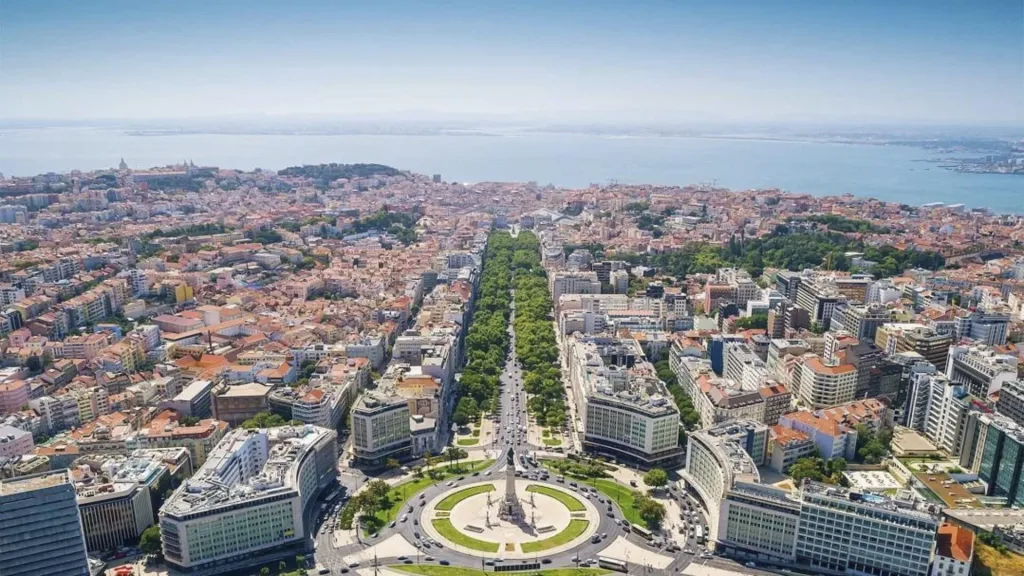
This private Lisbon city tour covers the full arc of the capital – from Parque das Nações in the east, built on a remediated industrial zone for the 1998 World Exposition, to the riverside district of Belém in the west: approximately 20 km of the city along the Tagus north bank. The day includes a crossing of the 25 de Abril Bridge (opened 6 August 1966, main span 1,013 m) to the south bank in Almada for panoramic views from Cristo Rei, consecrated on 17 May 1959, 110 m above the river. Conducted in a private air-conditioned vehicle with a licensed driver-guide in English, Spanish, French or Portuguese. Up to 8 passengers. The vehicle is exclusive to your group – no other travellers join. From €285 per vehicle. 28 Tripadvisor reviews, 5.0/5.
Why Choose a Private Lisbon Tour
A private tour means the vehicle, the guide, and the schedule are exclusively yours. You decide whether to spend more time in Alfama, whether to go up to the Cristo Rei observation platform, and whether to sit down for a proper lunch in Chiado or grab a pastel de nata in Belém. None of that is possible on a shared coach.
The tour covers seven distinct areas of Lisbon in chronological order – from the 8th-century Moorish Alfama to the 1998 Expo architecture of Parque das Nações – without leaving the capital. The full 8 hours stay within Lisbon and its immediate south bank. There are no motorway transfers to Sintra or Cascais. This is the tour for travellers who want to understand Lisbon itself.
At €285 per vehicle for up to 2 passengers and €470 for up to 8 passengers, the per-person cost for a group of four (€85/person) is comparable to many shared OTA Lisbon city tours – with an exclusive vehicle, a dedicated guide, and a flexible schedule.
For travellers who want to combine Lisbon with Sintra and Cascais in a single day, the Best Solution Tour covers the city highlights plus Cabo da Roca and Sintra (UNESCO 1995) from €310 per vehicle.
Tips For Visiting Lisbon
Book Jerónimos Monastery tickets in advance if entry is a priority. Jerónimos is Belém’s main monument (UNESCO 1983, construction 1501). Entry is €18/person. On peak summer days (July–August), queues to buy tickets on-site can add 30–45 minutes. Tickets are available at patrimoniocultural.gov.pt. The guide can advise whether the queue justifies buying in advance based on the day’s conditions.
Wear flat, closed-toe shoes for Alfama. Alfama’s streets are uneven basalt cobblestone (calçada portuguesa), narrow, and sloped. The walking distance during the miradouro section is approximately 1–1.5 km. Sandals and heels are not practical.
Cristo Rei elevator: book before you go. The observation platform at 82 m altitude (ticket €8/person) is the best single vantage point over Lisbon – the 25 de Abril Bridge, the full Tagus estuary, and the city skyline in one frame. On weekends and in summer, same-day tickets can sell out before 12:00. Book at cristorei.pt if this is a priority. If you only have the ticket for the grounds, the esplanade view is still significant.
June: Festas de Lisboa. The city’s main festival runs throughout June, culminating on 12–13 June (Santo António). Alfama and Mouraria are packed with sardine grills, paper decoration, and street performances. The atmosphere is unique and worth planning around — or avoiding, depending on the preference for crowds.
Timing at Belém. The Fábrica de Pastéis de Belém (opened 1837) has a queue on its street facade most mornings. The guide routes the group to arrive by 15:00, after the main tourist wave, making the queue manageable. The recipe – descended from the monks of Jerónimos – has never been published and is held by three people.
Sample Itinerary (Flexible)
This is a suggested plan. Exact timing may vary depending on traffic, weather and your preferences.
- 09:00 – Pickup (Lisbon city centre).
- Parque das Nações (quick riverside stop / photos).
- Alfama + viewpoints (Santa Luzia / Graça area).
- Castle/Cathedral surroundings (photo stop / short walk).
- Downtown (Baixa + Praça do Comércio + Chiado).
- Lunch break (not included).
- Cristo Rei viewpoint (across 25 de Abril Bridge).
- Belém (Jerónimos area + Belém Tower surroundings + Pastéis stop).
- 17:00 – Drop-off in Lisbon.
Highlights
Parque das Nações – Modern Lisbon by the Tagus River
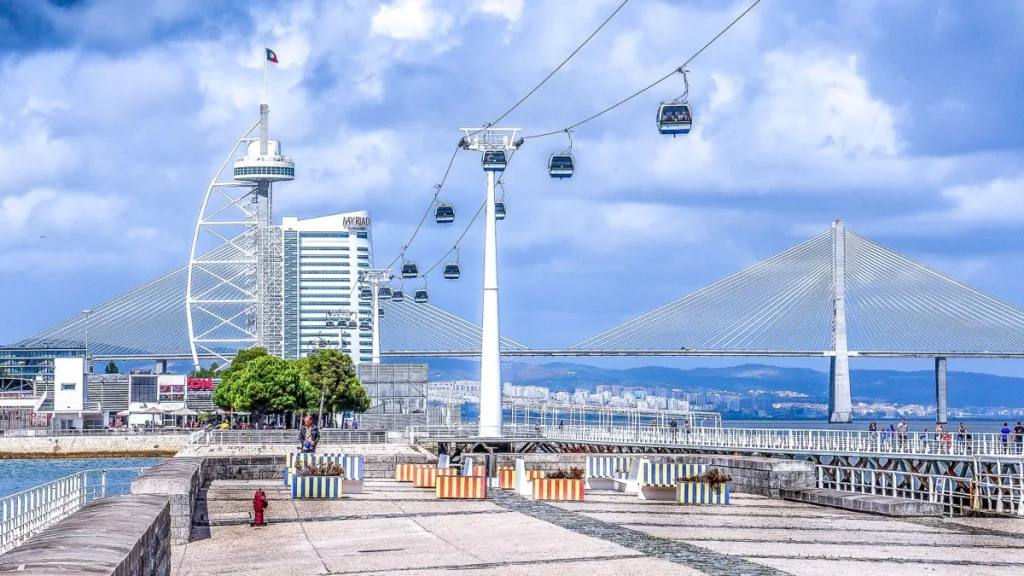
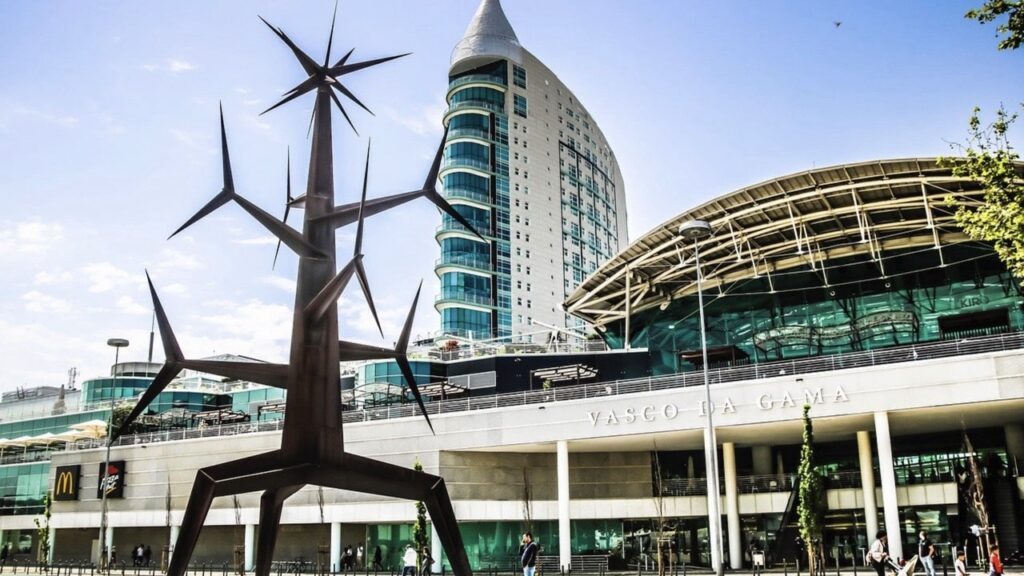
Parque das Nações is the eastern Tagus waterfront district built to host the Lisbon World Exposition 1998, themed “The Oceans: A Heritage for the Future.” The event ran May–September 1998 and attracted approximately 10 million visitors from 155 countries. The site was previously a heavily contaminated industrial and landfill zone; remediation of polluted soil took from 1994 to 1998.
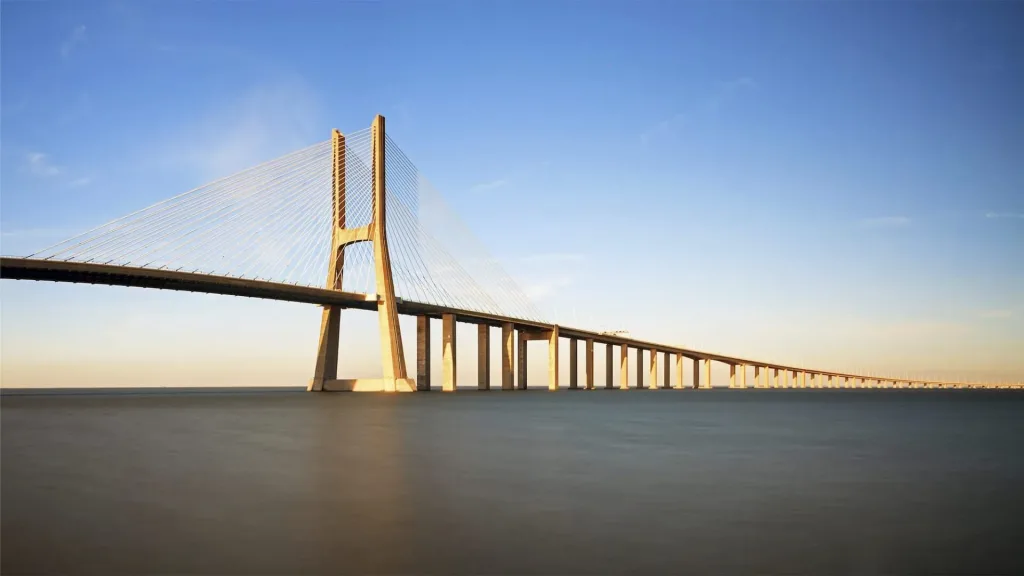
Vasco da Gama Bridge (Ponte Vasco da Gama): Opened 29 March 1998, specifically for Expo 98. Total length 17,185 m (17.2 km); 12,345 m over water. Crosses the Tagus at its widest point, approximately 12 km. Was the longest bridge in Europe at the time of opening.
Oriente Station (Estação do Oriente): Opened 1998. Designed by Spanish architect Santiago Calatrava. Serves as Lisbon’s main long-distance rail hub. The steel and glass canopy over the platforms is visible from the adjacent Expo grounds.
Oceanário de Lisboa: Opened 1998. Approximately 7 million litres of water. One of the largest aquariums in Europe. Entry tickets sold separately (€25-29/person depending on the time of the day). The tour drives past rather than entering, unless specifically requested.
Alfama – Old Lisbon & Traditional Streets
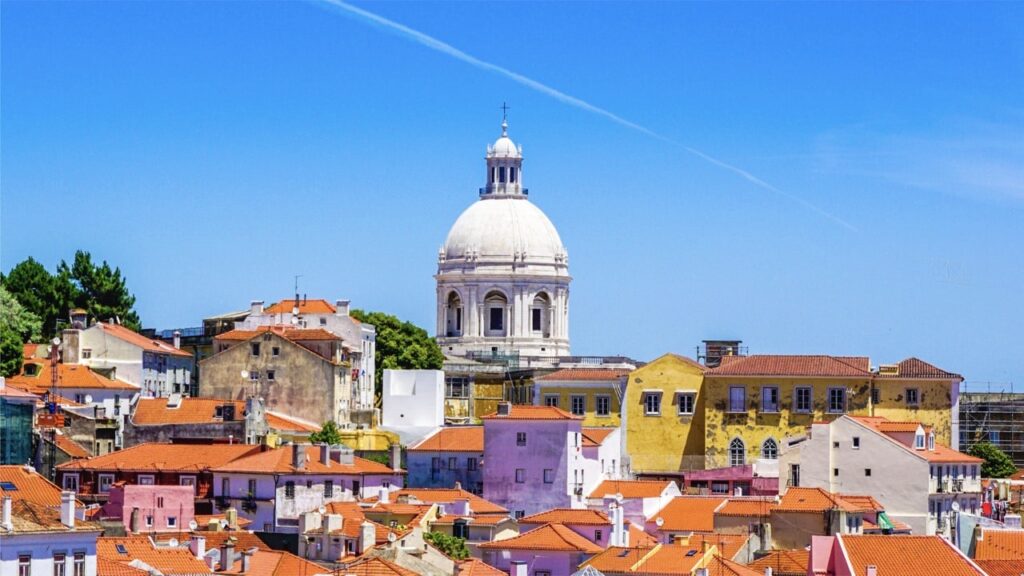
Alfama is Lisbon’s oldest surviving neighbourhood, with Moorish origins dating to the 8th–12th century. It survived the catastrophic earthquake of 1 November 1755 intact – unlike the Pombaline Baixa – because it sits on schist and granite bedrock rather than the alluvial soil of the lower city. The earthquake struck at 09:20 on All Saints’ Day; estimated magnitude 8.7–9.0. Approximately 60,000–100,000 people died across Lisbon, Setúbal, and the Algarve. Most deaths occurred in churches during morning Mass and in the fire and tsunami that followed.
Alfama’s street pattern remains medieval: irregular alleyways, steep stairways, whitewashed houses with azulejo tilework. Fado music – declared UNESCO Intangible Cultural Heritage in 2011 -originated in Lisbon’s Alfama and Mouraria districts in the early 19th century. Most casas de Fado charge €25–€40 for dinner and a performance.


Graça & Nossa Senhora do Monte – Best Viewpoints
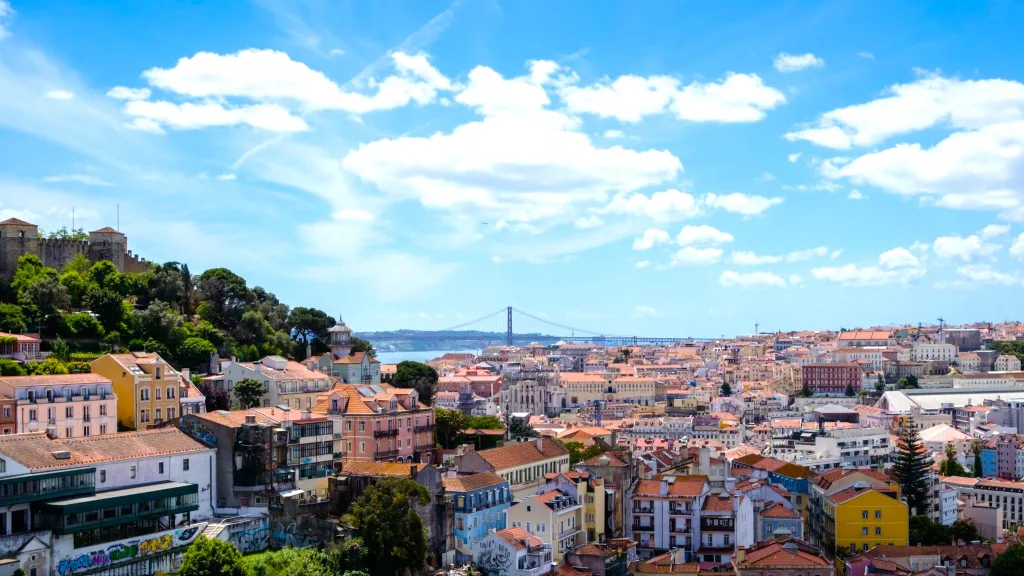
Head to Graça, perched on Lisbon’s highest hill.
Santa Luzia Viewpoint: A terrace with azulejo panels on the retaining wall depicting Lisbon’s Praça do Comércio before the 1755 earthquake and the 1147 Siege of Lisbon. Views over the Alfama rooftops toward the Tagus.
Nossa Senhora do Monte: The highest miradouro in Lisbon, at approximately 111 m altitude, in the Graça district. Views extend from Castelo de São Jorge to the Tagus estuary. The site is believed to have been a Celtic sacred location before Roman and Moorish occupation.

Sé Cathedral & São Jorge Castle
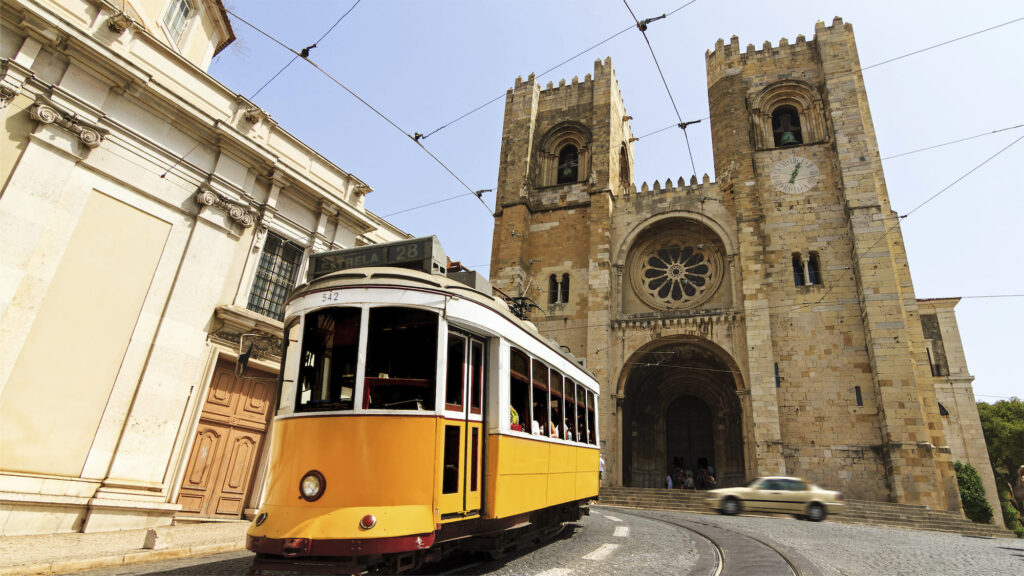
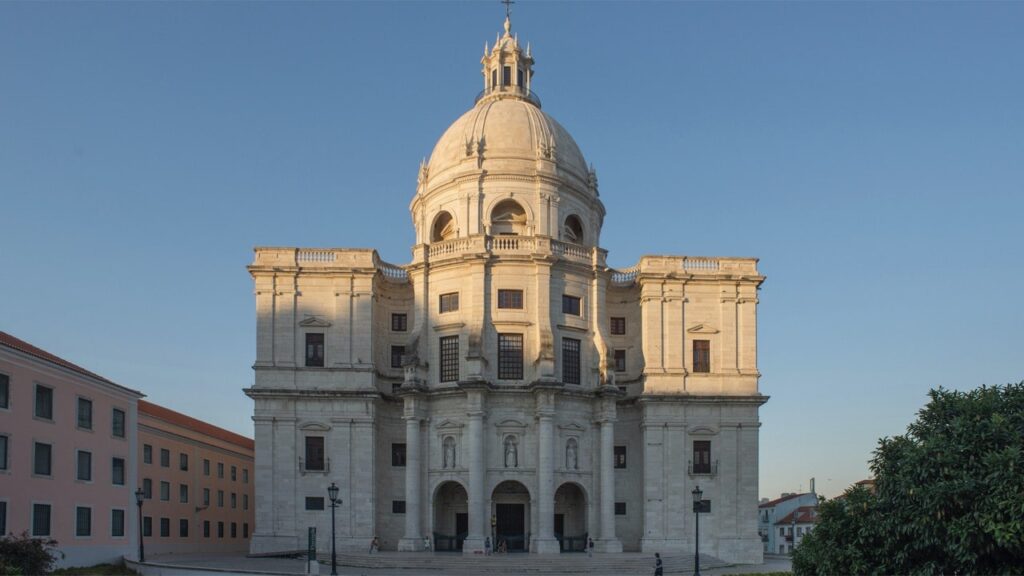
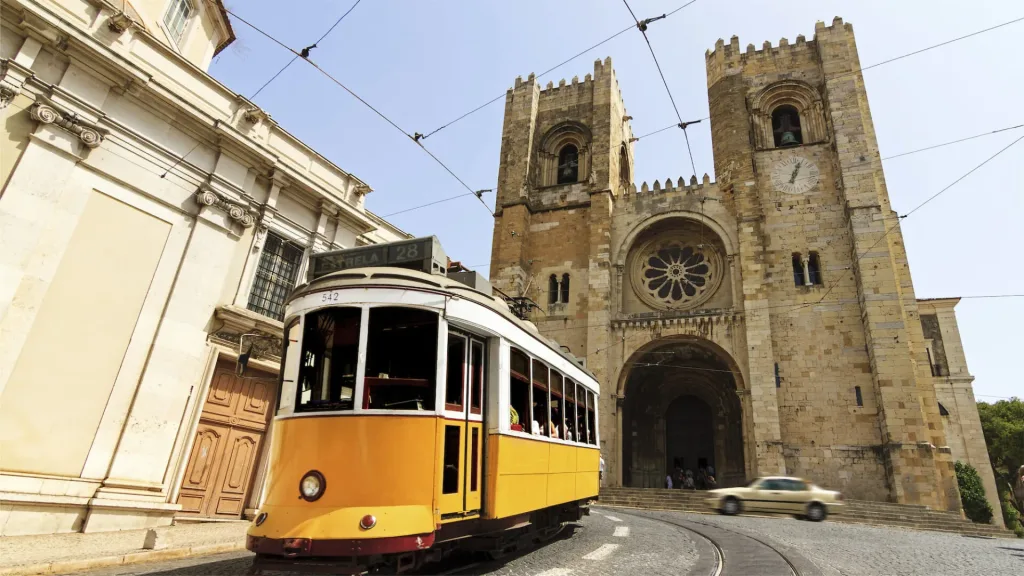
Sé de Lisboa (Cathedral): Founded in 1147 by King Afonso Henriques immediately after the Christian reconquest of Lisbon from the Moors, built on or adjacent to the site of the main mosque. The oldest church in Lisbon. The Romanesque nave dates from the original 12th-century construction; a Gothic ambulatory was added in the 14th century. The 1755 earthquake caused significant damage; the structure was restored multiple times. Archaeological excavations ongoing since 1990 have revealed layers from the Iron Age, Roman period (1st century BCE–4th century CE), and 9th-century Moorish occupation beneath the current foundations.
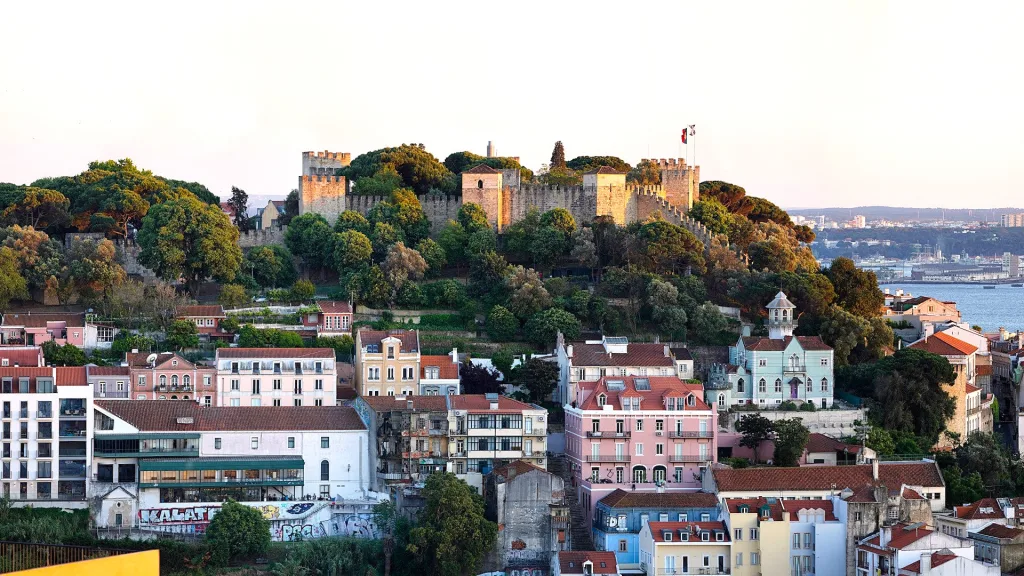
Castelo de São Jorge: Hilltop fortification at approximately 100 m altitude. Earliest occupation 1st century BCE (Lusitanian/Roman). Moorish rulers fortified the hill between the 8th and 11th centuries. Captured by King Afonso Henriques in 1147 during the Siege of Lisbon, alongside Flemish and English Crusaders en route to the Second Crusade. Used as the royal palace (Paço da Alcáçova) from the 14th to the 16th century. Classified National Monument. 11 towers currently survive. 360° panoramic views over the city. Entry €17/person.
![{"type":"elementor","siteurl":"https://yellowcabtttours.pt/wp-json/","elements":[{"id":"7e9e01e","elType":"widget","isInner":false,"isLocked":false,"settings":{"image":{"url":"https://yellowcabtttours.pt/wp-content/uploads/igreja-santa-antonio.webp","id":262867,"size":"","alt":"","source":"library"},"caption_source":"attachment","image_size":"large","image_custom_dimension":{"width":"","height":""},"caption":"","link_to":"none","link":{"url":"","is_external":"","nofollow":"","custom_attributes":""},"open_lightbox":"default","align":"","align_tablet":"","align_mobile":"","width":{"unit":"%","size":"","sizes":[]},"width_tablet":{"unit":"%","size":"","sizes":[]},"width_mobile":{"unit":"%","size":"","sizes":[]},"space":{"unit":"%","size":"","sizes":[]},"space_tablet":{"unit":"%","size":"","sizes":[]},"space_mobile":{"unit":"%","size":"","sizes":[]},"height":{"unit":"px","size":"","sizes":[]},"height_tablet":{"unit":"px","size":"","sizes":[]},"height_mobile":{"unit":"px","size":"","sizes":[]},"object-fit":"","object-fit_tablet":"","object-fit_mobile":"","object-position":"center center","object-position_tablet":"","object-position_mobile":"","opacity":{"unit":"px","size":"","sizes":[]},"css_filters_css_filter":"","css_filters_blur":{"unit":"px","size":0,"sizes":[]},"css_filters_brightness":{"unit":"px","size":100,"sizes":[]},"css_filters_contrast":{"unit":"px","size":100,"sizes":[]},"css_filters_saturate":{"unit":"px","size":100,"sizes":[]},"css_filters_hue":{"unit":"px","size":0,"sizes":[]},"opacity_hover":{"unit":"px","size":"","sizes":[]},"css_filters_hover_css_filter":"","css_filters_hover_blur":{"unit":"px","size":0,"sizes":[]},"css_filters_hover_brightness":{"unit":"px","size":100,"sizes":[]},"css_filters_hover_contrast":{"unit":"px","size":100,"sizes":[]},"css_filters_hover_saturate":{"unit":"px","size":100,"sizes":[]},"css_filters_hover_hue":{"unit":"px","size":0,"sizes":[]},"background_hover_transition":{"unit":"px","size":"","sizes":[]},"hover_animation":"","image_border_border":"","image_border_width":{"unit":"px","top":"","right":"","bottom":"","left":"","isLinked":true},"image_border_width_tablet":{"unit":"px","top":"","right":"","bottom":"","left":"","isLinked":true},"image_border_width_mobile":{"unit":"px","top":"","right":"","bottom":"","left":"","isLinked":true},"image_border_color":"","image_border_radius":{"unit":"px","top":"","right":"","bottom":"","left":"","isLinked":true},"image_border_radius_tablet":{"unit":"px","top":"","right":"","bottom":"","left":"","isLinked":true},"image_border_radius_mobile":{"unit":"px","top":"","right":"","bottom":"","left":"","isLinked":true},"image_box_shadow_box_shadow_type":"","image_box_shadow_box_shadow":{"horizontal":0,"vertical":0,"blur":10,"spread":0,"color":"rgba(0,0,0,0.5)"},"caption_align":"","caption_align_tablet":"","caption_align_mobile":"","text_color":"","caption_background_color":"","caption_typography_typography":"","caption_typography_font_family":"","caption_typography_font_size":{"unit":"px","size":"","sizes":[]},"caption_typography_font_size_tablet":{"unit":"px","size":"","sizes":[]},"caption_typography_font_size_mobile":{"unit":"px","size":"","sizes":[]},"caption_typography_font_weight":"","caption_typography_text_transform":"","caption_typography_font_style":"","caption_typography_text_decoration":"","caption_typography_line_height":{"unit":"px","size":"","sizes":[]},"caption_typography_line_height_tablet":{"unit":"em","size":"","sizes":[]},"caption_typography_line_height_mobile":{"unit":"em","size":"","sizes":[]},"caption_typography_letter_spacing":{"unit":"px","size":"","sizes":[]},"caption_typography_letter_spacing_tablet":{"unit":"px","size":"","sizes":[]},"caption_typography_letter_spacing_mobile":{"unit":"px","size":"","sizes":[]},"caption_typography_word_spacing":{"unit":"px","size":"","sizes":[]},"caption_typography_word_spacing_tablet":{"unit":"em","size":"","sizes":[]},"caption_typography_word_spacing_mobile":{"unit":"em","size":"","sizes":[]},"caption_text_shadow_text_shadow_type":"","caption_text_shadow_text_shadow":{"horizontal":0,"vertical":0,"blur":10,"color":"rgba(0,0,0,0.3)"},"caption_space":{"unit":"px","size":"","sizes":[]},"caption_space_tablet":{"unit":"px","size":"","sizes":[]},"caption_space_mobile":{"unit":"px","size":"","sizes":[]},"_title":"","_margin":{"unit":"px","top":"","right":"","bottom":"","left":"","isLinked":true},"_margin_tablet":{"unit":"px","top":"","right":"","bottom":"","left":"","isLinked":true},"_margin_mobile":{"unit":"px","top":"","right":"","bottom":"","left":"","isLinked":true},"_padding":{"unit":"px","top":"","right":"","bottom":"","left":"","isLinked":true},"_padding_tablet":{"unit":"px","top":"","right":"","bottom":"","left":"","isLinked":true},"_padding_mobile":{"unit":"px","top":"","right":"","bottom":"","left":"","isLinked":true},"_element_width":"","_element_width_tablet":"","_element_width_mobile":"","_element_custom_width":{"unit":"%","size":"","sizes":[]},"_element_custom_width_tablet":{"unit":"px","size":"","sizes":[]},"_element_custom_width_mobile":{"unit":"px","size":"","sizes":[]},"_grid_column":"","_grid_column_tablet":"","_grid_column_mobile":"","_grid_column_custom":"","_grid_column_custom_tablet":"","_grid_column_custom_mobile":"","_grid_row":"","_grid_row_tablet":"","_grid_row_mobile":"","_grid_row_custom":"","_grid_row_custom_tablet":"","_grid_row_custom_mobile":"","_flex_align_self":"","_flex_align_self_tablet":"","_flex_align_self_mobile":"","_flex_order":"","_flex_order_tablet":"","_flex_order_mobile":"","_flex_order_custom":"","_flex_order_custom_tablet":"","_flex_order_custom_mobile":"","_flex_size":"","_flex_size_tablet":"","_flex_size_mobile":"","_flex_grow":1,"_flex_grow_tablet":"","_flex_grow_mobile":"","_flex_shrink":1,"_flex_shrink_tablet":"","_flex_shrink_mobile":"","_element_vertical_align":"","_element_vertical_align_tablet":"","_element_vertical_align_mobile":"","_position":"","_offset_orientation_h":"start","_offset_x":{"unit":"px","size":0,"sizes":[]},"_offset_x_tablet":{"unit":"px","size":"","sizes":[]},"_offset_x_mobile":{"unit":"px","size":"","sizes":[]},"_offset_x_end":{"unit":"px","size":0,"sizes":[]},"_offset_x_end_tablet":{"unit":"px","size":"","sizes":[]},"_offset_x_end_mobile":{"unit":"px","size":"","sizes":[]},"_offset_orientation_v":"start","_offset_y":{"unit":"px","size":0,"sizes":[]},"_offset_y_tablet":{"unit":"px","size":"","sizes":[]},"_offset_y_mobile":{"unit":"px","size":"","sizes":[]},"_offset_y_end":{"unit":"px","size":0,"sizes":[]},"_offset_y_end_tablet":{"unit":"px","size":"","sizes":[]},"_offset_y_end_mobile":{"unit":"px","size":"","sizes":[]},"_z_index":"","_z_index_tablet":"","_z_index_mobile":"","_element_id":"","_css_classes":"","e_display_conditions":"","_element_cache":"","trp_language_restriction":"","trp_language_restriction_automatic_translation":"","trp_restricted_languages":"","trp_exclude_handler":"","trp_excluded_languages":"","motion_fx_motion_fx_scrolling":"","motion_fx_translateY_effect":"","motion_fx_translateY_direction":"","motion_fx_translateY_speed":{"unit":"px","size":4,"sizes":[]},"motion_fx_translateY_affectedRange":{"unit":"%","size":"","sizes":{"start":0,"end":100}},"motion_fx_translateX_effect":"","motion_fx_translateX_direction":"","motion_fx_translateX_speed":{"unit":"px","size":4,"sizes":[]},"motion_fx_translateX_affectedRange":{"unit":"%","size":"","sizes":{"start":0,"end":100}},"motion_fx_opacity_effect":"","motion_fx_opacity_direction":"out-in","motion_fx_opacity_level":{"unit":"px","size":10,"sizes":[]},"motion_fx_opacity_range":{"unit":"%","size":"","sizes":{"start":20,"end":80}},"motion_fx_blur_effect":"","motion_fx_blur_direction":"out-in","motion_fx_blur_level":{"unit":"px","size":7,"sizes":[]},"motion_fx_blur_range":{"unit":"%","size":"","sizes":{"start":20,"end":80}},"motion_fx_rotateZ_effect":"","motion_fx_rotateZ_direction":"","motion_fx_rotateZ_speed":{"unit":"px","size":1,"sizes":[]},"motion_fx_rotateZ_affectedRange":{"unit":"%","size":"","sizes":{"start":0,"end":100}},"motion_fx_scale_effect":"","motion_fx_scale_direction":"out-in","motion_fx_scale_speed":{"unit":"px","size":4,"sizes":[]},"motion_fx_scale_range":{"unit":"%","size":"","sizes":{"start":20,"end":80}},"motion_fx_transform_origin_x":"center","motion_fx_transform_origin_y":"center","motion_fx_devices":["desktop","tablet","mobile"],"motion_fx_range":"","motion_fx_motion_fx_mouse":"","motion_fx_mouseTrack_effect":"","motion_fx_mouseTrack_direction":"","motion_fx_mouseTrack_speed":{"unit":"px","size":1,"sizes":[]},"motion_fx_tilt_effect":"","motion_fx_tilt_direction":"","motion_fx_tilt_speed":{"unit":"px","size":4,"sizes":[]},"handle_motion_fx_asset_loading":"","sticky":"","sticky_on":["desktop","tablet","mobile"],"sticky_offset":0,"sticky_offset_tablet":"","sticky_offset_mobile":"","sticky_effects_offset":0,"sticky_effects_offset_tablet":"","sticky_effects_offset_mobile":"","sticky_anchor_link_offset":0,"sticky_anchor_link_offset_tablet":"","sticky_anchor_link_offset_mobile":"","sticky_parent":"","_animation":"","_animation_tablet":"","_animation_mobile":"","animation_duration":"","_animation_delay":"","_transform_rotate_popover":"","_transform_rotateZ_effect":{"unit":"px","size":"","sizes":[]},"_transform_rotateZ_effect_tablet":{"unit":"deg","size":"","sizes":[]},"_transform_rotateZ_effect_mobile":{"unit":"deg","size":"","sizes":[]},"_transform_rotate_3d":"","_transform_rotateX_effect":{"unit":"px","size":"","sizes":[]},"_transform_rotateX_effect_tablet":{"unit":"deg","size":"","sizes":[]},"_transform_rotateX_effect_mobile":{"unit":"deg","size":"","sizes":[]},"_transform_rotateY_effect":{"unit":"px","size":"","sizes":[]},"_transform_rotateY_effect_tablet":{"unit":"deg","size":"","sizes":[]},"_transform_rotateY_effect_mobile":{"unit":"deg","size":"","sizes":[]},"_transform_perspective_effect":{"unit":"px","size":"","sizes":[]},"_transform_perspective_effect_tablet":{"unit":"px","size":"","sizes":[]},"_transform_perspective_effect_mobile":{"unit":"px","size":"","sizes":[]},"_transform_translate_popover":"","_transform_translateX_effect":{"unit":"px","size":"","sizes":[]},"_transform_translateX_effect_tablet":{"unit":"px","size":"","sizes":[]},"_transform_translateX_effect_mobile":{"unit":"px","size":"","sizes":[]},"_transform_translateY_effect":{"unit":"px","size":"","sizes":[]},"_transform_translateY_effect_tablet":{"unit":"px","size":"","sizes":[]},"_transform_translateY_effect_mobile":{"unit":"px","size":"","sizes":[]},"_transform_scale_popover":"","_transform_keep_proportions":"yes","_transform_scale_effect":{"unit":"px","size":"","sizes":[]},"_transform_scale_effect_tablet":{"unit":"px","size":"","sizes":[]},"_transform_scale_effect_mobile":{"unit":"px","size":"","sizes":[]},"_transform_scaleX_effect":{"unit":"px","size":"","sizes":[]},"_transform_scaleX_effect_tablet":{"unit":"px","size":"","sizes":[]},"_transform_scaleX_effect_mobile":{"unit":"px","size":"","sizes":[]},"_transform_scaleY_effect":{"unit":"px","size":"","sizes":[]},"_transform_scaleY_effect_tablet":{"unit":"px","size":"","sizes":[]},"_transform_scaleY_effect_mobile":{"unit":"px","size":"","sizes":[]},"_transform_skew_popover":"","_transform_skewX_effect":{"unit":"px","size":"","sizes":[]},"_transform_skewX_effect_tablet":{"unit":"deg","size":"","sizes":[]},"_transform_skewX_effect_mobile":{"unit":"deg","size":"","sizes":[]},"_transform_skewY_effect":{"unit":"px","size":"","sizes":[]},"_transform_skewY_effect_tablet":{"unit":"deg","size":"","sizes":[]},"_transform_skewY_effect_mobile":{"unit":"deg","size":"","sizes":[]},"_transform_flipX_effect":"","_transform_flipY_effect":"","_transform_rotate_popover_hover":"","_transform_rotateZ_effect_hover":{"unit":"px","size":"","sizes":[]},"_transform_rotateZ_effect_hover_tablet":{"unit":"deg","size":"","sizes":[]},"_transform_rotateZ_effect_hover_mobile":{"unit":"deg","size":"","sizes":[]},"_transform_rotate_3d_hover":"","_transform_rotateX_effect_hover":{"unit":"px","size":"","sizes":[]},"_transform_rotateX_effect_hover_tablet":{"unit":"deg","size":"","sizes":[]},"_transform_rotateX_effect_hover_mobile":{"unit":"deg","size":"","sizes":[]},"_transform_rotateY_effect_hover":{"unit":"px","size":"","sizes":[]},"_transform_rotateY_effect_hover_tablet":{"unit":"deg","size":"","sizes":[]},"_transform_rotateY_effect_hover_mobile":{"unit":"deg","size":"","sizes":[]},"_transform_perspective_effect_hover":{"unit":"px","size":"","sizes":[]},"_transform_perspective_effect_hover_tablet":{"unit":"px","size":"","sizes":[]},"_transform_perspective_effect_hover_mobile":{"unit":"px","size":"","sizes":[]},"_transform_translate_popover_hover":"","_transform_translateX_effect_hover":{"unit":"px","size":"","sizes":[]},"_transform_translateX_effect_hover_tablet":{"unit":"px","size":"","sizes":[]},"_transform_translateX_effect_hover_mobile":{"unit":"px","size":"","sizes":[]},"_transform_translateY_effect_hover":{"unit":"px","size":"","sizes":[]},"_transform_translateY_effect_hover_tablet":{"unit":"px","size":"","sizes":[]},"_transform_translateY_effect_hover_mobile":{"unit":"px","size":"","sizes":[]},"_transform_scale_popover_hover":"","_transform_keep_proportions_hover":"yes","_transform_scale_effect_hover":{"unit":"px","size":"","sizes":[]},"_transform_scale_effect_hover_tablet":{"unit":"px","size":"","sizes":[]},"_transform_scale_effect_hover_mobile":{"unit":"px","size":"","sizes":[]},"_transform_scaleX_effect_hover":{"unit":"px","size":"","sizes":[]},"_transform_scaleX_effect_hover_tablet":{"unit":"px","size":"","sizes":[]},"_transform_scaleX_effect_hover_mobile":{"unit":"px","size":"","sizes":[]},"_transform_scaleY_effect_hover":{"unit":"px","size":"","sizes":[]},"_transform_scaleY_effect_hover_tablet":{"unit":"px","size":"","sizes":[]},"_transform_scaleY_effect_hover_mobile":{"unit":"px","size":"","sizes":[]},"_transform_skew_popover_hover":"","_transform_skewX_effect_hover":{"unit":"px","size":"","sizes":[]},"_transform_skewX_effect_hover_tablet":{"unit":"deg","size":"","sizes":[]},"_transform_skewX_effect_hover_mobile":{"unit":"deg","size":"","sizes":[]},"_transform_skewY_effect_hover":{"unit":"px","size":"","sizes":[]},"_transform_skewY_effect_hover_tablet":{"unit":"deg","size":"","sizes":[]},"_transform_skewY_effect_hover_mobile":{"unit":"deg","size":"","sizes":[]},"_transform_flipX_effect_hover":"","_transform_flipY_effect_hover":"","_transform_transition_hover":{"unit":"px","size":"","sizes":[]},"motion_fx_transform_x_anchor_point":"","motion_fx_transform_x_anchor_point_tablet":"","motion_fx_transform_x_anchor_point_mobile":"","motion_fx_transform_y_anchor_point":"","motion_fx_transform_y_anchor_point_tablet":"","motion_fx_transform_y_anchor_point_mobile":"","_background_background":"","_background_color":"","_background_color_stop":{"unit":"%","size":0,"sizes":[]},"_background_color_stop_tablet":{"unit":"%"},"_background_color_stop_mobile":{"unit":"%"},"_background_color_b":"#f2295b","_background_color_b_stop":{"unit":"%","size":100,"sizes":[]},"_background_color_b_stop_tablet":{"unit":"%"},"_background_color_b_stop_mobile":{"unit":"%"},"_background_gradient_type":"linear","_background_gradient_angle":{"unit":"deg","size":180,"sizes":[]},"_background_gradient_angle_tablet":{"unit":"deg"},"_background_gradient_angle_mobile":{"unit":"deg"},"_background_gradient_position":"center center","_background_gradient_position_tablet":"","_background_gradient_position_mobile":"","_background_image":{"url":"","id":"","size":""},"_background_image_tablet":{"url":"","id":"","size":""},"_background_image_mobile":{"url":"","id":"","size":""},"_background_position":"","_background_position_tablet":"","_background_position_mobile":"","_background_xpos":{"unit":"px","size":0,"sizes":[]},"_background_xpos_tablet":{"unit":"px","size":0,"sizes":[]},"_background_xpos_mobile":{"unit":"px","size":0,"sizes":[]},"_background_ypos":{"unit":"px","size":0,"sizes":[]},"_background_ypos_tablet":{"unit":"px","size":0,"sizes":[]},"_background_ypos_mobile":{"unit":"px","size":0,"sizes":[]},"_background_attachment":"","_background_repeat":"","_background_repeat_tablet":"","_background_repeat_mobile":"","_background_size":"","_background_size_tablet":"","_background_size_mobile":"","_background_bg_width":{"unit":"%","size":100,"sizes":[]},"_background_bg_width_tablet":{"unit":"px","size":"","sizes":[]},"_background_bg_width_mobile":{"unit":"px","size":"","sizes":[]},"_background_video_link":"","_background_video_start":"","_background_video_end":"","_background_play_once":"","_background_play_on_mobile":"","_background_privacy_mode":"","_background_video_fallback":{"url":"","id":"","size":""},"_background_slideshow_gallery":[],"_background_slideshow_loop":"yes","_background_slideshow_slide_duration":5000,"_background_slideshow_slide_transition":"fade","_background_slideshow_transition_duration":500,"_background_slideshow_background_size":"","_background_slideshow_background_size_tablet":"","_background_slideshow_background_size_mobile":"","_background_slideshow_background_position":"","_background_slideshow_background_position_tablet":"","_background_slideshow_background_position_mobile":"","_background_slideshow_lazyload":"","_background_slideshow_ken_burns":"","_background_slideshow_ken_burns_zoom_direction":"in","_background_hover_background":"","_background_hover_color":"","_background_hover_color_stop":{"unit":"%","size":0,"sizes":[]},"_background_hover_color_stop_tablet":{"unit":"%"},"_background_hover_color_stop_mobile":{"unit":"%"},"_background_hover_color_b":"#f2295b","_background_hover_color_b_stop":{"unit":"%","size":100,"sizes":[]},"_background_hover_color_b_stop_tablet":{"unit":"%"},"_background_hover_color_b_stop_mobile":{"unit":"%"},"_background_hover_gradient_type":"linear","_background_hover_gradient_angle":{"unit":"deg","size":180,"sizes":[]},"_background_hover_gradient_angle_tablet":{"unit":"deg"},"_background_hover_gradient_angle_mobile":{"unit":"deg"},"_background_hover_gradient_position":"center center","_background_hover_gradient_position_tablet":"","_background_hover_gradient_position_mobile":"","_background_hover_image":{"url":"","id":"","size":""},"_background_hover_image_tablet":{"url":"","id":"","size":""},"_background_hover_image_mobile":{"url":"","id":"","size":""},"_background_hover_position":"","_background_hover_position_tablet":"","_background_hover_position_mobile":"","_background_hover_xpos":{"unit":"px","size":0,"sizes":[]},"_background_hover_xpos_tablet":{"unit":"px","size":0,"sizes":[]},"_background_hover_xpos_mobile":{"unit":"px","size":0,"sizes":[]},"_background_hover_ypos":{"unit":"px","size":0,"sizes":[]},"_background_hover_ypos_tablet":{"unit":"px","size":0,"sizes":[]},"_background_hover_ypos_mobile":{"unit":"px","size":0,"sizes":[]},"_background_hover_attachment":"","_background_hover_repeat":"","_background_hover_repeat_tablet":"","_background_hover_repeat_mobile":"","_background_hover_size":"","_background_hover_size_tablet":"","_background_hover_size_mobile":"","_background_hover_bg_width":{"unit":"%","size":100,"sizes":[]},"_background_hover_bg_width_tablet":{"unit":"px","size":"","sizes":[]},"_background_hover_bg_width_mobile":{"unit":"px","size":"","sizes":[]},"_background_hover_video_link":"","_background_hover_video_start":"","_background_hover_video_end":"","_background_hover_play_once":"","_background_hover_play_on_mobile":"","_background_hover_privacy_mode":"","_background_hover_video_fallback":{"url":"","id":"","size":""},"_background_hover_slideshow_gallery":[],"_background_hover_slideshow_loop":"yes","_background_hover_slideshow_slide_duration":5000,"_background_hover_slideshow_slide_transition":"fade","_background_hover_slideshow_transition_duration":500,"_background_hover_slideshow_background_size":"","_background_hover_slideshow_background_size_tablet":"","_background_hover_slideshow_background_size_mobile":"","_background_hover_slideshow_background_position":"","_background_hover_slideshow_background_position_tablet":"","_background_hover_slideshow_background_position_mobile":"","_background_hover_slideshow_lazyload":"","_background_hover_slideshow_ken_burns":"","_background_hover_slideshow_ken_burns_zoom_direction":"in","_background_hover_transition":{"unit":"px","size":"","sizes":[]},"_border_border":"","_border_width":{"unit":"px","top":"","right":"","bottom":"","left":"","isLinked":true},"_border_width_tablet":{"unit":"px","top":"","right":"","bottom":"","left":"","isLinked":true},"_border_width_mobile":{"unit":"px","top":"","right":"","bottom":"","left":"","isLinked":true},"_border_color":"","_border_radius":{"unit":"px","top":"","right":"","bottom":"","left":"","isLinked":true},"_border_radius_tablet":{"unit":"px","top":"","right":"","bottom":"","left":"","isLinked":true},"_border_radius_mobile":{"unit":"px","top":"","right":"","bottom":"","left":"","isLinked":true},"_box_shadow_box_shadow_type":"","_box_shadow_box_shadow":{"horizontal":0,"vertical":0,"blur":10,"spread":0,"color":"rgba(0,0,0,0.5)"},"_box_shadow_box_shadow_position":" ","_border_hover_border":"","_border_hover_width":{"unit":"px","top":"","right":"","bottom":"","left":"","isLinked":true},"_border_hover_width_tablet":{"unit":"px","top":"","right":"","bottom":"","left":"","isLinked":true},"_border_hover_width_mobile":{"unit":"px","top":"","right":"","bottom":"","left":"","isLinked":true},"_border_hover_color":"","_border_radius_hover":{"unit":"px","top":"","right":"","bottom":"","left":"","isLinked":true},"_border_radius_hover_tablet":{"unit":"px","top":"","right":"","bottom":"","left":"","isLinked":true},"_border_radius_hover_mobile":{"unit":"px","top":"","right":"","bottom":"","left":"","isLinked":true},"_box_shadow_hover_box_shadow_type":"","_box_shadow_hover_box_shadow":{"horizontal":0,"vertical":0,"blur":10,"spread":0,"color":"rgba(0,0,0,0.5)"},"_box_shadow_hover_box_shadow_position":" ","_border_hover_transition":{"unit":"px","size":"","sizes":[]},"_mask_switch":"","_mask_shape":"circle","_mask_image":{"url":"","id":"","size":""},"_mask_image_tablet":{"url":"","id":"","size":""},"_mask_image_mobile":{"url":"","id":"","size":""},"_mask_size":"contain","_mask_size_tablet":"","_mask_size_mobile":"","_mask_size_scale":{"unit":"%","size":100,"sizes":[]},"_mask_size_scale_tablet":{"unit":"px","size":"","sizes":[]},"_mask_size_scale_mobile":{"unit":"px","size":"","sizes":[]},"_mask_position":"center center","_mask_position_tablet":"","_mask_position_mobile":"","_mask_position_x":{"unit":"%","size":0,"sizes":[]},"_mask_position_x_tablet":{"unit":"px","size":"","sizes":[]},"_mask_position_x_mobile":{"unit":"px","size":"","sizes":[]},"_mask_position_y":{"unit":"%","size":0,"sizes":[]},"_mask_position_y_tablet":{"unit":"px","size":"","sizes":[]},"_mask_position_y_mobile":{"unit":"px","size":"","sizes":[]},"_mask_repeat":"no-repeat","_mask_repeat_tablet":"","_mask_repeat_mobile":"","hide_desktop":"","hide_tablet":"","hide_mobile":"","_attributes":"","custom_css":""},"defaultEditSettings":{"defaultEditRoute":"content"},"interactions":{},"elements":[],"widgetType":"image","htmlCache":"\t\t\n\t\t\t\t\t\t\t\t\t\t\t\t\n\t\t\t\t\t\t\t\t\t\t\t\t\t\t\t\t\t\t\t\t\tSt. Anthony's Church\n\t\t\t\t\t\t\t\t\t\t\n\t\t\t\t\t\t\t\t\t\n\t\t","editSettings":{"defaultEditRoute":"content","panel":{"activeTab":"content","activeSection":"section_image"}}}]}](https://yellowcabtttours.pt/wp-content/uploads/igreja-santa-antonio.webp)
Downtown Lisbon – Baixa, Chiado & Praça Do Comércio
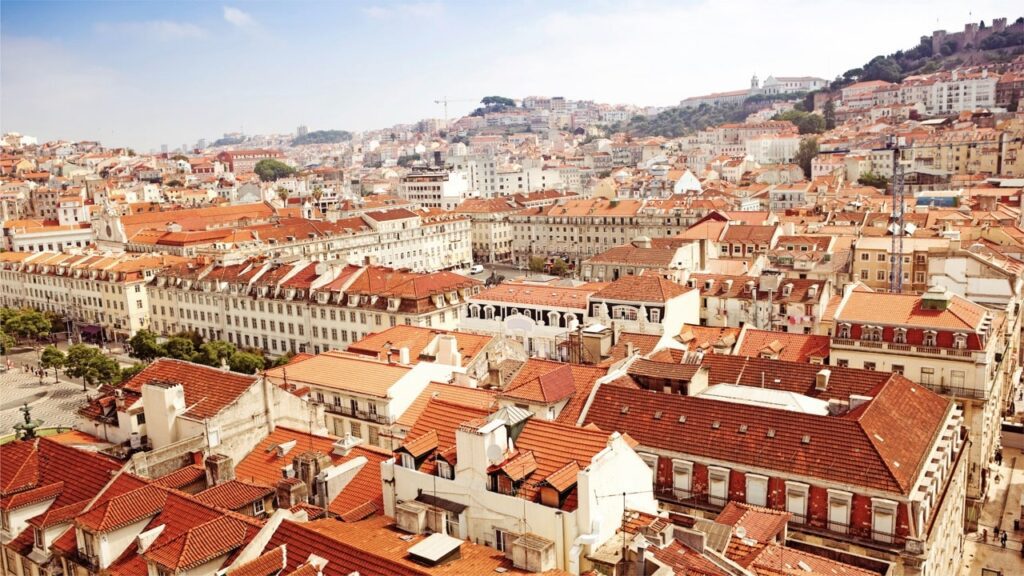
Pombaline Baixa: The entire downtown grid was rebuilt after the 1755 earthquake under Sebastião José de Carvalho e Melo, Marquis of Pombal (Prime Minister 1756–1777). The reconstruction plan – one of Europe’s first earthquake-resistant urban designs – used a cage-frame timber structure known as the gaiola pombalina (Pombaline cage). Streets were standardised at 8 m width. The reconstruction established Lisbon’s characteristic 18th-century lower city.
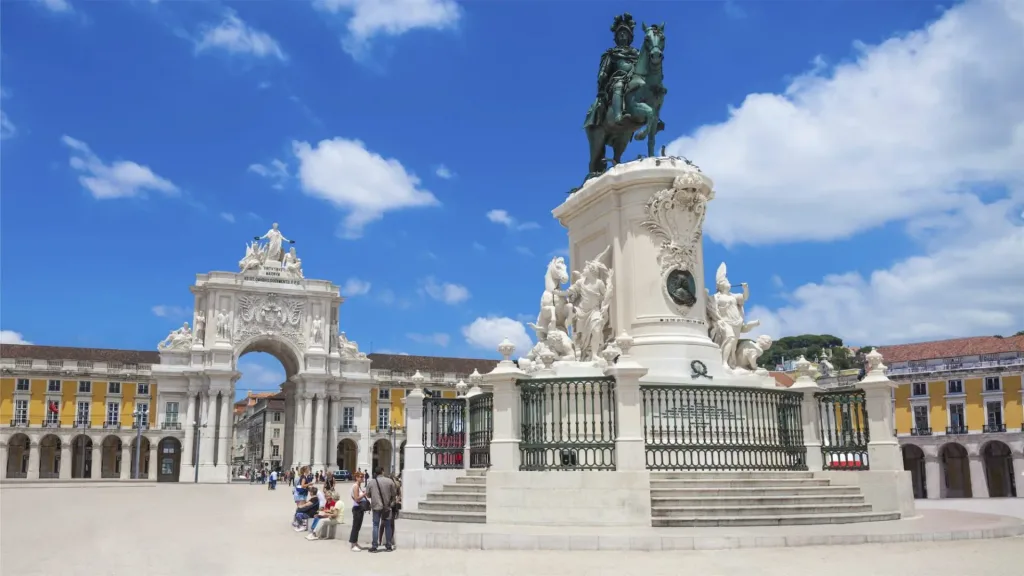
Praça do Comércio: 36,000 m² waterfront square fronting the Tagus. Formerly Terreiro do Paço (Palace Courtyard), the site of the royal Ribeira Palace until it was destroyed in the 1755 earthquake and subsequent fire. The equestrian statue of King José I (r. 1750–1777) was commissioned in 1775 and cast in bronze by sculptor Joaquim Machado de Castro.
Rua Augusta Arch: Triumphal arch at the north end of Praça do Comércio; construction began post-earthquake 1755, opened in 1875; 30 m tall.
Chiado: Lisbon’s literary and cultural quarter from the 16th century. Badly damaged by fire on 25 August 1988, which destroyed 18 buildings. Reconstruction led by architect Álvaro Siza Vieira; completed 1994–1997.
Bairro Alto: Emerged in the 16th century as a planned urban extension north of the Baixa. Approximately 400 restaurants, bars and nightclubs today.
25 De Abril Bridge & Cristo Rei
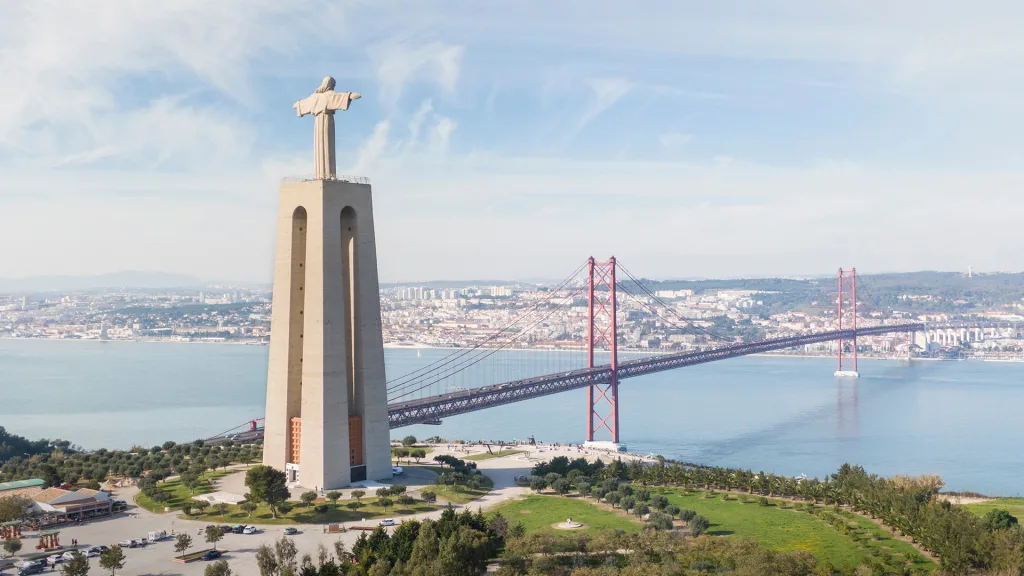
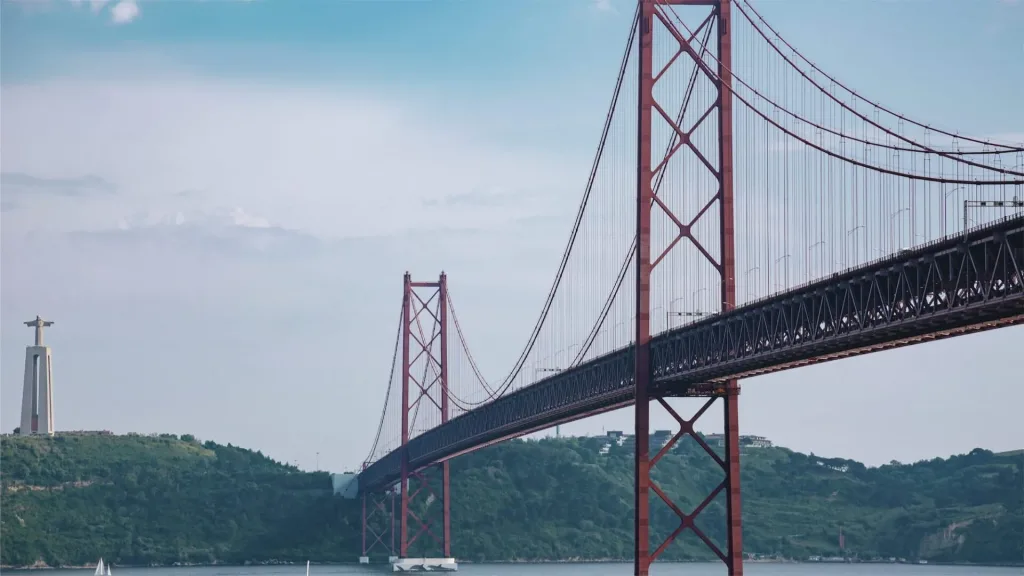
Ponte 25 de Abril: Opened 6 August 1966 as “Ponte Salazar” (renamed after the Carnation Revolution of 25 April 1974). Main span 1,013 m; total length 3,323 m. Upper deck carries 6 road lanes; lower deck carries two rail tracks, added in 1999. Designed by American firm Steinman, Boynton, Gronquist & London. Frequently compared to San Francisco’s Golden Gate Bridge – both use similar suspension engineering and are approximately the same era.
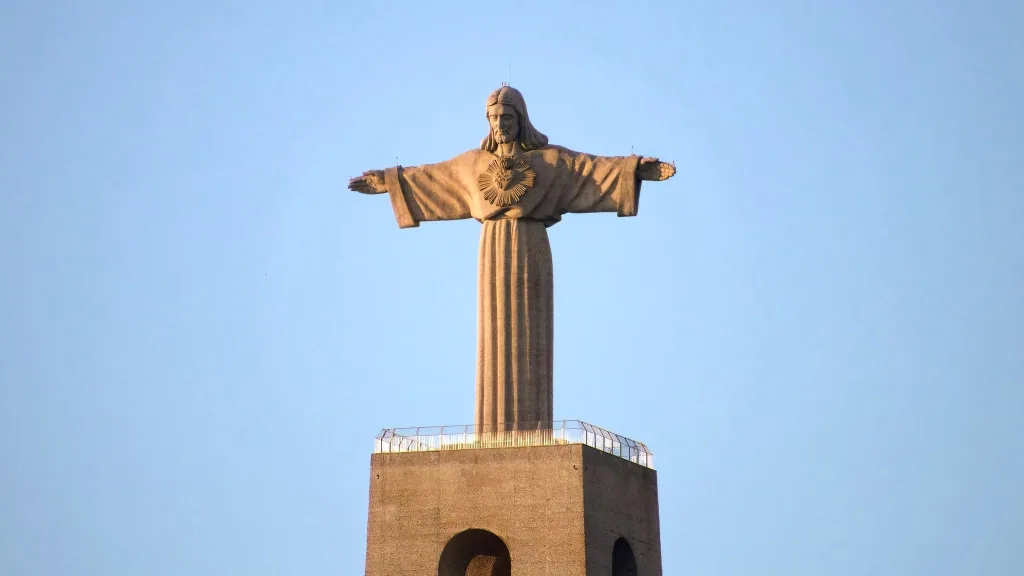
Cristo Rei (Christ the King): Almada municipality, south bank of the Tagus. Construction 1949–1959; consecrated 17 May 1959 by Cardinal Patriarch Manuel Cerejeira in the presence of an estimated 500,000+ people. Inspired by the Christ the Redeemer in Rio de Janeiro (opened 1931) – Cardinal Cerejeira visited Rio in 1934 during the International Eucharistic Congress and proposed a similar monument for Lisbon. Statue height: 28 m. Pedestal height: 82 m. Total from ground: 110 m. The observation platform at the top of the pedestal, accessible by elevator (€10/person), offers 360° panoramic views: Lisbon skyline, the 25 de Abril Bridge, the Tagus estuary, and on clear days the Atlantic Ocean.
Belém – Age of Discoveries & Pastéis
Belém is 6 km west of Lisbon city centre along the Tagus north bank. It was the departure point for Portugal’s Age of Discovery voyages in the 15th and 16th centuries.
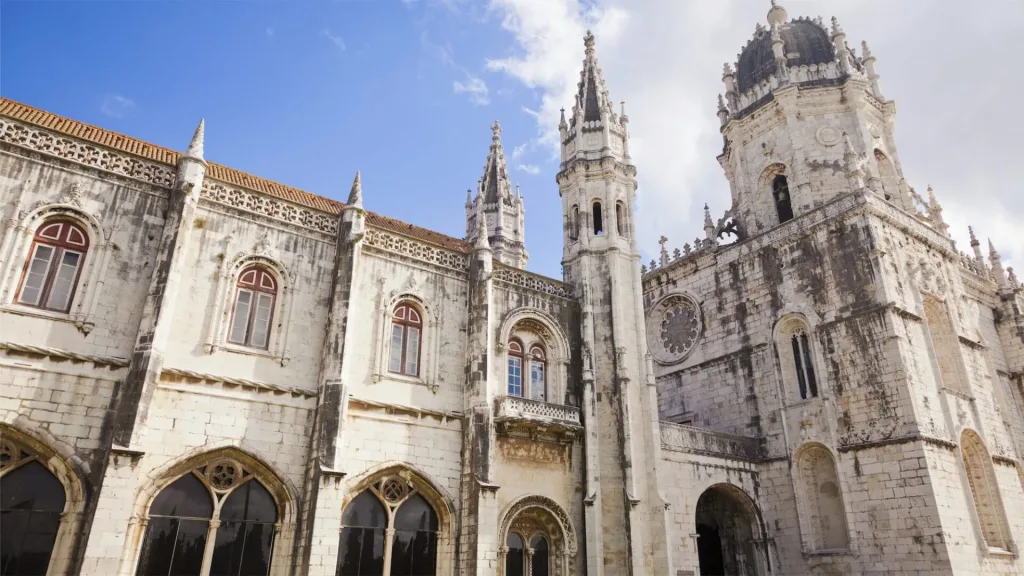
Jerónimos Monastery (Mosteiro dos Jerónimos): Construction began in 1501 under King Manuel I (r. 1495–1521). Manueline Gothic style: Portuguese Late Gothic incorporating maritime motifs — twisted ropes, coral, armillary spheres, navigational instruments. Approximately 100 years to complete. Designated UNESCO World Heritage Site 1983. The monastery church contains the tomb of Vasco da Gama (died 24 December 1524, aged approximately 64, in Kochi, India) and the tomb of the poet Luís de Camões (died c. 10 June 1580). Entry €18/person.
Belém Tower (Torre de Belém): Built 1514–1521 in Manueline style. Originally positioned on a small island in the Tagus at the mouth of the port; riverbank silting over centuries has connected it to the northern bank. UNESCO 1983 (same inscription as Jerónimos, reference 263). Entry separate.
Monument to the Discoveries (Padrão dos Descobrimentos): Unveiled in October 1960 on the 500th anniversary of the death of Henry the Navigator (1460). 52 m tall. Represents 33 figures of Portuguese exploration. The wind-rose compass mosaic on the pavement is 50 m in diameter, gifted by South Africa in 1960.
Fábrica de Pastéis de Belém: Opened 1837. Recipe descended from the monks of Jerónimos Monastery, who sold the recipe to a local sugar refinery owner at the time of the dissolution of the convents. The original recipe is held by only three people and has never been published. The factory produces approximately 20,000–25,000 pastéis de nata per day.

Return To Your Hotel
At the end of the day, we drive back to your hotel or agreed drop-off point in Lisbon city centre, arriving approximately 17:00.
In a single 8-hour journey, the tour covers the full chronological arc of Lisbon: from the 8th-century Moorish Alfama to the rebuilt Enlightenment-era Baixa (1755–1820), to the Manueline monuments of the Age of Discovery in Belém, to the 20th-century concrete of Cristo Rei (1959) and the post-industrial waterfront of Expo 98. Seven distinct areas of one city. One private vehicle. One fixed price.
Customise Your Day
This is a private tour – the itinerary adapts to your priorities. Confirm preferences when booking:
- More Old Lisbon: Extended time in Alfama, Mouraria, and Graça; additional miradouro stops; option to enter São Jorge Castle (€17/person).
- More Belém: Longer stop at the Jerónimos area, Tower surroundings, and full pastel de Belém experience; option to enter Jerónimos (€18/person).
- More downtown: Extended walking in Baixa and Chiado; option to enter the São Jorge Castle or Rua Augusta Arch viewpoint.
- Modern Lisbon focus: Extended stop at Parque das Nações and Oriente Station architecture; option to visit Oceanário (€25-29/person).
- Cristo Rei inside: If accessing the 82 m platform is a priority, book elevator tickets in advance at cristorei.pt (€10/person); the guide will adjust timing accordingly.
Tip: Tell us your «must-see» places when booking (and whether you prefer more walking or more panoramic stops), and we’ll recommend the best order for the day.
What’s Included
- Private air-conditioned vehicle (up to 8 passengers)
- Licensed driver-guide (EN, ES, FR, PT)
- Hotel pickup and drop-off in Lisbon city centre
- Fuel, tolls, parking at all stops
- Mandatory passenger insurance
Not included:
- Meals and drinks
- Entrance tickets to monuments. Be sure to contact us before purchasing tickets.
- Tips (optional and appreciated)
- Pickup outside Lisbon city centre (additional fee, confirmed at booking)
Tour Prices
Prices are per vehicle, not per person.
-
Up to 2 Pax €285
-
3 to 4 Pax €340
-
5 to 8 Pax €470
Pickup outside Lisbon city centre is available on request and may require an additional fee (confirmed before booking). For a group of 4, the per-person cost (€85) is comparable to most shared OTA Lisbon city tours – with an exclusive vehicle and a dedicated guide.
Free cancellation up to 24 hours before departure. Cancellations within 24 hours are non-refundable.
contact us and book your tour
Best Time of Year for This Tour
March–May (recommended): Temperatures 16–22°C across the city. Alfama is lush from spring rainfall. Belém Tower photograph conditions are excellent in spring morning light. Monument queues are manageable. Book Jerónimos tickets 1–2 weeks in advance. The Festas de Lisboa begin in June, so late May is the last quiet week before peak season.
June – special case: The city’s main street festival, Festas de Lisboa (Santos Populares), runs throughout June, culminating on the night of 12–13 June (Santo António). Alfama and Mouraria fill with sardine grills, lights, and street parties. The atmosphere is unique – this is a legitimate reason to visit specifically in mid-June. Plan for crowds; book accommodation well in advance. The guide can incorporate festival activity into the itinerary on applicable dates.
July–August (peak season): Temperatures 28–32°C in the city; slightly cooler in Belém due to the Atlantic breeze. Highest visitor numbers. São Jorge Castle and Cristo Rei elevator queues peak between 11:00–14:00. The 08:30 or 09:00 departure is especially valuable in this period. Book Jerónimos tickets 3–4 weeks in advance.
September–October (second recommended window): Temperatures 20–26°C. Crowds drop significantly from the August peak. Belém Tower reflection photography is best in early autumn low-angle light. Alfama’s Fado houses open for their full autumn season. Monument tickets generally available 1–2 weeks in advance.
November–February (low season): Temperatures 10–16°C, Atlantic rain possible. Alfama and the Castle are near-empty on weekdays – some days, Castelo de São Jorge has no queue at all. Belém Tower in winter low light against a grey Tagus can be more atmospheric than the crowded summer version. Cristo Rei viewpoint on a clear winter day provides the longest visibility range. Bring a warm layer and waterproof jacket; the Baixa is sheltered but Cristo Rei and Cabo da Roca-equivalent cliff exposures are cold.
FAQ
Is this a private tour?
Yes. Only your group travels in the vehicle – up to 8 passengers. No other travellers join at any point during the day.
What is the difference between this tour and the Best Solution Tour?
This tour is dedicated entirely to Lisbon city — including Cristo Rei on the south bank (110 m total height, consecrated 1959) and Parque das Nações (Expo 98 zone, Vasco da Gama Bridge 17.2 km). The Best Solution Tour covers Lisbon briefly, then adds Cascais, Cabo da Roca (165 m cliffs), and Sintra (UNESCO 1995). Choose this tour if Lisbon is the priority; the Best Solution Tour if you want the coast and Sintra as well.
How long is the tour?
8 hours. Standard pickup 09:00, return approximately 17:00. Total driving approximately 60–70 km within Lisbon and the south bank.
Are entrance tickets included?
No. Key prices for reference: São Jorge Castle €17/person; Jerónimos Monastery €18/person; Cristo Rei elevator €10/person. The guide advises which to prioritise based on your interests and available time. Be sure to contact us before purchasing tickets.
What is the price and is it per person?
Pricing is per vehicle: up to 2 passengers €285; 3–4 passengers €340; 5–8 passengers €470. For a group of 4 the per-person cost is approximately €85 – comparable to most shared OTA full-day Lisbon tours, with an exclusive vehicle and guide.
Do we go inside Cristo Rei?
The stop is at the base and surrounding grounds of Cristo Rei (consecrated 1959, 110 m total height). The elevator to the 82 m observation platform requires a separate ticket (€8/person). If you want to access the viewpoint, purchase tickets in advance at cristorei.pt (talk with us before purchasing any tickets).
Is the tour suitable for people with limited mobility?
Yes. Options include more time in Alfama, an extended Belém stop, more downtown walking, or a deeper visit to Parque das Nações. Confirm priorities when booking.
Can we customise the itinerary?
Alfama involves cobblestone streets and uphill walking – approximately 1–1.5 km. São Jorge Castle requires steps. The rest of the tour is primarily vehicle-based with short flat walks (Praça do Comércio, Belém esplanade). Guests with limited mobility should mention this when booking so the guide can adapt the route.
What languages does the guide speak?
English, Spanish, French, and Portuguese.
Is lunch included?
No. The itinerary includes approximately 60 minutes for lunch. The guide can recommend options in Baixa, Chiado, or Belém based on your preferences.
Is this tour suitable for children?
Yes. Child seats are available on request – state the child’s age and weight when booking.
What time is pickup?
Standard pickup is 09:00 at your accommodation in Lisbon city centre. Alternative start times can be requested and will be confirmed based on availability.
What is the best time of year to visit Lisbon?
March–May and September–October offer the best combination of mild temperatures (16–24°C), lower crowds, and manageable monument queues. July–August is peak season (28–32°C) with longest queues at São Jorge Castle and Cristo Rei. June brings the Festas de Lisboa, culminating on 12–13 June – unique atmosphere in Alfama and Mouraria; expect crowds.
Can I book as a solo traveller?
Yes. The tour can be booked by a single person. Pricing is per vehicle – up to 2 passengers is €285.
What is the cancellation policy?
Free cancellation up to 24 hours before the scheduled departure. Cancellations with less than 24 hours’ notice are non-refundable.
What Our Guests Say
You may also be interested in:
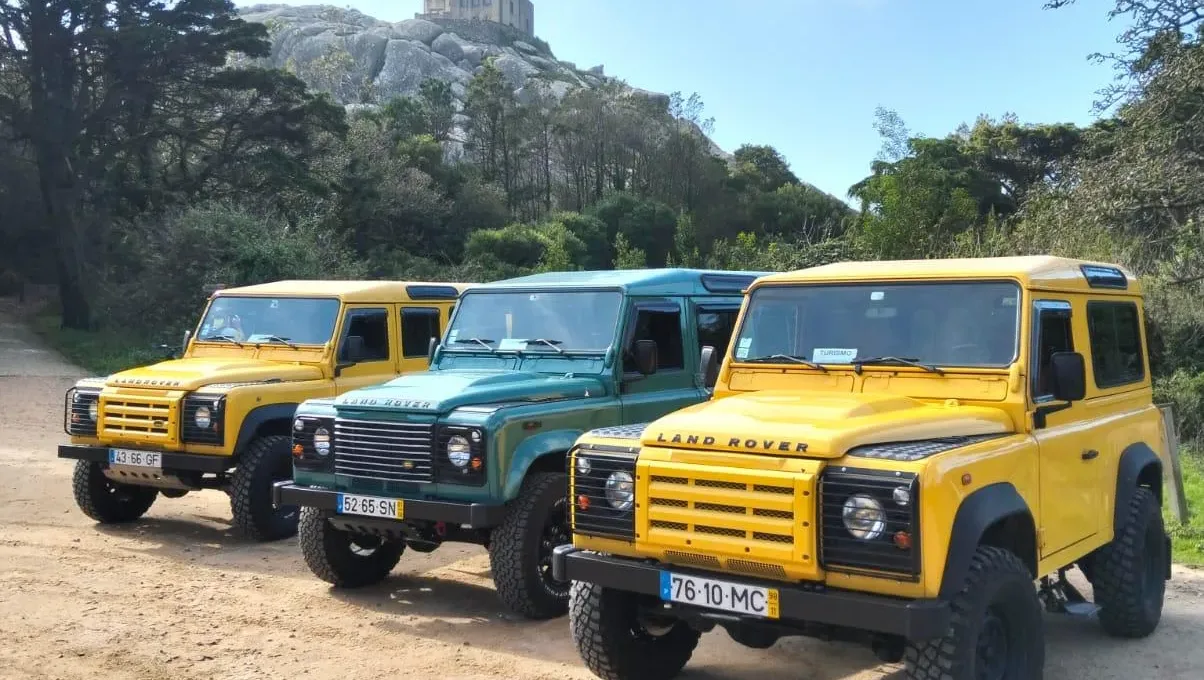
Land Rover 4x4 Tours
Looking for a unique way to explore Portugal?
Hop on a 4x4 Land Rover and discover what most visitors never see!
Off-road Sintra, Cabo da Roca and Cascais in a private Land Rover Defender.
Best Solution Tour - Lisbon, Cascais & Sintra
Combines Lisbon city highlights with the Sintra–Cascais coast in one day.
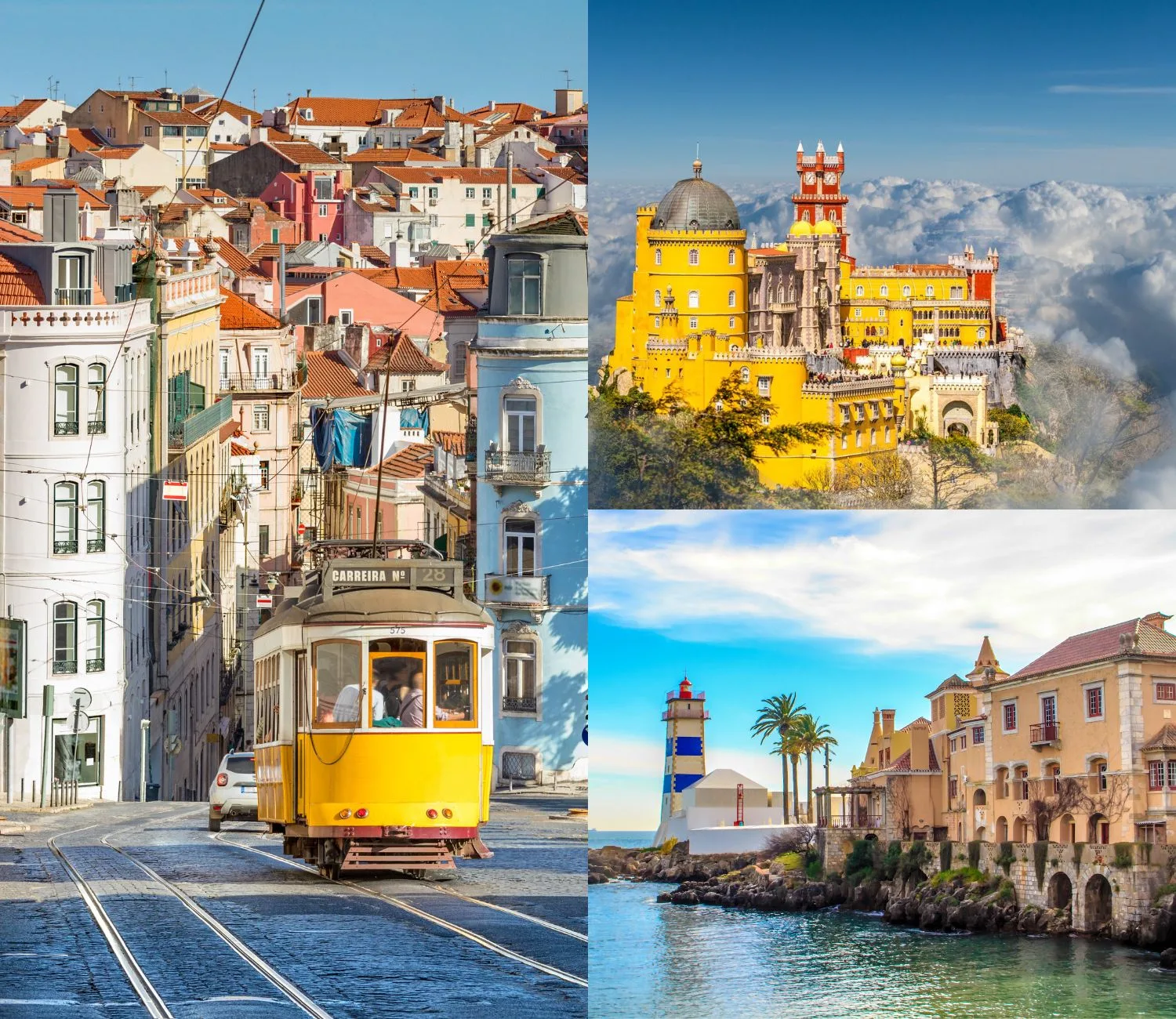
Sintra Cascais Small Group Tour
Small-group format (max 8 passengers): Sintra, Cabo da Roca, Guincho, Cascais, Estoril. €69 per person.
