
Óbidos, Portugal: Medieval Walled Town & Day Tours from Lisbon
Óbidos is a medieval walled town in the Leiria District of Portugal, located 88 km north of Lisbon on the Silver Coast (Costa de Prata). Population: 11,922 (2021 census, municipality), covering an area of 141.55 km². The town sits on a hilltop enclosed by a 1,565-metre limestone wall, walkable in its entirety, rising to a height of 13 metres at its tallest point.
Since 1282, Óbidos has been known as Vila das Rainhas – Town of the Queens – after King Dinis I gifted it to his wife, Queen Isabel of Aragon, as a wedding present. The tradition continued for three centuries: successive Queens of Portugal received Óbidos as part of their royal dowry.


A A Brief History of Óbidos
The name Óbidos derives from the Latin “oppidum” (fortified town), itself a Latinisation of the earlier Celtic name “Eburobricio.” Before Roman rule, the site served as a Phoenician trading point on the Silver Coast. Roman occupation established the civitas of Eburobrittium nearby.
Arab forces established a fortification on the hilltop during the 8th century, following the Umayyad conquest of the Iberian Peninsula in 711 AD. The site remained under Moorish control for over four centuries. In 1148, King Afonso Henriques – first King of Portugal – captured Óbidos during the Reconquista. The assault on the Moorish castle was led by his knight Gonçalo Mendes da Maia.
In 1282, King Dinis I presented Óbidos to his wife, Queen Isabel of Aragon (later canonised as Saint Isabel of Portugal), as a wedding gift. The gesture established the tradition of the Vila das Rainhas: for the next three centuries, Portuguese queens received Óbidos as part of their dowry, enriching the town with donations, construction projects and artistic patronage.
The Walls and Castle of Óbidos
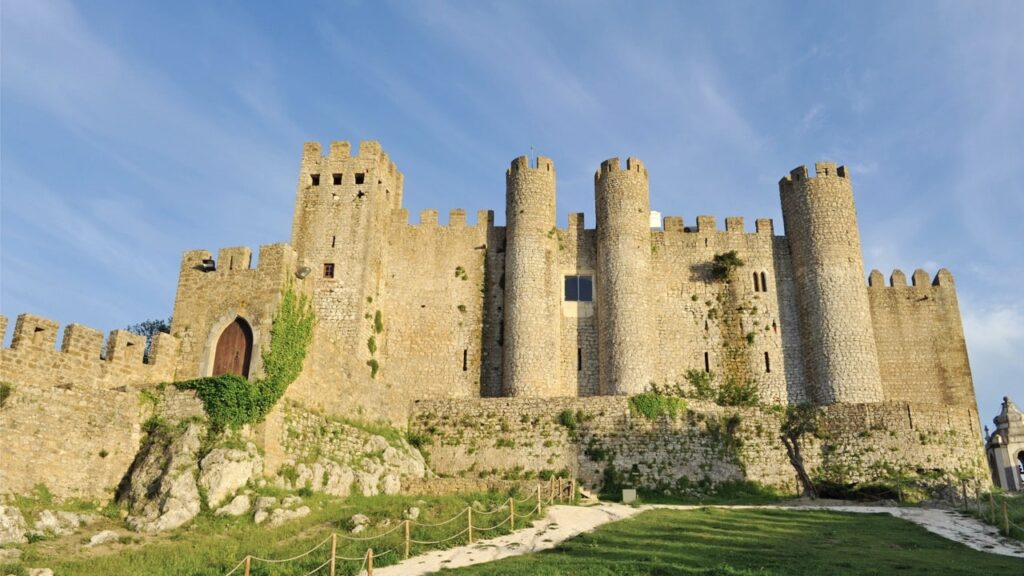
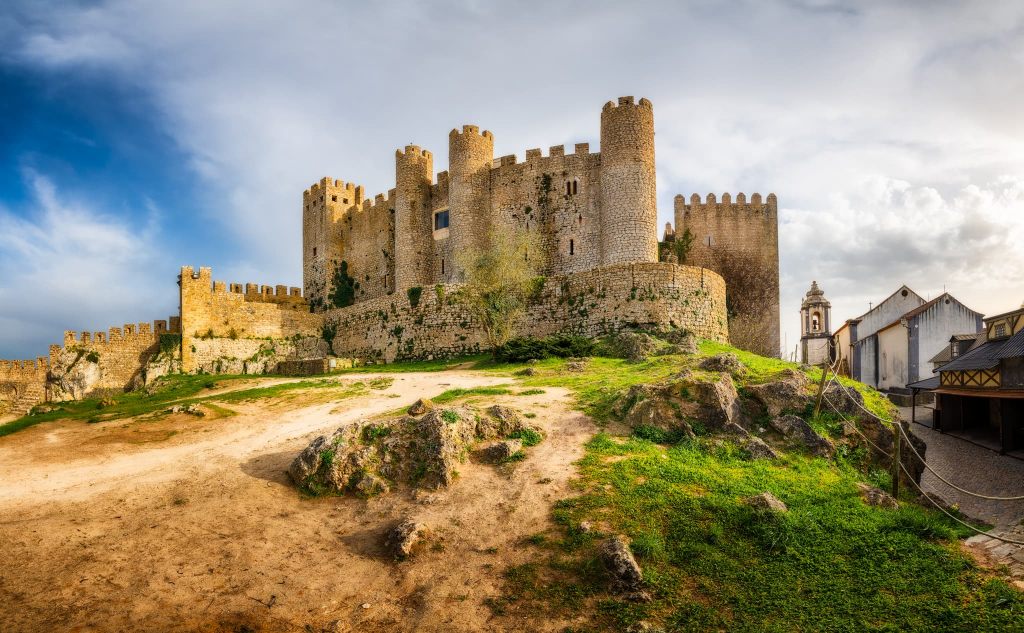
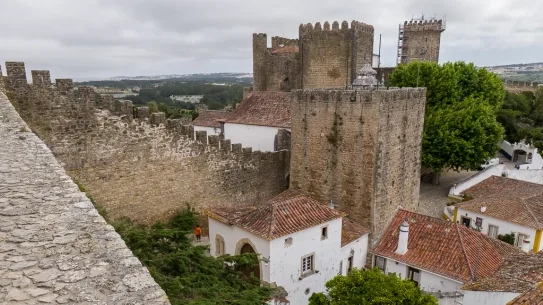
The fortified walls of Óbidos enclose the historic town in an unbroken perimeter of 1,565 metres. Built on Moorish foundations and expanded during the reign of King Dinis I (r. 1279–1325), the limestone ramparts reach up to 13 metres in height and are fully walkable – the narrow pathway along the top of the wall offers direct views across the surrounding valleys and the Atlantic coastline.
Castelo de Óbidos
The castle at the north end of the walled town was strengthened by King Dinis I and received its keep — a rectangular tower — in the 14th century, during the reign of King Fernando I (r. 1367–1383). In 1951, the castle was converted into a pousada (state-run heritage hotel), making it one of the first pousadas established in Portugal. Guests sleep inside the medieval towers; advance booking is required during summer months.
Porta da Vila - The Main Gate
The main gate into Óbidos, the Porta da Vila, is an arched passage whose interior walls are entirely covered in 18th-century azulejo tiles depicting scenes from the Passion of Christ. The tiles were added after the 1755 Lisbon earthquake – the gate and surrounding walls survived the earthquake structurally intact.

Igreja de Santa Maria - Church of Saint Mary
Igreja de Santa Maria stands in the central square of the same name (Praça de Santa Maria). The site has been a place of worship since Visigothic times: before the Reconquista, it served as a mosque. After the Christian reconquest in 1148, King Afonso Henriques ordered a church built on the site. The current structure dates primarily from the 16th century, rebuilt under King João III (r. 1521–1557) and Queen Catherine of Austria.
Three details define the church’s historical significance:
Royal wedding of 1444. King Afonso V (aged 10) married his cousin Infanta Isabel (aged 8) inside Igreja de Santa Maria on 22 August 1444. The dynastic marriage was conducted within the church while Óbidos remained a royal town under Queen Leonor’s patronage.
Azulejo panels (1680–1690). The lower interior walls are lined with blue and yellow azulejo tiles dated to 1680–1690, among the most complete 17th-century tilework programmes outside Lisbon.
Josefa de Óbidos. The altarpiece of Saint Catherine of Alexandria was painted by Josefa de Óbidos – baptised in Seville on 20 February 1630, died in Óbidos on 22 July 1684. She produced approximately 150 paintings over her career, making her the most celebrated female Baroque artist in 17th-century Portugal. Her godfather at baptism was the Sevillian master Francisco de Herrera the Elder. The altarpiece inside Santa Maria is the only work by Josefa still displayed in its original location.

The Aqueduct of Óbidos (Aqueduto da Usseira, 1571–1575)
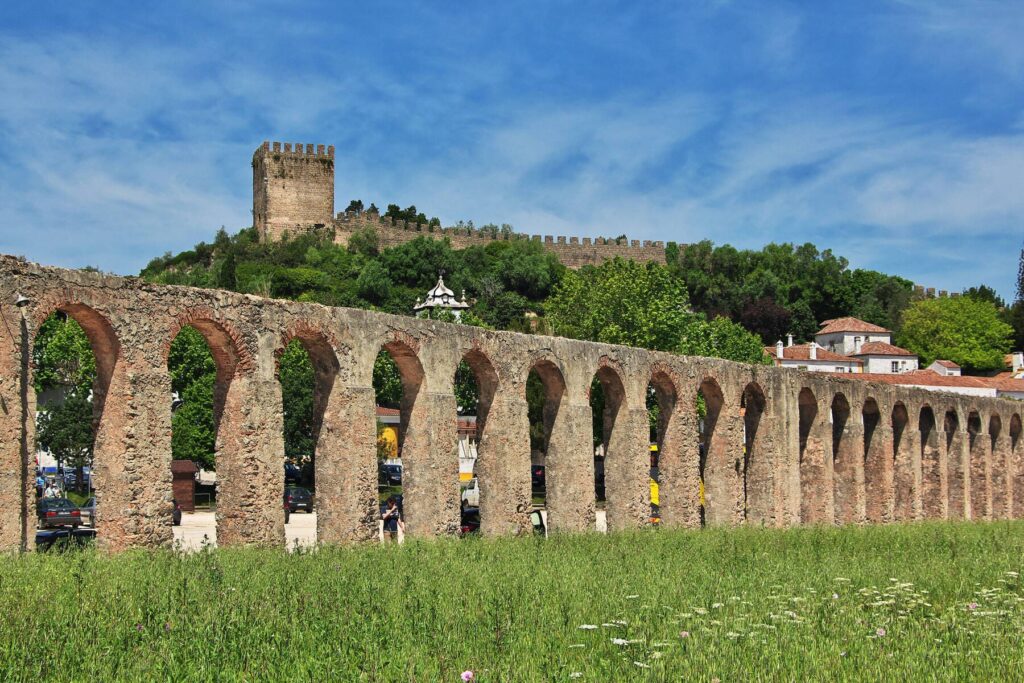
The Aqueduto da Usseira runs 3 km from a spring near the village of Usseira to the town of Óbidos, reaching heights of up to 20 metres at its tallest arches. Queen Catherine of Austria commissioned the aqueduct between 1571 and 1575, personally funding its construction by selling her lands around the town — a direct act of royal patronage consistent with the Vila das Rainhas tradition.
The aqueduct survived the 1755 Lisbon earthquake without structural collapse, an unusual distinction for a Portuguese monument of its scale and age. It was classified as a Property of Public Interest in 1962. The structure is visible from the road approaching Óbidos from the south.
Ginja de Óbidos - The Cherry Liqueur
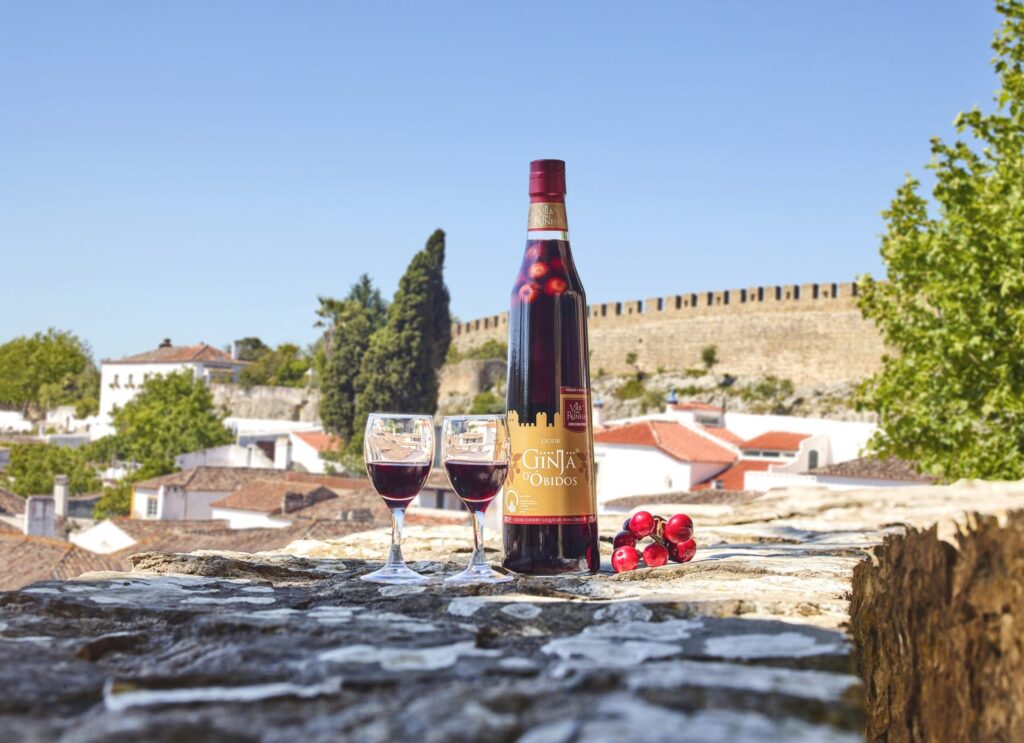
Ginja is a liqueur made from ginja berries – a variety of morello cherry (Prunus cerasus) grown in the Sobral da Lagoa valley within the municipality of Óbidos. The berry produces a tart, dark liquid with natural sweetness balanced by acidity.
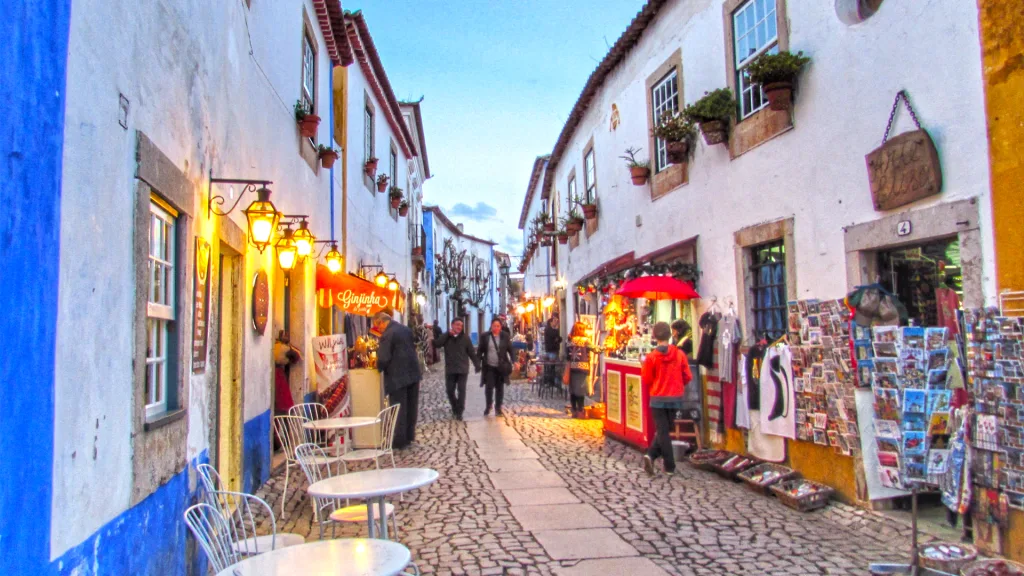
Although ginja production in Portugal has roots in the 19th century, the Óbidos tradition of serving it in dark chocolate cups was developed in 1987 by local producer Dário Pimpão. His recipe and presentation method remain the standard used by vendors along Rua Direita, the main street of the historic town. The chocolate cup is consumed after the liqueur – the cup itself is part of the experience.
The Medieval Market of Óbidos
Every July, Óbidos hosts the Mercado Medieval — an annual event recreating 14th-century life inside and around the castle walls. The programme includes jousting tournaments, troubadour performances, fire-eaters, and a craft and food market selling medieval-style products. The event runs for approximately two weeks and draws visitors from across Portugal and Europe. For current dates, check goobidos.com.
When to Visit Óbidos
March–May | Mild (15–20°C), low crowds, green surroundings;
June–August | Peak season, 25–30°C, highest visitor numbers; castle hotel requires advance booking;
July | Annual Medieval Market – town at peak activity;
September–October | Warm (20–25°C), reduced crowds post-summer;
November–February | Cool (8–14°C), very few visitors; walls and castle exterior accessible year-round.
The walled town is compact: most visitors cover the main sights in 2–3 hours on foot. A half-day (3–4 hours) allows a relaxed visit including the rampart walk, church interior, and lunch in the town.
Getting to Óbidos from Lisbon
By car: 88 km via A8 motorway north from Lisbon, exit for A15 at Caldas da Rainha junction toward Óbidos. Journey time approximately 1 hour. Paid parking is available outside the main gate (Porta da Vila); no cars enter the historic centre.
By bus: Rede Expressos and regional operators run services from Lisbon (Campo Grande bus terminal) to Caldas da Rainha, with onward connections to Óbidos. Total journey approximately 1h 45min–2h.
By train: Comboios de Portugal runs services from Lisboa Oriente or Lisboa Santa Apolónia to Caldas da Rainha; a local bus connects to Óbidos town. Total journey approximately 2h.
Private Tours to Óbidos from Lisbon
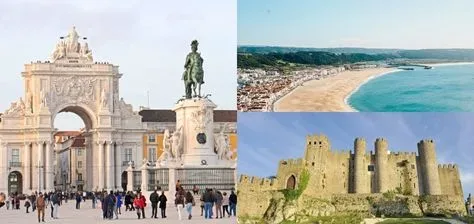
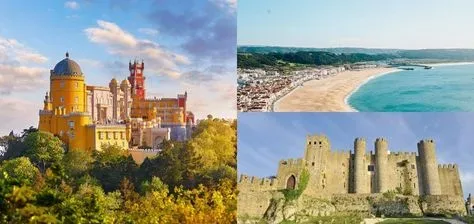
Óbidos is 22 km from Nazaré, making the two towns a natural pairing on a Silver Coast day tour from Lisbon. Batalha Monastery – UNESCO World Heritage Site since 1983 – lies 37 km north of Óbidos and is frequently added as a third stop. Fátima Sanctuary (1917 apparitions, 6.2 million visitors per year) is 52 km from Óbidos. Yellow Cab TT Tours operates private day tours combining Óbidos with several destinations. All private tours depart from the client’s hotel in Lisbon at a time chosen in advance. All tours are conducted in a vehicle with a licensed guide.


À ne pas manquer à Óbidos
Château d’Óbidos

Remparts du village
Ginginha

Librairie

Foire aux questions (FAQ)
How far is Óbidos from Lisbon?
Óbidos is 88 km north of Lisbon via the A8 motorway, approximately 1 hour by car. By public transport (bus plus connection), the journey takes approximately 1h 45min to 2h.
Can you walk on the walls of Óbidos?
Yes. The ramparts are fully walkable along their 1,565-metre perimeter. The pathway is narrow and has no handrails in most sections; sturdy footwear is recommended. Access to the walls is free of charge.
What is Ginja de Óbidos?
Ginja de Óbidos is a cherry liqueur made from ginja berries grown in the Sobral da Lagoa valley near Óbidos. In 1987, producer Dário Pimpão introduced the tradition of serving it in small dark chocolate cups. Sold at numerous vendors along Rua Direita, the main street of the historic town.
Why is Óbidos called Vila das Rainhas?
In 1282, King Dinis I gifted Óbidos to his wife, Queen Isabel of Aragon, as a wedding present. For the following three centuries, successive Queens of Portugal received Óbidos as part of their dowry. Vila das Rainhas means Town of the Queens.
Who was Josefa de Óbidos?
Josefa de Óbidos (baptised Seville, 20 February 1630 – died Óbidos, 22 July 1684) was the most celebrated female Baroque painter in 17th-century Portugal. She produced approximately 150 paintings. Her altarpiece of Saint Catherine of Alexandria inside Igreja de Santa Maria is the only work by Josefa still in its original location.
What is inside the Castle of Óbidos?
The Castelo de Óbidos has operated as a pousada heritage hotel since 1951, one of the first in Portugal. The castle interior is reserved for hotel guests. The outer walls, towers, and rampart walk are publicly accessible.
When is the Medieval Market held?
The Mercado Medieval de Óbidos takes place every July, typically for approximately two weeks. Features include jousting, troubadour performances, period costumes, and a craft market. For exact dates: goobidos.com.
What is the best time to visit Óbidos?
March to May: mild (15–20°C), low visitor numbers. September–October: warm (20–25°C), quieter than summer. July hosts the Medieval Market but is the busiest month. The walls and castle exterior are accessible year-round.
How long do you need to visit Óbidos?
2–3 hours covers the main sights on foot: Porta da Vila, Rua Direita, Igreja de Santa Maria, castle exterior, and the rampart walk. A half-day (3–4 hours) allows time for lunch. Óbidos is frequently combined with Nazaré (22 km) on a full-day tour from Lisbon.
Is Óbidos easy to combine with other destinations?
Yes. The most common pairing from Lisbon is Nazaré (22 km from Óbidos). Batalha Monastery (UNESCO 1983) is 37 km north; Fátima Sanctuary is 52 km away. Yellow Cab TT Tours operates private tours combining these destinations in a single day from Lisbon.