
Day Trip to Fátima from Lisbon: Sanctuary, History & Tours
Fátima is a town in the municipality of Ourém, Santarém district, located 142 km north of Lisbon – approximately 1 hour 30 minutes by car via the A1 motorway. The Shrine of Fátima recorded 6.2 million visitors in 2024, making it one of the most visited Catholic pilgrimage sites in the world.
The site is known for six reported apparitions of the Virgin Mary between May 13 and October 13, 1917. Three shepherd children – Lúcia dos Santos (age 10), Francisco Marto (age 9), and Jacinta Marto (age 7) – reported the visions at the Cova da Iria, a hollow outside their home village of Aljustrel. The Diocese of Leiria officially recognised the apparitions on October 13, 1930 – thirteen years after the final event.
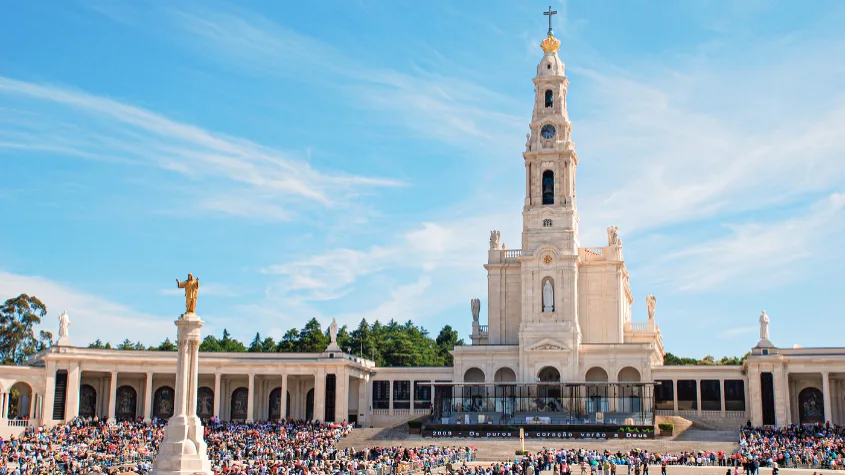
The Sanctuary of Fátima covers the area around the Cova da Iria and includes three major structures: the Chapel of the Apparitions (built 1919), the Basilica of Our Lady of the Rosary (consecrated 1953), and the Basilica of the Holy Trinity (inaugurated 2007). Entry to all three is free.

The 1917 Apparitions
The apparitions occurred on six consecutive 13th-of-the-month dates: May 13, June 13, July 13, August 19 (the August apparition was delayed because local authorities had detained the children), September 13, and October 13, 1917.
Each apparition took place at the Cova da Iria, a field that belonged to the Santos family and was used as grazing land for the family’s sheep. On May 13 the children reported seeing a “Lady” in a holm oak tree. Local crowds gathered at subsequent dates: approximately 5,000 on September 13 and around 70,000 on the final date of October 13, 1917.
The third apparition, July 13, 1917, is the one in which the Virgin Mary is said to have revealed the Three Secrets of Fátima – a three-part message that included a vision of hell, predictions connected to World War II, and a third element that was kept secret until Pope John Paul II released the text on June 26, 2000.
The final apparition on October 13, 1917, concluded with what witnesses described as the “Miracle of the Sun”: for approximately ten minutes, approximately 70,000 people reported the sun spinning, changing colours, and appearing to fall toward the earth. The phenomenon was reported by both believers and secular journalists present at the site, including a correspondent from the newspaper O Século.
The Three Seers
Lúcia dos Santos was born on March 22, 1907 in Aljustrel, near Fátima. After the apparitions she entered religious life and became a Carmelite nun at the Carmel of Coimbra, where she lived until her death on February 13, 2005, aged 97. She was declared Venerable by Pope Francis in 2023 – the first formal step toward beatification.
Francisco Marto was born on June 11, 1908. He died on April 4, 1919, aged 10, of pneumonia – one of the victims of the 1918–1919 influenza pandemic. Jacinta Marto was born on March 11, 1910. She died on February 20, 1920, aged 9, of pleurisy, in a Lisbon hospital. Both Francisco and Jacinta were beatified by Pope John Paul II on May 13, 2000 and canonized by Pope Francis on May 13, 2017 – the centennial of the first apparition. They are the youngest non-martyr saints in the history of the Catholic Church.
The remains of Francisco, Jacinta, and Lúcia are all interred in the Basilica of Our Lady of the Rosary. Lúcia’s remains were transferred to the basilica in 2006, one year after her death.
What to Visit at the Sanctuary
Chapel of the Apparitions (Capelinha das Aparições)
Construction of the Chapel of the Apparitions began on April 28, 1919, initiated by local residents. The church neither encouraged nor hindered its construction at that stage. The chapel was built on the precise location of the holm oak tree where the six apparitions were reported – the original tree was gradually removed by pilgrims taking pieces as relics.
The chapel is an open-air structure without walls on all sides. It operates 24 hours a day and serves as the spiritual core of all ceremonies at the sanctuary. A small statue of Our Lady of Fátima in a glass case marks the spot of the apparitions.
Basilica of Our Lady of the Rosary (Basílica de Nossa Senhora do Rosário)
The foundation stone for the Basilica of Our Lady of the Rosary was laid on May 13, 1928. The basilica was consecrated on October 7, 1953. It can accommodate approximately 9,000 people.
The architecture is Baroque Revival with a 65-metre campanile (bell tower). Two colonnaded wings extend from the main façade and form the sides of the main esplanade. Inside, the lateral chapels contain the tombs of Francisco Marto, Jacinta Marto, and Lúcia dos Santos – the three visionaries canonized or in the process of canonization.

Basilica of the Holy Trinity (Basílica da Santíssima Trindade)
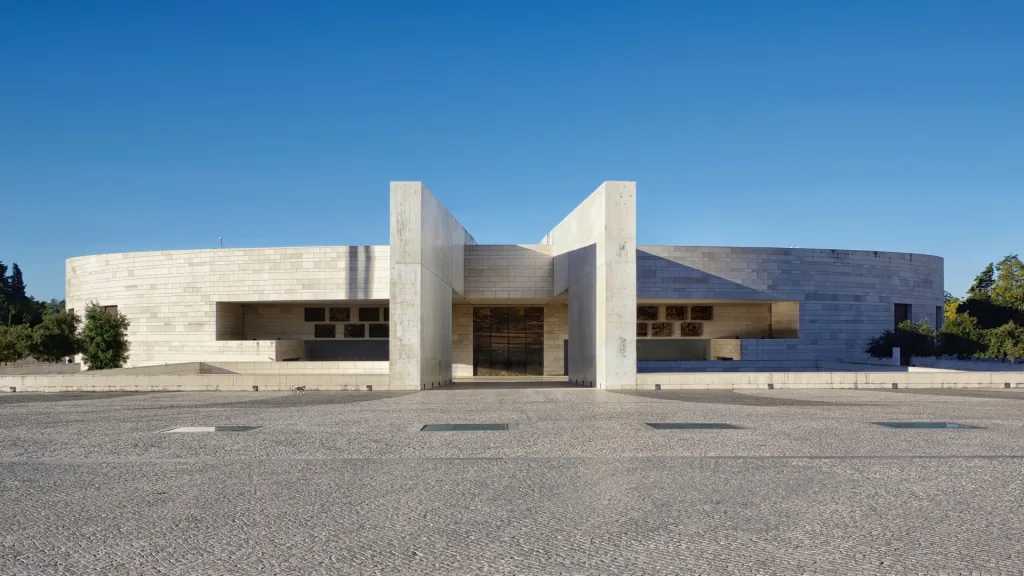
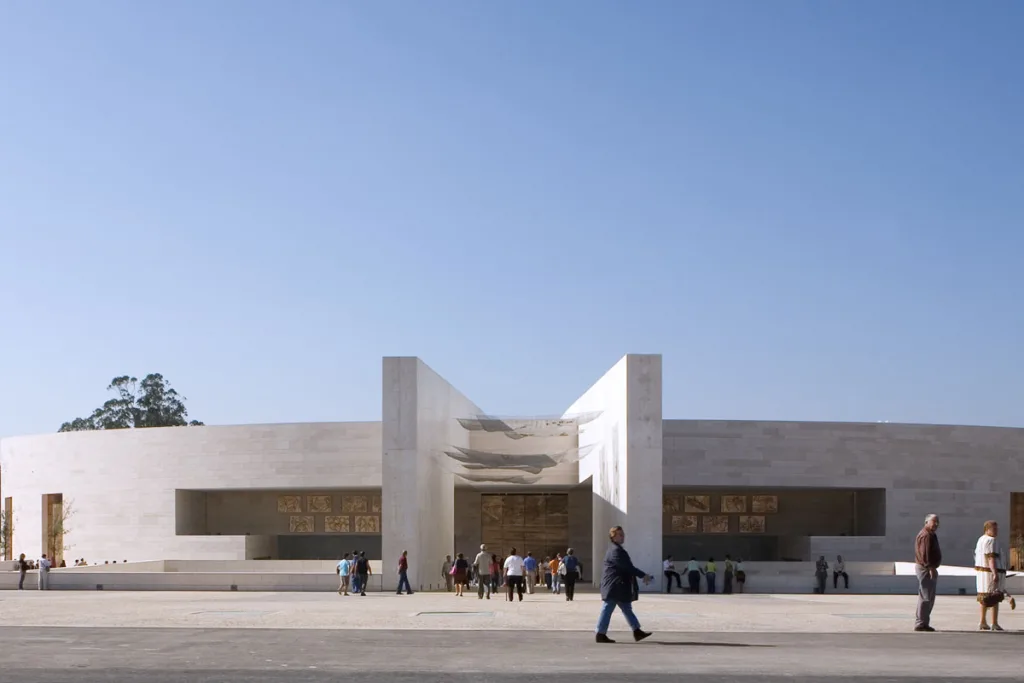
The Basilica of the Holy Trinity was designed by Greek architect Alexandros Tombazis, selected through an international competition organized in 1997. His design was chosen on December 19, 1998. Construction began in February 2004, with the cornerstone installed on June 6, 2004. The basilica was dedicated on October 12, 2007, during the 90th anniversary of the Fátima apparitions.
Capacity: 8,633 seats, including 76 spaces for people with reduced mobility. The main prestressed concrete beams are 182.5 m long; the largest free span is 80 m. The assembly area has a diameter of 125 m. Total gross construction area: 38,516 m².
In 2009 the basilica received the Outstanding Structure Award from the International Association for Bridge and Structural Engineering (IABSE).
When to Visit Fátima
The Sanctuary of Fátima is open year-round. The two major annual pilgrimages take place on May 12-13 and October 12-13.
For the May 2026 pilgrimage, the Shrine reported approximately 430,000 pilgrims from five continents across the two-day period. October traditionally draws up to one million pilgrims. On both dates, roads around Fátima are closed to private vehicles and public transport demand is high.
For visitors who prefer smaller crowds: any day from November through March offers significantly quieter conditions. April, June, and September offer mild weather with manageable visitor numbers. July and August are the hottest months (average temperature 27-30°C) and see high visitor volumes outside the pilgrimage dates.
Sanctuary grounds: open 24 hours. Basilicas: open approximately 07:30-20:00 (check the sanctuary website for current hours before visiting). Entrance: free to all three structures.
How to Get to Fátima From Lisbon
By car: Take the A1 motorway north from Lisbon, exit at Fátima. Total distance: 142 km. Drive time: approximately 1 hour 30 minutes in standard traffic.
By bus: Rede Expressos operates frequent bus services from Sete Rios terminal in Lisbon to Fátima bus station. Journey time: approximately 1 hour 45 minutes. Tickets: from approximately €14 return. Buses run multiple times daily. From Fátima bus station to the Sanctuary: approximately 800 m on foot (10 minutes) or by local taxi.
By private tour from Lisbon: Yellow Cab TT Tours picks up from your hotel or address in central Lisbon. Departure is typically in the morning; return by early evening. The tour combines Fátima with Batalha Monastery (22 km away) or Nazaré (63 km away) depending on the itinerary.
Combining with Other Destinations
Fátima’s central location in Portugal makes it easy to combine with several other sites in a single day:
Batalha Monastery – 22 km northwest of Fátima (28-minute drive). The Monastery of Santa Maria da Vitória was built to commemorate the 1385 Battle of Aljubarrota, in which Portugal defeated Castile. Construction began in 1386 under King João I and continued through the 16th century. It is a UNESCO World Heritage Site since 1983. Known for its Manueline Gothic royal cloister and the unfinished Capelas Imperfeitas (Unfinished Chapels).
Nazaré – 63 km west of Fátima (approximately 50-minute drive). Fishing village on the Atlantic coast. Praia do Norte is the site of the world’s largest surfed waves, produced by the Nazaré Canyon – a submarine canyon 170 km long with depths reaching 5,000 m offshore. Portuguese surfer Rodrigo Koxa set a world record wave of approximately 24 m at Nazaré in November 2017.
Tomar – 45 km southeast of Fátima. Home to the Convent of Christ (Convento de Cristo), the former headquarters of the Knights Templar in Portugal from 1160. UNESCO World Heritage Site since 1983. The Charola, a 12-sided Templar rotunda built in the 1160s, is the oldest structure on the site.
Óbidos – approximately 70 km southwest of Fátima. Medieval walled town with a circuit of walls 1.6 km long. The castle was given as a wedding gift to the Portuguese queens by King Dinis I in 1282, a tradition maintained by Portuguese kings until the 19th century.
Day Tours to Fátima from Lisbon
Yellow Cab TT Tours has been operating day tours from Lisbon since 2013. Tripadvisor rating: 5.0/5 based on 3,372 reviews. Ranked #2 of 847 outdoor activities in Lisbon. Tripadvisor Travelers’ Choice Best of the Best 2025.
All tours are private unless indicated. Vehicle and guide are exclusively for your group. Pickup from your hotel or address in central Lisbon.
Fátima Group Tours
Au départ de Lisbonne

Fátima Private tours
Au départ de Lisbonne




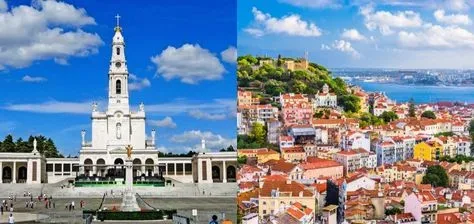
À ne pas manquer à Fátima
Sanctuaire de Fátima
Chapelle des Apparitions
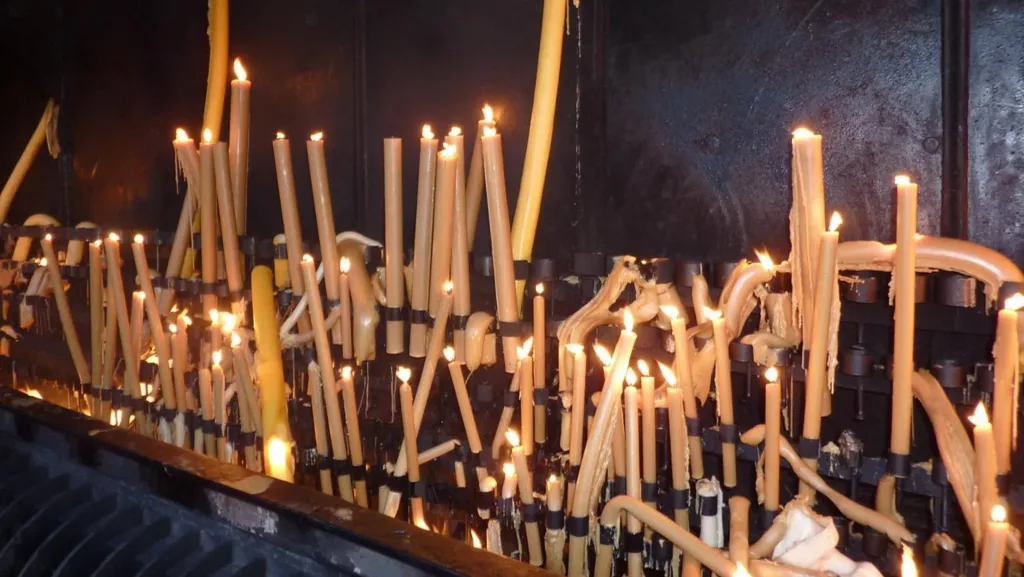
Allumez une bougie
Basilique de Notre-Dame

Foire aux questions (FAQ)
How far is Fátima from Lisbon?
Fátima is 142 km north of Lisbon by road. By car via the A1 motorway, the drive takes approximately 1 hour 30 minutes. By bus from Sete Rios terminal, the journey is approximately 1 hour 45 minutes.
How long does a visit to Fátima take?
The main sanctuary - Chapel of the Apparitions, Basilica of Our Lady of the Rosary, and Basilica of the Holy Trinity - requires approximately 2.5 to 3 hours for a first-time visitor. A full day trip from Lisbon including travel and one additional stop (e.g. Batalha) is typically 9–10 hours.
Is Fátima accessible by public transport from Lisbon?
Yes. Rede Expressos operates multiple daily bus services from Sete Rios terminal in Lisbon to Fátima. Journey time approximately 1 hour 45 minutes, tickets from approximately €14 return. There is no direct train service to Fátima.
What is the Miracle of the Sun?
On October 13, 1917 - the date of the sixth and final apparition — approximately 70,000 people gathered at the Cova da Iria reported seeing the sun spinning, emitting different colours, and appearing to fall toward the earth for approximately ten minutes. The event was witnessed by secular journalists as well as pilgrims and was reported in the mainstream Portuguese press the following day.
Are Francisco and Jacinta Marto saints?
Yes. Francisco Marto (died 1919, aged 10) and Jacinta Marto (died 1920, aged 9) were canonized by Pope Francis on May 13, 2017 - the centennial of the first apparition. They are the youngest non-martyr saints in the Catholic Church. The third seer, Lúcia dos Santos (died 2005), was declared Venerable in 2023 and is in the process of beatification.
Do I need to be Catholic to visit Fátima?
No. The Sanctuary of Fátima is open to all visitors regardless of religion. The site is of historical and architectural interest beyond its religious significance: the 1917 events and the Basilica of the Holy Trinity (a major 21st-century work of religious architecture) attract visitors with non-religious motivations. Dress modestly inside the basilicas.
What are the Three Secrets of Fátima?
The Three Secrets were revealed by the Virgin Mary during the July 13, 1917 apparition. The first is a vision of hell. The second concerns the end of World War I, the beginning of World War II, and a request to consecrate Russia to the Immaculate Heart of Mary. The third secret, kept confidential for decades, was published by Pope John Paul II on June 26, 2000. It describes a vision of the Pope and other figures being killed - widely interpreted as a reference to the 1981 assassination attempt on Pope John Paul II.
Can I visit Batalha Monastery and Fátima in the same day?
Yes. Batalha Monastery is 22 km northwest of Fátima (approximately 28 minutes by car). A combined visit is one of the most common day-trip combinations from Lisbon. Total drive time Lisbon–Fátima–Batalha–Lisbon is approximately 4 hours. Yellow Cab TT Tours includes this combination in the Fátima, Batalha & Nazaré tour.
When should I avoid visiting Fátima?
Avoid May 12–13 and October 12–13. These are the two major annual pilgrimage dates, each attracting 400,000–1,000,000 pilgrims. Roads around the sanctuary are closed to private vehicles and public transport is heavily congested. If you wish to witness the pilgrimage, plan accommodation in Fátima in advance and use the bus service from Lisbon.
What is the difference between the private Fátima tour and the group tour?
The group tour (€84/person) follows a fixed schedule shared with other passengers. The private tours are exclusively for your group, with a dedicated vehicle and guide, flexible timing, and the ability to customise stops. Private tours can be combined with Batalha, Nazaré, Tomar, Sintra, or Coimbra in a single day itinerary.