
Lisbon, Portugal: History, Neighbourhoods & Private City Tours
Lisbon is the capital and largest city of Portugal. The municipality covers 100.05 km² with a population of 575,739 (2024). The metropolitan area spans 18 municipalities with approximately 3,028,000 residents (2025). In 2024, Lisbon received 8.52 million visitors – 6.54 million international, 1.98 million domestic – generating €2.01 billion in direct tourism expenditure. The city was voted Europe’s leading city break destination, ahead of Paris, Athens, and Venice.
Lisbon is the second oldest European capital, after Athens. The city sits on the northern shore of the Tagus (Tejo) River estuary. The historic centre extends across several hills – the characteristic topography that shapes its neighbourhoods, viewpoints (miradouros), and the routes of its vintage tram lines.
Yellow Cab TT Tours has operated private tours from Lisbon since 2013, based at Avenida da Liberdade 129B, 1250-140 Lisboa. Our guides lead tours both within the city and on day trips to Sintra, Fátima, Évora, and 12 other destinations across Portugal.


A Brief History of Lisbon
The site of Lisbon has been continuously inhabited since at least the 8th century BC. Phoenician traders established an early settlement on the hilltop later occupied by the Castle of São Jorge. The Romans fortified the same hill in 48 BC and named the city Olisipo, making it the capital of the province of Lusitania.
In 714 AD, Moorish forces from North Africa captured the city, establishing Moorish rule that lasted 433 years. The Moors expanded the hilltop fortifications and founded the neighbourhood now known as Alfama – whose name derives from the Arabic al-ḥamma (hot springs). The Castle of São Jorge reached its current form during this period, with construction ordered by the Islamic ruler Hisam II and supervised by the statesman Almanzor, based on archaeological evidence dating the fortification walls to approximately 985.
On October 25, 1147, the first King of Portugal, Afonso Henriques, captured Lisbon from the Moors in a military campaign supported by Crusader forces. The city became the Portuguese capital in 1255, under King Afonso III, when the royal court relocated from Coimbra to Lisbon.
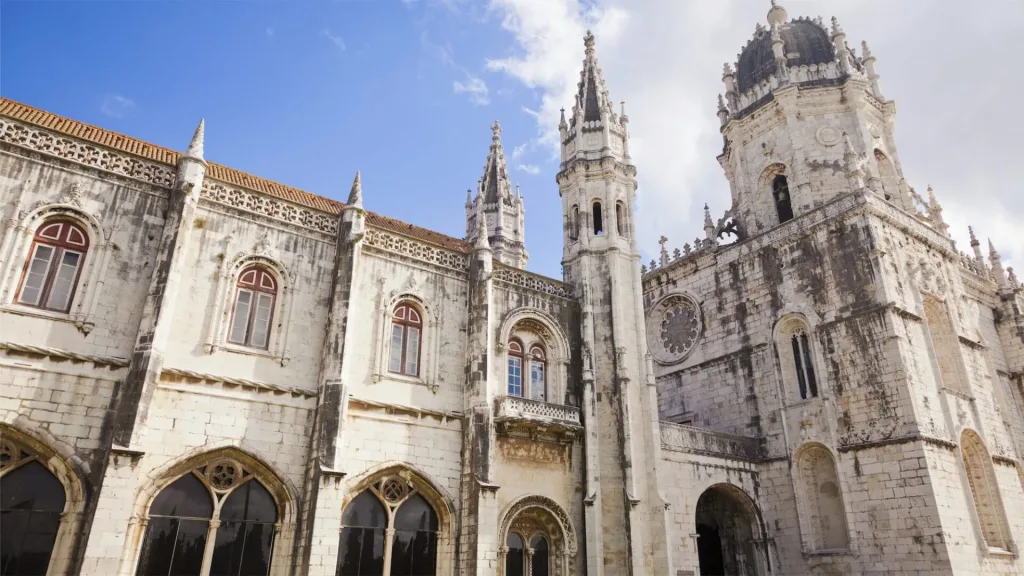
In the 15th and 16th centuries, Lisbon served as the principal European port for oceanic exploration. On July 8, 1497, Vasco da Gama departed Lisbon with a fleet of four ships and a crew of 170 men. The fleet reached Kozhikode (Calicut), on the southwest coast of India, on May 20, 1498 – the first direct sea route between Europe and India. The voyage covered approximately 24,000 miles over nearly two years; only 54 of the 170 crew members returned. The Jerónimos Monastery in Belém, begun in 1502 and completed in 1601, was built directly opposite the point from which da Gama’s fleet departed, funded in part by the profits of the spice trade.
On November 1, 1755, at approximately 09:40, an earthquake struck the Iberian Peninsula. Seismologists estimate the magnitude at between 7.7 and 9.0 on the moment magnitude scale, with the epicentre approximately 290 km southwest of Lisbon in the Atlantic Ocean. The earthquake, followed by fires and a tsunami, killed an estimated 30,000-40,000 people in Lisbon and destroyed the majority of the city’s historic buildings.
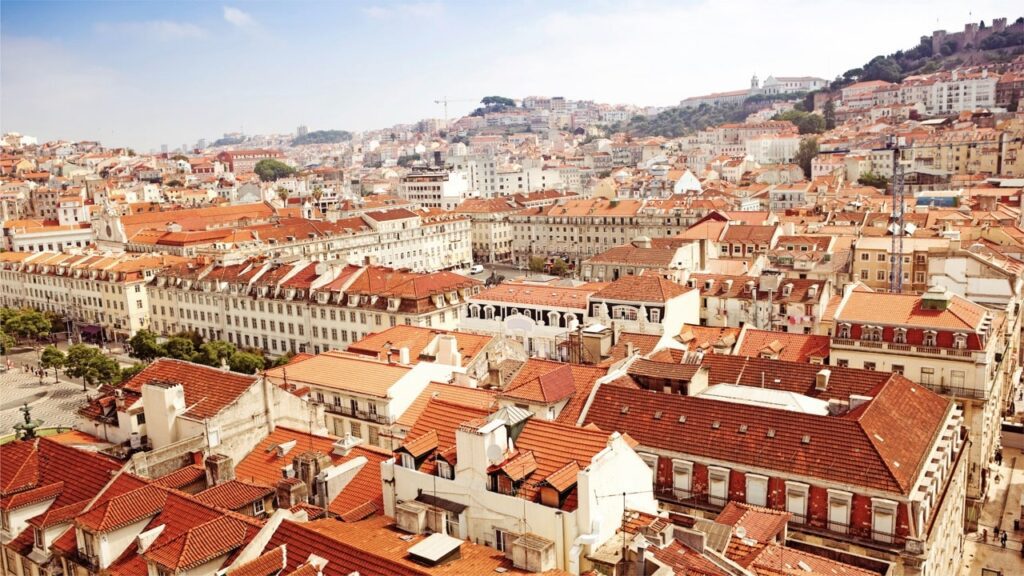
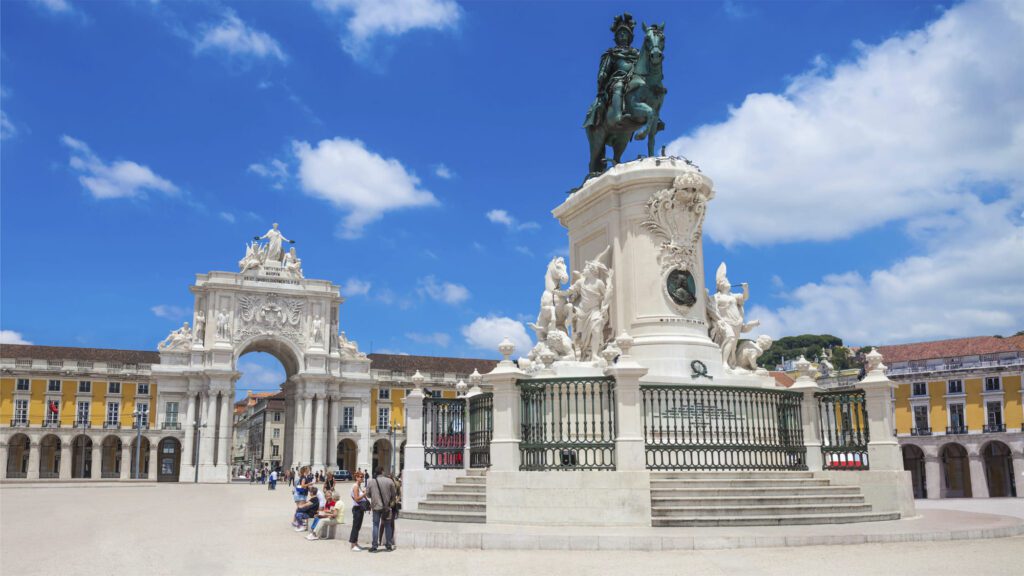
The rebuilding was directed by Sebastião José de Carvalho e Melo, the 1st Marquis of Pombal. His plan replaced the ruined medieval quarter with a grid of wider streets and matching stone-fronted buildings using a technique known as the gaiola pombalina (Pombaline cage) – a flexible timber framework embedded in the masonry, designed to absorb seismic movement. The rebuilt Baixa (Lower City) is considered the world’s first planned earthquake-resistant urban district. Praça do Comércio (Commerce Square), opened after the reconstruction on the site of the former Ribeira Palace, faces the Tagus River and remains the city’s principal ceremonial square.
–
Lisbon's Neighbourhoods
Alfama
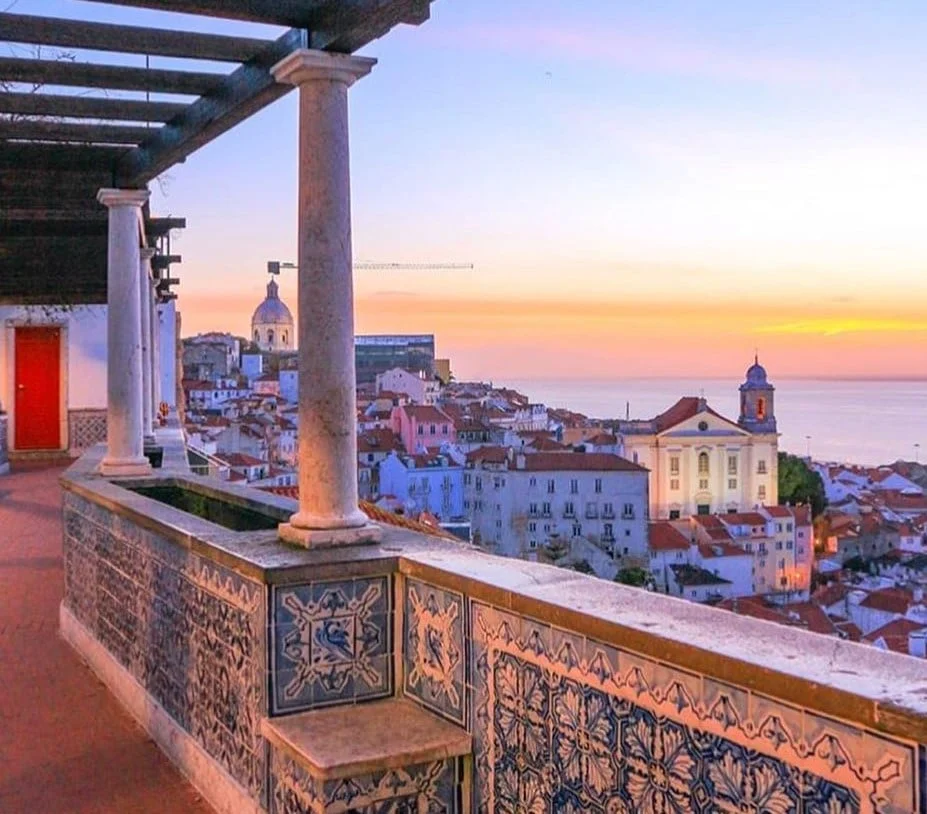
Alfama is the oldest neighbourhood in Lisbon, occupying the slopes between the Castle of São Jorge and the Tagus River. It was established in the 8th century during Moorish rule and is the only major area of the city to survive the 1755 earthquake largely intact – its solid rock foundations reduced the impact of the seismic shockwaves, and its elevation protected it from the subsequent tsunami.
As a result, Alfama’s streets still follow the original Moorish layout: narrow lanes, stairways, and terraces that have not substantially changed since the 12th century. Alfama is also the neighbourhood where fado – Portugal’s national genre of music, characterised by themes of longing and fate – first developed in the 19th century, in the taverns and sailors’ houses of the waterfront quarter.
Belém
Belém is a riverside parish located approximately 6 km west of the city centre, on the northern bank of the Tagus. It is the point from which Portugal’s Age of Discovery expeditions departed in the 15th and 16th centuries. The neighbourhood contains two UNESCO World Heritage Sites: the Tower of Belém (1514–1520) and the Monastery of the Hieronymites (1502–1601), designated together in 1983.
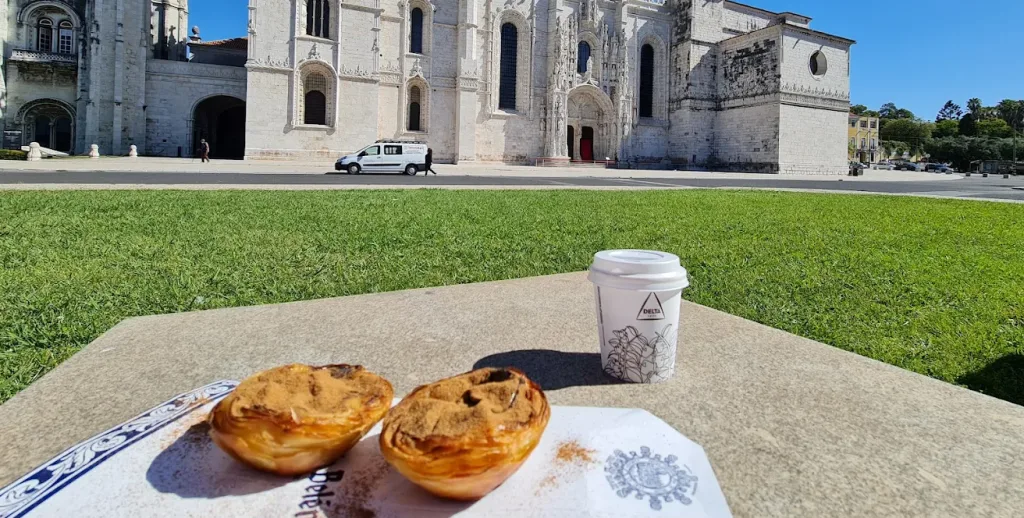
Belém also contains the Monument to the Discoveries (Padrão dos Descobrimentos), erected in 1960 on the bank of the Tagus to mark the 500th anniversary of the death of Prince Henry the Navigator. The Fábrica de Pastéis de Belém, which has produced the original pastéis de nata (custard tarts) from the monastery’s historic recipe since 1837, is located at Rua de Belém 84–92, a 5-minute walk from the Jerónimos Monastery.

Baixa & Chiado
The Baixa (Lower City) is the flat, grid-planned commercial district built after the 1755 earthquake under the direction of the Marquis of Pombal. Its uniform stone-fronted buildings with decorative tile façades and straight intersecting streets represent the first planned seismic-resistant urban district in the world. Praça do Comércio, the district’s southern square, opens directly onto the Tagus River and was the site of the Ribeira Palace until the 1755 earthquake.
The Arco da Rua Augusta, a triumphal arch at the northern end of Praça do Comércio, was completed in 1875 and marks the entrance to the Baixa pedestrian shopping street. The adjacent Chiado district, on the hillside above the Baixa, developed as the city’s literary and intellectual quarter in the 19th century and remains known for its independent bookshops, cafés, and the works of poet Fernando Pessoa (1888–1935).
What to Visit in Lisbon
São Jorge Castle (Castelo de São Jorge)
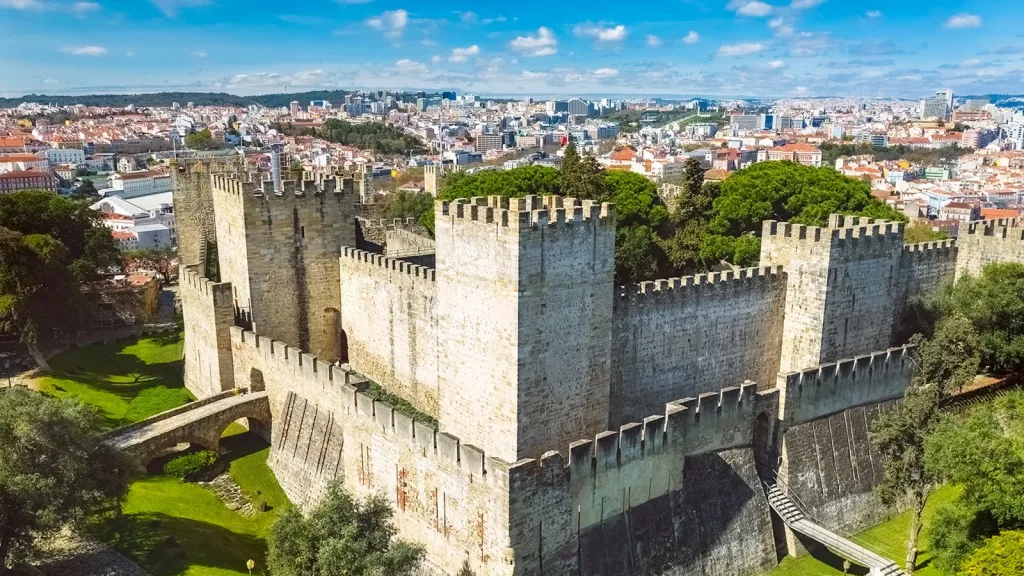
The Castle of São Jorge occupies the highest hilltop in the historic centre of Lisbon, with a first fortification established by the Romans in 48 BC. The current stone structures date from the Moorish period (9th–10th century), when the walls and towers were built on the orders of the Islamic ruler Hisam II, with construction evidence from approximately 985. Afonso Henriques captured the castle in 1147 and it served as the royal residence of the Portuguese kings from the 13th to the early 16th century, when the court relocated to the Ribeira Palace. The 1755 earthquake damaged parts of the structure, which underwent major restoration in the 20th century.
The castle occupies an area of approximately 4.4 hectares and contains the Ulysses Tower – the oldest standing tower in Lisbon – as well as a medieval residential quarter (the Barrio de Castelo) within the outer walls.
Belém Tower (Torre de Belém)
The Belém Tower was built between 1514 and 1520 on the northern bank of the Tagus River to serve as a fortified gateway to Lisbon’s harbour. It was designed by military architect Francisco de Arruda. The tower is a prime example of the Portuguese Manueline architectural style – a Portuguese variant of Late Gothic that incorporates maritime and navigational motifs including armillary spheres, ropes, and crosses of the Order of Christ.
The tower is four storeys high with a bastion at water level and a cylindrical watchtower rising 30 metres above. Along with the Jerónimos Monastery, it was designated a UNESCO World Heritage Site in 1983.

Monastery of the Hieronymites (Mosteiro dos Jerónimos)a
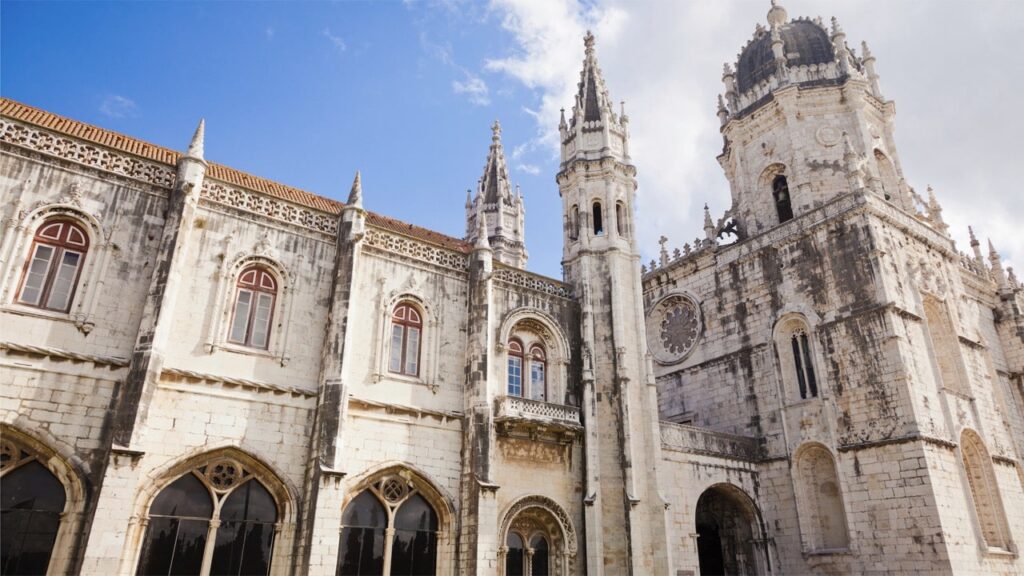
Construction of the Monastery of the Hieronymites (Mosteiro dos Jerónimos) began in 1502, under King Manuel I, on the site of a chapel built by Prince Henry the Navigator in the early 15th century. The monastery was completed in 1601. It was funded in large part by the profits of Portugal’s spice trade with India and was built to commemorate Vasco da Gama’s 1498 sea voyage.
The monastery was designed in the Manueline style, primarily by João de Castilho from 1517 onward. The south portal – the principal entrance – is considered one of the most elaborate examples of Manueline carving in existence. The cloisters are two-storey, measuring approximately 55 × 55 metres. The church contains the tomb of Vasco da Gama (moved from India in 1898) and the tomb of poet Luís de Camões. Designated UNESCO World Heritage Site in 1983.
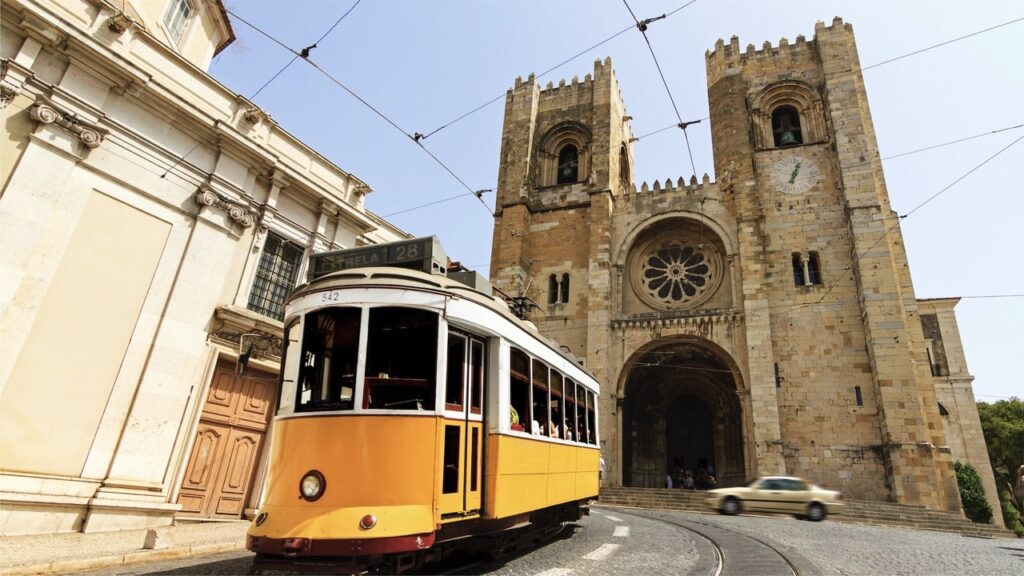
Tram 28 (Eléctrico 28)
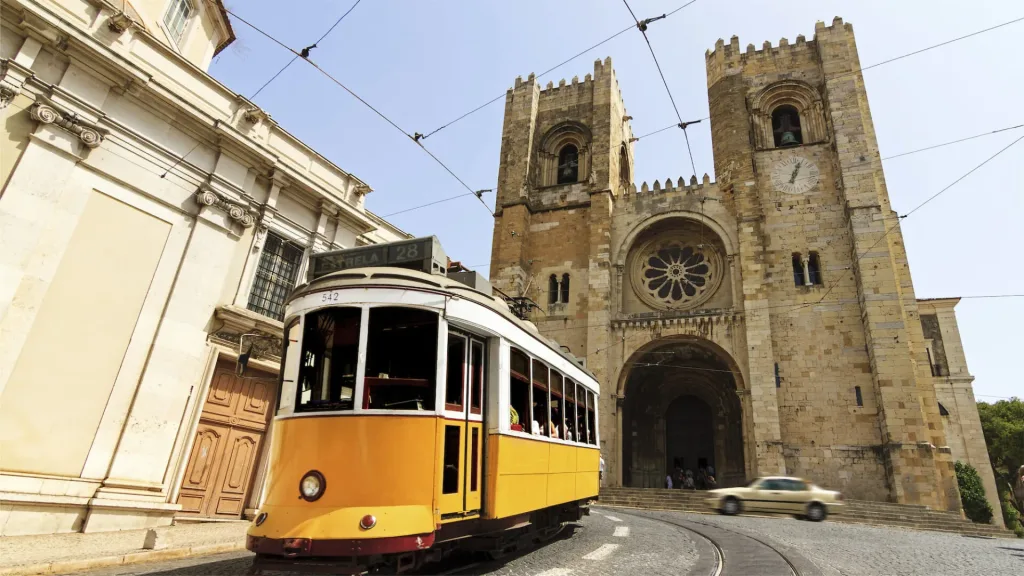
Tram 28 has run through the streets of central Lisbon since 1914. The route connects Martim Moniz in the east with Prazeres cemetery in the west, passing through the Alfama, Graça, Baixa, Chiado, and Estrela districts. The full route takes 45-50 minutes depending on traffic. The tram carries approximately 4.5 million passengers per year.
The current carriages are the Remodelado class, produced in the 1930s and subsequently upgraded with modern brakes and electrical systems while retaining their original polished wood interiors and yellow paintwork. Tram 28 is the only public transport line serving the Alfama and Graça districts due to the route’s narrow streets, tight corners, and steep gradients that are unsuitable for modern tram stock.
Practical note: the tram is heavily used by tourists and is a known target for pickpockets. Hold bags on your lap and keep personal items secured. Tickets can be purchased from the driver or via the Carris mobile app.

Pastéis de Belém
The Fábrica de Pastéis de Belém, located at Rua de Belém 84–92, has operated continuously since 1837. The original recipe was developed by monks of the Jerónimos Monastery and sold at a nearby sugar refinery following the closure of Portugal’s religious houses in 1834, a result of the liberal revolution. The bakery is the only establishment legally permitted to use the name “Pastéis de Belém” – all other variations sold across Portugal and worldwide are legally termed pastéis de nata.
The recipe is classified as a trade secret. Pastéis are produced on the premises throughout each day in a dedicated production kitchen. The bakery typically sells several thousand units daily and can accommodate queues of several hundred people during peak season.
When to Visit Lisbon
Lisbon’s average annual temperature is approximately 17°C. The city has one of the warmest climates of any European capital, with an annual average of around 2,800 hours of sunshine.
Spring (March–May): temperatures 14–22°C, low rainfall from April onward. This is considered the optimal period for visiting: comfortable walking weather, manageable crowds, and full operational hours at major attractions.
Summer (June–September): temperatures 24–32°C, almost no rainfall. July and August are the busiest months. The USA market peaks in July–August (US visitors accounted for 17.5% of international arrivals in 2024). Belém Tower, Jerónimos Monastery, and São Jorge Castle can have queues of 30–90 minutes during these months. Book tickets in advance.
Autumn (October–November): temperatures 16–24°C, increasing rainfall from November. October is still a viable month; visitor volumes are lower than July–August by approximately 20–30%.
Winter (December–February): temperatures 10–15°C, highest rainfall. Museums and indoor attractions are less crowded. Belém Tower exterior is often accessible without a queue. Christmas market in Praça do Comércio typically operates from late November to early January.
Local events that affect availability:
- NOS Alive music festival: July (Algés, near Belém);
- Festas de Lisboa (Santo António): June 12–13 – city-wide street parties, Alfama neighbourhood particularly crowded;
- Rock in Rio Lisboa: even-numbered years, June (check current calendar).
Getting Around Lisbon
Lisbon’s historic centre is compact but hilly. Several districts – Alfama, Bairro Alto, Graça – are not easily accessible by standard vehicles and require walking on steep, narrow streets or using public funiculars (ascensores) and elevators.
Metro: 4 lines, 56 stations covering the central city and suburbs. The Blue Line (Azul) connects the airport (Aeroporto) to downtown (Baixa-Chiado) in approximately 25 minutes. A single journey costs €1.61 (2025 price – verify before publishing). The 24-hour tourist card (Navegante 24h) covers all public transport including trams and funiculars.
Tram 28: as described above. Note: the Remodelado trams have no air conditioning and reach capacity quickly during summer.
Funiculars: three operating historic funiculars – Glória (to Bairro Alto), Bica (to Chiado area), and Lavra (to Torel garden). All use the same Carris ticket system as the metro and trams.
Taxis and ride-hailing: Uber, Bolt, and standard yellow taxis are widely available. A taxi from the airport to central Lisbon typically costs €15–€25 depending on destination and traffic (confirm current metered rate).
Private tour vehicle: Yellow Cab TT Tours picks up from your hotel or central Lisbon address. For city tours and day trips to destinations outside Lisbon, private transport eliminates the need to navigate public transport with luggage or groups.
Private Lisbon City Tours
Yellow Cab TT Tours has operated from Lisbon since 2013. Tripadvisor rating: 5.0/5 based on 3,372 reviews. Ranked #2 of 847 outdoor activities in Lisbon. Tripadvisor Travelers’ Choice Best of the Best 2025. All city tours are private. Vehicle and guide are exclusively for your group. Pickup from your hotel or address in central Lisbon.

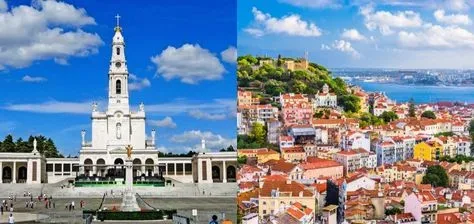

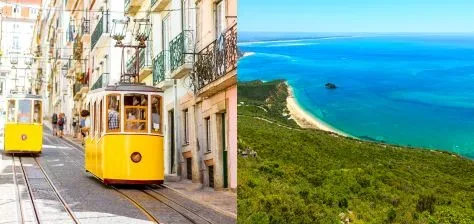
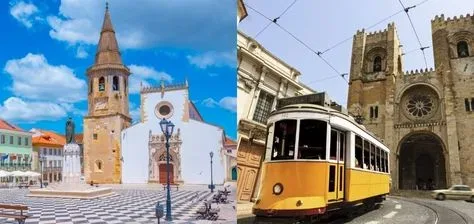
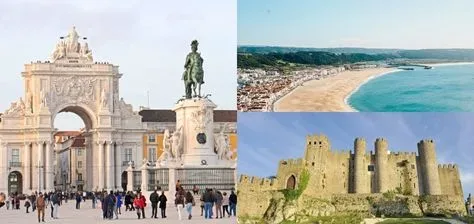
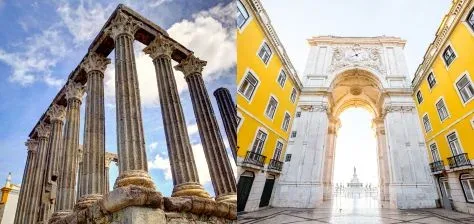
Ce qu'il ne faut pas manquer à Lisbonne
Alfama et château
Tramway et Cathédrale de Lisbonne
Place du Commerce (Praça do Comércio)
Monastère des Jerónimos
Foire aux questions (FAQ)
How many days should I spend in Lisbon?
The core historic districts – Alfama, Belém, Baixa, and Chiado – can be covered in 2 full days of walking. Three days allows a more comfortable pace with time for São Jorge Castle, Jerónimos Monastery, Belém Tower, and at least one day trip from Lisbon. Most international visitors stay between 3 and 5 nights based on 2024 Lisbon Tourism data showing an average stay of approximately 3.2 nights.
What are the top attractions in Lisbon?
The most visited sites in the city proper are the Castle of São Jorge (built on a site dating to 48 BC, current fortifications from the 9th–10th century), the Belém Tower (1514–1520, UNESCO 1983), and the Jerónimos Monastery (1502–1601, UNESCO 1983). The Alfama neighbourhood - the only area of Lisbon to survive the 1755 earthquake largely intact - is the primary destination for fado music and the city's oldest residential architecture.
What is the best time to visit Lisbon?
March to May and September to October. Spring offers 14-22°C temperatures and manageable crowds. The summer peak (July-August) brings temperatures of 24-32°C and significant queues at major attractions – Belém Tower and Jerónimos Monastery can require 30-90 minutes of queuing. Advance ticket booking is strongly recommended for summer.
What is fado?
Fado is a Portuguese musical genre characterised by themes of longing (saudade), fate, and the sea. It developed in the 19th century in the Alfama district of Lisbon, in the taverns of the working-class waterfront quarter. Fado was inscribed on the UNESCO Intangible Cultural Heritage list in 2011. Live fado performances are concentrated in the Alfama and Bairro Alto districts; dedicated fado restaurants (casas de fado) typically begin performances after 21:00 and include dinner service.
What happened in the 1755 Lisbon earthquake?
On November 1, 1755 at approximately 09:40 — All Saints' Day, when most residents were at church - an earthquake with an estimated magnitude between 7.7 and 9.0 struck approximately 290 km southwest of Lisbon. Subsequent fires burned for several days, and a tsunami struck the Tagus waterfront. Total deaths in Lisbon are estimated at 30,000–40,000. The earthquake destroyed the majority of the city's historic medieval buildings. Only Alfama, sitting on solid rock, survived largely intact. The rebuilding, directed by the Marquis of Pombal, produced the Baixa grid - the world's first planned earthquake-resistant urban district.
What is the connection between Lisbon and the Age of Discovery?
Between the early 15th and the mid-16th centuries, Lisbon was the primary European port of departure for oceanic exploration. Vasco da Gama sailed from the Tagus on July 8, 1497 and reached Kozhikode (Calicut), India on May 20, 1498 - establishing the first direct sea route between Europe and Asia. Pedro Álvares Cabral reached Brazil in 1500; Fernão de Magalhães (Magellan) departed from Spain but was Portuguese. The profits of the spice trade built Belém's UNESCO-listed monuments. The Monument to the Discoveries (Padrão dos Descobrimentos, 1960) at Belém commemorates the explorers of this era.
Is Tram 28 worth taking?
Tram 28 passes through Alfama and Graça, the two hillside districts that are otherwise difficult to access on foot. From a practical perspective, it is also public transport - the cheapest way to cover ground between the Estrela district in the west and Martim Moniz in the east. The Remodelado carriages from the 1930s are the primary reason visitors take this route; they are one of the few vintage tram fleets still in regular daily service in Europe. Practical notes: buy tickets in advance using the Carris app; the tram reaches capacity quickly in summer and is frequently delayed by traffic; pickpocketing is reported on busy days.
Where is the original Pastéis de Belém?
The Fábrica de Pastéis de Belém is located at Rua de Belém 84–92, in the Belém district, approximately 6 km west of the city centre. It has operated continuously since 1837, using the original recipe of the monks of the nearby Jerónimos Monastery. The recipe is a classified trade secret. Opening hours are approximately 08:00–23:00 daily (verify current hours before visiting). It is the only bakery legally permitted to use the name "Pastéis de Belém.
How far is Belém from central Lisbon?
Belém is approximately 6 km west of Praça do Comércio. By tram (line 15E from Praça da Figueira), the journey takes approximately 25–30 minutes. By Uber or taxi, approximately 15–20 minutes depending on traffic. By car, parking near Belém Tower is available but limited; it typically fills before 10:00 in summer. Walking the entire distance from central Lisbon takes approximately 70–80 minutes along the river.
What is the difference between a private Lisbon city tour and exploring on your own?
On a private tour, a licensed guide covers the historical and practical context of each site in real time - context that is typically not apparent from signage or general guidebooks. Logistics (transport, entrance priority for some sites, timing relative to crowd patterns) are also managed by the guide. The main trade-off is cost. For groups of 3 or more, private transport typically costs less per person than individual taxi fares across the same route. For solo travellers or pairs, self-guided exploration using the metro and tram is a reasonable alternative for the Baixa and Belém areas; Alfama and São Jorge Castle are more straightforward on foot.