

What Was Promised — and When
The events of 13 October 1917 were not spontaneous.
They had been anticipated for five months. The first apparition at Fátima occurred on 13 May 1917, when three children — Lúcia dos Santos, aged 10, and her cousins Francisco Marto, aged 9, and Jacinta Marto, aged 7 — reported seeing a figure they described as “a lady brighter than the sun” at Cova da Iria, a grazing field outside the village. Five more apparitions followed on the 13th of each subsequent month: June, July, August (delayed to 19 August due to the children being detained by local authorities), September, and finally October.
At each apparition, the children reported receiving messages and conversing with the figure. During the July apparition, they stated the lady had revealed three secrets — prophetic messages the children were instructed not to disclose immediately. One was described as a vision of hell. A second contained a prophecy about a second world war. The third remained secret until the Vatican disclosed it in 2000.
Most significantly, at the September apparition, the children announced a public prediction: on 13 October, the lady would perform a miracle so that everyone present could believe. The phrase entered circulation immediately. Word spread across Portugal and beyond. By mid-October, crowds were converging on Fátima from across the country.
This had not been a gradual or informal process. The children’s claims had been publicly contested from the beginning. The local administrator, Artur de Oliveira Santos, was actively hostile — he had detained the children on 13 August specifically to prevent the scheduled apparition, interrogating them separately and threatening to have them boiled in oil if they refused to reveal the secrets. They did not. The August apparition took place four days late. The crowds kept coming.
The Crowd at Cova da Iria
Contemporary estimates of the crowd present on 13 October 1917 range from 30,000 to 100,000, with 70,000 the figure most consistently cited in both Church and secular documentation. The range reflects the difficulty of counting an outdoor crowd in 1917, not disagreement about whether a large crowd was present.
The gathering was documented by multiple independent observers before the event began. It had rained heavily the night before and throughout the morning. The field was described in multiple witness accounts as deep mud. People had come from as far as Porto, Lisbon, and Spain. Many had walked for two or three days.
The crowd included people of very different dispositions toward the claimed apparitions. Most were believers or at least open to the possibility. Some were specifically there to disprove it. Among them was Avelino de Almeida, a senior correspondent for *O Século* — Portugal’s largest circulation daily newspaper at the time, with a firmly secular editorial position. He had published a satirical article about the Fátima events in August and arrived in October to document what he expected to be a non-event.
The children arrived at the site around noon. Lúcia fell to her knees. The crowd reported seeing a brief flash of light, and Lúcia began to speak — inaudible to the crowd, directed at the figure only she could see. Then, at approximately 13:30, it happened.
What the Witnesses Reported
What follows is not a single account. It is a composite of what dozens of independent witnesses described in statements collected in the months and years following the event, including testimonies gathered during the Church’s canonical investigation of 1922–1930.
The broad agreement across witnesses is: the rain stopped, the clouds parted, and the sun became visible as a distinct silver disk that could be looked at directly without pain or eye damage. The disk then appeared to rotate on its own axis, throwing off light in different colours — reds, yellows, blues — which illuminated the crowd and the surrounding landscape. This phase was reported to last several minutes. Then, according to multiple witnesses, the disk appeared to detach from its position in the sky and move in a zigzag or spiral pattern toward the earth, increasing in apparent size, generating intense heat felt by the crowd. Then it returned to its normal position.
The phenomenon lasted approximately ten minutes in total, according to the most commonly cited accounts.
Several features of the testimony are consistently repeated. First: the visual phenomenon was reported not only by people at Cova da Iria but by witnesses in surrounding villages up to 40 kilometres away — some of whom had not known the event was occurring that day. Second: after the event, the crowd reported that their clothes — soaked through after hours of standing in rain — were suddenly dry. Third: people who had been ill reported being cured.
The third category of claim is harder to evaluate. The first and second — atmospheric visual phenomenon seen across a wide geographic area, followed by sudden drying of wet clothing — are the claims that have generated the most sustained scientific discussion.

The Secular Press: Avelino de Almeida and O Século
Avelino de Almeida published his account in O Século on 15 October 1917. He had arrived as a sceptic and wrote as one who had, in his own words, witnessed something he could not explain.
His report described the visual phenomenon in terms consistent with other witness accounts: the luminous disk, the rotation, the colour play, the apparent movement toward the earth. He did not claim a supernatural cause. He did not retract his secular position. He reported what he had seen, in specific terms, as a journalist. The article ran on the front page with the headline describing the sun dancing at Fátima.
The publication of this account — in a republican, anti-clerical newspaper — was considered significant precisely because the editorial staff of O Século had no incentive to promote a Catholic religious event. A second journalist, Avelino de Almeida’s colleague from O Dia (another Lisbon newspaper), filed a similar account.
The secular press coverage did not resolve anything. It amplified the dispute.
What is documented with certainty: O Século published an eyewitness account of an unusual visual phenomenon on 15 October 1917. The journalist who wrote it — Avelino de Almeida (born Sintra 1873, died Lisbon 2 August 1932) — subsequently converted to Catholicism. He did not connect the two events publicly, which is either principled or convenient depending on your reading of the situation.
The Scientific and Meteorological Context
No scientific consensus exists on what happened at Cova da Iria on 13 October 1917.
The phenomenon was not recorded by any meteorological observatory. No cameras captured it. (Several photographers were present, but photographic technology in 1917 could not capture unusual light behaviour reliably, and no anomalous images survive.) The Portuguese Meteorological Institute has no record of unusual atmospheric conditions for that date in that area.
This absence of instrument data has led to a range of proposed explanations, none of which is universally accepted:
Optical atmospheric phenomenon. Concentrations of ice crystals or dust in the upper atmosphere can produce halo effects and unusual colour scattering around the sun. This would explain some aspects of the reported visual phenomenon, though not its duration or the apparent motion.
Mass suggestion / collective psychology. A crowd primed for a supernatural event, staring directly at the sun (which the accounts say was possible without pain), could report shared perceptual experiences. The pain-free viewing itself is consistent with the sun being obscured by thin cloud or dust, which would also reduce apparent brightness.
Localized atmospheric event. Some researchers have proposed an unusual dust cloud or ice-crystal phenomenon that produced the visual effects without registry at more distant instruments.
Unexplained. The Vatican’s position, as of the 1930 declaration and subsequently, is that the event is not explicable through natural causes — but the Church does not require Catholics to accept this interpretation. The miracle was declared worthy of belief, not mandatory belief.
What none of the scientific proposals account for satisfactorily is the geographic spread of the reports — witnesses in villages at distances of 18 to 40 kilometres describing similar visual effects — and the drying of wet clothing, which would require a sudden and localized temperature or radiant heat event of a kind that has no atmospheric parallel in the existing literature.
The debate is ongoing. It will not be resolved here.

The Chapel of Apparitions: What Stands There Now
The site where the children knelt during the apparitions is marked today by the Chapel of the Apparitions (Capelinha das Aparições). The original small structure was built in 1919, two years after the events, and has been rebuilt and expanded several times since — the first time after it was bombed in 1922.
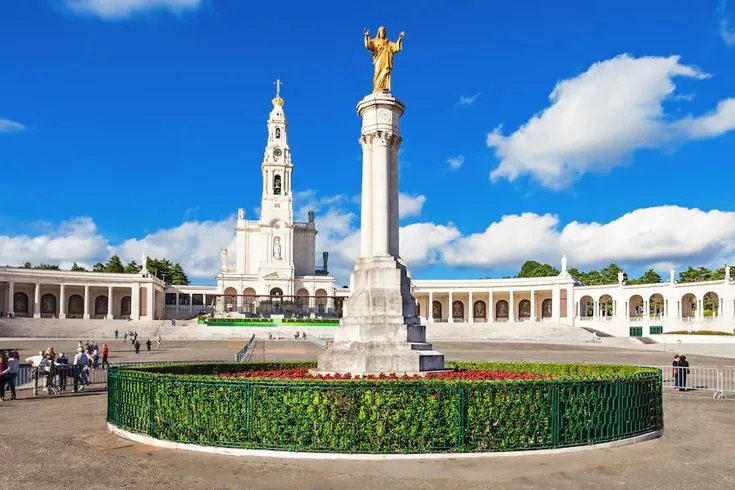
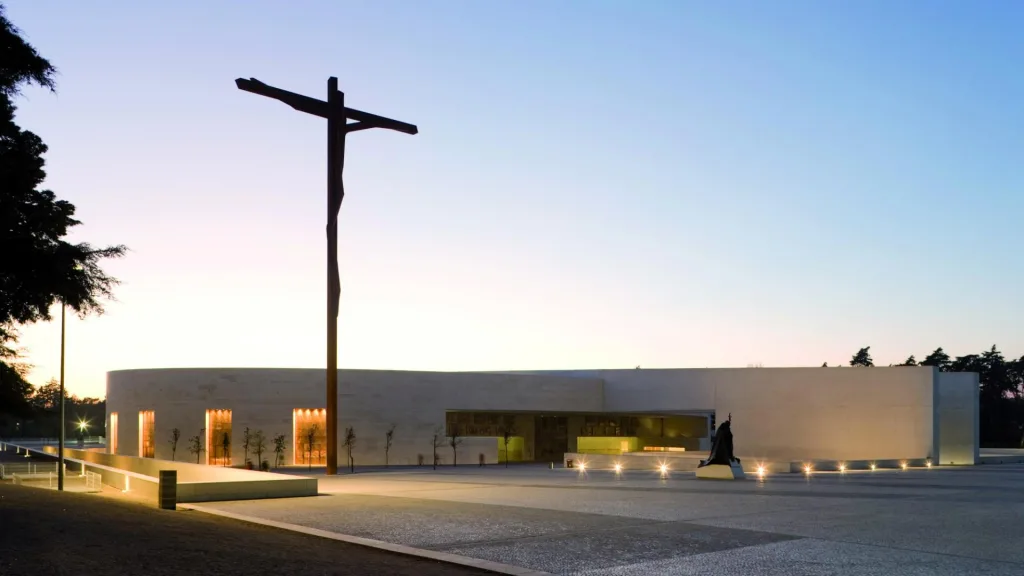
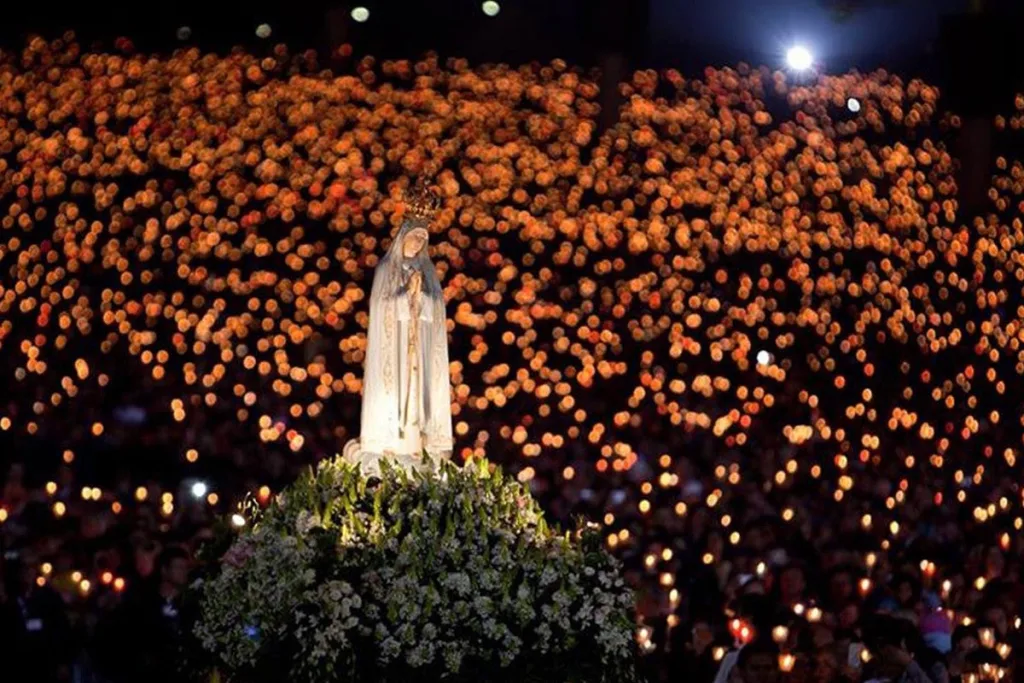
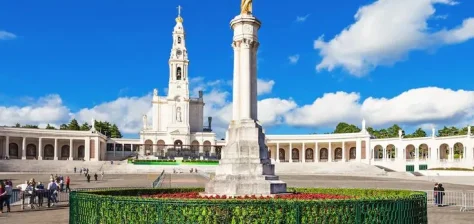
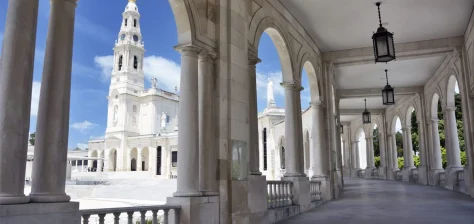
What exists now at Cova da Iria is the Sanctuary of Fátima: a complex comprising the Basilica of Our Lady of the Rosary (completed 1953), the modern Basilica of the Holy Trinity (consecrated 2007, capacity 8,633), the Chapel of the Apparitions, the esplanade, and several other buildings. The esplanade — the main open area between the two basilicas — can accommodate over 300,000 people during peak pilgrimage events.
The Chapel of the Apparitions is open every day of the year. It is small relative to the scale of the complex. The column marking the exact location of the apparitions stands inside it. On major pilgrimage dates — 13 May and 13 October in particular — the chapel cannot be entered due to crowd density, but the esplanade surrounding it is open.
I find that most clients who are not Catholic are more interested in the chapel than the basilicas, precisely because it is the original reference point. The basilicas are large institutional buildings from the 20th century. The chapel is where the story happened. Both visits take roughly the same time.
How to Visit Fátima Today
Fátima is located in the municipality of Ourém, in the Santarém District, approximately 135 kilometres north of Lisbon. Drive time from Lisbon is approximately 1 hour 20 minutes by highway.
The sanctuary complex is free to enter. The chapels are open during visiting hours, which vary by season. The major pilgrimage dates — 12–13 May and 12–13 October — attract crowds in excess of 300,000. If your interest is the site rather than the pilgrimage experience, visiting on any other date gives significantly easier access to the chapel and esplanade.
The town itself is small. Apart from the sanctuary, there is little of tourist interest in Fátima’s immediate surroundings. Most visitors who come on a tour combine Fátima with Batalha (the Monastery of Batalha is 19 kilometres north, a UNESCO World Heritage Site), Nazaré (the Atlantic town known for large waves, 30 kilometres west of Batalha), and Óbidos (a medieval walled town, 50 kilometres south of Batalha).
For clients who come specifically for the religious significance, a half-day at the sanctuary is sufficient. For those combining it with Batalha and Nazaré in a single day, plan on 2–2.5 hours at the sanctuary.
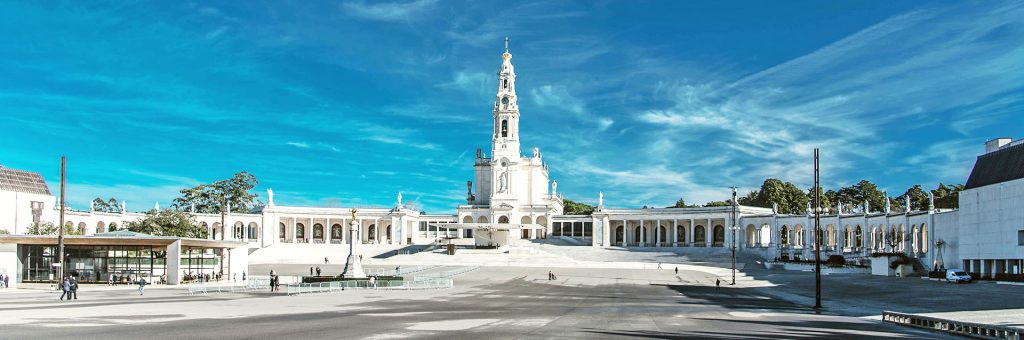
Visit Fátima from Lisbon
The sanctuary is freely accessible and takes 2–4 hours depending on how much of the complex you want to cover. What a guide adds is context — the sequence of events, the content of the secrets, the significance of each structure — which transforms a walk across a large esplanade into a coherent narrative.
Fátima is 142 km from Lisbon. A private tour combines the sanctuary with Batalha Monastery (22 km north — UNESCO 1983) and Nazaré or Óbidos, covering the full northern circuit in one day.
FAQ
What is the Miracle of the Sun at Fátima?
How many people witnessed the Miracle of the Sun?
Was the Miracle of the Sun scientifically explained?
Who were the three children who reported the Fátima apparitions?
Did secular journalists report the Miracle of the Sun?
What is the Chapel of Apparitions in Fátima?
When did the Catholic Church officially recognise the Fátima apparitions?
What are the Three Secrets of Fátima?
Are Francisco and Jacinta Marto saints?
How far is Fátima from Lisbon?

Founder & Director of Yellow Cab TT Tours. Guiding in Portugal for 20+ years.
Founded Yellow Cab TT Tours in 2013. 3,372 five-star reviews on Tripadvisor.